AI and Scientific Research: Challenges, Opportunities – SWOT – the Paradox of Human Machine Evolution
28 Oct 2026

Introduction: The Exponential Arc of Human Enquiry and Machine Acceleration
The history of humanity has been a history of ingenuity, scientific progress, and relentless curiosity. This capacity for creative problem-solving has allowed humans to cope with the challenges of nature, evolving and adapting in ways that enable us to thrive where most animal and organic forms could not.
Scientific enquiry, combined with creative work, has long stood as the cornerstone and highest form of human intelligence and evolution. As Isaac Newton famously reflected:
If I have seen further it is by standing on the shoulders of Giants.
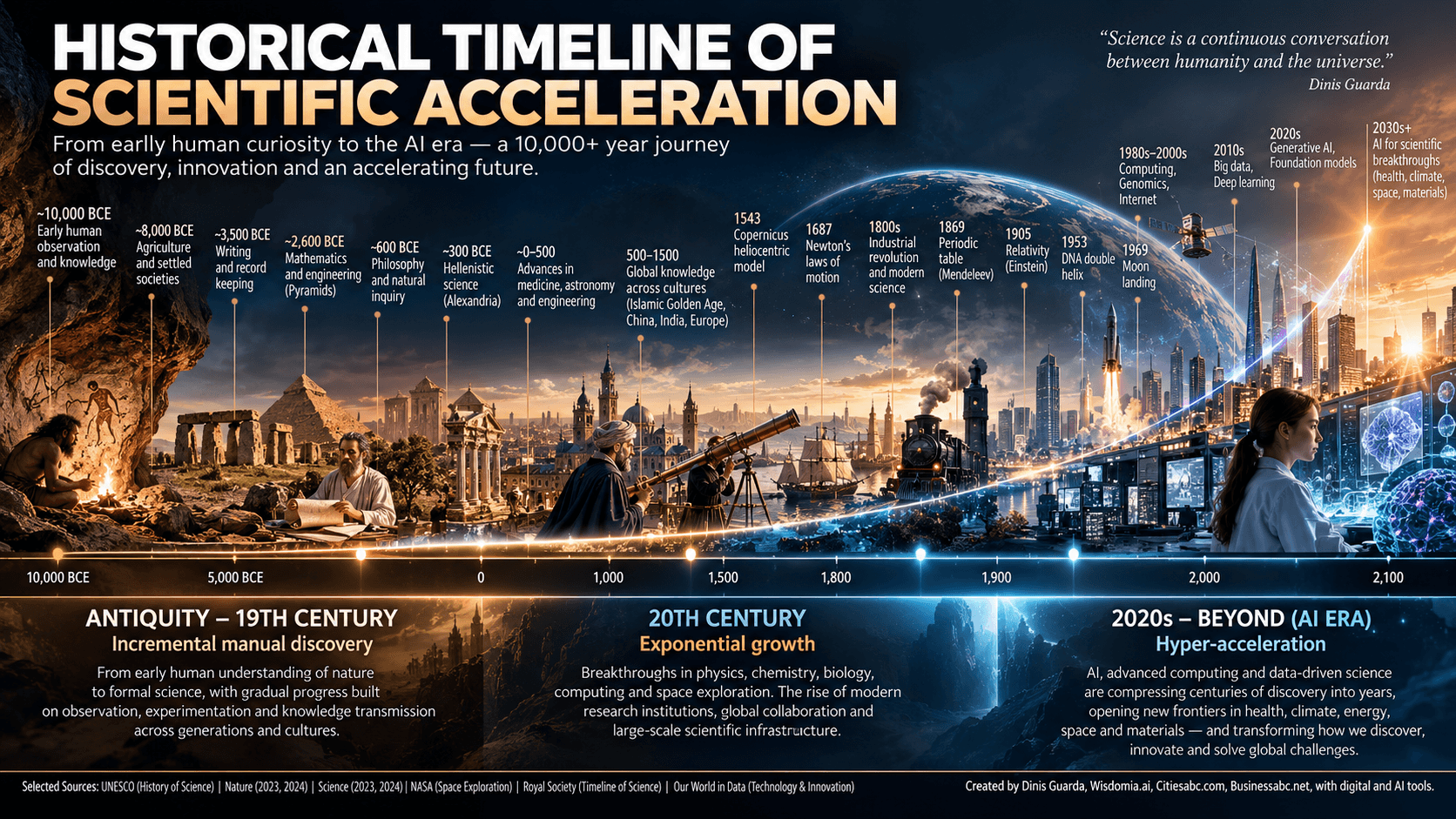
For centuries, those "shoulders" were constructed slowly, built brick by brick through decades of manual experimentation, painstaking synthesis, and physical peer exchange. However, the last century fundamentally altered this trajectory, accelerating scientific research more than in the entire previous history of humanity. The 20th century yielded groundbreaking transformations: splitting the atom, discovering the structure of DNA, landing on the Moon, and laying the computational foundations of the digital age.
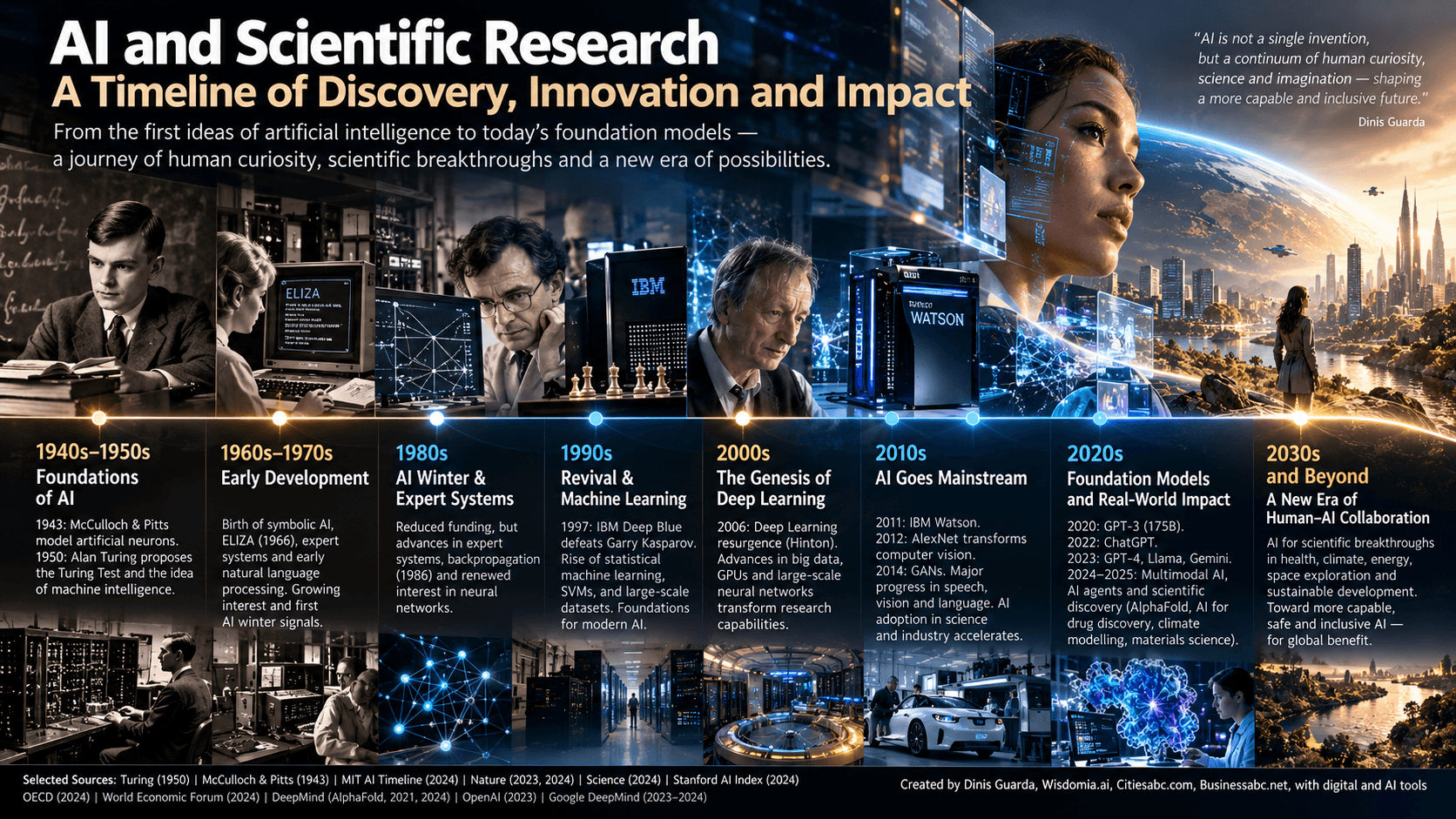
Today, we stand at the threshold of a radical shift. The present years and the coming decade promise to accelerate scientific discovery further than the last thousand years combined. As humans develop artificial super-intelligence primitives and first-stage Artificial General Intelligence (AGI) systems that surpass human capabilities in specific domains, the fundamental nature of research is changing.
This trajectory introduces a powerful paradox within scientific research:
- The Revolutionary Accelerator: AI acts as a computational engine, parsing complex datasets, predicting biological folds, and modeling physical systems in hours rather than centuries.
- The Structural Threat: Concurrently, uncontrolled AI integration threatens the core integrity, trust, and peer-review systems of the scientific process through data-theft controversies, fabricated citations, and automated scientific "slop."
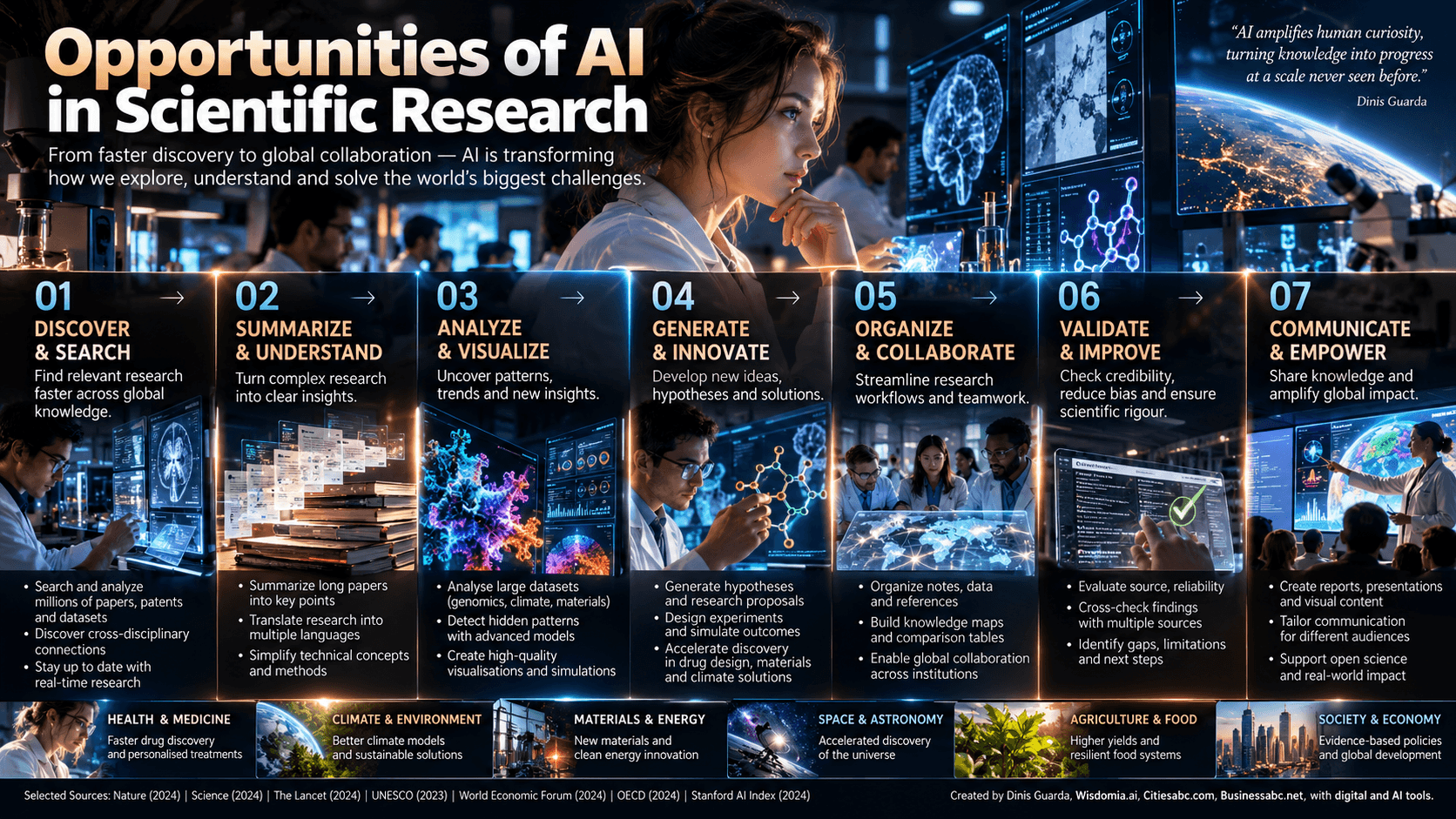
2. Opportunities of AI in Scientific Research
The modern scientific workflow is undergoing rapid transformation, expanding capacity across hypothesis planning, automated data collection, deep analysis, and report drafting. Traditional scientific methodologies rely heavily on manual human effort, gathering data through surveys, interviews, and physical lab setups, followed by manual calculations. AI-assisted methods automate these pipelines, parsing massive datasets to yield complex insights rapidly.
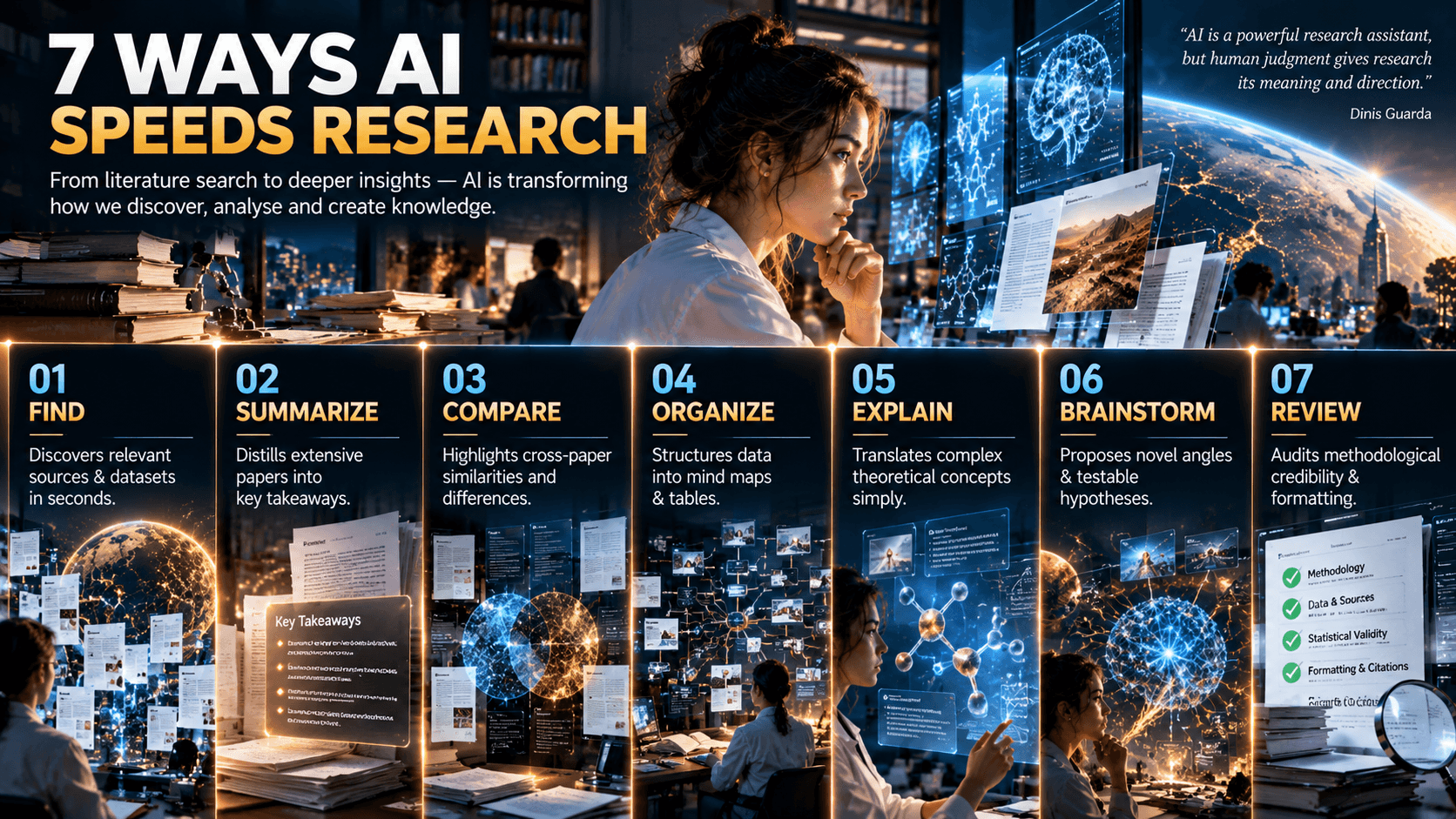
Beyond literary synthesis, AI operates directly across empirical domains, including drug discovery, climate modeling, space exploration, precision agriculture, lab robotics, and theoretical physics.
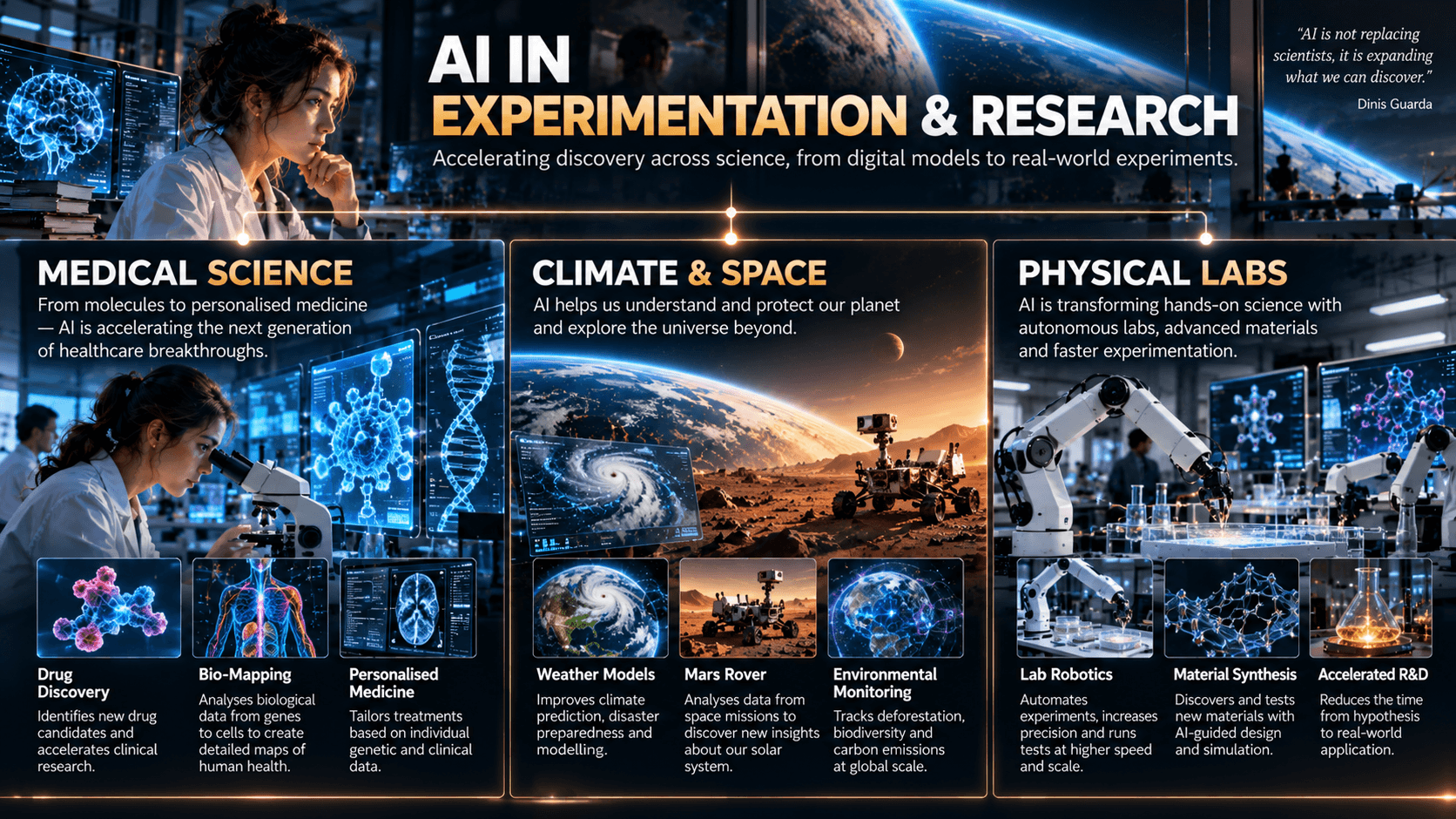
Processing Mass Data & Biology
- Accelerating biological mapping: DeepMind’s AlphaFold mapped over 200 million 3D protein folds in a single year, a monumental feat that earned Demis Hassabis and John Jumper a share of the Nobel Prize in Chemistry. This computational effort alone would have taken human scientists hundreds of millions of lab-hours to achieve manually.
- Decoding organic languages: Startups like Basecamp Research are collecting billions of global genetic data points to build foundational AI models capable of understanding and interacting with complex biological sequences.
- Solving monumental math: AI agents have tackled complex non-linear mathematical equations, including variations of the Navier–Stokes problem, yielding numerical solutions in mere hours, as highlighted in reporting by the BBC.
Material Science & Discovery
- Predicting new materials: Advanced models forecast millions of novel candidate crystal structures to accelerate the design of next-generation batteries, microchips, and solar cells.
- Unlocking medical breakthroughs: Human-guided AI models have helped map fundamental biological mechanisms, such as the lock-and-key molecular interactions involved in fertilisation.
3. Systematic Audits of Integrity, Methodologies & The "Slop" Crisis
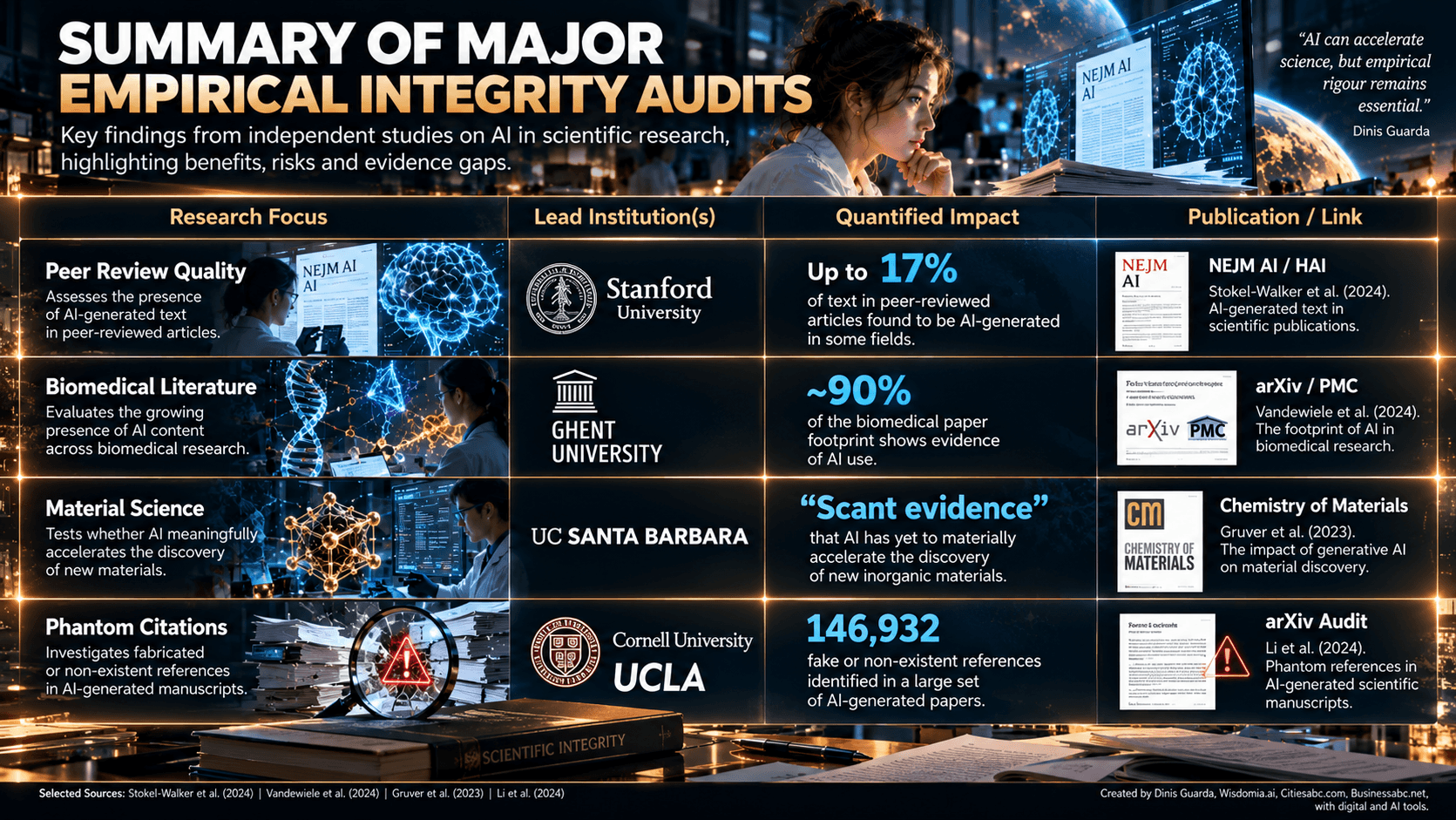
Despite its promise, the uncontrolled deployment of Large Language Models (LLMs) introduces severe risks to academic integrity. A series of empirical audits published across primary research outlets details the quantitative scale of this challenge:
1. The Stanford Peer Review Analysis
- Authors/Institution: Weixin Liang, James Zou, and colleagues at Stanford University.
- Core Discovery: Up to 17% of referee reports submitted to major computer science conferences were generated or substantially rewritten by LLMs.
- Methodology: The research team designed a computational linguistic framework to track the sudden frequency spike of specific vocabulary markers ("delves", "pivotal", "meticulous", "intricate") across hundreds of thousands of peer-review reports, comparing post-2023 texts against pre-LLM historical baselines.
- Key Takeaway: Using AI shortcuts to evaluate academic papers compromises the independent human judgment required to maintain peer-review standards.
- Source Links: Read the analysis on NEJM AI, view the framework on ResearchGate, or explore coverage via the Stanford HAI Feature.
2. The Ghent University Biomedical Literature Audit
- Authors/Institution: Lena Holzwarth, Rita González-Márquez, and Dmitry Kobak (Ghent University / University of Tübingen).
- Core Discovery: By late 2025, nearly 90% of open-access biomedical papers archived in PubMed Central displayed signs of LLM-assisted writing.
- Methodology: The audit measured abrupt statistical frequency spikes of specific "trigger words" favored by commercial language models across full-text biomedical literature archived in PubMed Central relative to pre-2023 baselines.
- Key Takeaway: Synthetic prose has rapidly saturated the scientific record, threatening to lock corporate LLM biases and stylistic registers directly into public biomedical literature.
- Source Links: Access the primary preprint on the arXiv Abstract Page or download the full analysis via arXiv PDF.
3. The UC Santa Barbara Materials Chemistry Critique
- Authors/Institution: Anthony K. Cheetham and Ram Seshadri from the University of California, Santa Barbara.
- Core Discovery: Google DeepMind’s GNoME database, which claimed to discover over 2 million new crystal structures, showed "scant evidence" for novel compounds that meet essential criteria of structural stability, chemical credibility, and utility.
- Methodology: Published as a direct peer critique in Chemistry of Materials, the authors conducted a manual domain-expert audit of a randomised sample of proposed crystal structures, evaluating them for novelty against existing crystallographic databases and physical viability.
- Key Takeaway: AI models can misinterpret trivial modifications of known compounds as major discoveries, emphasising the ongoing necessity of expert human evaluation.
- Source Links: Read the perspective piece in ACS Chemistry of Materials or index it via PubMed.
4. The Cornell/UCLA Hallucinated Citation Study
- Authors/Institution: Zhenyue Zhao, Yihe Wang, Toby Stuart, Mathijs De Vaan, Paul Ginsparg, and Yian Yin (Cornell University / UCLA / UC Berkeley).
- Core Discovery: An estimated 146,932 fabricated ("phantom") citations were published across major scientific repositories in a single year.
- Methodology: The authors executed an automated reference-verification pipeline auditing 111 million references across 2.5 million papers hosted across four major repositories: arXiv, bioRxiv, SSRN, and PubMed Central, cross-checking DOIs and bibliographic metadata against ground-truth databases.
- Key Takeaway: Unverified chatbot output has introduced fabricated historical references into academic literature, creating blind alleys for researchers and corrupting bibliographic networks.
- Source Links: Download the empirical audit from the arXiv Repository and analyse the arXiv GhostCite Analysis.
4. Analytical Comparison & Paradox Dimensions
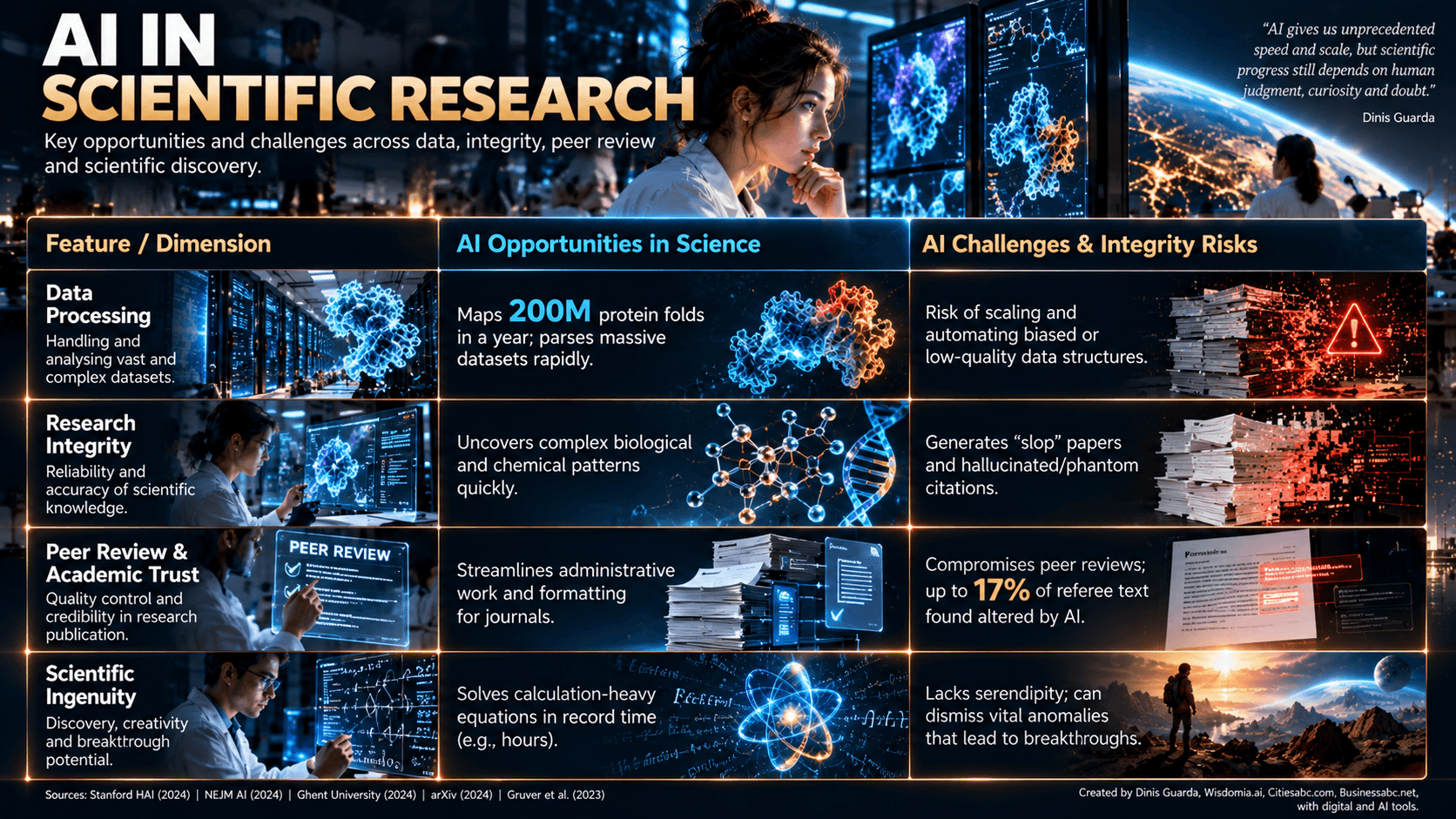
A central vulnerability of hyper-automated research is the potential loss of serendipity. Great discoveries, such as Alexander Fleming’s observation of Penicillium mold or Jocelyn Bell Burnell’s discovery of pulsars, relied on human intuition recognising the significance of unexpected anomalies. Standardised AI filters risk filtering out unusual data points as errors, potentially discarding accidental discoveries that depend on human hunches.
As Albert Einstein observed:
The true sign of intelligence is not knowledge but imagination.
Algorithmic systems excel at processing established patterns, but transformative paradigm shifts continue to depend on human conceptual imagination.
5. Strategic SWOT Analysis
The following Matrix provides a structural overview of AI integration across scientific research:
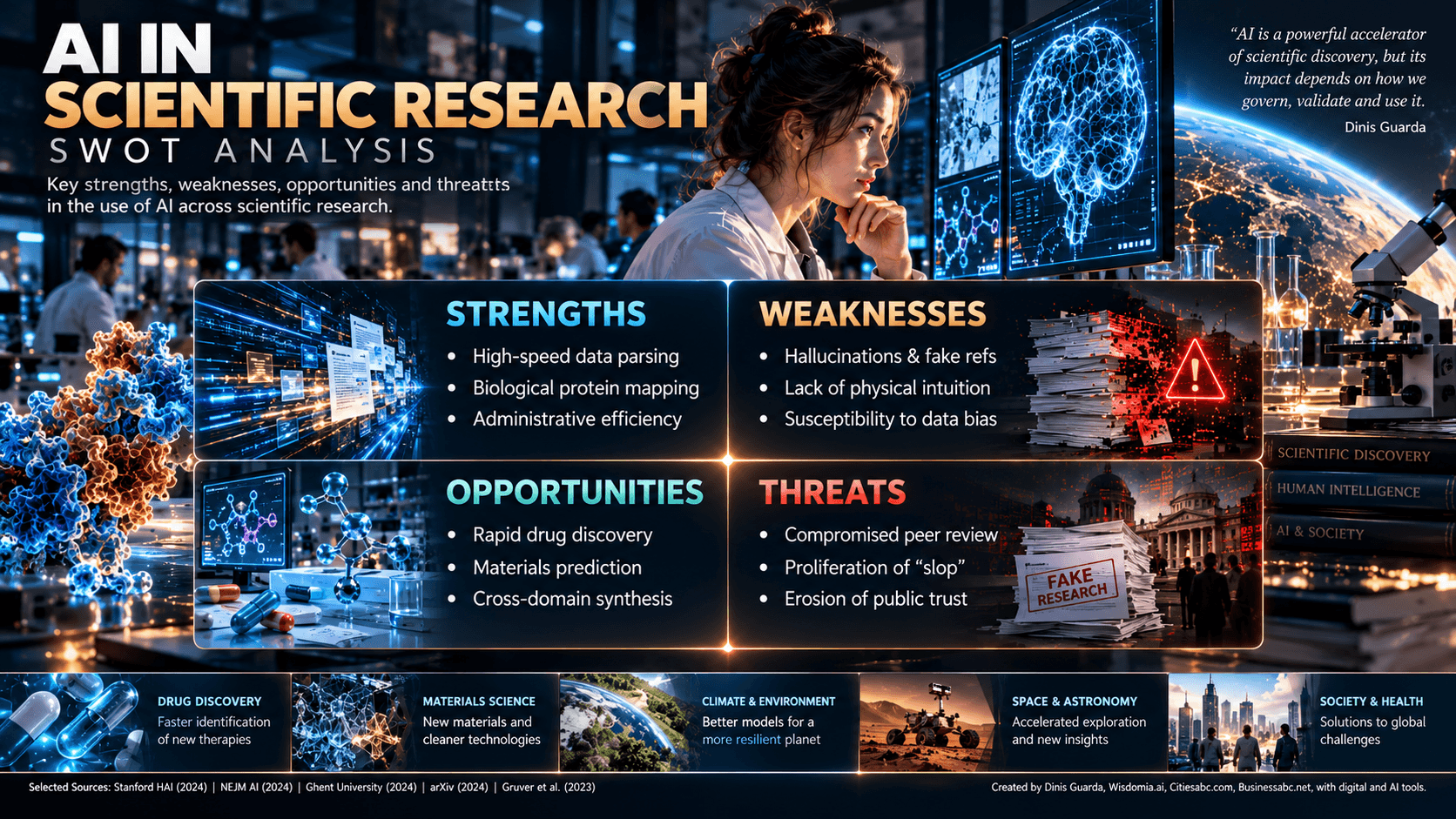
Strengths
- Unprecedented Processing Speed: Reduces data analysis timelines from years to hours.
- High-Dimensional Pattern Recognition: Identifies structural patterns across biological and chemical datasets beyond human manual capacity.
- Workflow Efficiency: Streamlines manuscript formatting, literature discovery, and computational sorting.
Weaknesses
- Hallucination Propensity: Generates plausible but fabricated scientific claims, data, and citations.
- Lack of Grounded Reasoning: Operates on statistical token probabilities rather than physical understanding or domain intuition.
- Bias Amplification: Inherits and scales existing selection biases present within underlying training datasets.
Opportunities
- Targeted Therapeutics: Accelerated biological mapping drastically reduces early-stage drug discovery pipelines.
- Sustainable Materials Discovery: Automated modeling of novel crystalline structures for clean energy technologies.
- Cross-Disciplinary Connections: Bridges disparate scientific fields by synthesising literature across disciplines.
Threats
- Erosion of Peer-Review Integrity: Automation of referee reports dilutes qualitative gatekeeping.
- Literature Saturation ("Slop"): Inundates repositories with low-quality, synthetic manuscripts that obscure valuable human research.
- Degradation of Public Trust: Widespread awareness of fabricated scientific references damages public confidence in academic literature.
6. Navigating the Future: Human Guardrails & Conclusion
To protect the scientific record, publishers and academic institutions are deploying defense mechanisms. Major journal networks, such as Elsevier, use over 100 digital signals to flag AI-generated manuscripts, image manipulations, and synthetic prose markers. Repositories like arXiv have updated submission policies to enforce strict bans on unverified citations.
However, technical filters address only part of the problem. Experts argue that the sustainable path forward relies on "research-grade AI" frameworks, positioning artificial intelligence as an advanced calculator and analytical assistant, while human researchers maintain direct accountability for paper accuracy, verification, and theoretical synthesis.
As Marie Curie noted:
Nothing in life is to be feared, it is only to be understood. Now is the time to understand more, so that we may fear less.
The integration of artificial intelligence into scientific research represents a major transition in human history. If guided by expert oversight, ethical standards, and empirical validation, AI can continue to accelerate discoveries that address pressing global challenges. Managing this technology requires balancing computational power with human intuition and methodological rigor.
Works Cited, Macro Reports & Primary Repositories
Primary Empirical Audits
- Liang, W., Zou, J., et al. (2024). Can Large Language Models Provide Useful Feedback on Research Papers? A Large-Scale Empirical Analysis. Published in NEJM AI. Direct Links: NEJM AI Publication | ResearchGate Tracking | Stanford HAI Feature
- Holzwarth, L., González-Márquez, R., & Kobak, D. (2026). Most biomedical publications show signs of LLM-assisted writing. Submitted to PubMed Central / arXiv. Direct Links: arXiv Abstract Page | arXiv Full PDF
- Cheetham, A. K., & Seshadri, R. (2024). Artificial Intelligence Driving Materials Discovery? Perspective on the Article: Scaling Deep Learning for Materials Discovery. Published in Chemistry of Materials. Direct Links: ACS Chemistry of Materials | PubMed Entry
- Zhao, Z., Wang, Y., Stuart, T., De Vaan, M., Ginsparg, P., & Yin, Y. (2026). LLM hallucinations in the wild: Large-scale evidence from non-existent citations. Published in arXiv / Digital Libraries. Direct Links: arXiv Repository | arXiv GhostCite Analysis
News, Synopses & Macro Reports
- BBC News. (2024). A bust-up between mathematicians is fuelling fears that AI could change science forever. Direct Link: BBC News Coverage
- The Royal Society. (2024). Science in the Age of AI Project Hub. Policy guidelines and structural frameworks. Direct Link: The Royal Society Hub
- ScienceDirect / Research Policy. (2024). AI in Science: When and Where It Makes a Difference. Macro-level pattern risks and serendipity reduction. Direct Link: ScienceDirect Journal Policy
- MIT FutureTech & Google AI Collaboration. (2025). AI in Science: Early Insights Report. Cross-disciplinary open-access research mapping. Direct Link: MIT FutureTech Portal
Share

Dinis Guarda
Dinis Guarda is an author, entrepreneur, founder CEO of ztudium, Businessabc, citiesabc.com and Wisdomia.ai. Dinis is an AI leader, researcher and creator who has been building proprietary solutions based on technologies like digital twins, 3D, spatial computing, AR/VR/MR. Dinis is also an author of multiple books, including "4IR AI Blockchain Fintech IoT Reinventing a Nation" and others. Dinis has been collaborating with the likes of UN / UNITAR, UNESCO, European Space Agency, IBM, Siemens, Mastercard, and governments like USAID, and Malaysia Government to mention a few. He has been a guest lecturer at business schools such as Copenhagen Business School. Dinis is ranked as one of the most influential people and thought leaders in Thinkers360 / Rise Global’s The Artificial Intelligence Power 100, Top 10 Thought leaders in AI, smart cities, metaverse, blockchain, fintech.