ETHOS: The AI Assistant Bringing 2,500 Years of Jain Philosophy Into Modern Technology
16 Oct 2026

Developed by Sheaf Labs, ETHOS combines artificial intelligence with ancient Jain teachings on non-violence, truthfulness and restraint, raising new questions about the role of philosophy in shaping intelligent machines.
Artificial intelligence is increasingly capable of reasoning, generating knowledge and assisting with complex decisions. But as machines become more influential in human life, an older philosophical question is gaining renewed importance: can intelligence exist without causing harm?
Sheaf Labs is exploring this question through ETHOS, an AI assistant developed around the ethical teachings of Jainism, a philosophical and religious tradition that has emphasised non-violence for more than 2,500 years. Accessible through ThePeacefulAI.com, ETHOS combines contemporary language models with an ethical reasoning component trained on Jain scriptures.
The project brings an ancient system of moral philosophy into modern AI architecture, examining whether principles historically used to guide human conduct can also inform the behaviour of intelligent machines.
From Ahimsa to Artificial Intelligence
At the heart of ETHOS is ahimsa, the Jain principle of non-violence towards all living beings. In Jain philosophy, avoiding harm is not limited to physical actions but also extends to speech, intention and the consequences of individual choices.
According to Sheaf Labs, the ethical reasoning component of ETHOS was trained on four Jain texts: the Acharanga Sutra, Sutrakritanga, Uttaradhyayana and Kalpa Sutra, using Hermann Jacobi's translations. Rather than simply quoting religious texts, the system is designed to incorporate their ethical principles into its responses.
Five commitments guide ETHOS: non-violence, truthfulness, non-stealing, restraint and non-possessiveness. In practical terms, these principles are intended to prevent the assistant from facilitating harmful actions, encourage it to acknowledge uncertainty, respect permissions and avoid operating beyond the task requested by a user.
The result is an attempt to translate philosophical ideas into operational rules for artificial intelligence, connecting traditional ethical reasoning with contemporary computational systems.
Can a Machine Develop an Ethical Conscience?
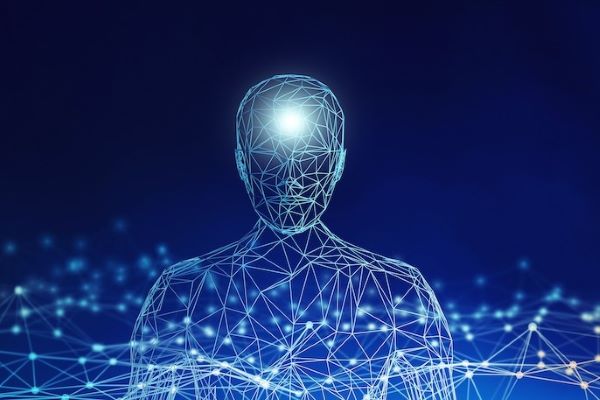
ETHOS operates on Sheaf Mind, an AI architecture developed by Sheaf Labs. The company describes a system in which specialised components contribute to reasoning, memory and ethical assessment, with checks designed to identify potentially harmful responses before they are delivered.
Unlike a conventional chatbot that may rely primarily on external safety instructions, ETHOS is presented as a system in which ethical principles influence multiple stages of the response process. Sheaf Labs has also invited the public to challenge these safeguards by submitting difficult or potentially harmful requests.
However, an AI system following ethical rules is not necessarily equivalent to a conscious being possessing moral understanding. ETHOS raises a distinction between simulating ethical reasoning and genuinely experiencing moral responsibility, a question that remains unresolved in philosophy and cognitive science.
The effectiveness of its safeguards also requires independent evaluation. Training an AI component on philosophical texts does not, by itself, establish that every response will follow those principles.
Ancient Wisdom and the Future of Machine Ethics
ETHOS represents an example of how philosophical traditions can contribute to discussions about AI development beyond technical performance and computational efficiency. Jainism's emphasis on restraint and non-violence offers a perspective that contrasts with approaches to technology centred primarily on increasing capabilities.
Its development also raises broader questions about the cultural foundations of AI ethics. If intelligent machines increasingly influence education, healthcare, communication and human relationships, whose ethical traditions should guide their behaviour, and how should competing values be reconciled?
ETHOS does not resolve these questions, but it offers a practical experiment in applying ancient moral teachings to modern technology. As artificial intelligence grows more capable, the challenge may not simply be to build machines that can answer more questions, but to understand which questions they should refuse to answer, and why.
Sources
Share

Sara Srifi
Sara is a Software Engineering and Business student with a passion for astronomy, cultural studies, and human-centered storytelling. She explores the quiet intersections between science, identity, and imagination, reflecting on how space, art, and society shape the way we understand ourselves and the world around us. Her writing draws on curiosity and lived experience to bridge disciplines and spark dialogue across cultures.