Henry Moore and More: Where Sculpture Meets the Wild
13 May 2026

There's a particular kind of art experience that doesn't happen in white-walled rooms, the kind where the work changes depending on what time you arrive, what the weather's doing, and whether the trees have started turning. That's precisely what's coming to Kew Wakehurst this summer. Henry Moore and More, opening 5 June 2026, is a year-long outdoor sculpture exhibition set across one of the UK's most biologically rich landscapes, and it makes a compelling case for art that lives and breathes alongside nature rather than behind glass.
The exhibition pairs four works by the late British sculptor Henry Moore with three commissions and premieres from contemporary international artists — each responding specifically to Wakehurst's terrain, its trees, its ecology, and its character. It runs all the way through to 23 May 2027, which means you can visit in deep winter and get an entirely different show.
The Moore Connection
Henry Moore's relationship with the natural world wasn't decorative, it was foundational. Bone, pebble, landscape, and the human body fed into a sculptural language that still feels surprisingly alive. Placing four of his works across Wakehurst's American Prairie, Winter Garden, and Mansion Lawns isn't just a heritage exercise; it's a reminder that these pieces were always meant to be encountered outside, in open air, with weather and changing light doing half the interpretive work.
The exhibition is a collaboration with the Henry Moore Foundation and its Leeds-based Henry Moore Institute , an organisation that's spent decades thinking seriously about what sculpture means, historically and now.
Together, these works show how sculpture can transform our experience of a landscape, even as the landscape itself reshapes how sculpture is seen.
— Laurence Sillars, Head of the Henry Moore Institute
Three New Works Worth Knowing
The contemporary side of the show is where things get particularly interesting. Three artists were each given Wakehurst as their brief, its specific places, plants, light conditions, and ecological rhythms and responded in very different ways.
Rana Begum RA — No.1604 Mesh
Source: https://www.kew.org/wakehurst/whats-on/henry-moore-and-more
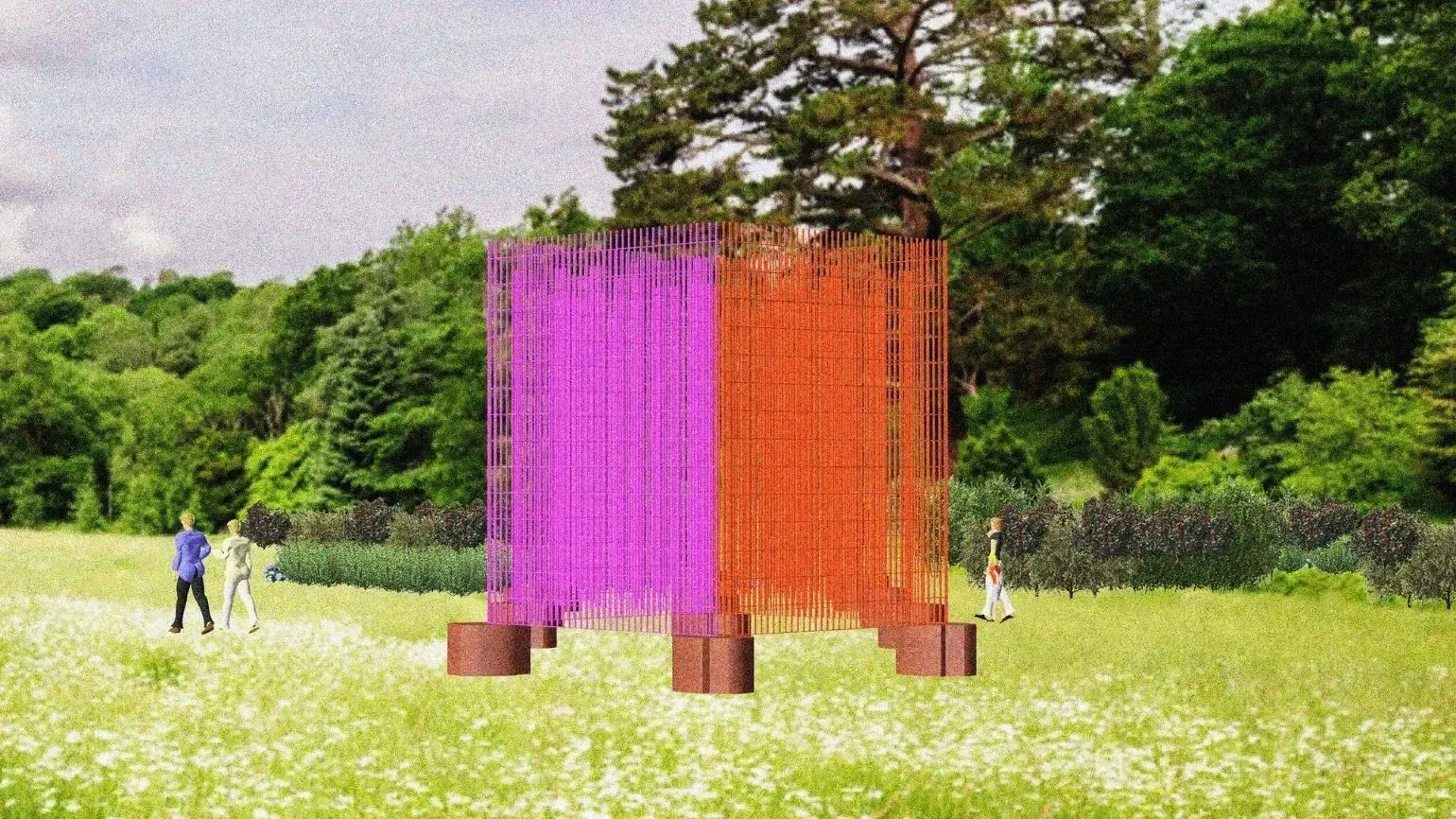
A 14-metre installation that weaves industrial fencing with timber from Wakehurst's own trees, running in a zigzag along the slope of The Paddock. Begum, a Royal Academician known for work that plays light against geometry, designed the piece to shift in colour and character throughout the day and across seasons, drawing colour cues from the dogwood growing nearby in the Winter Garden. It's a genuinely site-specific work: the surrounding plants, the angle of the sky, the weather patterns are all part of the sculpture itself.
Paloma Varga Weisz — Wilde Leute 3, 6, and 18
Source: https://www.kew.org/wakehurst/whats-on/henry-moore-and-more
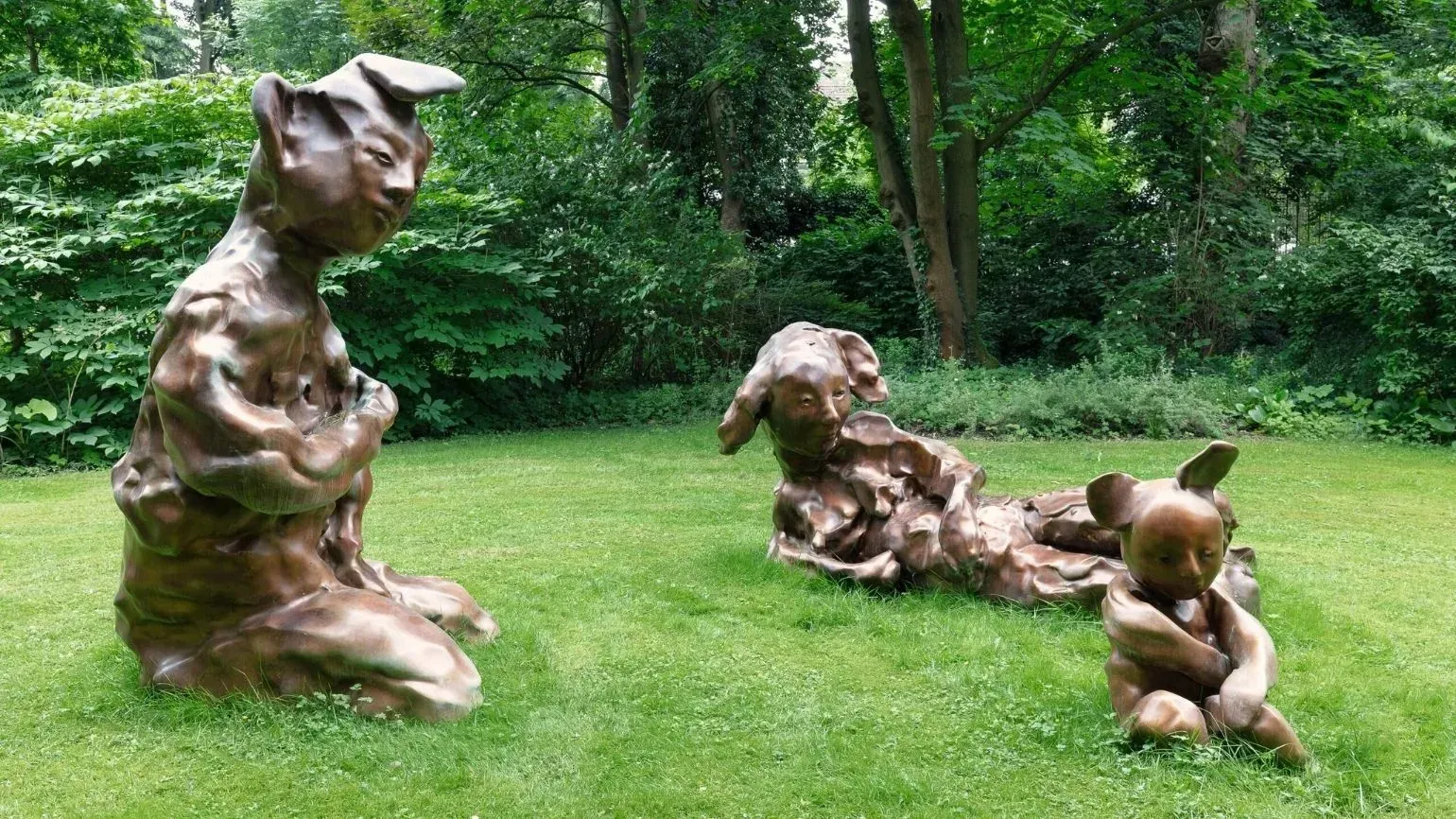
German sculptor Paloma Varga Weisz brings three bronze figures from her long-running Wilde Leute series to British soil for the first time. The series, which she began in ceramic back in 1998, draws on a medieval archetype representing humanity's untamed, pre-civilised state. Set on the Mansion Lawn, these elder and childlike figures carry a quiet strangeness: they're abstract enough to feel ancient, expressive enough to feel oddly familiar. Bronze against a living landscape creates an interesting tension, permanence meeting constant change.
Rafael Pérez Evans — Horizontals
Source: https://www.kew.org/wakehurst/whats-on/henry-moore-and-more
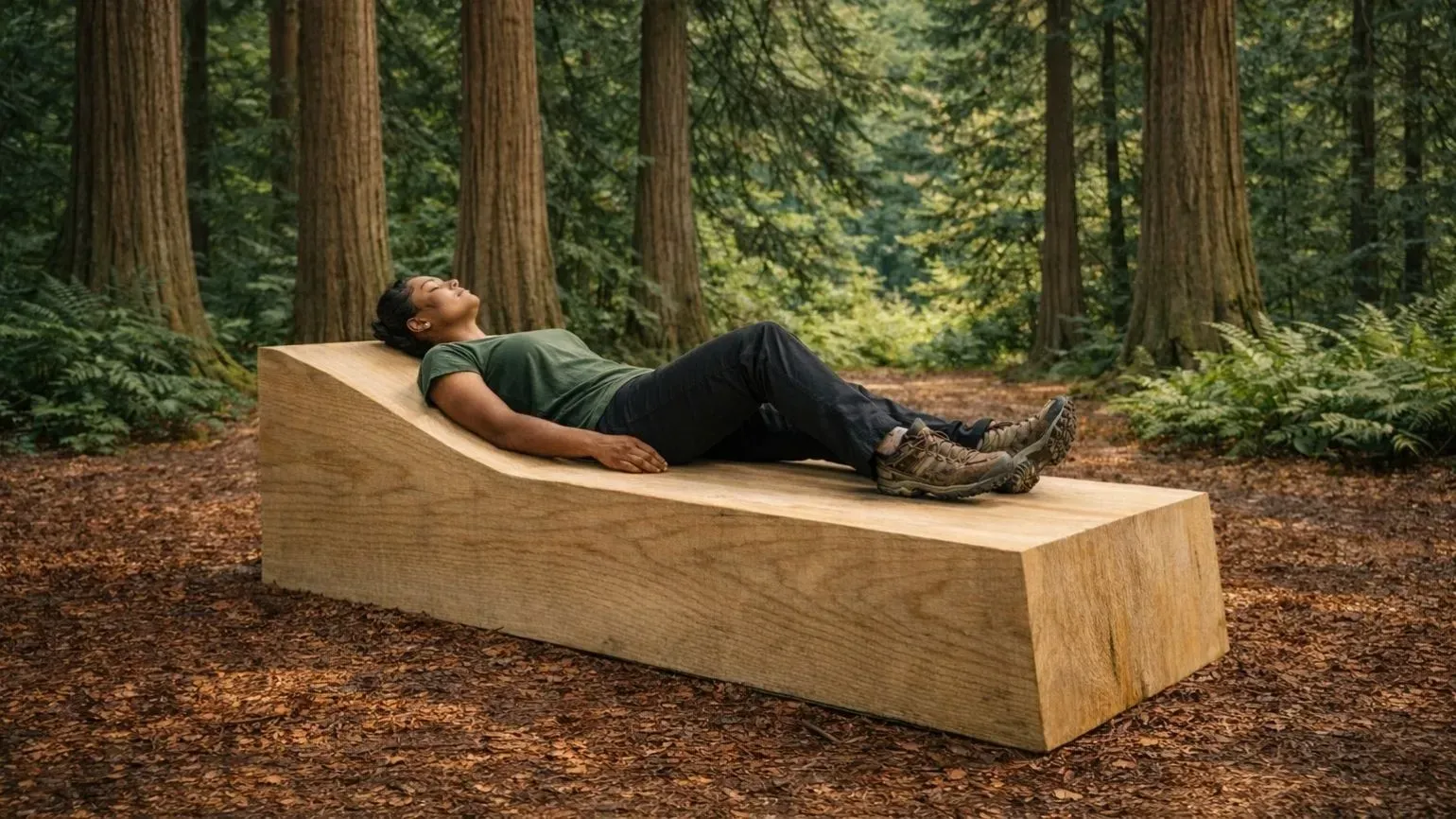
Six wooden resting sculptures placed within Wakehurst's collection of southern beech trees, each made from timber salvaged from trees that had already fallen on the estate. The invitation is simple and slightly radical: lie down. Evans, a sculptor and DPhil researcher at Oxford whose upbringing on a farm in southern Spain runs through his practice, is researching rest, exhaustion, and what happens when we actually stop moving. These aren't benches. They ask you to go horizontal, look up at the canopy, and stay a while.
Like a radio finding its signal, Wakehurst shifts you into a slower, more grounded frequency — a different rhythm for being alive.
— Rafael Pérez Evans
Why Wakehurst is the Right Place for This
Not every green space could host an exhibition like this. Wakehurst isn't just scenery, it's a working scientific site. At its heart is the Millennium Seed Bank, the largest collection of wild plant seeds anywhere on the planet. The broader estate, spanning 535 acres in the Sussex High Weald, functions as a living laboratory for biodiversity and climate research. When the artists talk about responding to the landscape, there's genuine substance behind it: this is a place where plants and e
cosystems are taken seriously.
That context gives the exhibition an added layer. These aren't sculptures dropped into a pretty backdrop. They're works that, at their best, are in actual conversation with a place that cares deeply about the relationship between humans and the living world.
While You're in London: A Companion Show
If the Sussex trip sparks an appetite for more Moore, Kew Gardens in London launched Henry Moore: Monumental Nature on 9 May 2026, reportedly the most comprehensive outdoor showing of his work yet, with 30 sculptures spread across the gardens and inside the Temperate House Victorian glasshouse. A gallery exhibition at the Shirley Sherwood Gallery of Botanical Art accompanies it with over 90 rarely seen works.
Given it runs nearly a full year, there's every reason to time a visit for autumn or winter and catch it in a completely different mood.
Share

Sara Srifi
Sara is a Software Engineering and Business student with a passion for astronomy, cultural studies, and human-centered storytelling. She explores the quiet intersections between science, identity, and imagination, reflecting on how space, art, and society shape the way we understand ourselves and the world around us. Her writing draws on curiosity and lived experience to bridge disciplines and spark dialogue across cultures.