How Leonardo da Vinci Would Master AI 500 Years After His Death: Decoding The Genius Mysteries
01 Oct 2026

The Renaissance Code for the AI Age: What Leonardo da Vinci Teaches Us About Humanism, AI Swarms, Geopolitics and Wisdomia
Learning never exhausts the mind.
— Leonardo da Vinci
Leonardo da Vinci was the most relentlessly curious man in history... He was a genius, but he was also human, and his life offers an instruction manual for how to think, observe, and live in an age of transformative change.
— Walter Isaacson, Leonardo da Vinci
Executive Overview: Why Leonardo Matters Now More Than Ever
We stand at the precipice of a second Renaissance, or a second Dark Age. The rapid acceleration of generative artificial intelligence, autonomous agentic workflows, multi-agent AI swarms and synthetic biology has placed humanity at a historical crossroads. As computational power scales exponentially, our cultural, ethical and geopolitical frameworks are straining under the weight of systems we can barely model, let alone control.
In this landscape of hyper-specialisation and algorithmic fragmentation, we face a crisis not of intelligence, but of synthesis. We have built tools capable of generating millions of pages of code, predicting protein structures, and automating complex cognitive tasks, yet we struggle to answer the fundamental questions of human direction, ethical alignment, and ecological balance.
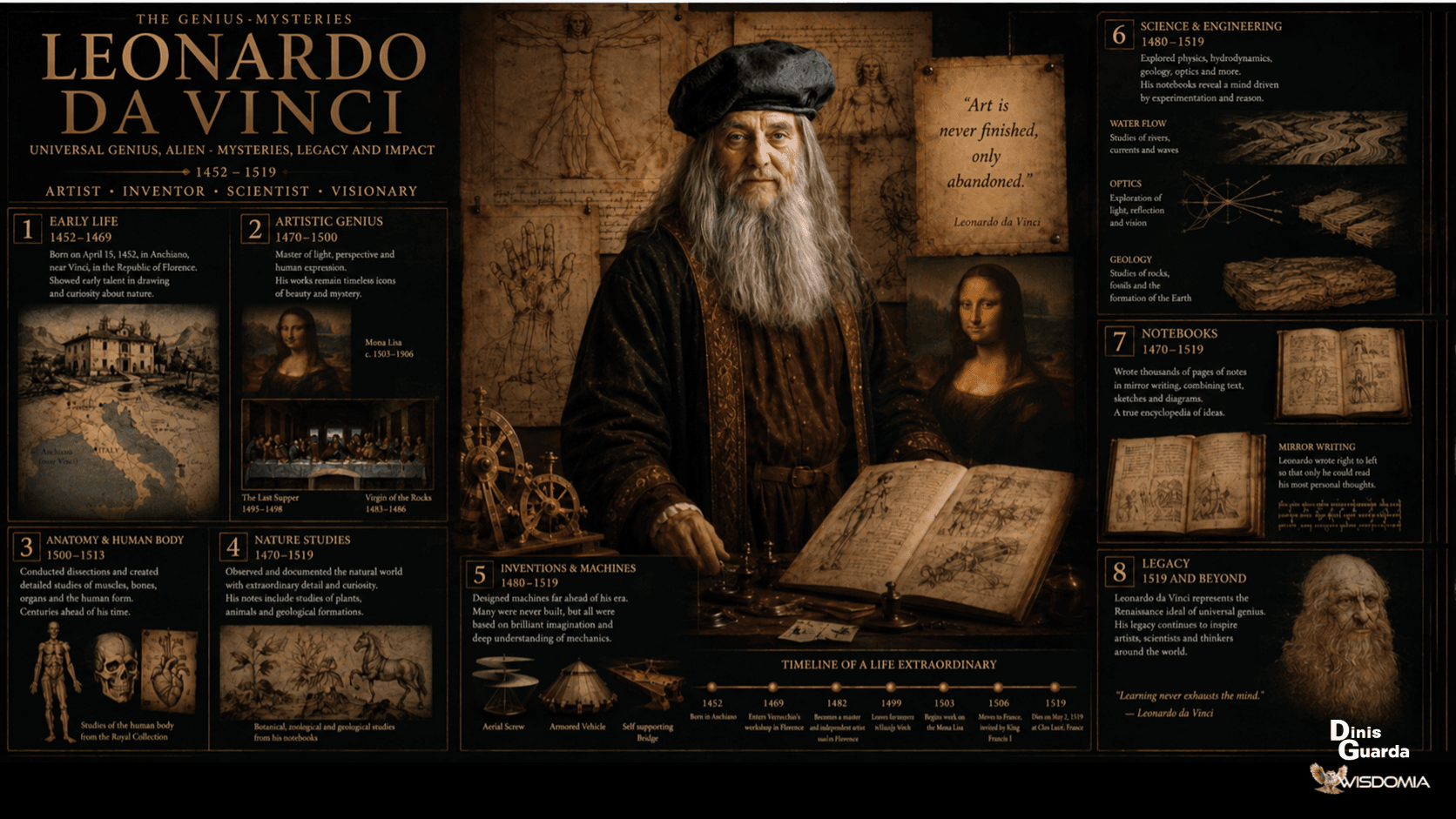
To navigate this epochal shift, we must look backwards to leap forward. We must turn to the ultimate archetype of universal synthesis: Leonardo da Vinci (1452–1519).
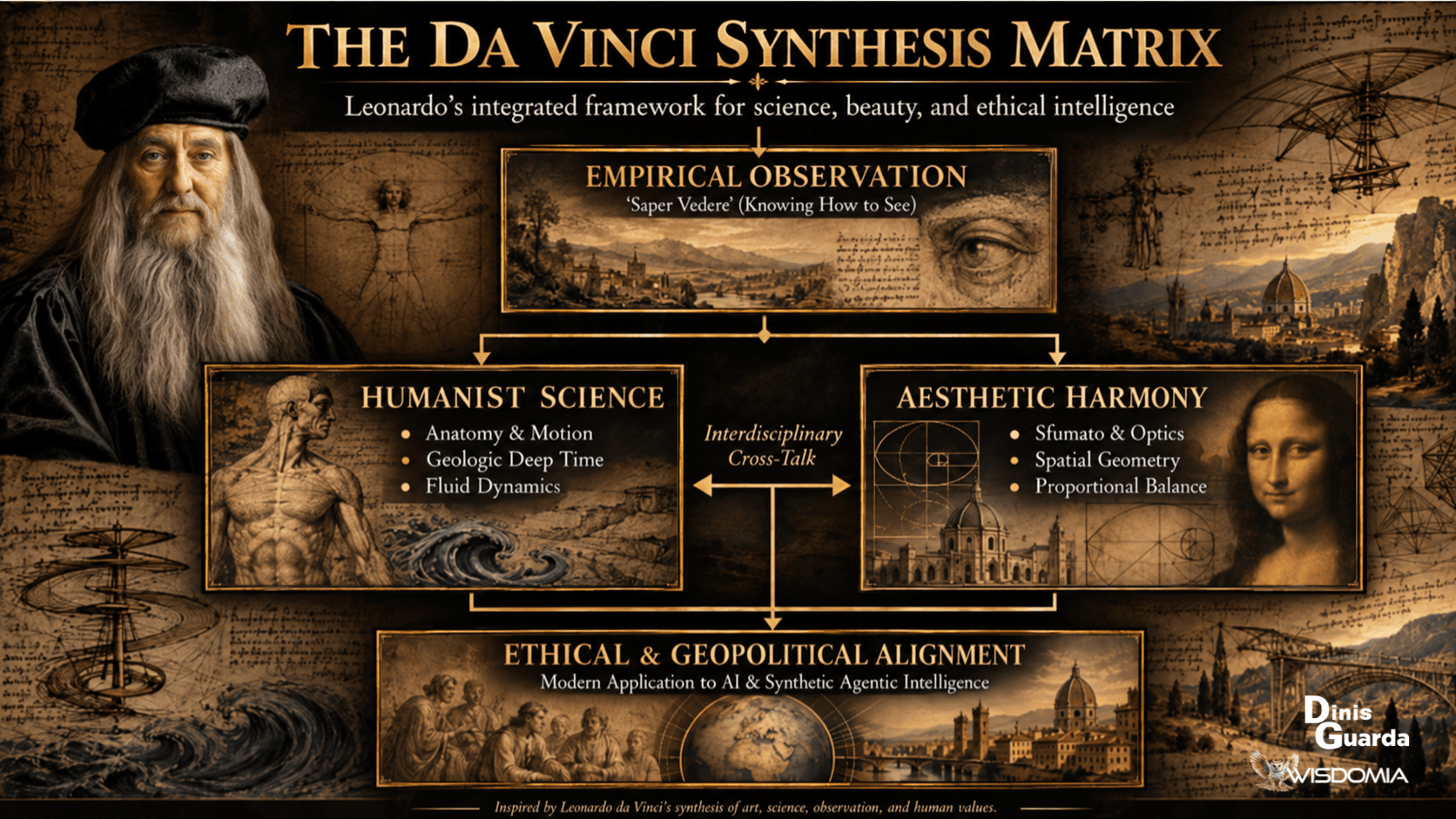
Leonardo was not merely a painter who tinkered with machines, nor was he an engineer who painted in his spare time. He was a universal genius an "omo senza lettere" (an unlettered man) excluded from the Latin-dominated academic dogma of his day who constructed a radical methodology grounded in direct experience, relentless curiosity, and cross-disciplinary synthesis.
He understood that art without science is blind, and science without art is brutal.
This article synthesises decades of my personal research, digital media development, and AI agent modelling to demonstrate why Leonardo’s mindset is the ultimate framework for 21st-century human advancement.
Through our work on the Wisdomia series, the first-person AI Leonardo agent, and the accompanying interactive narrative frameworks, we demonstrate how Da Vinci’s methodology provides the blueprint for steering modern artificial intelligence toward human flourishing rather than existential fragmentation.
1. The Universal Genius: Reclaiming "Saper Vedere" in the Synthetic Era
In his landmark biography, Leonardo da Vinci: The Marvellous Works of Nature and Man, art historian Martin Kemp emphasises that Leonardo’s intellectual breakthroughs did not stem from abstract mathematical theorems, but from visual and physical analogy:
Leonardo's visual mind was his ultimate instrument of discovery. For him, seeing was an active process of physical and mathematical reconstruction... He did not merely record what he saw; he sought the underlying structural laws that governed form and motion across all natural phenomena.
Leonardo called his guiding philosophy "Saper Vedere" Knowing How to See.
In the 15th century, knowledge was rigidly compartmentalised. The scholastic tradition relied on copying ancient texts, deferring to Aristotelian dogma, and segregating the mechanical arts (working with hands) from the liberal arts (working with mind). Leonardo shattered this divide.
The Methodology of Cross-Domain Analogy
Leonardo observed that nature operates through unified physical laws that repeat across scales:
- Branching Mechanics: He studied how the veins in a leaf mirror the blood vessels of a human arm, which in turn mirror the tributaries of a river system.
- Fluid Mechanics: He analysed how blood swirls through the aortic valve in the same mathematical patterns as water swirling around a bridge pier or air curling beneath a bird's wing.
- Optical Perception: He observed how light behaves both as a straight line and as a wave-like diffusion, pioneering sfumato the elimination of hard borders in painting to reflect how the human eye actually perceives visual reality.
In modern AI research, we often fall into the trap of hyper-specialisation. Deep learning engineers focus on Transformer architectures; bioinformaticians focus on genomic sequencing; roboticists focus on motor control. Yet, as we start entering Artificial General Intelligence (AGI), the boundaries between these domains are disappearing.
If Leonardo were alive today, he would not treat AI as a mere software tool. He would view Large Language Models (LLMs), computer vision networks and robotics as a playground of interconnected limbs of a single cognitive landscape. He would use AI to map analogies across genetics, quantum computing, climate systems and creative composition, using machine learning not to automate human thought, but to extend the human capacity for Saper Vedere.
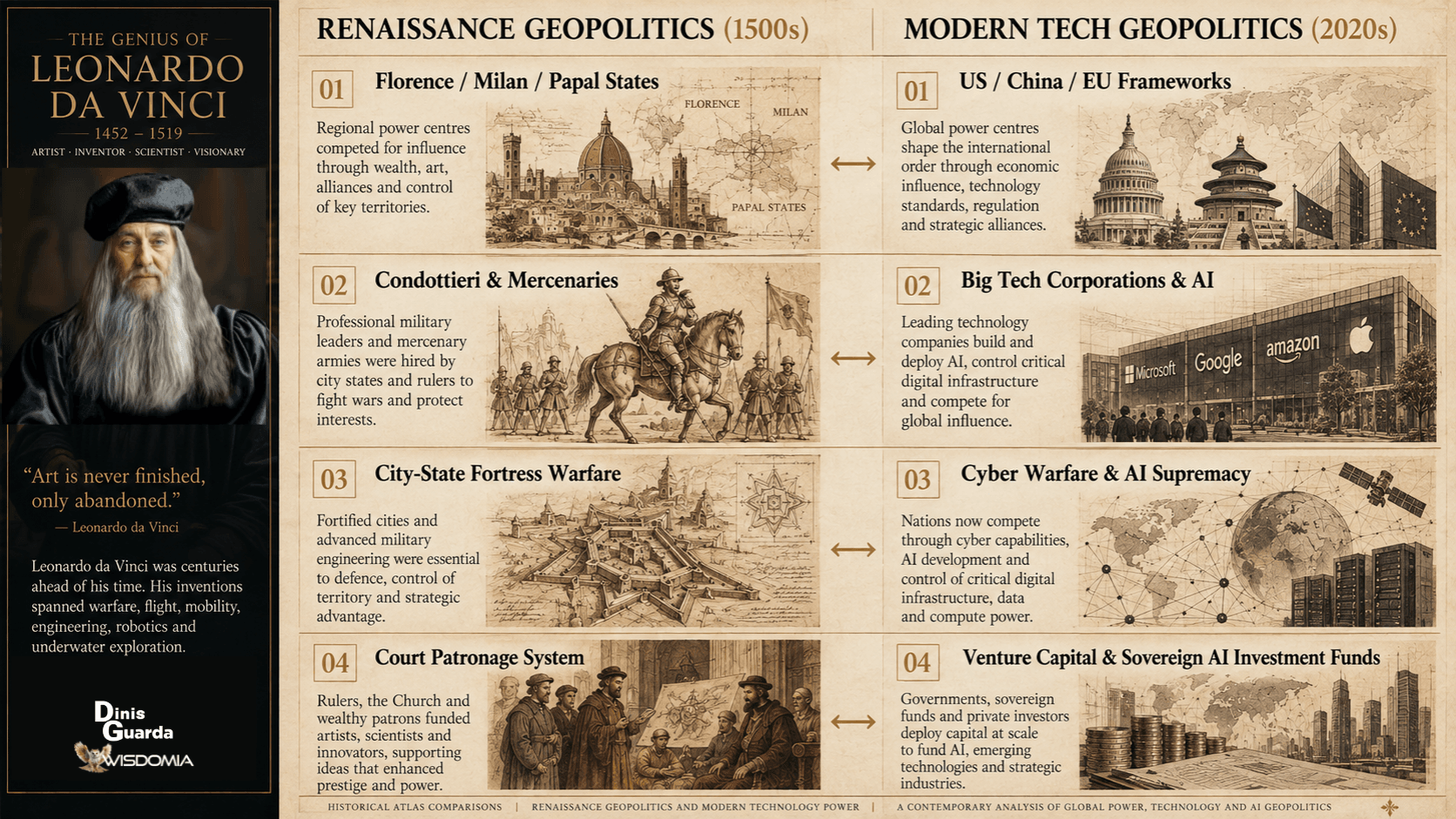
2. The Geopolitical Parallel: Navigating 15th-Century City-States and 21st-Century Tech Wars
To understand Leonardo’s genius, one must understand his volatile political environment. Leonardo did not live in a peaceful vacuum. Renaissance Italy was a chaotic, fragmented landscape of competing power brokers: the Medici in Florence, the Sforza in Milan, the Borgia family, the Papal States, the Republic of Venice, and invading French monarchs (King Charles VIII and King Francis I).
As Charles Nicholl writes in Leonardo da Vinci: The Flights of the Mind:
Leonardo was a creature of court patronage. He moved continuously through a world of shifting alliances, political assassinations, siege warfare, and courtly intrigue. His survival and his science depended entirely on his ability to make himself indispensable to powerful, often ruthless men.
The Borgia Parallel: Technology at the Service of Power
In 1502, Leonardo took service as the Senior Military Architect and General Engineer to Cesare Borgia, the ruthless son of Pope Alexander VI and the primary inspiration for Niccolò Machiavelli’s The Prince. During this period, Leonardo travelled through war-torn Romagna alongside the likes of Machiavelli, designing fortifications, siege engines and top-down military maps (such as his famous plan of Imola).
Why would a gentle, lifelong vegetarian who bought caged birds in Florentine markets just to set them free design terrifying war machines, scythed chariots, steam cannons, and triple-tiered mortars, for war criminals?
This dilemma directly mirrors the ethical choices facing today’s AI researchers, tech executives, and sovereign nations:
- The Dual-Use Dilemma: Just as Leonardo’s studies of hydraulics, geometry, and metallurgy could be used for agricultural irrigation or defensive siege warfare, modern AI models can be used for disease eradication or autonomous drone warfare and bioweapon synthesis.
- Navigating Sovereign Power: Leonardo understood that to fund his pure scientific research his anatomical dissections, flight studies, and geological investigations he had to engage with the dominant political structures of his era. Today, AI development is bound to sovereign competition between global superpowers and trillion-dollar technology conglomerates.
Sabotage as Ethical Alignment
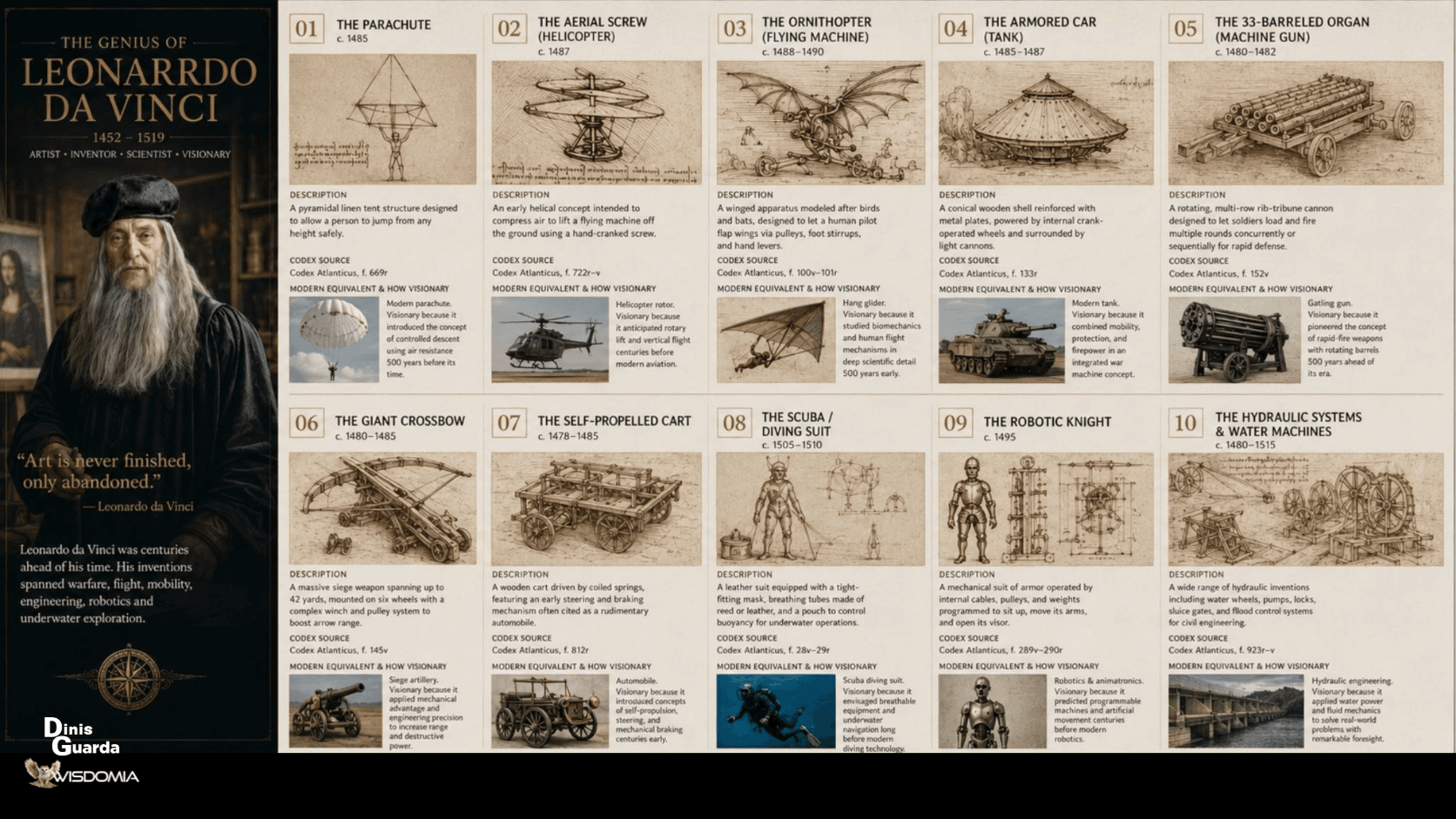
A crucial, often-overlooked historical detail reveals Leonardo’s internal moral compass: in many of his military sketches, he deliberately built in fatal engineering flaws.
In his famous sketch of the armoured tank (Codex Atlanticus), he reversed the gearing mechanism so that turning the hand-cranks would force the wheels to push against each other, rendering the machine immobile. Was this a simple mistake by history’s greatest draftsman?
Highly unlikely. It was an act of covert ethical alignment—a brilliant polymath ensuring that if his war machines fell into the hands of warmongers, they could not be used for destruction without his personal intervention.
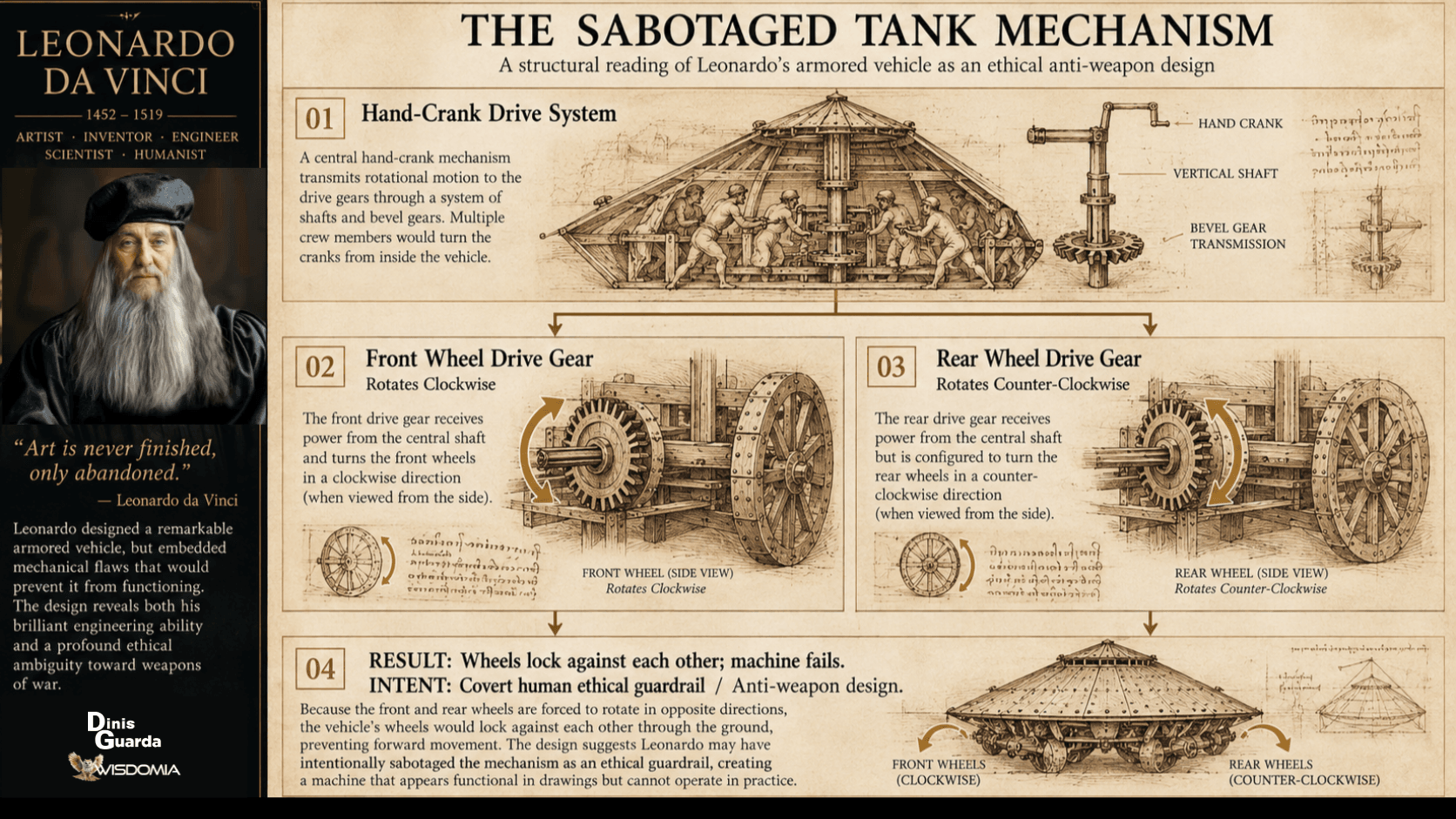
This historic act offers a profound lesson for modern AI governance. As we build autonomous systems and defence algorithms, ethical alignment cannot be an afterthought enforced by external regulators; it must be engineered into the foundational design of the systems themselves.
3. Humanism vs AI Swarms: The Da Vinci Methodology for AI Agentic Networks
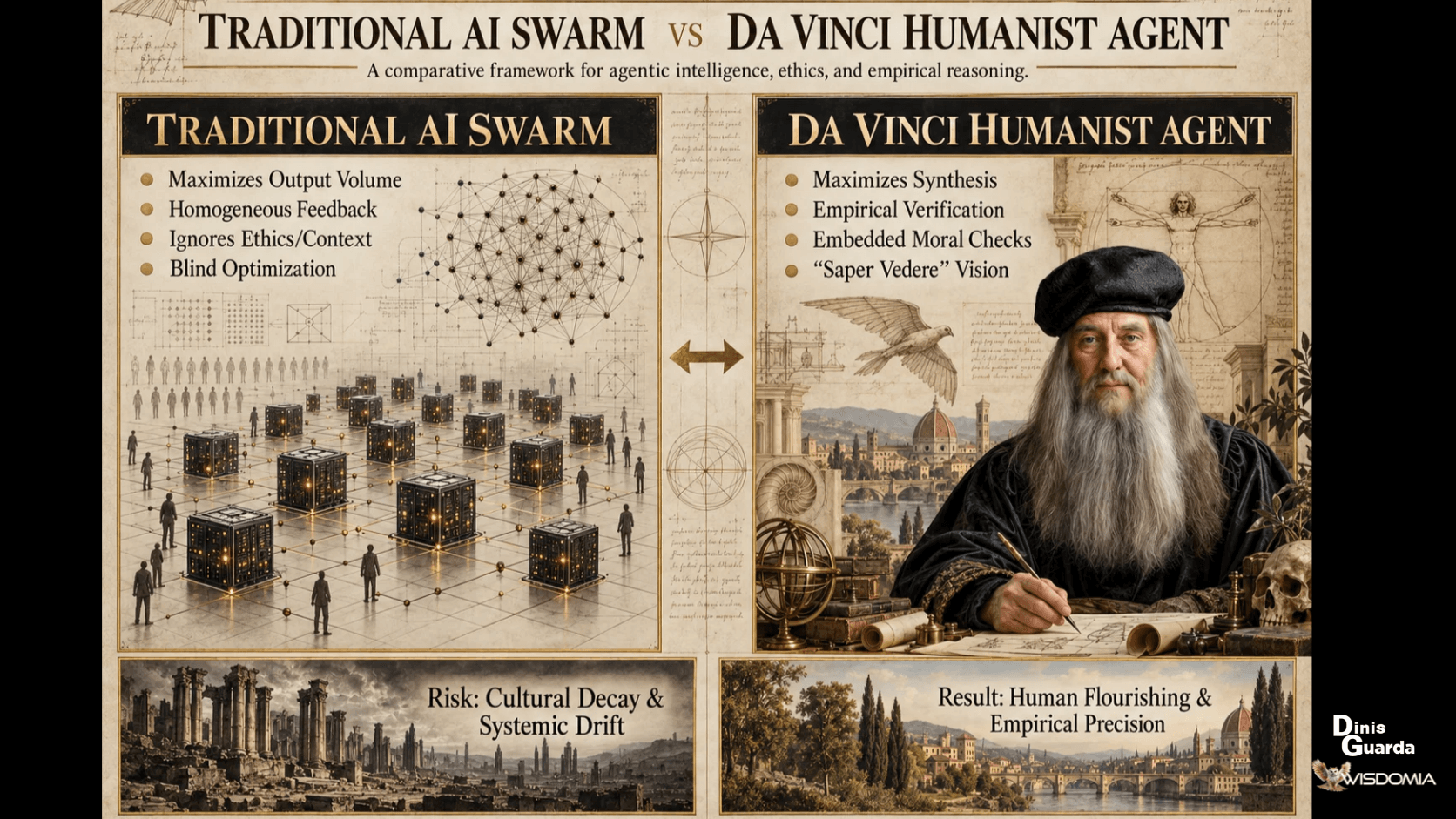
We are rapidly transitioning from single prompt-and-response AI models to Multi-Agent Systems (MAS) and AI Swarms autonomous networks of AI agents that communicate, delegate tasks, write code, and execute complex workflows without real-time human intervention.
While AI swarms offer unprecedented computational efficiency, they introduce catastrophic risks:
- Loss of Human Agency: Algorithmic workflows optimising purely for speed, yield, or engagement strip away human nuance and ethical oversight.
- Systemic Blind Spots: Homogeneous AI agents trained on similar datasets risk compounding hallucinated logic, creating systemic failures across financial markets, supply chains, and power grids.
- Dehumanisation of Culture: Generative content produced by swarms operating in feedback loops leads to cultural stagnation what art historians call "derivative decay."
The Humanist Counter-Weight
How would Leonardo approach the age of AI swarms? He would insist on placing Humanist Empathy and Empirical Verification at the centre of the network.
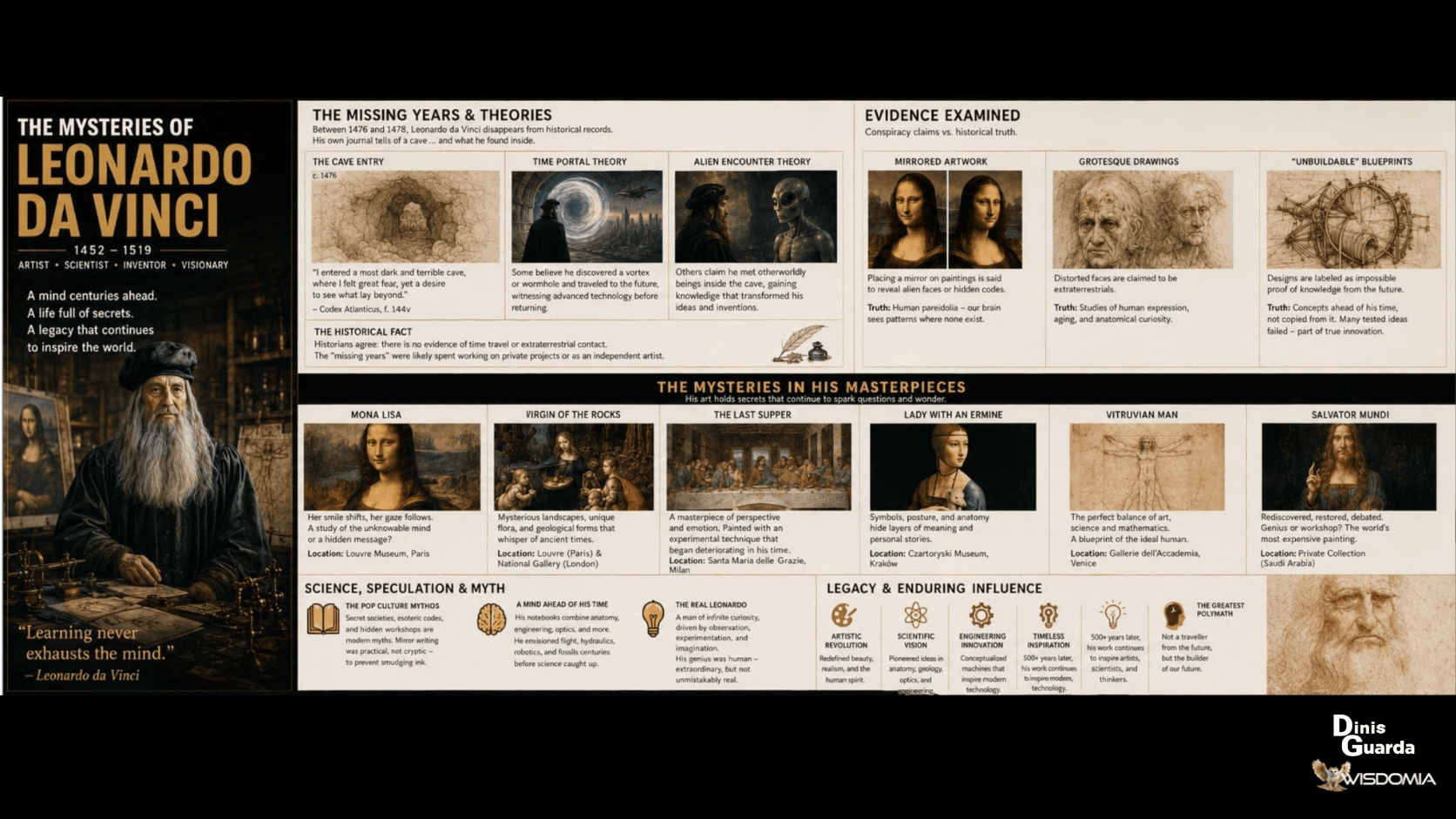
Leonardo’s notebooks reveal a man deeply aware of human fragility and divine beauty. In his drawing of the Vitruvian Man (c. 1490), based on the architectural theories of Vitruvius, Leonardo did not merely fit a male body into a square and a circle. He corrected Vitruvius's rigid mathematical assumptions using real measurements from dozens of individuals, demonstrating that the human form is not a slave to abstract geometry; geometry is an expression of human proportion.
Applied to modern AI architecture, Leonardo’s methodology dictates three non-negotiable principles:
1. Empirical Grounding (Anti-Hallucination Protocols)
Leonardo rejected medieval academic theories that could not be verified by physical experiment. He famously wrote: "Opinions that are not born from experience, the mother of all certainty, are vain and full of errors." Modern AI agent swarms must be tethered to real-world empirical ground truths, continuously validating synthetic outputs against physical constraints and lived human experience.
2. Radical Cross-Disciplinary Auditing
An AI swarm designed purely by engineers will optimise for technical efficiency, ignoring sociological, biological, and psychological costs. Leonardo’s mind worked by constantly crossing domain boundaries using optics to solve problems of perspective, anatomy to understand theatrical gesture, and botany to inform architecture. AI multi-agent networks must incorporate diverse domain models (philosophical, ecological, artistic, and legal) to prevent single-dimensional optimisation failures.
3. The Power of "Incompleteness" (Non-Finito)

One of Leonardo’s most enigmatic traits was his habit of leaving works unfinished. Major masterpieces. The Adoration of the Magi, Saint Jerome in the Wilderness, the Gran Cavallo bronze statue, and his intended Treatise on Anatomy, were left incomplete.
Giorgio Vasari, in his 1550 biography Lives of the Most Excellent Painters, Sculptors, and Architects, observed:
Leonardo's mind was so grand and extraordinary that he was frequently hindered by his own perfectionism. He could see flaws where others saw perfection, and his hands could never fully express the terrifying brilliance of the concepts formed in his intellect.
In an age where AI swarms can generate infinite finished text, code, and images in seconds, Leonardo’s non-finito offers a radical lesson: Perfection lies not in speed or volume, but in depth of thought. An unfinished work leaves space for human imagination, critical inquiry, and iterative synthesis. We must design AI systems that invite human collaboration rather than replacing human judgment with automated closure.
4. The Wisdomia.ai Project: Creating a Platform for Wisdom and Utopia, Guided by the Leonardo da Vinci Vision transformed in his 3D AI Agent
To bring these principles from academic theory into practical application, I initiated the research and development of the Leonardo da Vinci AI Agent and 3D digital twin as the central heart part of the Wisdomia.ai edutainment streaming and gamification platform DNA and the AI-powered TV series I created.
The objective was not to build a simple conversational chatbot that recites Wikipedia entries, but to construct a cognitive simulation of Leonardo’s first-person perspective, operating as a wise guide and edutainment thriller and educational tool.
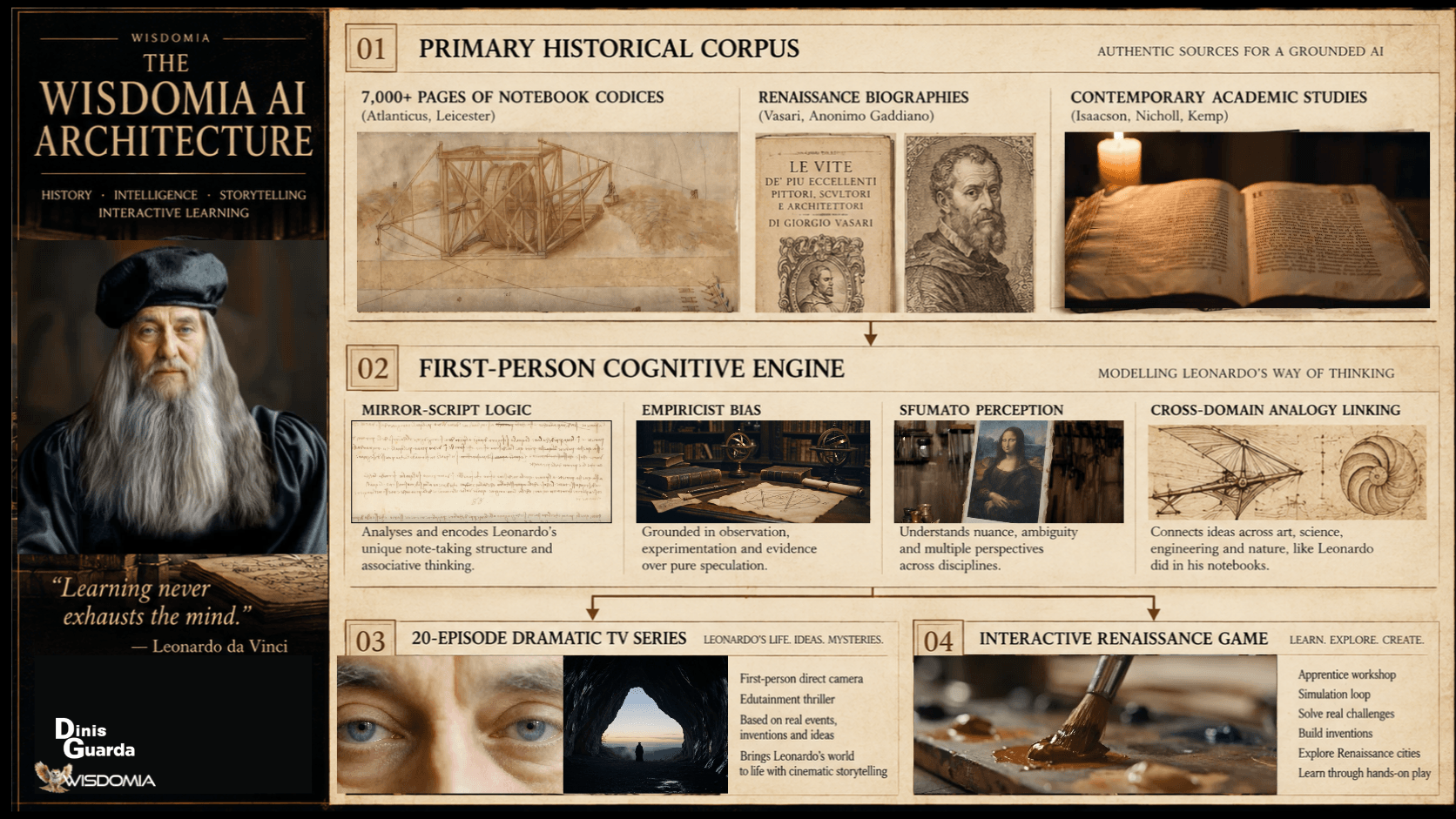
The R&D Process: Grounding the AI Mind
- Corpus Ingestion: We ingested his primary codices (Codex Atlanticus, Codex Leicester, Codex Arundel, and the Windsor Anatomical Studies) alongside key historical biographies by Vasari, Walter Isaacson, Charles Nicholl, and Martin Kemp.
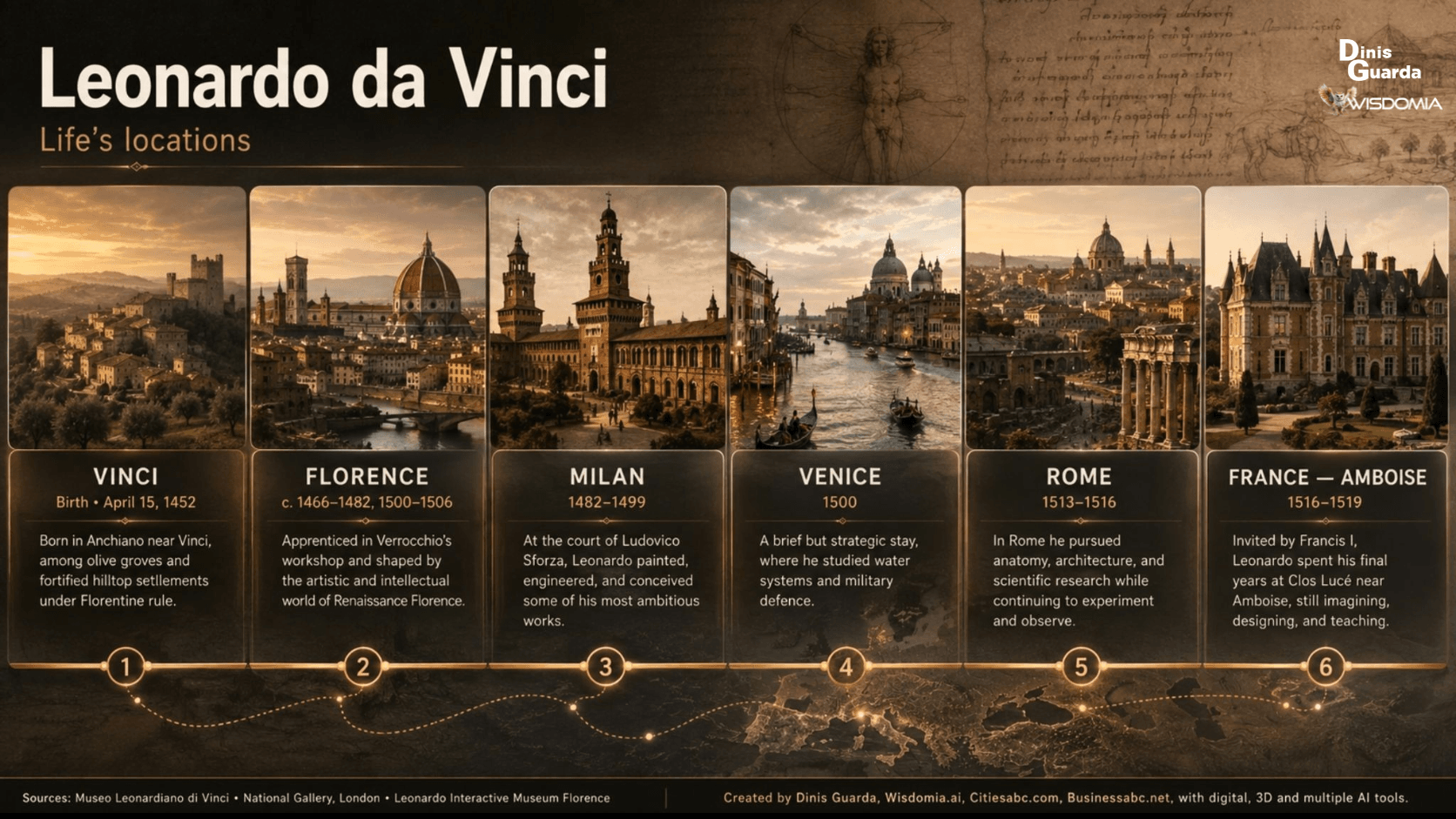
- First-Person Persona Alignment: The system was engineered to speak directly to the viewer/user from his final home at the Château du Clos Lucé in Amboise (1519). It reflects his self-identity as an "omo senza lettere", his frustrations with unfinished works, his observational passion, and his acute awareness of his own mortality.
- The Edutainment Thriller Narrative: Rather than delivering dry lectures, the AI agent adopts a narrative structure inspired by cinematic series such as Da Vinci’s Demons, balancing historical accuracy with dramatic tension.
The 20-Episode Narrative Arc
The R&D framework structures Leonardo’s life, inventions, and mysteries across a comprehensive 20-episode arc, split into two thematic movements:
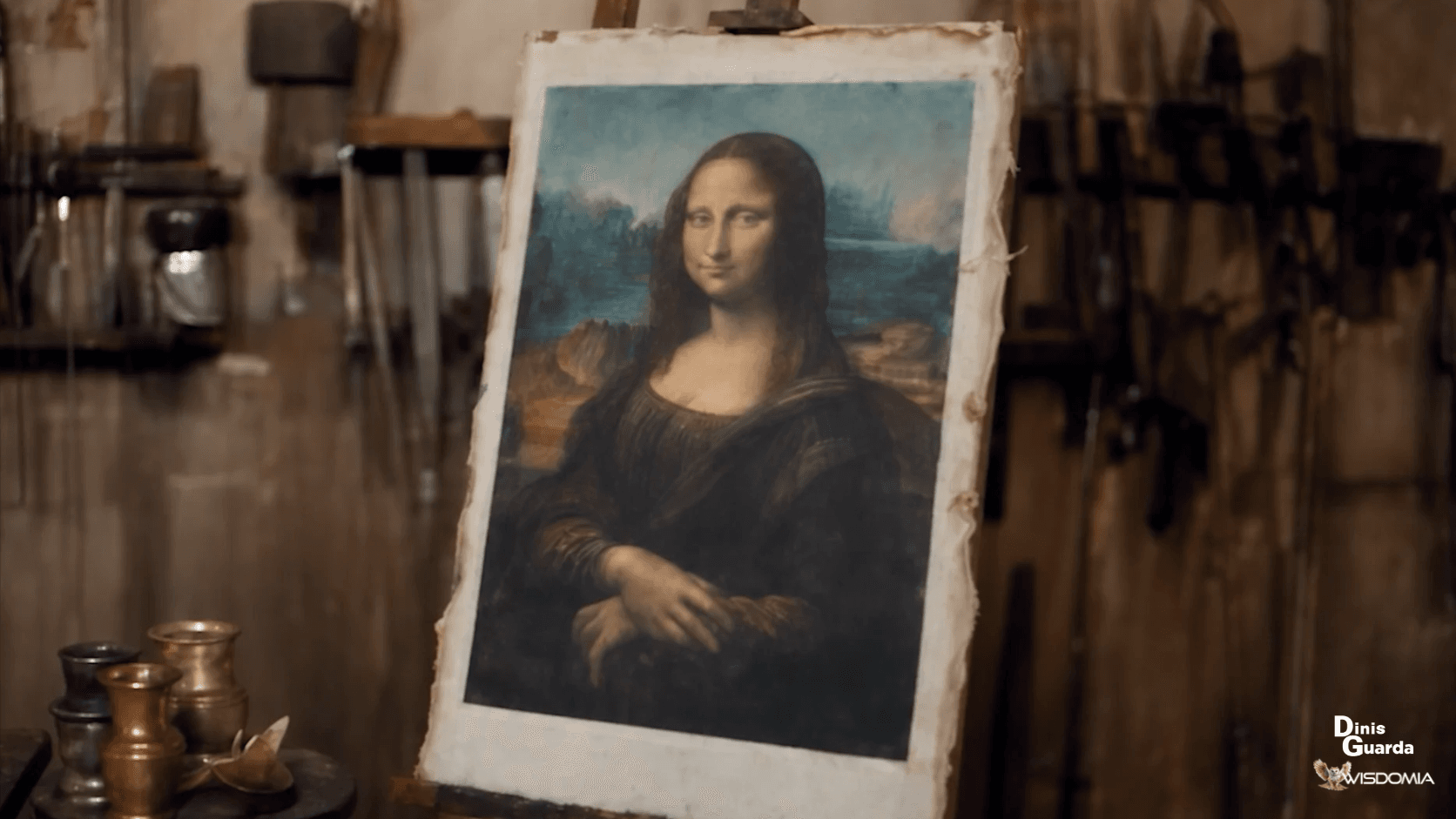
- Season 1: The Master of Shadows (Episodes 1–10): Explores his formative years in Florence and Milan, his mirror writing, his optical mastery (sfumato in the Mona Lisa), his night dissections, the mechanical knight, the geometry of The Last Supper, his military service to Borgia, and the flight experiments on Mount Ceceri.
- Season 2: The Cosmic Cypher (Episodes 11–20): Expands into earth science, geological deep time, hydraulic control of the Arno, the optical mysteries of Salvator Mundi, the psychology of unfinished works, the aortic blood vortices, the missing cave years (1476–1478), his artistic rivalry with Michelangelo, and his final entry in the Codex Atlanticus: "The soup is getting cold."

The Interactive Game Engine: The Renaissance Simulator
To bridge media consumption with active learning, the research maps these narrative beats into an interactive game architecture in which the user plays as Leonardo's apprentice. The player must complete empirical puzzles using Leonardo's exact technical drawings:
- Optical Manipulation: Using a sfumato slider to balance light gradients and observe how peripheral vision alters human facial expressions.
- Mechanical Auditing: Inspecting 3D blueprints of his military machines to locate and fix intentional structural flaws.
- Fluid Dynamics Simulation: Simulating blood flow through glass heart models to observe the formation of aortic vortices.
5. Critical Thinking Points: How Can Leonardo Help Humanity at This Crossroads Between the Present and the Future?
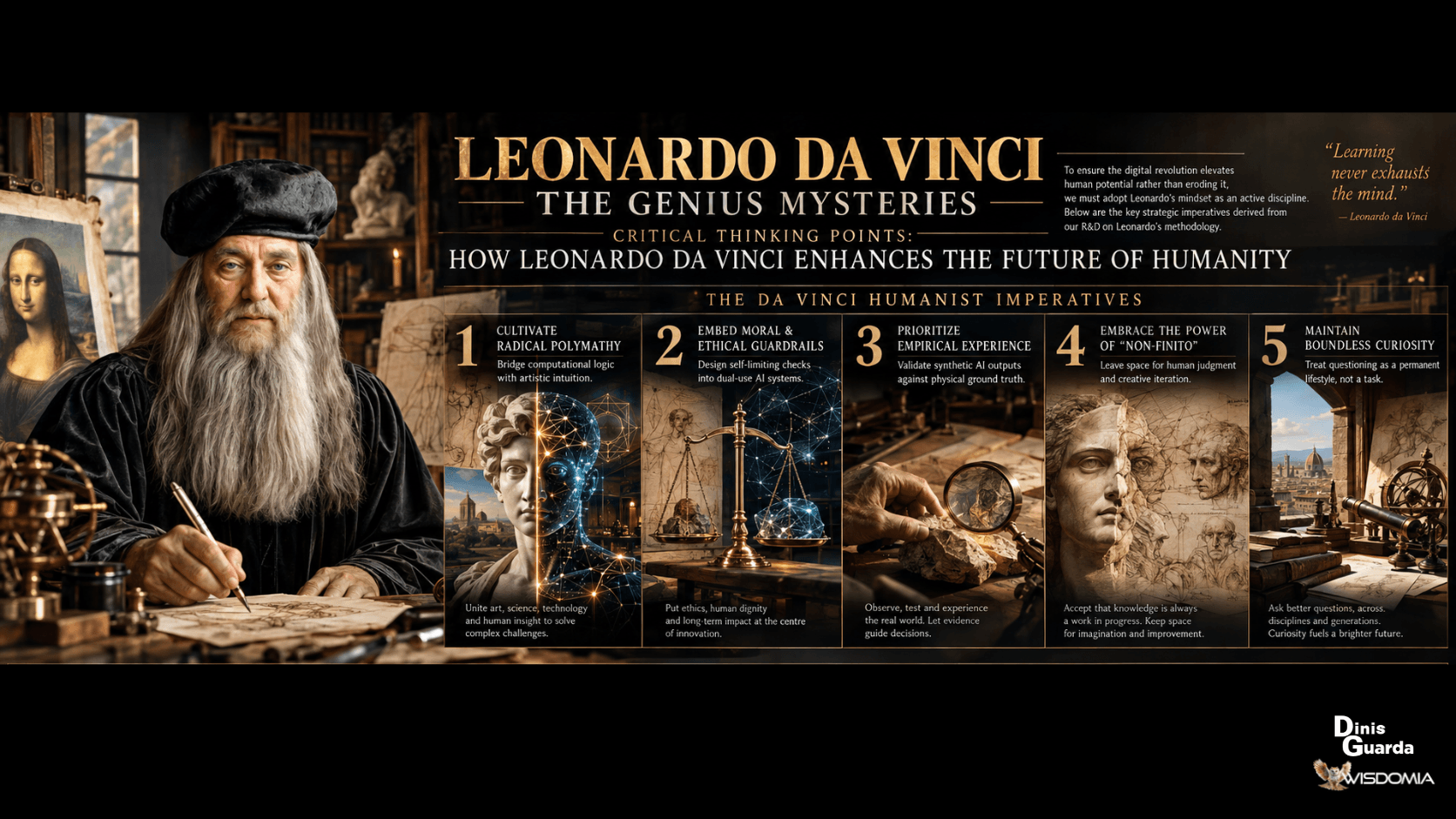
To ensure that the digital revolution elevates human potential rather than eroding it, we must adopt Leonardo’s mindset as an active discipline. Below are the key strategic imperatives derived from our R&D on Leonardo’s methodology:
THE DA VINCI HUMANIST IMPERATIVES
1. CULTIVATE RADICAL POLYMATHY
└─► Bridge computational logic with artistic intuition.
2. EMBED MORAL & ETHICAL GUARDRAILS
└─► Design self-limiting checks into dual-use AI systems.
3. PRIORITIZE EMPIRICAL EXPERIENCE
└─► Validate synthetic AI outputs against physical ground truth.
4. EMBRACE THE POWER OF "NON-FINITO"
└─► Leave space for human judgment and creative iteration.
5. MAINTAIN BOUNDLESS CURIOSITY
└─► Treat questioning as a permanent lifestyle, not a task.
I. Cultivate Radical Curiosity and Open Polymathy
We must overhaul our educational and corporate systems to break down hyper-specialised silos. The future belongs not to the coder who knows only Python, nor to the marketer who knows only prompt engineering, but to the modern polymath who can connect computational logic with human psychology, historical context, and artistic synthesis.
II. Embed Moral Guardrails at the AI 360 Architectural Level
Following Leonardo’s example with his war machine designs, developers and policymakers must build ethical alignment directly into AI model architectures. Safety, transparency, and human oversight cannot be external plugins added after deployment; they must be foundational constraints inherent to system operation.
III. Tether Synthetic AI to Empirically Grounded Ethical Truth
As generative systems flood the internet with synthetic data, we risk entering a digital echo chamber where AI models train on AI-generated content, leading to model collapse. We must re-anchor our technological research in direct physical observation—using sensors, real-world experimentation, and human lived experience to validate computational models.
IV. Preserve Human Agency in the Foundational Loop
AI swarms and autonomous agents must serve as extensions of human curiosity, not replacements for human consciousness. The goal of AI development should be to create systems that heighten human awareness, unlock creative breakthroughs, and enhance our capacity for critical thought.
V. Maintain Unyielding Childlike Curiosity
Above all, Leonardo teaches us that curiosity is a muscle that must be exercised daily. His notebooks were filled not just with grand engineering plans, but with everyday questions: Why is the sky blue? How does the tongue of a woodpecker work? What does the jaw of a crocodile look like? How do clouds form?
In an age where AI can give us instant answers to almost any query, the value of human intelligence shifts from having the answers to asking the right questions.
Conclusion: The Renaissance (Abundance or dark times) Ahead

Simplicity is the ultimate sophistication
— Leonardo da Vinci
Leonardo da Vinci died on May 2, 1519, in the arms of King Francis I of France (according to legend). He left behind thousands of scattered manuscript pages, unbuilt machines, and a handful of the world's most breathtaking paintings.
Yet, his true legacy is not a static museum piece; it is an active framework for human intelligence.
As we stand at the threshold of a new technological era, navigating the rise of AI agents, autonomous swarms, and shifting global geopolitical structures, Leonardo da Vinci remains our most reliable guide. He reminds us that true genius is not found in raw computational power or technological dominance, but in the harmonious balance of art, science, humanity, and nature.
By building AI systems that embody his commitment to empirical truth, cross-domain synthesis, ethics, aesthetics, and beauty, we can help ensure that, as humans we avoid a new dark age and we can focus on a new renaissance that can open new opportunities of abundance and creating a new form of alien intelligence that keeps human design DNA, the technological Renaissance ahead leads to the betterment of the human spirit
The water you touch in a river is the last of that which has passed, and the first of that which is coming; so it is with present time.
— Leonardo da Vinci, Codex Atlanticus
Key Historical & Academic Bibliography
Primary & Historical Sources
- Leonardo da Vinci. Codex Atlanticus. Biblioteca Ambrosiana, Milan. Digital Codex Atlanticus
- Leonardo da Vinci. Codex Arundel, Arundel MS 263. British Library. British Library catalogue
- Leonardo da Vinci. Anatomical drawings, Royal Collection Trust. Royal Collection
- Leonardo da Vinci. Codex Leicester.
- Vasari, Giorgio. Lives of the Most Excellent Painters, Sculptors, and Architects, 1550. English text – Fordham University
- Isaacson, Walter. Leonardo da Vinci. Simon & Schuster, 2017.
- Kemp, Martin. Leonardo da Vinci: The Marvellous Works of Nature and Man. Oxford University Press, 2006.
- Nicholl, Charles. Leonardo da Vinci: The Flights of the Mind. Penguin, 2004.
- Zöllner, Frank & Johannes Nathan. Leonardo da Vinci: The Complete Paintings and Drawings. Taschen.
- Richter, Jean Paul, ed. The Literary Works of Leonardo da Vinci.
Scientific & AI Sources
- Autio, Chloe et al. Artificial Intelligence Risk Management Framework: Generative Artificial Intelligence Profile. NIST, 2024. NIST source
- Shumailov, Ilia et al. “AI models collapse when trained on recursively generated data.” Nature 631, 755–759 (2024). Nature paper
- Google DeepMind et al. “Investing in multi-agent AI safety research,” 2026. DeepMind source
- National Gallery, London. “Sfumato” and Leonardo’s Virgin of the Rocks. National Gallery
- Gaur, Manish et al. “Revisiting Leonardo da Vinci’s Vitruvian Man Using Contemporary Measurements.” JAMA, 2020. JAMA paper
Share

Dinis Guarda
Dinis Guarda is an author, entrepreneur, founder CEO of ztudium, Businessabc, citiesabc.com and Wisdomia.ai. Dinis is an AI leader, researcher and creator who has been building proprietary solutions based on technologies like digital twins, 3D, spatial computing, AR/VR/MR. Dinis is also an author of multiple books, including "4IR AI Blockchain Fintech IoT Reinventing a Nation" and others. Dinis has been collaborating with the likes of UN / UNITAR, UNESCO, European Space Agency, IBM, Siemens, Mastercard, and governments like USAID, and Malaysia Government to mention a few. He has been a guest lecturer at business schools such as Copenhagen Business School. Dinis is ranked as one of the most influential people and thought leaders in Thinkers360 / Rise Global’s The Artificial Intelligence Power 100, Top 10 Thought leaders in AI, smart cities, metaverse, blockchain, fintech.