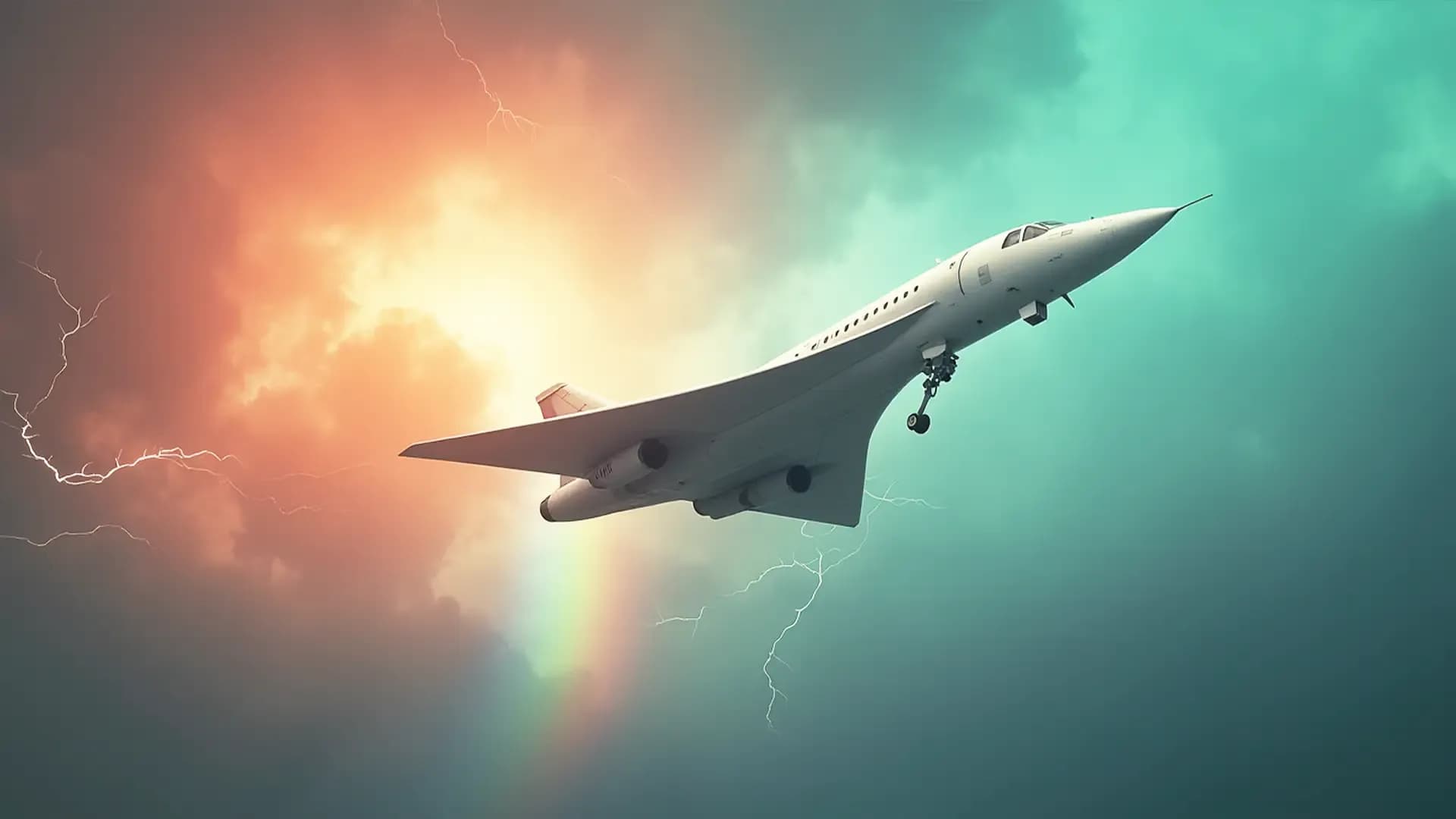

The Concorde remains one of the most significant achievements in supersonic commercial aviation. A joint development between British Aircraft Corporation (BAC) and Aérospatiale, it was designed to drastically reduce flight times by cruising at speeds over Mach 2, or twice the speed of sound. Its sleek, delta-wing design, advanced aerodynamics, and innovative engineering captured global attention, making it a symbol of cutting-edge technology and the pursuit of speed in aviation. Though its service was retired in 2003, the Concorde continues to be celebrated for its groundbreaking performance and its cultural and technological impact.
Key highlights:
The Concorde’s design was revolutionary, addressing the complexities of supersonic flight while maintaining operational feasibility.
Key features included:
The Concorde’s historical significance goes beyond its design and technology. It was a symbol of international collaboration between Britain and France, a product of political will and technological ambition during the Cold War era. The aircraft’s creation marked the peak of supersonic passenger aircraft development in the late 1960s and early 1970s. It was not only an engineering marvel but also a representation of the optimistic belief in advanced technology as a way to improve the quality of life and global connectivity.
Historically, the Concorde:
The Concorde introduced numerous technological innovations that advanced aviation design, including in aerodynamics, materials science, and propulsion.
Additional innovations:
The Concorde was developed by British Aircraft Corporation (BAC) and Aérospatiale. Both manufacturers contributed unique expertise in aerospace engineering, making the Concorde a true international effort.
The Concorde had a limited but high-profile operational history, primarily serving transatlantic routes between London and Paris to New York and Washington, D.C..
The aircraft's legacy influenced future supersonic research and remains a cultural symbol of aviation excellence.
The Concorde’s legacy continues to influence modern aviation concepts, especially in the field of supersonic commercial flight.