Sign In
HOMELEONARDO DA VINCI AI COMPANIONTITANS OF THE WORLDWISDOMIA TOP WRITERSWONDERS OF THE WORLDMUSEUMS OF THE WORLDWONDERS OF NATURETREES OF THE WORLDGODS OF INDIAWONDERS OF ENGINEERINGWISDOMIA UNIVERSITYTHE REFLECTIONS OF WISDOMMARKETPLACEABOUT US
Loading wiki page…
P-51D Mustang
Aircraft NameP-51D Mustang
Country of OriginUnited States
ManufacturerNorth American Aviation
Top SpeedApproximately 440 mph (708 km/h)
Home/Wonders of Engineering/P-51D Mustang
Introduction
Engineering & Design
Historical Significance
Technological Innovations
Manufacturers and Aircraft Brands
Usage and Impact
Future of Aviation
References
Introductionarrow

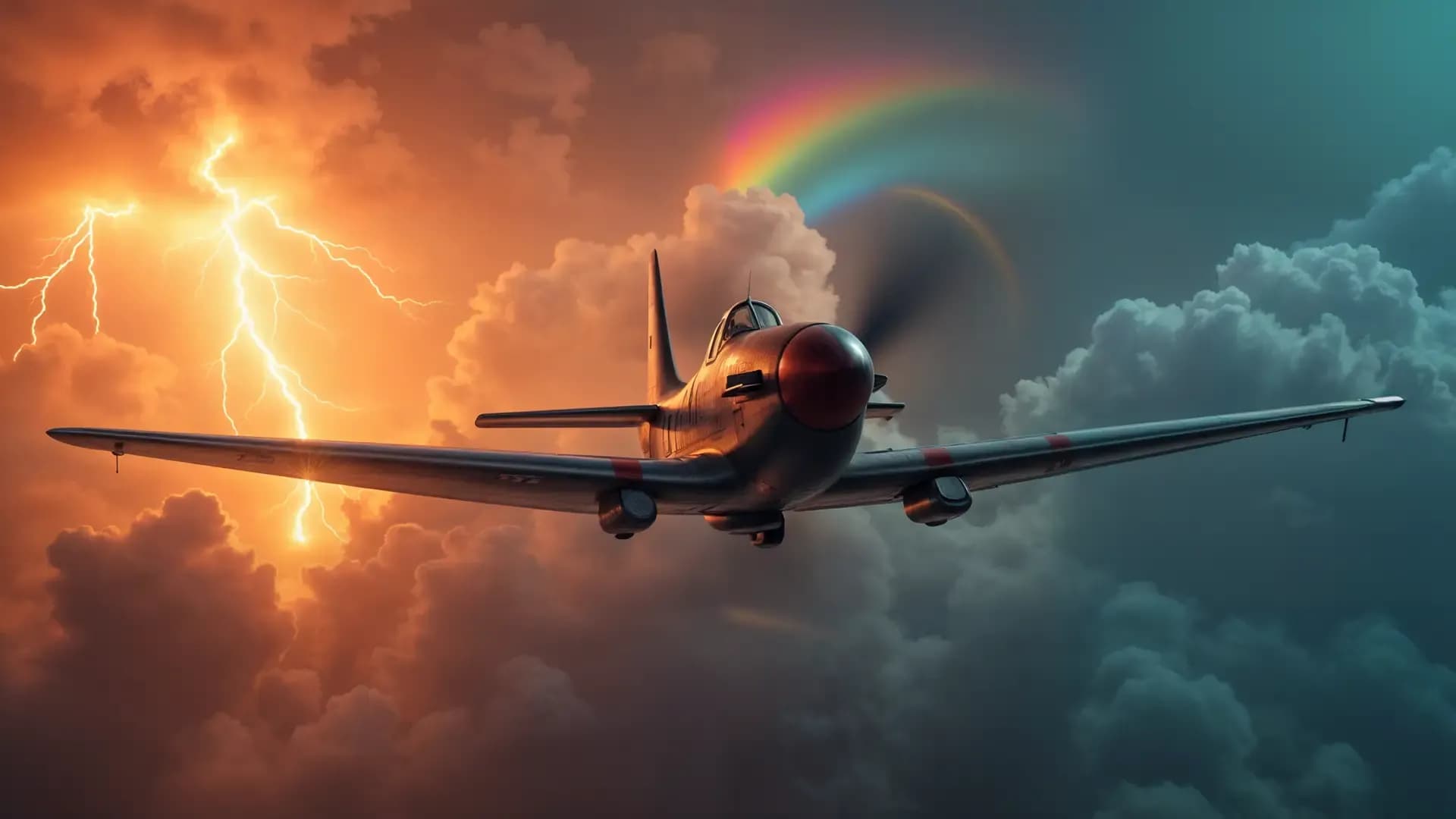
The P-51D Mustang is widely regarded as one of the most successful and influential fighters of World War II. Originally developed by North American Aviation (NAA) in 1940, it evolved into an iconic aircraft that played a crucial role in the Allied victory, especially in its ability to escort bombers deep into enemy territory. With its excellent speed, range, and maneuverability, the Mustang became a symbol of Allied air superiority and continues to be admired by aviation enthusiasts today.

Key highlights:

  • Long-range Escort Fighter
  • Unmatched Maneuverability
  • Significant Contribution to the Allied Victory in WWII
Engineering & Designarrow

The P-51D Mustang was a feat of innovative aircraft design, combining advanced aerodynamic principles with robust engineering. Its laminar flow wing design significantly reduced drag, enhancing high-speed performance. The aircraft’s structure was designed with a focus on weight reduction, which contributed to both speed and maneuverability.

Key design features include:

  • Aerodynamic Efficiency: • Laminar flow wings that minimized drag and improved stability at high speeds • Sleek fuselage that contributed to both speed and agility in aerial combat
  • Powerful Engine: • Rolls-Royce Merlin V-1650-7 engine, providing 1,490 horsepower, ensuring exceptional high-altitude performance
  • Pilot Comfort: • Bubble canopy for improved pilot visibility and operational effectiveness • Spacious cockpit designed for comfort during long missions

The Mustang’s design perfectly balanced speed, agility, and range, making it one of the best all-around fighters of its era.

Historical Significancearrow

The P-51D Mustang had an unparalleled impact on the outcome of World War II. Its primary role was as a long-range escort fighter, providing essential protection for bombers flying deep into Nazi-occupied Europe. Before the Mustang, bombers suffered heavy losses due to the lack of fighter escorts, but the P-51D’s extended range and high performance allowed it to protect bombers over long distances, drastically reducing losses.

Historically, the P-51D:

  • Enabled Bomber Escort Deep Into Enemy Territory
    • Allowed Allied bombers to operate safely over long distances, even deep inside Germany and other Axis territories
  • Versatile Fighter
    • Excelled in various roles, from air superiority to ground-attack missions
  • Contributed to the Weakening of the Luftwaffe
    • Helped tip the balance in favor of the Allies by neutralizing enemy air forces
Technological Innovationsarrow

The P-51D Mustang featured numerous technological innovations that set it apart from earlier fighters. One of the most notable advancements was the introduction of the Rolls-Royce Merlin engine, which significantly improved high-altitude performance, allowing the Mustang to outpace and outmaneuver many of its German counterparts.

Additional innovations include:

  • Engine and Performance: • Rolls-Royce Merlin engine provided the necessary power to handle high-altitude combat and long-range missions
  • Weaponry and Armament: • Six .50 caliber M2 Browning machine guns for heavy firepower in dogfights and ground-attack missions
  • Enhanced Pilot Visibility: • Bubble canopy provided a 360-degree field of view, reducing the risk of surprise attacks

These technological features contributed to the P-51D’s reputation as a superior air combat aircraft.

Manufacturers and Aircraft Brandsarrow

The P-51D Mustang was produced by North American Aviation (NAA), a company that became known for its excellent aircraft designs during and after WWII. NAA's dedication to innovation led to the creation of the P-51D, which was based on the original P-51 airframe but modified with the more powerful Rolls-Royce Merlin engine for greater performance.

Key aspects include:

  • Innovation at North American Aviation: • NAA was known for quick aircraft development and efficient production processes, delivering high-performance aircraft during the war
  • Collaboration with Rolls-Royce: • The integration of the Rolls-Royce Merlin engine was a crucial factor in the P-51D's success, enhancing its performance at high altitudes
  • Mass Production Excellence: • Thousands of P-51D Mustangs were produced, ensuring that the Allies had an abundant supply of highly effective fighters
Usage and Impactarrow

The P-51D Mustang had widespread usage across multiple theaters of WWII, primarily in fighter escort missions and ground attack roles. It was used by both the United States Army Air Forces (USAAF) and the Royal Air Force (RAF). The aircraft played a critical role in securing air superiority over Europe, contributing significantly to the defeat of Nazi Germany.

In operational history, the P-51D:

  • Escorted Bombers
    • Protected Allied bombers during long-range missions, reducing losses and ensuring the success of strategic bombing campaigns
  • Ground Attack Missions
    • Conducted ground-attack operations, utilizing its firepower and agility to target enemy infrastructure and vehicles
  • Post-War Roles
    • Continued to serve in various capacities post-WWII, including in the Korean War and other conflicts
Future of Aviationarrow

The P-51D Mustang influenced future aircraft designs, particularly in fighter aircraft technology. Its emphasis on speed, range, and versatility laid the groundwork for many modern military aircraft, with a strong focus on multi-role functionality and long-range capabilities.

Future influences include:

  • Design Philosophy: • Laminar flow wing design and bubble canopy are design elements still seen in modern aircraft for improved aerodynamics and visibility
  • Operational Relevance: • The Mustang demonstrated the effectiveness of a multi-role fighter, a concept that continues to dominate modern air combat strategies
  • Inspiration for Modern Fighters: • The success of the P-51D helped set the stage for future developments in jet fighter technology and aerial warfare tactics

As military aviation continues to evolve, the P-51D’s legacy remains influential in shaping both the design and tactics of contemporary air forces.

Referencesarrow
  1. National WWII Museum – P-51 Mustang Impact. Retrieved from https://www.nationalww2museum.org
  2. Smithsonian National Air and Space Museum – Aircraft Collection. Retrieved from https://airandspace.si.edu
  3. National Museum of the United States Air Force – P-51 Mustang History. Retrieved from https://www.nationalmuseum.af.mil
  4. Aerospace Engineering Journals – Legacy of the P-51 Mustang. Retrieved from https://www.aeroengineering.com
  5. U.S. Air Force – P-51 Mustang Legacy. Retrieved from https://www.af.mil
  6. P-51 Mustang – Wikipedia Article. Retrieved from https://en.wikipedia.org/wiki/North_American_P-51_Mustang
  7. Rolls-Royce Engine History – P-51 Mustang. Retrieved from https://www.rolls-royce.com
  8. HistoryNet – The P-51 Mustang Story. Retrieved from https://www.historynet.com
  9. Britannica – North American P-51 Mustang. Retrieved from https://www.britannica.com
  10. The National WWII Museum – Air Combat and the P-51 Mustang. Retrieved from https://www.nationalww2museum.org

Share

P-51D Mustang
Country of Origin
United States
Year of Introduction
1942
Aircraft Type
Fighter
Manufacturer
North American Aviation
Top Speed
Approximately 440 mph (708 km/h)
Engine Type
Rolls-Royce Merlin V-1650-7
Notable Features
• Laminar flow wing design • Rolls-Royce Merlin engine • Bubble canopy • Six .50 caliber M2 Browning machine guns
Operational Use
Primarily used by the United States Army Air Forces and the Royal Air Force during WWII
Famous Pilots
Captain Eric Brown, RN; Kurt Bühligen; Heinz Bär
Legacy & Influence
Revolutionized air combat, influencing modern fighter design and tactics
background
Logo

Where Wisdom Meets AI Utopia Edutainment
Wisdomia.ai is a 3D AI edutainment platform that seamlessly blends learning with immersive play. As the first AI-powered 3D Web 3.0 marketplace created by creators for creators. Founded by renowned serial entrepreneur and author Dinis Guarda, Wisdomia empowers individuals to flourish in an ecosystem designed for collective wisdom EQ. Join us in shaping humanity's future as we harness the power of AI to visualise and create a better world—where technology serves human potential, and innovation is guided by utopian wisdom.

Contact us

Email
Contact
Phone
+44 20 7946 0958
Business address
167 - 169 Great Portland Street, Fifth Floor, London, W1W 5PF

Follow Us

Produced by

Partner logo
Partner logo

Tech AI Media Platforms

Partner logo
Partner logo
Partner logo
Partner logo
Partner logo
Partner logo

© 2025 wisdomia. All rights reserved.

Powered by ztudium group

DisclaimerReturn PolicyTerms of Service
Partner logo
Partner logo
Partner logo
Partner logo
Partner logo
Partner logo