Sign In
HOMELEONARDO DA VINCI AI COMPANIONTITANS OF THE WORLDWISDOMIA TOP WRITERSWONDERS OF THE WORLDMUSEUMS OF THE WORLDWONDERS OF NATURETREES OF THE WORLDGODS OF INDIAWONDERS OF ENGINEERINGWISDOMIA UNIVERSITYTHE REFLECTIONS OF WISDOMMARKETPLACEABOUT US
Loading wiki page…
Supermarine Spitfire
Aircraft NameSupermarine Spitfire
Country of OriginUnited Kingdom
ManufacturerSupermarine Aviation Works (with production support from Castle Bromwich and Westland)
Top SpeedUp to approximately 405 mph (652 km/h) in later marks
Home/Wonders of Engineering/Supermarine Spitfire
Introduction
Engineering & Design
Historical Significance
Technological Innovations
Manufacturers and Aircraft Brands
Usage and Impact
Future of Aviation
References
Introductionarrow

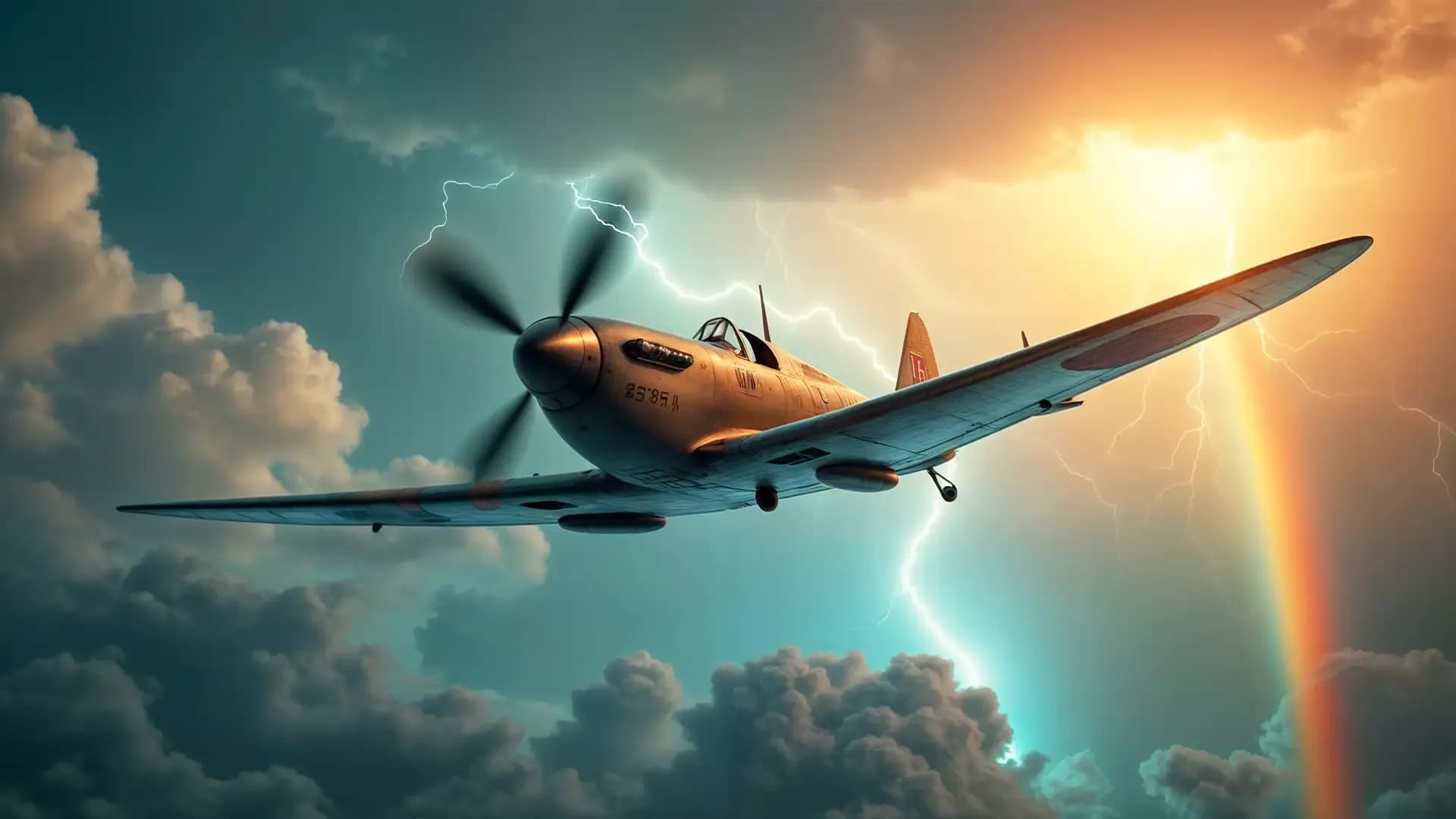
The Supermarine Spitfire stands as one of the most iconic fighter aircraft in aviation history. Developed in the mid?1930s by Supermarine, its sleek design and high performance played a critical role during World War II, particularly in the defense of Britain. Its first flight in 1936 marked the beginning of an aircraft that would not only excel as a high-speed interceptor but also evolve into a versatile platform for photo-reconnaissance and fighter-bomber roles.

Key details include:

  • First Flight: 1936
  • Role: Initially a fighter/interceptor, later adapted for multiple combat roles
  • Legacy: Remains a symbol of British ingenuity and determination
Engineering & Designarrow

The engineering behind the Spitfire is as celebrated as its combat record. Its design features a blend of innovative aerodynamics and continuously upgraded systems. Central to its performance is the elliptical wing, which minimized drag and maximized lift, thus contributing to exceptional maneuverability and speed. Over the years, modifications such as improvements to the engine (from early Merlin models to later Griffon variants), retractable undercarriage, and enhanced cockpit design have ensured that the Spitfire could adapt to evolving combat requirements.

Notable design elements include:

  • Elliptical Wing:
    • Reduces drag
    • Increases lift and maneuverability
  • Engine Evolution:
    • Started with Rolls-Royce Merlin engines
    • Later incorporated more powerful Griffon engines
  • Aerodynamic Features:
    • Streamlined fuselage and retractable undercarriage
    • Continuous cockpit improvements for better visibility and pilot comfort
Historical Significancearrow

The Spitfire’s contribution to the Allied war effort is profound. It was pivotal during the Battle of Britain, where its performance helped thwart the Luftwaffe’s aerial onslaught, and it later served across multiple theaters—from the Mediterranean to the Pacific. Its adaptability allowed it to remain effective throughout the war, earning it an enduring place in military history and popular culture.

Its impact can be summarized as follows:

  • Battle of Britain:
    • Critical in defending British skies
    • Boosted national morale during a time of crisis
  • Multi-Theater Service:
    • Used in Europe, North Africa, and the Pacific
    • Served in various roles including reconnaissance and ground attack
  • Cultural Icon:
    • Remains a celebrated symbol of technological and wartime excellence
Technological Innovationsarrow

The Spitfire was a testbed for numerous technological advancements that influenced fighter design for decades. Its iterative improvements were driven by combat experience, leading to enhancements in engine performance, propeller technology, and pilot ergonomics. For instance, constant-speed propellers and ejector exhaust systems were integrated to boost performance, while evolving canopy designs improved pilot visibility and safety.

Innovations included:

  • Advanced aerodynamics (elliptical wing design)
  • Progressive engine upgrades (Merlin to Griffon)
  • Propeller improvements (constant-speed technology)
  • Enhanced pilot interfaces (improved canopy and pressurization in later models)
Manufacturers and Aircraft Brandsarrow

The production of the Spitfire is a story of collaborative industrial effort. Supermarine Aviation Works led the design and early production, with significant contributions from facilities such as the Castle Bromwich factory. This partnership enabled the rapid production of thousands of units, reflecting Britain’s ability to mobilize its industrial resources effectively during wartime.

Highlights of its production include:

  • Primary Producer: Supermarine Aviation Works
  • Mass Production: Supported by Castle Bromwich and Westland
  • Industrial Collaboration: Enabled rapid scaling and continuous design modifications
Usage and Impactarrow

Throughout World War II, the Spitfire served in multiple capacities. It was a key player in defensive and offensive operations, protecting the United Kingdom during critical battles and later supporting Allied campaigns on multiple fronts. Its adaptability meant that pilots could rely on it in varied combat situations, from high-altitude interceptions to low-level ground attacks.

Operational impact:

  • Combat Versatility: Functioned as a fighter, reconnaissance, and fighter-bomber
  • Critical Role: Instrumental in the defense during the Battle of Britain and subsequent operations
  • Long-Term Service: Continued use in training and ceremonial roles after the war
Future of Aviationarrow

Although the Spitfire is no longer produced, its design philosophy continues to influence modern fighter aircraft. The principles of aerodynamic efficiency, lightweight construction, and continuous technological innovation set by the Spitfire are still relevant today. Modern engineers study its evolution to extract lessons in performance optimization and design flexibility, ensuring that its legacy endures in future aviation developments.

Key influences for future aviation:

  • Design Legacy: Principles of aerodynamics and lightweight design
  • Technological Inspiration: Iterative upgrades and adaptation methods
  • Educational Value: A benchmark for aerospace engineering and design innovation
Referencesarrow
  1. National Museum of Flight. The Story of the Spitfire: An Iconic British Combat Aircraft. Retrieved from National Museum of Flight website.
  2. Wikipedia. Supermarine Spitfire. Retrieved from Wikipedia.
  3. Spitfire Performance. History and Specifications. Retrieved from Spitfire Performance website.
  4. National Museum of Scotland. The Story of the Spitfire: An Iconic British Combat Aircraft. Retrieved from National Museum of Scotland website.
  5. McKinstry, Leo. Spitfire: Portrait of a Legend. London: John Murray, 2007.
  6. Price, Alfred. The Spitfire Story: Revised Second Edition. Enderby, Leicester, UK: Silverdale Books, 2002.
  7. Morgan, Eric B. & Shacklady, Edward. Spitfire: The History. Stamford, UK: Key Books Ltd, 2000.
  8. Quill, Jeffrey. Spitfire: A Test Pilot’s Story. London: Arrow Books, 1983.
  9. Harvey-Bailey, A. The Merlin in Perspective: The Combat Years. Derby, UK: Rolls-Royce Heritage Trust, 1995.
  10. Dibbs, John & Holmes, Tony. Spitfire: Flying Legend. Southampton, UK: Osprey Publishing, 1997.

Share

Supermarine Spitfire
Country of Origin
United Kingdom
Year of Introduction
1938
Aircraft Type
Single-seat fighter/interceptor
Manufacturer
Supermarine Aviation Works (with production support from Castle Bromwich and Westland)
Top Speed
Up to approximately 405 mph (652 km/h) in later marks
Engine Type
Initially Rolls-Royce Merlin; later models evolved to Griffon variants
Notable Features
Elliptical wing design, constant-speed propellers, continuous design evolution, and innovative cockpit enhancements
Operational Use
Served in World War II as a fighter, interceptor, reconnaissance platform, and fighter-bomber
Famous Pilots
Among others, Douglas Bader and numerous celebrated RAF aces
Legacy & Influence
A symbol of British resilience and technological innovation that continues to inspire modern aviation design
background
Logo

Where Wisdom Meets AI Utopia Edutainment
Wisdomia.ai is a 3D AI edutainment platform that seamlessly blends learning with immersive play. As the first AI-powered 3D Web 3.0 marketplace created by creators for creators. Founded by renowned serial entrepreneur and author Dinis Guarda, Wisdomia empowers individuals to flourish in an ecosystem designed for collective wisdom EQ. Join us in shaping humanity's future as we harness the power of AI to visualise and create a better world—where technology serves human potential, and innovation is guided by utopian wisdom.

Contact us

Email
Contact
Phone
+44 20 7946 0958
Business address
167 - 169 Great Portland Street, Fifth Floor, London, W1W 5PF

Follow Us

Produced by

Partner logo
Partner logo

Tech AI Media Platforms

Partner logo
Partner logo
Partner logo
Partner logo
Partner logo
Partner logo

© 2025 wisdomia. All rights reserved.

Powered by ztudium group

DisclaimerReturn PolicyTerms of Service
Partner logo
Partner logo
Partner logo
Partner logo
Partner logo
Partner logo