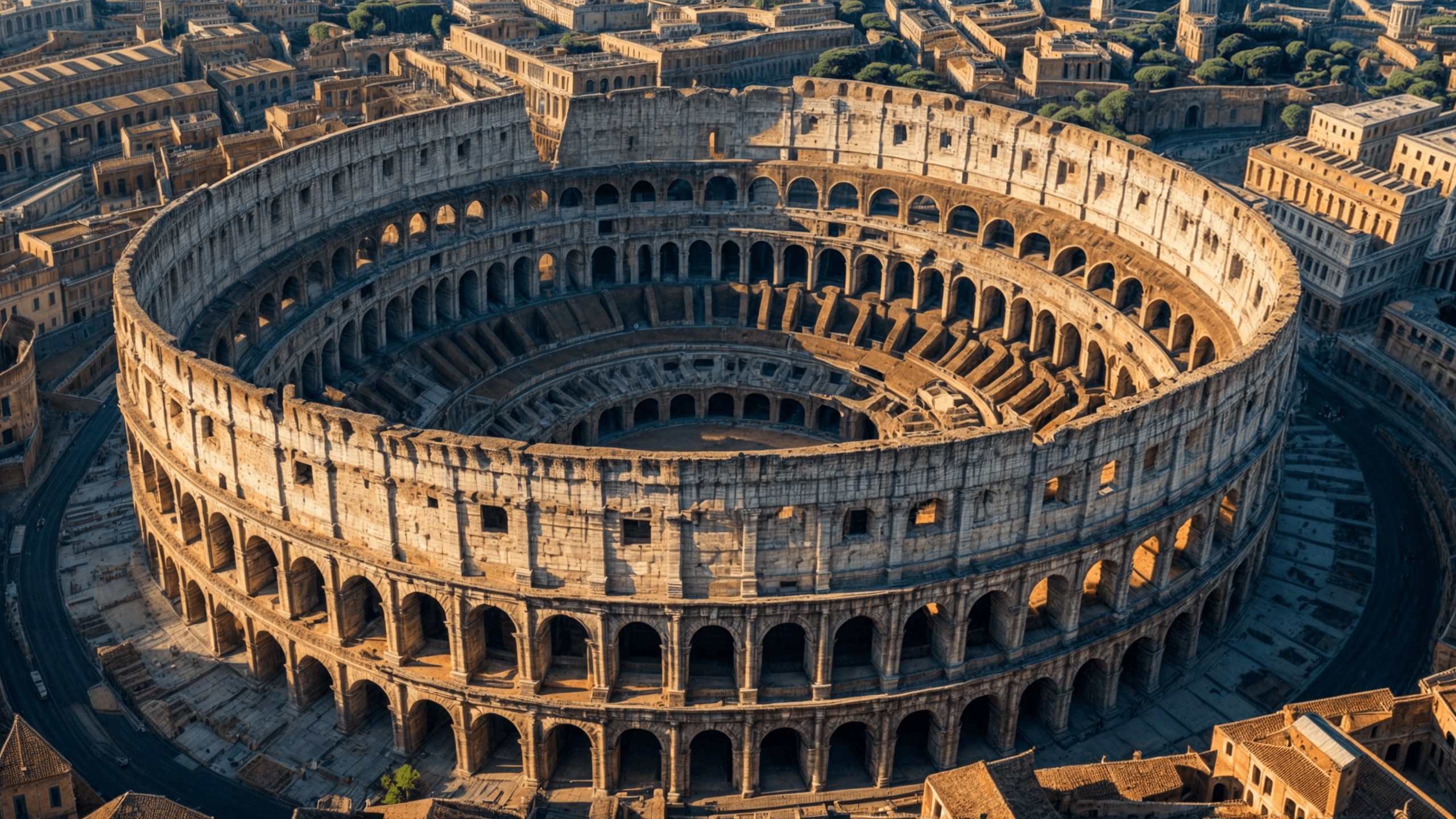

The Colosseum, also known as the Flavian Amphitheatre, is an iconic symbol of Imperial Rome. Its construction began under the Emperor Vespasian in AD 72 and was completed in AD 80 under his successor and heir, Titus. Further modifications were made during the reign of Domitian (81–96). The Colosseum was used to host gladiatorial contests, public spectacles, and even mock sea battles, symbolizing the grandeur and might of the Roman Empire.
Read More:
The Colosseum is an architectural marvel, showcasing the ingenuity of Roman engineering. It is the largest amphitheatre ever built, with an oval shape measuring 189 meters long, 156 meters wide, and a height of over 48 meters. The structure consists of concrete and sand, and was once capable of seating 50,000 spectators. The facade was made of travertine and the interior of tufa and brick. Its intricate system of vaults, arches, and corridors is a testament to the advanced construction techniques of the Romans.
The Colosseum was not only a venue for entertainment but also a symbolic representation of Rome's military prowess. The games held within its walls, often brutal and violent, were used to showcase Roman martial skill and the spoils of war. In addition, the amphitheatre was used for public spectacles such as animal hunts, executions, re-enactments of famous battles, and dramas based on Classical mythology. The Colosseum, thus, played a significant role in the cultural and political life of the Roman Empire.
The Colosseum's legacy extends far beyond its physical structure. It has been depicted in numerous works of art and literature, symbolizing the eternal city of Rome. Its design has also influenced the construction of modern sports stadiums. Despite the violence and brutality often associated with the Colosseum, it continues to be revered as an architectural marvel and an enduring symbol of Roman civilization.
Despite its name, the Colosseum was originally known as the Flavian Amphitheatre, after the Flavian dynasty of emperors who built it. The name 'Colosseum' came into usage only in the Middle Ages, possibly derived from a colossal statue of Nero that once stood nearby. Moreover, it is rumored that the Colosseum could be flooded to re-enact naval battles, although there is ongoing debate among historians about the feasibility of this. Despite its violent past, the Colosseum has been a site of Christian worship and is now a symbol of the international campaign against capital punishment.