Rare Flowers and the Grace of Persistence
28 May 2025

There exists, in the quieter corners of our world, a conversation most of us have never heard. It speaks not in words, but in petals of impossible hues, in fragrances that carry the memory of ancient forests, and in forms so delicate they seem conjured from dreams rather than soil. These are the rare flowers—nature's most precious whispers, spoken in a language older than human civilisation itself.
The Poetry of Scarcity
Consider the Ghost Orchid, that ethereal phantom of Florida's swamplands. With its translucent white petals that seem to float like spirits in the humid darkness, it blooms perhaps once every decade, if at all. To find one is to stumble upon nature's own secret—a reminder that some of life's most profound gifts are not given freely, but earned through patience, reverence, and often, sheer chance.
Or imagine the Chocolate Cosmos of Mexico, its velvety burgundy petals releasing the rich scent of cocoa into the mountain air. Extinct in the wild for decades, it survives now only through the tender care of botanists who understood that to lose such beauty would be to diminish the world itself. Each remaining specimen carries within its cells not just genetic material, but hope—hope that what was nearly lost can be restored, that human hands can heal what they have harmed.
The Jade Vine of the Philippines drapes itself like nature's own chandelier, its blue-green flowers cascading in impossible clusters that seem to glow with inner light. Yet habitat destruction threatens to silence this spectacular display forever, leaving future generations to wonder at photographs of what once graced their world with such uncommon beauty.
The Weight of Loss
There is something achingly poignant about rarity in the natural world. Unlike the scarcity we create through human artifice—limited editions and exclusive collections—nature's rare flowers exist in small numbers because they represent evolution's most delicate experiments. They are the quiet poets amongst the botanical world's more boisterous performers, species that found their perfect niche in specific conditions that are now vanishing as quickly as morning dew.
When we lose a rare flower, we lose more than mere aesthetics. We lose a unique solution to life's puzzle, a genetic library that took millions of years to write, a relationship network that supported countless other species. The Middlemist Red, of which only two specimens remain in the entire world, represents not just a beautiful flower, but an entire evolutionary story that we're in danger of letting end mid-sentence.
Seeds of Tomorrow
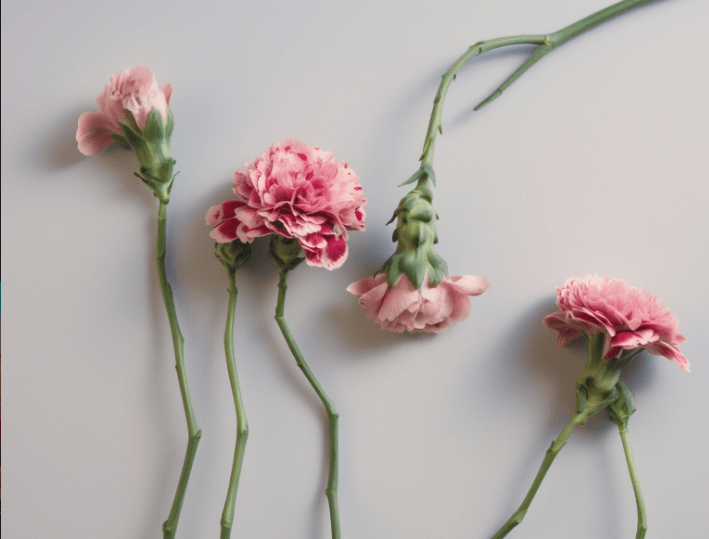
The story of rare flower conservation is ultimately a story about human nature at its finest. It reveals our capacity to care for beauty that offers us no immediate practical benefit, to invest in futures we may never see, to find meaning in the preservation of wonder itself. When a team of scientists successfully propagates a species thought extinct, when a community rallies to protect a rare habitat, when a child first sees a photograph of the Corpse Flower and decides to become a botanist—these moments remind us that hope is not passive optimism, but active devotion.
Modern technology offers unprecedented opportunities for conservation. Tissue culture techniques allow botanists to propagate rare species from tiny fragments. DNA analysis helps us understand genetic diversity and breeding requirements. Climate modelling predicts where rare species might thrive as conditions change. Yet perhaps most importantly, social media and digital photography allow rare flowers to capture hearts and minds across the globe, creating constituencies for conservation that span continents.
The youth of today are inheriting a world where many rare flowers exist only in photographs and pressed specimens. Yet they are also inheriting tools and knowledge their predecessors could only dream of. Gene banking, habitat restoration, community-based conservation, and international cooperation offer pathways to recovery that didn't exist even a generation ago.
The Garden of Memory and Hope
Every rare flower tells us something essential about resilience, adaptation, and the preciousness of what we might too easily take for granted. The Franklin Tree, extinct in the wild for over 200 years but still gracing gardens thanks to seeds collected by 18th-century botanists, reminds us that foresight and care can literally preserve species across centuries. The Attenborough's Pitcher Plant, discovered as recently as 2009 in the remote mountains of Palawan, shows us that our world still holds secrets, still offers surprises to those who look carefully enough.
In an age when the pace of change can feel overwhelming, when the scale of environmental challenges can seem insurmountable, rare flowers offer us something invaluable: they remind us that individual actions matter, that small populations can survive and thrive with proper care, that beauty and wonder are worth preserving for their own sake.
They teach us patience—the Talipot Palm flowers only once in its 25 to 80-year lifetime, then dies, a reminder that some things cannot be rushed. They teach us humility—many rare orchids depend on specific fungi, specific pollinators, specific soil conditions, reminding us how interconnected and complex life truly is. Most importantly, they teach us hope—that life finds ways to persist, to adapt, to surprise us with its tenacity and creativity.
A Living Legacy
As we stand at the threshold of an uncertain future, rare flowers offer us a different way of thinking about legacy. They ask us not what we can extract from the world, but what we can leave in it. They invite us to become ancestors worth remembering—people who understood that true wealth lies not in consumption, but in preservation; not in possession, but in protection.
The rare flowers that remain with us are not just botanical specimens, but emissaries from a wilder, more mysterious world. They carry messages we're only beginning to decode, relationships we're only starting to understand, beauty that can still take our breath away if we pause long enough to truly see it.
The conversation continues, whispered in petals and perfume, carried on the wind from hidden valleys and secret gardens, spoken in a language as old as life itself. We need only learn to listen, to care, and to answer with our own acts of preservation and love. For in the end, the rarest flower of all may be hope itself—and that, thankfully, is one species still very much within our power to cultivate.
Share

Hind MoutaoikiI
R&D Manager
Hind is a Data Scientist and Computer Science graduate with a passion for research, development, and interdisciplinary exploration. She publishes on diverse subjects including philosophy, fine arts, mental health, and emerging technologies. Her work bridges data-driven insights with humanistic inquiry, illuminating the evolving relationships between art, culture, science, and innovation.