We Are More Connected Than Ever. Why Do We Feel So Alone?
20 Nov 2026

From Remote Community to Digital Networks: What Are We Losing in the Race to Stay Connected?
I can communicate with someone thousands of miles away within seconds.
I can attend meetings across continents, collaborate with international teams, follow hundreds of people on social media and use artificial intelligence to answer almost any question.
Technology has made the world extraordinarily connected.
Yet I often wonder whether we are becoming less connected to the people and experiences that truly matter.
We have more contacts, but do we have more meaningful relationships?
We exchange messages throughout the day, but how often do we have distraction-free conversations?
We share celebrations online, but how many people can we genuinely depend on during difficult times?
And perhaps most importantly, are we gradually losing some of the human abilities that relationships help us develop, i.e. patience, listening, empathy, communication and the willingness to understand others?
I have been reflecting on these questions through my own journey, from growing up in a small village in Rajasthan to working across different cities, countries, businesses and technologies.
I am not suggesting that life was necessarily better before the internet.
Technology has created enormous opportunities, including in my own professional journey.
But connection and belonging are not the same thing.
And we need to understand that distinction before we lose something valuable.
When Community Was Part of Everyday Life
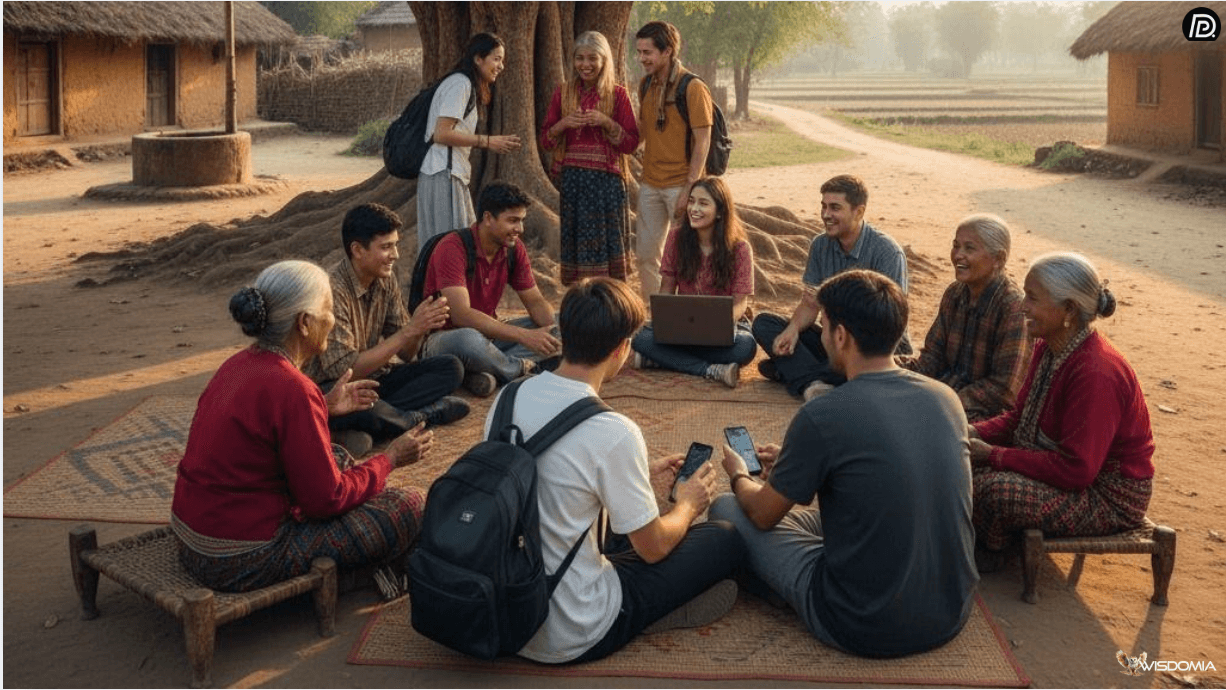
I grew up in Dhorimanna, a small village in Rajasthan.
Life was simple, resources were limited, and communication was nothing like it is today.
There were no smartphones, instant messages or social media networks.
But people knew one another.
Daily life revolved around family, neighbours, community activities, and frequent personal interaction.
If someone needed assistance, reaching out to others was a natural part of life.
We learned through observation, conversation and participation.
Children spent time around different generations. Elders shared experiences. People helped one another with practical matters.
There were certainly difficulties, inequalities and limitations. Village life should not be romanticised.
But one thing I continue to appreciate is the importance of community.
We didn't schedule relationships around our lives. They were part of how life functioned.
Growing up in that environment taught me cooperation, resourcefulness, respect for others and the value of human relationships.
I did not recognise those lessons as particularly important at the time.
Only after moving through different cities and eventually settling in London did I begin to appreciate them more deeply.
In modern urban life, people can live beside one another for years without knowing much about their neighbours.
We may exchange hundreds of digital messages while having very few meaningful in-person conversations.
This does not mean that every traditional community was supportive or that modern cities lack meaningful relationships.
But it does make me wonder:
Have we gained convenience while allowing some of our everyday human connections to weaken?
Technology Connects Us, but Does It Help Us Belong?
The numbers are striking.
According to the World Health Organisation's 2025 Commission on Social Connection, approximately one in six people worldwide experiences loneliness.
Loneliness is not simply about being physically alone.
It is the feeling that our relationships do not provide the connection, understanding or support we need.
A person can live in a crowded city, work in a busy office, maintain an active social media profile and still feel deeply lonely.
At the same time, someone who spends considerable time alone may feel satisfied and well connected through a few meaningful relationships.
This distinction matters.
We should not confuse the number of interactions with the quality of relationships.
Ofcom's 2025 Online Nation report found that UK adults spent an average of four and a half hours online each day.
Much of that time supports genuinely useful activities: work, education, entertainment and communication with family and friends.
But being connected throughout the day does not automatically create emotional closeness.
Technology makes people accessible. Relationships make people feel understood.
That is the difference we must preserve.
Are We Losing the Skills That Make Us Human?
One concern I have is not simply how much time we spend online.
It is what happens when digital interaction begins replacing opportunities to practise important human skills.
Consider everyday communication.
When we speak face to face, we interpret expressions, gestures, tone of voice and emotions.
We learn when to speak and when to listen.
We recognise discomfort.
We negotiate disagreements.
We sometimes struggle to find the right words.
And through those experiences, we gradually develop social judgment.
Digital communication changes that process.
A message can be edited before sending.
An uncomfortable conversation can be postponed.
A disagreement can be ended by ignoring someone.
We can express opinions without always seeing how our words affect the person receiving them.
These conveniences have advantages, particularly for people who find certain forms of face-to-face interaction difficult.
But I worry that if we increasingly avoid challenging interpersonal situations, we may have fewer opportunities to develop the skills needed to handle them.
No evidence shows that everyone who uses digital technology loses these abilities. Online communities can also strengthen communication, confidence and belonging.
The concern is about substitution.
What happens when messaging replaces conversation rather than supporting it?
What happens when virtual interaction replaces every opportunity for shared experience?
When we become comfortable expressing ourselves through screens but uncomfortable navigating difficult situations in person?
Human skills develop through use. We should be careful not to design them out of everyday life.
This is particularly important for younger generations.
Children need opportunities to play, disagree, cooperate, make mistakes and resolve problems.
Young professionals need opportunities to listen, negotiate, question and build trust.
Technology can help them develop these skills.
But it should not eliminate the experiences through which those skills are learned.
The Anxiety of Always Being Available
Another contradiction exists in our connected world.
Technology gives us more freedom to communicate.
Yet sometimes it makes us feel we must always be available.
An email arrives.
A message appears.
Someone has viewed our communication but not responded.
We begin wondering why.
In business, I have seen how easily this becomes part of daily life.
You send a proposal after several meetings.
The discussion has been encouraging.
You expect a response.
A day passes.
Then a week.
Then several weeks.
You continue checking your messages, wondering whether the opportunity is progressing.
The technology makes communication instant.
But the human decision-making process remains uncertain.
And that gap can create anxiety.
The same pattern can appear in personal relationships.
Why hasn't someone replied?
Have I said something wrong?
Why was my message read but unanswered?
Why does everyone else seem to be doing better?
Digital platforms can make us more aware of what others are doing without necessarily helping us understand their circumstances.
We see achievements, celebrations, business announcements and carefully selected moments.
But rarely the full story.
This can encourage unrealistic comparisons.
Of course, anxiety has many causes, including financial pressures, health concerns, relationships and broader social circumstances.
It would be misleading to blame technology alone.
But constant notifications, expectations of immediate availability and repeated social comparison can add pressure.
Through yoga, reflection and spiritual practice, I have learned the value of separating what genuinely requires attention from what merely demands it.
Not every notification deserves an immediate response. Not every silence from someone else requires an explanation.
Sometimes protecting our peace means accepting that we cannot control when another person responds.
Can Instant Answers Weaken Our Ability to Solve Problems?

Artificial intelligence adds a new dimension to this discussion.
Today, AI can draft messages, prepare presentations, recommend business strategies, explain difficult topics and help us make decisions.
These capabilities are valuable.
I work with AI and see significant opportunities for it to improve education, agriculture, business and society.
But I also believe we need to examine how we use it.
When we ask AI to prepare every response, are we still developing our own communication skills?
When we depend on AI for every decision, are we practising independent judgment?
When a student can generate an answer without struggling through the problem, is the learning process being strengthened or bypassed?
The answer depends on how we use the technology.
AI can be an excellent tutor, thinking partner and analytical assistant.
It can help people overcome communication barriers, learn new skills and consider alternative perspectives.
But if we use it only to avoid effort, uncertainty and independent thinking, we risk missing important learning opportunities.
The same applies to relationships.
An AI system may suggest what to say during a difficult conversation.
That can be useful.
But the actual conversation still requires empathy, listening, compromise and responsibility.
AI can help us prepare for human interaction. It should not become an excuse to avoid it.
When AI Becomes a Companion
Perhaps one of the most significant developments is the growing use of AI for companionship.
People increasingly speak with AI systems about personal concerns, relationships, emotional difficulties, and everyday experiences.
There are understandable reasons for this.
An AI system can be available at any hour.
It can respond without appearing impatient.
Some people may find it easier to discuss sensitive topics with technology before approaching another person.
For individuals experiencing isolation, these interactions may provide short-term comfort.
But we must also consider the limitations.
In a 2026 longitudinal study involving more than 2,000 adults across four Western countries, researchers found preliminary evidence that increased social chatbot use predicted higher loneliness on one measure over time.
However, the researchers cautioned against drawing strong causal conclusions.
Another 2026 experiment with university students found that regular interaction with a human peer reduced loneliness more than interaction with a supportive chatbot.
Other studies have reported positive associations between AI companionship and wellbeing for some users.
So the evidence is not uniformly negative.
It is developing, and individual experiences differ.
My concern is less about people occasionally seeking support from AI.
It is about allowing artificial interaction to replace the human relationships our communities depend on.
Human relationships are not always convenient.
People disagree.
They misunderstand us.
They have their own responsibilities.
Sometimes they disappoint us.
But those imperfections are part of learning how to care, compromise, forgive and remain accountable to one another.
An AI companion may simulate an attentive conversation.
But it does not participate in human life with the same lived responsibilities, mutual obligations or emotional experience as another person.
Technology may help someone feel heard. We should also help them remain connected to people who can genuinely share their lives.
What My Business Journey Has Taught Me About Relationships
Over the years, I have worked with people from different backgrounds, organisations and countries.
Technology has made international collaboration far easier.
I can discuss opportunities with partners in India, the UK and elsewhere without travelling for every conversation.
This has created possibilities that would have been difficult to imagine during my childhood.
But business experience has reinforced one important lesson.
A network is not necessarily a relationship. And a relationship is not necessarily trust.
You can have thousands of professional connections.
You can exchange messages with hundreds of people.
You can receive encouraging responses to your ideas.
But the real quality of a relationship becomes visible when difficulties arise.
Who honours their commitments?
Who communicates honestly when circumstances change?
Who supports you when an opportunity becomes difficult?
Who is willing to have an uncomfortable but necessary conversation?
And who remains accountable when something goes wrong?
In recent years, while developing businesses and pursuing new partnerships, I have faced delayed decisions, broken promises, and uncertainty.
These experiences have taught me to pay greater attention to behaviour rather than words.
Trust requires consistency.
Respect requires consideration.
And meaningful relationships require effort from both sides.
Technology can introduce us to people.
It cannot manufacture trust, integrity or genuine commitment.
Those qualities must still be demonstrated through human behaviour.
What Spirituality Can Teach Us About Connection
My understanding of spirituality is not confined to scripture, prayer or religious rituals.
Village life, yoga, community values, practical experience, and my continuing spiritual journey have shaped it.
Growing up in Rajasthan, I observed how cooperation and shared responsibility formed part of everyday life.
Through yoga, I have learned the importance of attention, inner balance, and awareness of my own responses.
Through business, I have learned that relationships are tested most clearly during uncertainty.
And through spiritual traditions, I have come to appreciate the connection between personal conduct and collective wellbeing.
One Indian philosophical idea that expresses this beautifully is Vasudhaiva Kutumbakam, the world is one family.
It reminds us that we are connected through responsibilities extending beyond our immediate interests.
Another important principle is Seva, the act of serving others.
What I find meaningful about these ideas is their practical relevance.
We cannot build healthy communities through messages alone.
We must also be prepared to give our time.
Listen to someone who is struggling.
Help a neighbour.
Support a friend without expecting anything in return.
Share knowledge with someone who needs guidance.
And recognise that other people's wellbeing matters.
These practices create something that digital connectivity alone cannot guarantee: belonging.
Spirituality, at its most practical, reminds us that life is not only about what we achieve individually, but also about how we contribute to others.
That does not require everyone to follow a particular religion.
A sense of purpose, compassion, mutual responsibility and service can be developed through many spiritual, philosophical and community traditions.
Sometimes, a Simple Conversation Is All Someone Needs
Two experiences in my life have particularly reinforced the importance of human connection.
During COVID-19, I took part in a grocery distribution initiative through the Rajasthan Association UK, helping people through an exceptionally difficult period.

What stayed with me was not simply the distribution of groceries.
It was meeting people who were isolated, anxious or struggling with uncertainty. I realised that, for some, the opportunity to speak with another person was just as meaningful as receiving essential supplies.
Some people wanted someone to listen.
Those encounters were deeply emotional and taught me that sometimes the greatest help we can offer isn't material support, but our time, attention, and compassion.
I experience something similar, in a much simpler way, during my daily walks.
Walking gives me time to reflect, clear my mind and reconnect with my surroundings. Along the way, I meet other walkers, exchange a smile or say a simple Good morning or hello.
These small interactions may last only a few seconds, yet they create a sense of familiarity, warmth and community.
We may not know each other's names or personal circumstances, but we acknowledge one another's presence.
And that matters.
I learned the importance of community. The COVID experience reminded me why it matters. My daily walks continue to reinforce that lesson.
Human connection does not always require a deep conversation or a lifelong relationship. Sometimes, it begins with a smile, a greeting, or simply being there when someone needs to talk.
In a world where we can reach thousands of people digitally, perhaps we should also remember the value of acknowledging the person walking beside us.
The Bigger Problem: Are We Becoming More Individualistic?
Technology is only one part of the issue.
Modern life has changed in many other ways.
People move frequently for education and employment.
Families may live across different countries.
Housing and financial pressures affect social life.
Long working hours and commuting can reduce opportunities to spend time with others.
Remote work can provide flexibility while also reducing informal workplace interaction.
And as communities change, some traditional forms of support become less accessible.
Having lived across India and the UK, I have seen how mobility creates both opportunities and challenges.
It broadens our understanding of the world.
But it also requires us to rebuild relationships in new environments.
A person may be professionally successful and financially independent while lacking a strong local support network.
That is why I do not believe the solution is to reduce screen time.
We need to rebuild meaningful opportunities for connection.
Communities need welcoming spaces.
Workplaces need cultures that value relationships alongside productivity.
Schools need to support communication, empathy and cooperation.
Cities need accessible public spaces where people can meet.
And families need to protect some time for genuine interaction.
Loneliness cannot be solved by individual discipline alone.
It is also a social and community challenge.
Seven Ways to Rebuild Meaningful Connection
I believe practical change begins with relatively simple habits.
1. Replace some messages with conversations
When something matters, call or meet in person when possible.
A five-minute conversation can sometimes achieve more than dozens of messages.
2. Give people your full attention
Put the phone aside during important conversations.
Listen without preparing your next response.
Being present is one of the simplest ways to show respect.
3. Practise real-world skills
Encourage children and adults to communicate directly, resolve disagreements, learn practical tasks and work collaboratively.
Use AI to support learning, not replace the experience of doing.
4. Strengthen your local community
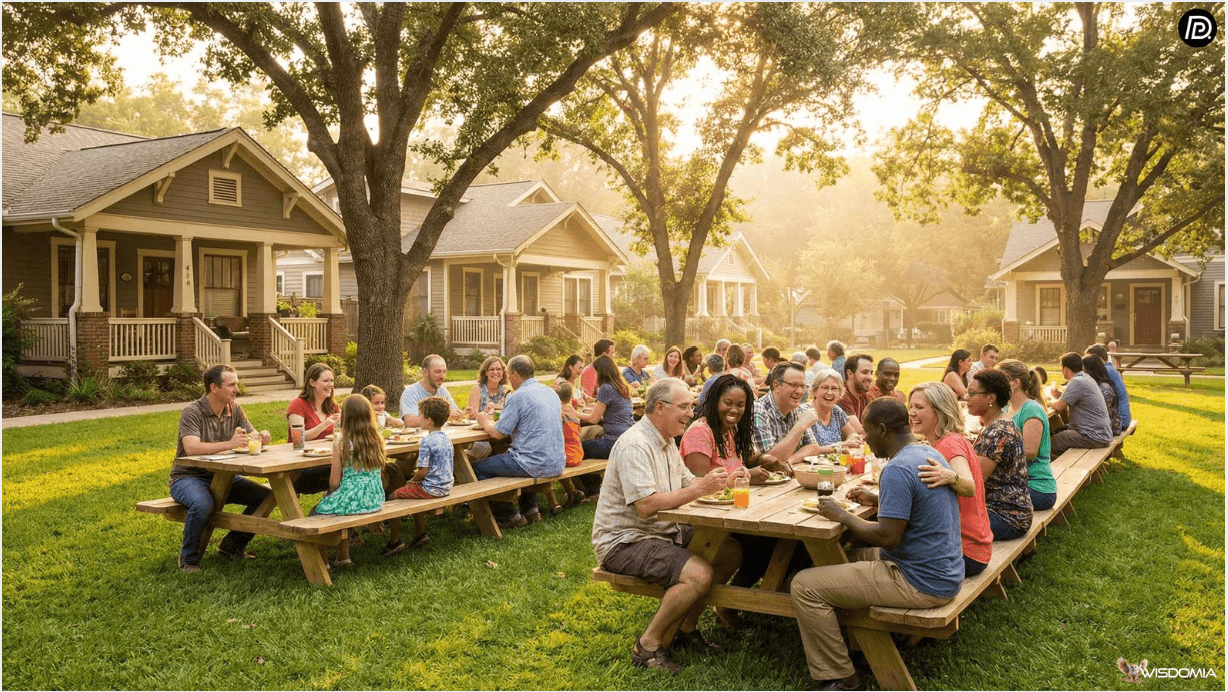
Know your neighbours.
Participate in local activities.
Support community initiatives.
Create opportunities for people of different ages and backgrounds to interact or celebrate together.
5. Use technology intentionally
Ask whether an application helps you learn, work, or strengthen relationships, or consumes your attention.
Disable unnecessary notifications and protect time away from screens.
6. Make service part of everyday life
Offer help without always expecting something in return.
Share experience, mentor someone, volunteer, or support someone facing difficulties.
Meaningful relationships often grow through shared responsibility.
7. Protect time for reflection
Yoga, meditation, prayer, a walk in nature or quiet contemplation can help us recognise when our lives have become overly reactive.
Ask yourself occasionally:
Who have I genuinely connected with this week?
Have I listened to someone who needed support?
Am I giving my family and friends enough attention?
Am I building relationships or merely accumulating contacts?
Small questions can lead to meaningful changes.
Should Technology Companies Take More Responsibility?
As someone working in the technology sector, I believe this conversation must also extend to the companies designing our digital systems.
For years, many platforms have measured success through engagement.
Time spent.
Number of interactions.
Daily active users.
Messages exchanged.
Content consumed.
These metrics are commercially important, but they do not necessarily measure human wellbeing.
A platform can maximise engagement while leaving people exhausted or dissatisfied.
An AI companion can encourage repeated interaction without necessarily improving someone's wider social relationships.
An education platform can deliver answers quickly without ensuring students understand them.
Perhaps we need a broader definition of successful technology.
What if we evaluated products partly on whether they help people learn independently?
Build useful skills?
Make informed decisions?
Strengthen healthy relationships?
Participate in communities?
Maintain control over their attention?
These outcomes are harder to measure than clicks and screen time.
But they may be more important for society.
I believe responsible AI and human-centred technology should increasingly consider these dimensions.
Not only whether a system is efficient.
But whether it strengthens the human capabilities and relationships that make efficiency worthwhile.
From a Small Village to a Connected World
Reflecting on my journey, I see two very different worlds.
One was the village environment of my childhood.
Limited or no technology. Fewer resources. Strong everyday dependence on people and community.
The other is the digitally connected world in which I now work.
Global communication. Extraordinary information access. AI-powered tools. Opportunities extending across countries.
I value both experiences.
I would not want to return to a world without modern technology.
But I would also not want future generations to lose the human qualities I learned in my early life.
Resourcefulness.
Patience.
Respect for others.
Listening.
Trust.
Shared responsibility.
Community participation.
And the understanding that we often achieve more when we support one another.
These values are not outdated.
They may be becoming more important.
As artificial intelligence takes over more routine tasks, distinctly human capabilities such as empathy, judgment, relationship-building and responsible leadership will remain essential.
The challenge is not to reject digital connection.
It is to ensure that digital connection strengthens our human relationships instead of gradually replacing them.
A Final Thought: Being Connected Is Not the Same as Being Together
Today, we can communicate with the world instantly.
But we cannot build trust instantly.
We can access information from almost anywhere.
But we cannot acquire every life skill without practice.
We can speak to AI whenever we want.
But that does not remove our need for genuine human relationships.
And we can accumulate thousands of online connections while still longing for someone who understands us.
I believe the next stage of technological progress should pay greater attention to these human needs.
We need technology that makes us more capable without making us unnecessarily dependent.
More informed without becoming less thoughtful.
More connected without becoming less present.
And more successful without losing our sense of belonging.
For me, the journey from Dhorimanna to London has reinforced one lesson above all:
The real strength of a connected society is not the number of people we can reach. It is the time we invest and the depth of the relationships we are willing to build.
Perhaps the next time we feel the urge to check another notification, we should ask ourselves a different question.
Is there someone in my life who would benefit more from a conversation than another message?
Because in a world where everyone is connected, being genuinely present for someone may become one of the most valuable human gifts.
Share

Dilip Pungliya
Industry Expert & Contributor
Dilip Pungliya is a business leader, Artificial Intelligence consultant, blockchain advisor, metaverse solution expert, data leader, technologist, and business, process, & technology architect. As a board member and significant shareholder of ztudium, Dilip brings a wealth of experience in business leadership and data technology. In his role as the Managing Partner of the ztudium Group, he benchmarks his strategic acumen in steering effective strategy and framework development for the company. Dilip also plays a pivotal role in his family's limited company in India, VPRPL, where he oversees operations and strategic planning. His professional journey includes impactful collaborations with esteemed organisations such as Shell, the Department for Environment Food and Rural Affairs, Deutsche Bank, ICBC Standard Bank Plc, BNP Paribas, and HSBC Investments. Beyond his professional endeavours, Dilip is deeply committed to philanthropy and charitable work, particularly during the global challenges presented by the COVID-19 pandemic.