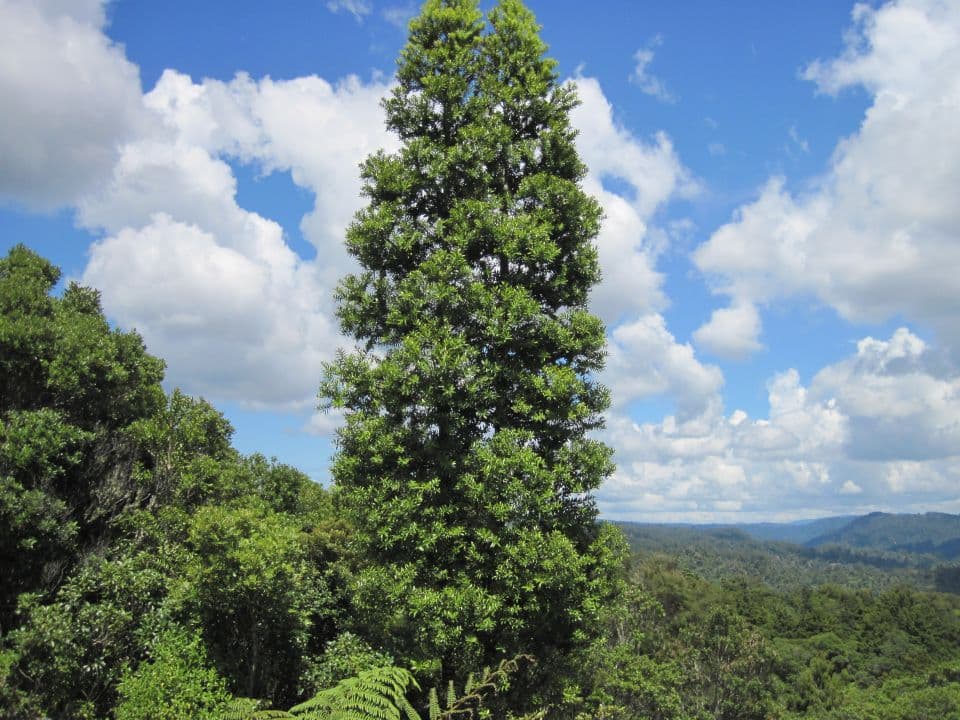

The Kauri tree, scientifically known as Agathis australis, is a colossal evergreen tree species that is native to the North Island of New Zealand. These trees are among the worlds largest trees by volume, with the largest known Kauri tree, Tane Mahuta, having a girth of over 15 meters and standing more than 50 meters tall. The Kauri tree forms an integral part of the flora of New Zealand and plays a significant role in the countrys ecology and cultural heritage.
The Kauri tree is a coniferous species, belonging to the Araucariaceae family. It is a slow-growing tree which can live for over 1000 years. The tree is characterized by its large size, straight trunk, small, narrow leaves, and spherical cones. The bark of the Kauri tree is smooth and grey, which peels off in flakes as the tree grows.
Kauri trees are known for their magnificent timber, which is strong, straight-grained and resistant to rot. The timber of these trees has been used extensively throughout history for a variety of purposes, including shipbuilding, house construction, and furniture making. The gum of the Kauri tree, known as Kauri gum, was also historically used in the manufacture of varnishes and linoleum.
Kauri trees have a unique ecological role in New Zealand. They are a keystone species, meaning that they have a disproportionately large effect on their environment relative to their abundance. Kauri forests create a unique soil type, known as Kauri podsol, which supports a distinctive community of plant and animal species. These forests also play a crucial role in maintaining water quality by reducing soil erosion and sedimentation in waterways.
Despite their ecological importance, Kauri trees are currently facing a major threat from a disease known as Kauri dieback. This disease is caused by a soil-borne pathogen, Phytophthora agathidicida, which infects the roots of Kauri trees and causes them to rot. The disease has already resulted in the death of a significant number of Kauri trees and poses a serious threat to the continued survival of this iconic species.
Efforts are currently underway to save the Kauri tree from extinction. These include research into the disease and potential treatments, as well as measures to prevent the spread of the disease, such as cleaning stations at the entrance to Kauri forests where visitors are required to clean their shoes to prevent the spread of the pathogen. However, the future of the Kauri tree remains uncertain, and it is listed as a threatened species by the International Union for Conservation of Nature (IUCN).
In addition to their ecological importance, Kauri trees also have significant cultural value. For the Maori people, the indigenous population of New Zealand, Kauri trees are considered taonga, or treasures. They feature prominently in Maori mythology and tradition, and the wood and gum of the Kauri tree have been used by Maori for carving and other crafts. The continued survival of the Kauri tree is therefore not just an ecological issue, but also a cultural one.
Despite the challenges facing the Kauri tree, it remains a symbol of New Zealand's unique flora and a testament to the country's rich ecological and cultural heritage. The majesty and longevity of the Kauri tree make it a remarkable species, and efforts to protect and conserve it are of paramount importance for the future of New Zealand's biodiversity. Whether it is the towering Tane Mahuta or the countless other Kauri trees that populate New Zealand's forests, the Kauri tree is a species that deserves our attention, respect, and care.
The Kauri tree, scientifically known as Agathis australis, is an iconic tree species endemic to the northern parts of New Zealand. A majestic species, the Kauri tree is amongst the world's mightiest trees, growing to over 50 metres tall, with trunk girths up to 16 metres, and living for over 2,000 years. The Kauri tree has played a significant role in the lives of the Maori people and the settlers who arrived in New Zealand centuries later.
In Maori culture, the Kauri tree was considered a taonga, or treasure. The tree's large size and the quality of its timber made it valuable for building waka, or canoes, and for constructing houses and fortified pa, or villages. The gum of the Kauri tree was also used by the Maori for starting fires, as it burns easily, and for making torches. It was also chewed as a form of gum and used for making jewellery and ornaments. Additionally, the soot from burnt Kauri gum was mixed with animal fats to create a pigment for traditional Maori tattoos, known as moko.
With the arrival of European settlers in the 19th century, the Kauri tree became even more sought after. The settlers recognised the value of the tree's timber for shipbuilding, due to its strength and durability. Kauri forests were heavily logged throughout the 19th and early 20th centuries, leading to the loss of most of the original Kauri forests. The timber was also used for building houses, furniture, and other structures, while the gum was collected and used in the production of varnish and linoleum.
In addition to its practical uses, the Kauri tree also held symbolic significance for both the Maori people and the settlers. For the Maori, the Kauri was seen as a symbol of strength and endurance, reflecting its ability to live for thousands of years. The settlers, on the other hand, saw the Kauri as a symbol of New Zealand's natural wealth and potential for growth. Even today, the Kauri is often used as a symbol of New Zealand, representing the country's unique flora and natural beauty.
Despite its historical importance and cultural significance, the Kauri tree is now under threat. The main threat to the Kauri is a disease known as Kauri dieback, caused by a microscopic fungus-like organism. This disease is spread through soil movement and can kill Kauri trees of all ages. Efforts are currently underway to control the spread of Kauri dieback, with measures such as cleaning stations at forest entrances and exits, and the closure of certain forest tracks.
Human interaction with the Kauri tree has also changed over time. While the tree was once heavily exploited for its timber and gum, logging of Kauri trees is now strictly controlled to prevent further loss of these magnificent trees. Instead, the emphasis is now on protecting and conserving the remaining Kauri forests. This includes efforts to restore logged Kauri forests by planting young Kauri trees and other native plant species.
The Kauri tree also continues to play a role in New Zealand's economy, although in a different way than in the past. Today, the Kauri is a major attraction for tourists, who come to see the impressive trees in protected parks and reserves. The largest remaining Kauri tree, Tane Mahuta, which stands over 50 metres tall and is estimated to be between 1,250 and 2,500 years old, is a popular tourist destination. There is also a thriving trade in Kauri gum and Kauri crafts, made from fallen Kauri wood and gum recovered from swamps.
In conclusion, the Kauri tree has had a long and complex relationship with humans, from its use by the Maori and the settlers to its role in today's conservation efforts. Despite the challenges it faces, the Kauri tree remains a symbol of strength and endurance, reflecting its ability to survive and thrive in the face of adversity. The story of the Kauri tree is a testament to the enduring connection between humans and the natural world, and the need to protect and preserve this for future generations.
The Kauri tree, part of the Araucariaceae family, is a significant emblem in the cultures of the islands in the South Pacific, particularly in New Zealand, where it is indigenous. This majestic tree is known for its long lifespan, reaching up to 2000 years, with some of the largest and oldest known living Kauri trees located in the Waipoua Forest of Northland, New Zealand.
In Maori culture, the Kauri tree is seen as a symbol of strength, durability, and longevity. The tree's ability to survive for many centuries makes it a powerful emblem of resilience and survival. The Kauri tree has traditionally been used in Maori carvings and is considered a taonga (treasure) by the Maori people, who believe it possesses mana (spiritual power).
The Maori also believe that the Kauri tree is a descendant of Tane Mahuta, the god of forests and birds, and the progenitor of all living creatures in Maori mythology. Tane Mahuta is believed to have created the first human by breathing life into a form he had carved from the earth. This association with the creation of life further enhances the symbolic significance of the Kauri tree.
The Kauri tree also plays an important role in other cultural practices. For instance, in the construction of waka (canoes), the Maori people would use Kauri wood for its strength and resistance to rot. The Kauri gum, a resinous substance exuded by the tree, was also used in various industries, such as making fire starters, varnish, and chewing gum.
Even today, in modern New Zealand, the Kauri tree is highly valued, not only for its economic benefits but also for its cultural and symbolic importance. The Kauri tree is a protected species in New Zealand, and conservation efforts are in place to preserve these ancient trees and their unique ecosystems.
The Kauri tree has also played a significant role in the history of New Zealand. Kauri logging was a major industry in the 19th and early 20th centuries, contributing greatly to the country's economy. However, overexploitation led to the decline of the Kauri population, prompting conservation efforts in the latter part of the 20th century.
Today, Kauri dieback disease further threatens the Kauri tree population. This disease, caused by a soil-borne fungus-like organism, can kill Kauri trees of all ages. The disease is spread through soil movement, and a significant part of the conservation efforts involves educating the public about the importance of cleaning their footwear and equipment before entering and leaving Kauri forests.
Despite these challenges, the Kauri tree continues to stand as a symbol of resilience and survival. Its towering height, enormous girth, and deep roots mirror the strength and perseverance of the Maori people and their culture. The Kauri tree's significant cultural and symbolic importance is a testament to its enduring power and influence.
From its place in Maori mythology to its role in the history and economy of New Zealand, the Kauri tree's significance extends far beyond its physical presence. Its value as a cultural icon is deeply ingrained in the New Zealand identity, and the ongoing efforts to protect and preserve this majestic tree are a testament to its enduring importance.
In conclusion, the Kauri tree, with its immense size, long lifespan, and rich cultural and symbolic significance, stands as a powerful emblem in the South Pacific. Its influence extends far beyond the forests where it grows, touching the lives and cultures of the people who revere it. As we move forward, the stories and significance of the Kauri tree must continue to be shared and preserved, ensuring that future generations can appreciate and learn from this remarkable symbol of strength, resilience, and survival.
The Kauri tree, Agathis australis, is one of the most magnificent trees in the world. With their smooth, grey bark and towering trunks that stretch upwards towards the sky, these trees are a sight to behold. They boast of a regal aesthetic that has long captured the hearts of anyone lucky enough to witness their grandeur.
The aesthetic appeal of the Kauri tree lies in its size, its shape, and the sheen of its bark. These trees are among the largest by volume in the world. Mature Kauris can reach up to 50 meters in height and have girths of up to 16 meters. Their trunks are cylindrical and straight, often devoid of branches on the lower half, which adds to the dramatic visual impact. The bark is smooth and flaky, with a silver-grey color that shines in the sunlight.
From a distance, a stand of Kauri trees appears like a collection of massive columns holding up the sky. Close-up, the scale of these trees is even more awe-inspiring. The trunks are so large that it can take a dozen people with outstretched arms to encircle one. The branches, which start high up the trunk, spread out to form a canopy that provides a dense shade, creating a unique microclimate beneath.
Kauri trees have a significant experiential aspect. The experience of standing beneath a Kauri, looking up at its vast, almost unending trunk and the green canopy far above, is a humbling one. It gives one a sense of the scale of nature and our place within it. It’s like standing inside a natural cathedral, with the silence only broken by the sound of the wind rustling through the leaves and the occasional call of a bird.
The Kauri tree is not just a visual spectacle; it also engages the other senses. The bark has a distinctive, resinous smell, especially after rain. The leaves, when crushed, release a fresh, green scent. The sound of the wind in the branches far above can be a whisper or a roar, depending on its strength. And there’s a tactile element too – the smoothness of the bark, the roughness of the fallen leaves, the sponginess of the ground underfoot in a Kauri forest.
At night, under a clear sky, the silhouette of a Kauri tree against the starry backdrop is a sight to behold. The tree seems to be reaching up to touch the stars. Its grandeur is all the more stark in the dark, a silent, enduring presence that has stood the test of time.
Each Kauri tree is an ecosystem in itself. A mature Kauri can support a host of other plants – epiphytes and vines – on its trunk and branches. These, in turn, provide habitat for a variety of birds, insects and other creatures. The ground beneath a Kauri is covered with a layer of fallen leaves, seeds and cones, providing a rich ground for fungi and a myriad of invertebrates. The Kauri, thus, enriches its environment, adding to its aesthetic and experiential appeal.
The Kauri tree has been a part of the human experience for centuries. For the Maori, the indigenous people of New Zealand, the Kauri has deep spiritual significance. They see it as a link between the heavens and the earth. The Kauri is also a symbol of strength and endurance, a theme that is reflected in many Maori myths and legends.
The Kauri tree, with its grandeur and beauty, has a profound effect on those who experience it. Its aesthetic appeal is undeniable, but it’s the experiential aspect – the sense of awe and wonder, the feeling of being connected to something larger than oneself – that truly sets it apart. Whether viewed from a distance or up close, in daylight or under a starlit sky, the Kauri tree is a testament to the majesty of nature.