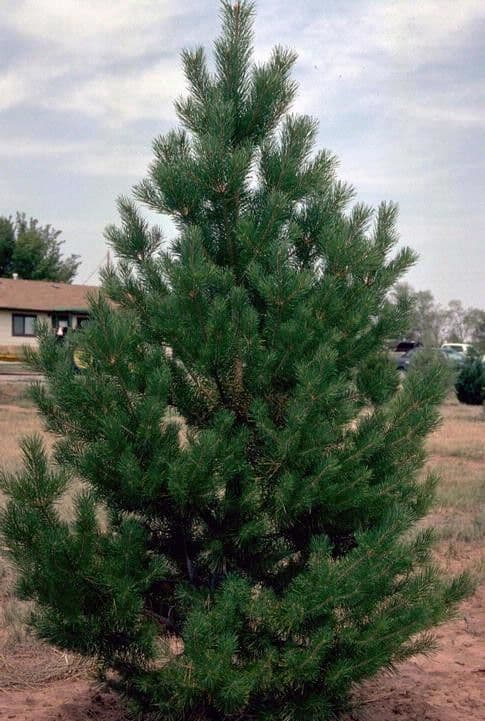

The Scots Pine, scientifically known as Pinus sylvestris, is a species of pine native to Europe and Asia. It is an evergreen conifer, meaning it retains its green foliage throughout the year. It is the only pine native to northern Europe and is considered one of the most widely distributed conifer species in the world.
The tree is characterised by its tall, straight trunk, and its crown which is often asymmetrical. The bark is a distinctive orange-red colour, which peels off in scales as the tree ages. The needles are blue-green in colour and are produced in pairs. The cones are elongated and have a unique shape with a rounded base and a pointed tip.
The Scots Pine is a hardy tree that can thrive in a variety of soil types. It is tolerant of poor soil conditions and is often found in areas where other trees struggle to grow. It can withstand harsh winters and is resistant to many diseases and pests. This resilience makes it a popular choice for reforestation efforts and for use in landscaping and horticulture.
The wood of the Scots Pine is valued for its strength and durability. It is used in construction, furniture making and for the production of pulp for paper. The resin is used in the production of turpentine and the needles are used in the production of essential oils. The tree also plays an important role in the ecosystem, providing habitat for a variety of wildlife and helping to prevent soil erosion.
Despite its wide distribution, the Scots Pine is facing threats from deforestation and climate change. Changes in land use, such as the conversion of forests to agricultural land, have led to a decline in its numbers in some areas. Climate change is also affecting the tree's range and distribution, with warmer temperatures leading to a shift in its preferred habitat.
Conservation efforts are underway to protect the Scots Pine. These include the establishment of protected areas, reforestation efforts and research into the tree's genetic diversity. These measures are crucial to ensure the survival of this important species and the ecosystems it supports.
The Scots Pine has a long history of use by humans. In ancient times, it was revered as a sacred tree and was used in religious ceremonies. Its wood was used to build houses and ships, while its resin was used for medicinal purposes. Today, the tree continues to be used in a variety of ways, from timber production to the creation of Christmas trees.
The Scots Pine is a symbol of endurance and survival. It is a tree that can thrive in harsh conditions, and its ability to adapt and survive makes it a symbol of resilience. Its distinctive appearance and important role in the ecosystem make it a beloved tree in many cultures.
The Scots Pine is also an important part of the cultural and natural heritage of many countries. In Scotland, for example, it is a national symbol and is featured in many works of literature and art. It is also a popular subject for photography and is often featured in nature documentaries.
Despite the challenges it faces, the Scots Pine remains a vital part of our natural world. Its beauty, resilience and importance to both humans and wildlife make it a tree worth protecting. Through conservation efforts and sustainable use, we can ensure that future generations can continue to enjoy the benefits of this remarkable tree.
In conclusion, the Scots Pine is more than just a tree. It is a symbol of resilience, a provider of valuable resources and a crucial part of our natural world. It is a testament to the beauty and diversity of nature and a reminder of our responsibility to protect and preserve it for future generations.
The Scots Pine, scientifically known as Pinus sylvestris, is a species of pine that is native to Eurasia, ranging from Western Europe to Eastern Siberia, south to the Caucasus Mountains and Anatolia, and north to well inside the Arctic Circle in Scandinavia. It is a robust tree, known for its hardiness and adaptability, making it a popular choice for a variety of human uses and interactions.
Historically, Scots Pine has been extensively used for timber in its native regions. The wood is pale yellow or red-brown, hard, straight-grained, and resinous. It is highly valued for its strength and durability, making it an excellent choice for construction. It has been used for centuries in shipbuilding, house construction, flooring, and furniture making. In fact, the extensive use of Scots Pine for shipbuilding in the 18th and 19th centuries led to significant deforestation in some parts of its range.
In addition to its use as timber, the Scots Pine has played a vital role in land management and reforestation efforts. Because of its hardiness and adaptability, it is often used in reforestation projects to stabilize soil and prevent erosion. It is also planted in parks and gardens for its ornamental value. Its high tolerance to wind and sea spray makes it an ideal choice for coastal planting schemes. In some parts of northern Europe, it is used in windbreaks and shelterbelts to protect crops and livestock from harsh weather conditions.
The Scots Pine is also a significant species for biodiversity. Its bark provides a habitat for several species of lichens and mosses, and its seeds are a food source for birds and small mammals. The tree itself provides nesting sites for birds and roosting sites for bats. In some parts of the world, it is considered a keystone species, playing a critical role in maintaining the structure of an ecological community.
However, the human interaction with Scots Pine is not limited to its practical uses. It has also been a part of cultural and spiritual practices for centuries. For example, in some cultures, the Scots Pine is associated with certain deities and is used in rituals and ceremonies. It is also a popular choice for Christmas trees, especially in Europe.
In the field of medicine, the Scots Pine has been used in various traditional remedies. The resin, needles, bark, and seeds have all been used for their medicinal properties. It has been used to treat respiratory conditions, skin problems, and as an antiseptic. Modern research has also shown that Scots Pine contains several compounds with potential health benefits, including antioxidants and anti-inflammatory substances.
Despite its extensive uses and benefits, the Scots Pine also faces several threats due to human activities. Deforestation, overexploitation, and climate change are some of the challenges that this species is currently facing. These threats not only affect the Scots Pine but also the biodiversity that depends on it.
Therefore, conservation efforts are crucial in ensuring the survival of the Scots Pine and the ecosystems it supports. These include responsible harvesting practices, habitat preservation, and reforestation programs. Public awareness and education about the importance and uses of Scots Pine are also key factors in its conservation.
In conclusion, the Scots Pine is a species that has been intricately woven into human culture and practices. Its uses range from practical applications such as timber and land management to cultural and medicinal uses. However, with the current threats it faces, concerted conservation efforts are necessary to ensure its survival for future generations to benefit from.
The Scots Pine, scientifically known as Pinus sylvestris, is a tree species that holds significant cultural and symbolic meaning in various communities around the world. It is a tree that is deeply embedded in the folklore, traditions, and history of many cultures, symbolizing endurance, longevity, and resilience. This tree, known for its towering height, robust trunk, and beautiful foliage, is a beloved symbol in many regions.
In the Celtic culture, the Scots Pine is associated with wisdom, longevity, and endurance. The Celts believed that this tree had the power to protect against evil spirits and bring good fortune. In the Druidic tradition, the Scots Pine is considered a sacred tree and is used in rituals and ceremonies. It is also associated with the winter solstice, a time of rebirth and renewal, where it is believed to hold the power of life over death. The pinecones and needles of the Scots Pine are also used in folk medicine and magic rituals for their believed healing and protective properties.
In Scottish folklore, the Scots Pine is seen as a symbol of nationalism and identity. It is a tree that is deeply rooted in the Scottish landscape, and its image is often used in heraldry and other forms of symbolic representation. In fact, the Scots Pine is so closely associated with Scotland that it has been declared the national tree of the country. It was also believed to be a guardian tree, protecting the land and the people from harm.
In Northern European mythology, the Scots Pine is associated with Thor, the god of thunder. The ancient people believed that this tree was sacred to Thor because of its association with lightning. They believed that when lightning struck a Scots Pine, it was an indication of the presence of Thor. This tree was also seen as a symbol of protection and was often planted near homes to ward off evil spirits and bring good fortune.
The Scots Pine also holds symbolic significance in other cultures. For example, in Japanese culture, the pine tree is seen as a symbol of longevity, good fortune, and steadfastness. It is often used in bonsai, a traditional Japanese art form that involves growing small trees that mimic the shape and scale of full-size trees. The Scots Pine, with its strong trunk and beautiful, evergreen foliage, is a popular choice for this art form.
In Russian culture, the Scots Pine is seen as a symbol of strength and endurance. It is often used in traditional medicine for its believed healing properties. The resin, needles, and bark of the Scots Pine are used in various medicinal preparations for their antiseptic, anti-inflammatory, and expectorant properties.
Even in modern times, the Scots Pine continues to hold symbolic significance. It is often used as a Christmas tree, representing the spirit of the holiday season. Its evergreen foliage symbolizes eternal life, while its tall, strong trunk symbolizes the steadfastness of faith. The pinecones, often used as decorations, symbolize growth and renewal.
Overall, the Scots Pine is more than just a tree. It is a symbol that has deep cultural and historical significance. It represents the endurance and resilience of nature, the wisdom and protection of the ancients, and the beauty and elegance of the natural world. Its presence in various traditions and rituals, its use in traditional medicine, and its symbolic associations make the Scots Pine a tree that is deeply rooted in our cultural consciousness.
The cultural and symbolic significance of the Scots Pine is a testament to the deep connection that humans have with nature. It serves as a reminder of our roots and our relationship with the natural world. As we continue to explore the significance of this tree, we are reminded of the rich tapestry of traditions, beliefs, and symbols that are intertwined with our natural environment. As such, the Scots Pine is not just a tree, but a symbol of our shared cultural heritage and our collective human experience.
Scots Pines are a captivating sight to behold. Often towering over 120 feet, they are the embodiment of strength and resilience. Native to Europe and Asia, these conifers paint an aesthetic of rustic wilderness, a throwback to times when forests dominated the landscape. Their tall, straight trunks, covered in a richly textured bark that ranges from a deep, earthy brown to an almost silvery white, are a testament to their endurance and longevity. The bark peels off in scales, revealing an underbark that is a beautiful, vibrant red-orange, which adds an additional layer of visual interest to the tree.
The crown of a Scots Pine is equally impressive. It is usually asymmetrical, with large, sweeping branches that give the tree a rugged, windswept look. The needles are a deep, rich green, and they are often tinged with blue, which makes them stand out beautifully against the backdrop of the bark. The cones are a lovely shade of chestnut brown, and they add a unique aesthetic element to the tree. In the winter, when the tree is dusted with snow, the contrast between the white snow, the green needles, and the brown cones is simply breathtaking.
But the aesthetic appeal of the Scots Pine extends beyond its physical characteristics. There is a certain romance attached to it, a sense of nostalgia. It is, after all, one of the few remaining links to the ancient Caledonian forest that once covered much of Scotland. Standing beneath a Scots Pine, one can almost hear the whispers of the past, the rustle of leaves echoing tales of a time long gone.
Experiencing a Scots Pine forest is not just a visual treat, but an immersive sensory experience. The air is filled with the fresh, invigorating scent of pine, a fragrance that has been associated with cleanliness and vitality for centuries. The sound of the wind rustling through the needles creates a soothing, natural music that can calm the most troubled mind. Touching the rough bark, feeling the sharpness of the needles, provides a tactile connection to nature that is often missing in our modern, digital world.
Walking through a Scots Pine forest is like stepping into a different world. The trees form a natural cathedral, their tall trunks reaching up towards the sky like pillars, their branches interweaving to form a canopy that filters the sunlight, casting a soft, dappled light on the forest floor. The forest floor itself is a tapestry of life, with mosses, lichens, and ferns creating a lush undergrowth that adds to the feeling of being in a primeval, untouched world.
The Scots Pine is not just a tree, but an ecosystem in itself. It provides a home for a variety of wildlife, from birds that nest in its branches to insects that find refuge in its bark. The cones provide food for squirrels and other small mammals, and the needles that fall to the ground decompose to enrich the soil. Experiencing the Scots Pine is to experience a complex, interconnected web of life.
Scots Pines are also a symbol of resilience. They can withstand harsh conditions, from the freezing winters of the Scottish Highlands to the dry, sandy soils of the coastal areas. This ability to adapt and thrive in a variety of conditions is a testament to their strength and tenacity. The sight of a Scots Pine standing tall and strong against the elements is a powerful reminder of the resilience of nature.
Overall, the aesthetic and experiential qualities of the Scots Pine make it a truly remarkable tree. It is a visual spectacle, a sensory delight, a link to the past, a home for wildlife, and a symbol of resilience. Whether you are observing it from a distance, walking through a forest of Scots Pines, or simply sitting beneath one, taking in its majesty, the Scots Pine offers an experience that is at once grounding and uplifting.