Do the Hanging Gardens of Babylon Still Exist? Exploring Ancient Legends
Hanging Gardens of Babylon, Seven Wonders of the Ancient World, ancient engineering, lost wonders, ancient history, Babylon, historical mysteries, archaeological discoveries, ancient civilisations, legendary gardens
28 Apr 2025

For millennia, the Hanging Gardens of Babylon have captured our collective imagination as one of the Seven Wonders of the Ancient World. These legendary gardens, said to be built by King Nebuchadnezzar II in the 6th century BCE, have long been considered lost to time—but might they still exist in some form? This article explores the fascinating history, legends, and modern discoveries surrounding this magnificent ancient wonder.
The Ancient Legend
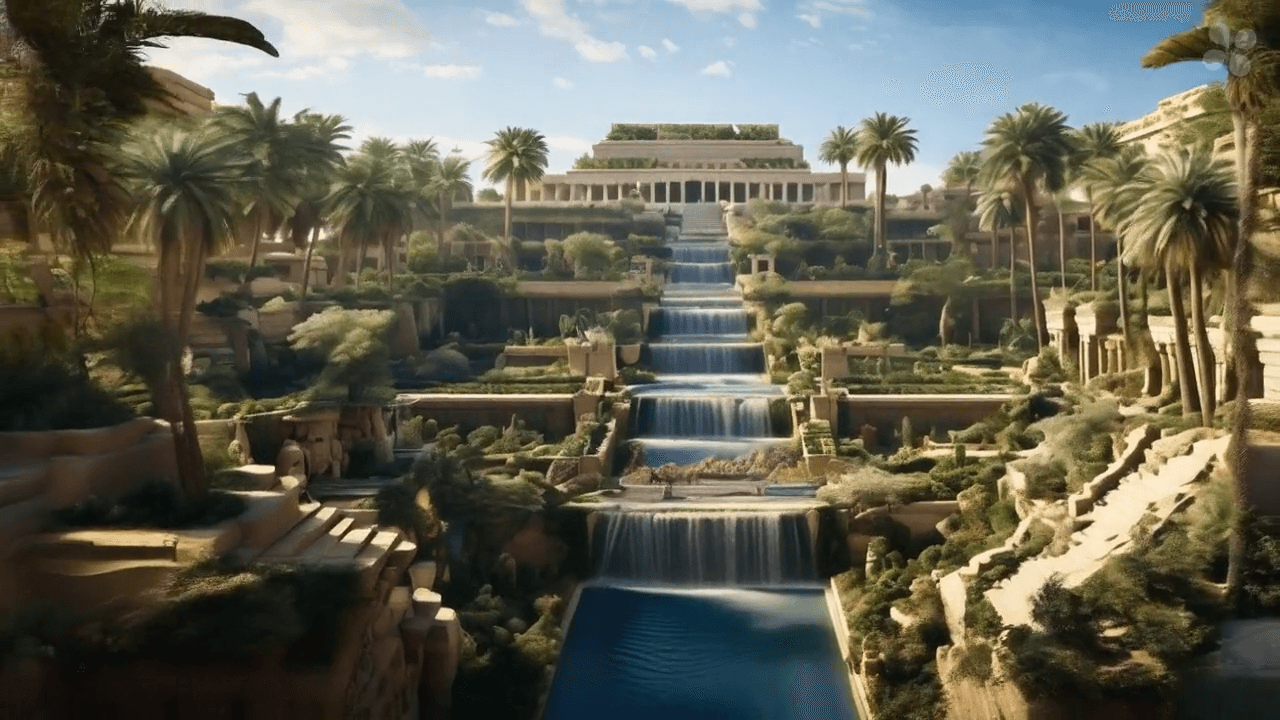
The Hanging Gardens were described as a remarkable feat of engineering—an ascending series of tiered gardens containing a vast variety of trees, shrubs, and vines. According to ancient accounts, the gardens appeared to "hang" in the air, creating a lush, verdant paradise in the heart of the Mesopotamian desert.
Ancient wisdom suggests that Nebuchadnezzar II commissioned the gardens to console his wife, Queen Amytis, who longed for the green mountains of her homeland. This romantic origin story adds to the mystique that has surrounded the gardens throughout history.
The Greek historian Diodorus Siculus described them as being supported by stone columns and irrigated by water lifted from the Euphrates River through an ingenious system of mechanical devices. These descriptions paint a picture of technological sophistication that would be impressive even by today's standards.
The Archaeological Puzzle
For centuries, archaeologists have searched the ruins of Babylon in present-day Iraq for evidence of these magnificent gardens, yet concrete proof has remained elusive. This absence of physical evidence has led some scholars to question whether the gardens ever existed at all.
The most perplexing aspect of this mystery is that whilst other ancient wonders like the Great Pyramid at Giza left behind substantial physical remains, the Hanging Gardens seem to have vanished completely. No Babylonian texts mention them, which is particularly strange for what would have been such a monumental achievement.
Modern Theories and Discoveries
Recent archaeological work has offered intriguing new perspectives. Professor Stephanie Dalley of Oxford University proposed a compelling theory that the gardens were actually located in Nineveh (near modern Mosul), built by the Assyrian King Sennacherib—not in Babylon at all. Her research suggests that Greek historians may have confused Babylon with Nineveh, attributing the gardens to the wrong location and ruler.
Archaeological evidence from Nineveh includes the remains of an advanced aqueduct system and stone carvings depicting lush gardens. The discovery of Sennacherib's tablets boasting about his "palace without rival" with elaborate water technologies lends credence to this theory.
The Cultural Legacy
Whether or not the physical gardens survive in any form, their cultural legacy most certainly endures. The concept of the Hanging Gardens has influenced garden design throughout history, from Persian paradise gardens to modern vertical gardening and urban greening initiatives.
The enduring fascination with the gardens speaks to their symbolic power—representing humanity's desire to create beauty, to merge the natural world with human ingenuity, and to transform hostile environments into paradises.
Rediscovering Ancient Wisdom
The quest to understand the Hanging Gardens continues to yield valuable insights into ancient engineering, agriculture, and cultural practices. The ancient wisdom embedded in descriptions of the gardens' irrigation systems has provided inspiration for modern sustainable water management techniques in arid regions.
The gardens represent a profound understanding of the psychological importance of green spaces—something increasingly validated by modern research showing the positive effects of nature on mental wellbeing. In this way, the ancient wisdom behind the creation of these gardens resonates powerfully with contemporary concerns.
Looking Forward
While we may never definitively answer whether the Hanging Gardens still exist in physical form, their legacy thrives in our continued exploration of their mystery. Advanced technologies like satellite imagery, ground-penetrating radar, and computer modelling are now being deployed to search for evidence in previously unexplored areas.
Climate change and ongoing conflicts in the region have complicated archaeological work, but they've also heightened the urgency of documenting and preserving the cultural heritage of Mesopotamia—the cradle of civilisation.
Conclusion
The question of whether the Hanging Gardens of Babylon still exist leads us down fascinating paths of historical inquiry, archaeological discovery, and cultural reflection. Perhaps the gardens' greatest achievement is not in their physical construction but in their ability to inspire wonder across millennia.
The ancient wisdom that conceived of a paradise garden in the desert continues to inspire modern innovations in architecture, urban planning, and environmental design. In this sense, the spirit of the Hanging Gardens lives on—a testament to human creativity and our eternal desire to create beauty in unlikely places.
As we face modern environmental challenges, the legendary gardens remind us of our ancestors' ingenuity in harmonising human needs with natural systems—wisdom that may prove invaluable as we design the sustainable cities of tomorrow.
Share

Hind MoutaoikiI
R&D Manager
Hind is a Data Scientist and Computer Science graduate with a passion for research, development, and interdisciplinary exploration. She publishes on diverse subjects including philosophy, fine arts, mental health, and emerging technologies. Her work bridges data-driven insights with humanistic inquiry, illuminating the evolving relationships between art, culture, science, and innovation.