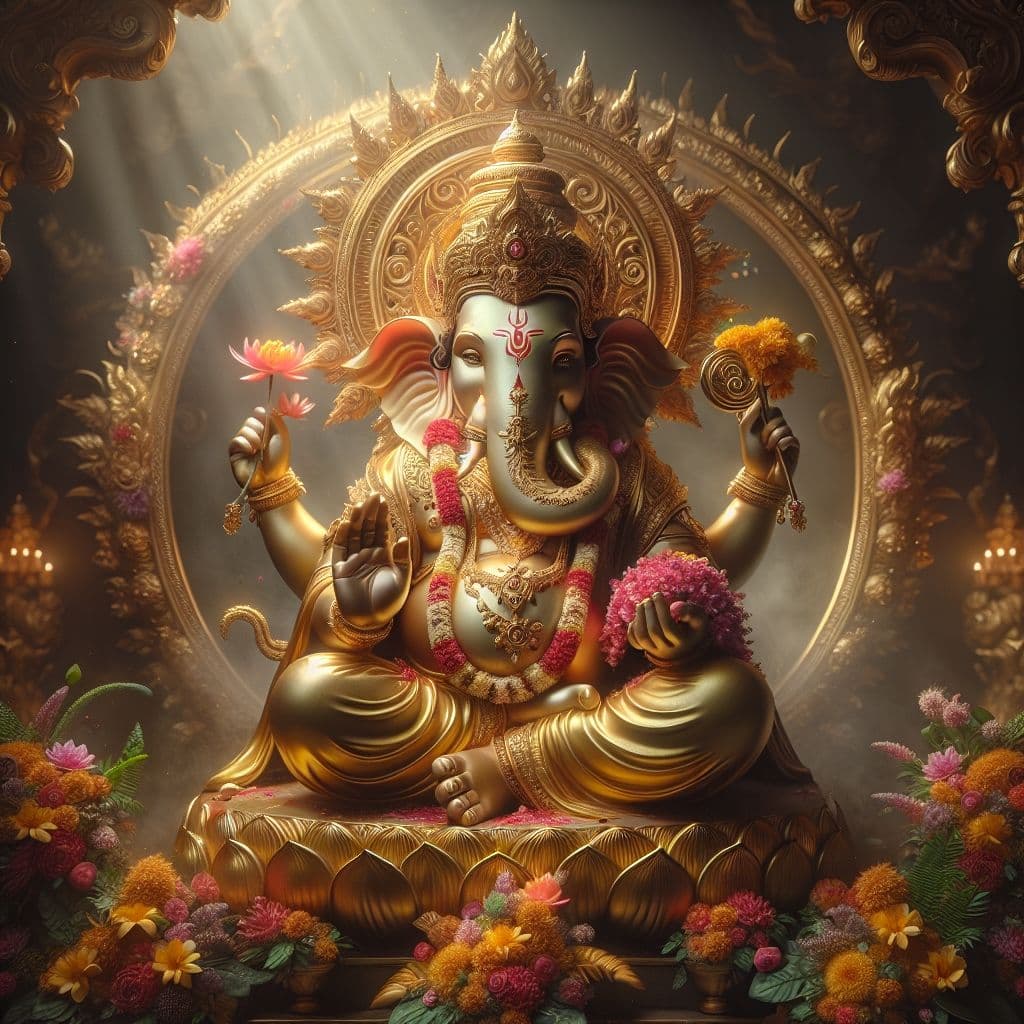

Lord Ganesh, also known as Ganesha, Ganapati, and Vinayaka, is a highly revered deity in Hinduism. His significance as the god of beginnings, wisdom, intellect and the remover of obstacles is deeply rooted in the Hindu culture. His influence spans India and reaches Hindu communities worldwide, making him a beloved figure irrespective of regional or sectarian differences.
Devotees commonly invoke Ganesh's blessings at the start of new ventures, ceremonies, and rituals, as he represents prosperity and good fortune. Understanding his role in Hinduism provides a deeper insight into the religion's culture and spirituality.
Lord Ganesha is revered through a diverse collection of one hundred-eight names, each highlighting a different attribute or role he embodies. The name "Ganesha" itself is derived from two Sanskrit words: "Gana," meaning group or multitude, and "Isha," meaning Lord, which together signify him as the Lord of the Multitudes.
Alongside this primary name, he is known by a multitude of other titles that further reflect his versatile nature and significance in the tradition, a testament to his multifaceted character and the depth of his influence.
Ganesh's iconography is distinctive and rich in symbolism, making his appearance easily recognisable. He is portrayed with the head of an elephant atop a significant human body, typically characterised by a pot belly and four arms. These key features highlight his unique identity in cultural depictions and inspire a sense of resilience and strength.
Noose, Harness challenges, and transforms negative traits into strengths.
The awe-inspiring transformation of Lord Ganesh, from his humble origins in the Vedic era to his emergence as one of the most cherished and revered gods in Hinduism, is a journey that captivates the imagination. His form and significance blossomed during the Gupta and post-Gupta periods, fostering regional diversity and a global presence.
The worship of Ganesha, the widely revered elephant-headed deity in Hindu tradition, is a complex and diverse tapestry of devotion that varies significantly across different regions of India and beyond, offering a fascinating insight into the rich complexity of Hindu culture.
Ganesh, widely recognised as a singular deity, is also depicted in various texts as having a rich tapestry of multiple incarnations or forms. The Mudgala Purana outlines eight incarnations of Ganesha, known as the Ashta Vinayaka, each aimed at overcoming different types of demonic forces. Additionally, the Ganesh Purana mentions other incarnations, though these are not as prominent as his primary form. Together, these diverse representations not only highlight Ganesha's divine nature but also enrich our understanding of the complexity of Hindu mythology.
Each incarnation represents a distinct facet of divine intervention and philosophical contemplation, illustrating how the divine essence might interact with the human experience.
Ganesha is celebrated in various Puranas, including the Shiva Purana, Ganesha Purana, and Mudgala Purana. These texts honour his wisdom and the profound lessons of his stories, inspiring us with their timeless teachings.
Wikipedia – Ganesha
https://en.wikipedia.org/wiki/Ganesha Wikipedia
Wikipedia – Ashtavinayaka
https://en.wikipedia.org/wiki/Ashtavinayaka Wikipedia
Wikipedia – Ganesha Purana
https://en.wikipedia.org/wiki/Ganesha_Purana Wikipedia
Wikipedia – Mudgala Purana
https://en.wikipedia.org/wiki/Mudgala_Purana Wikipedia
Wikipedia – Ganapati Atharvashirsha
https://en.wikipedia.org/wiki/Ganapati_Atharva%C5%9B%C4%ABr%E1%B9%A3a Wikipedia
Wikipedia – Ganesh Chaturthi
https://en.wikipedia.org/wiki/Ganesh_Chaturthi Wikipedia
Wikipedia – 108 Names of Ganesh
https://en.wikipedia.org/wiki/108_Names_of_Ganesh Wikipedia
Wikipedia – Mythological Anecdotes of Ganesha
https://en.wikipedia.org/wiki/Mythological_anecdotes_of_Ganesha Wikipedia
Institutional & Museum Sources
British Library – Ganesha Stavaraja manuscript (Endangered Archives Programme)
https://eap.bl.uk/archive-file/EAP790-4-28 EAP
Metropolitan Museum of Art – “Ganesha: Lord of New Beginnings” (exhibition)
https://www.metmuseum.org/exhibitions/ganesha The Metropolitan Museum of Art
British Museum – “Ancient India: Living Traditions” (exhibition featuring Ganesha objects)
https://www.britishmuseum.org/exhibitions/ancient-india-living-traditions British Museum
DrikPanchang – 108 Names of Lord Ganesha (Ashtottara Shatanamavali)
https://www.drikpanchang.com/deities-namavali/gods/lord-ganesha/108-ganesha-names.html Drik Panchang
TemplePurohit – “Why Ganesha Has One Tusk? The Story of the Broken Tusk”
https://www.templepurohit.com/ganesha-broken-tusk-story/ Temple Purohit
Buddha Weekly – “Buddhist Ganesha: Popular Ganapati’s Many Forms”
https://buddhaweekly.com/buddhist-ganesha-popular-ganapatis-many-forms-include-enlightened-emanation-avalokiteshvara-worldly-protector-bodhisattva-wrathful-tantric-deity-many/ Buddha Weekly
Times of India – “The Image of Ganesha and Its Meaning”
https://timesofindia.indiatimes.com/the-image-of-ganesha-and-its-meaning/articleshow/3437331.cms