Other namesMahadev, Bholenath, Shankar, Rudra
Sanskrit TransliterationShiva
AffiliationTrideva, Deva
AbodeMount Kailash

Lord Shiva, a central figure in Hinduism and a principal deity within the Shaivism tradition, embodies a complex blend of characteristics, making him a unique representation of the divine. He is part of the Trimurti, the holy trinity that includes Brahma, the creator, and Vishnu, the preserver. The Trimurti represents the three fundamental aspects of the divine, with each deity responsible for a specific function in the universe. Shiva, traditionally called the destroyer, embodies both destruction and transformation, clearing the path for new creation.
Worshipped widely across India and beyond, Shiva symbolizes destruction and regeneration, illustrating the paradox of creation and dissolution. He is revered as the destroyer of evil, the cosmic dancer, and the lord of meditation. His persona, beautifully balanced, reflects the duality of asceticism and domesticity, showcasing the harmony between spiritual and worldly life.
As an omnipotent (all-pervading), omniscient (all-knowing), and omnipresent (all-powerful) force, Shiva governs the universe and maintains the cycles of life. His followers believe that his awe-inspiring power facilitates transformation in the material world and within the spiritual realm, guiding souls toward liberation from the cycles of birth and rebirth (samsara).
Shiva is known by many names, each of which carries a profound symbolism, offering a deeper insight into his divine nature and cultural significance.
Together, these names reflect Shiva's rich and multifaceted nature, from his benevolence to his fearsome aspects.
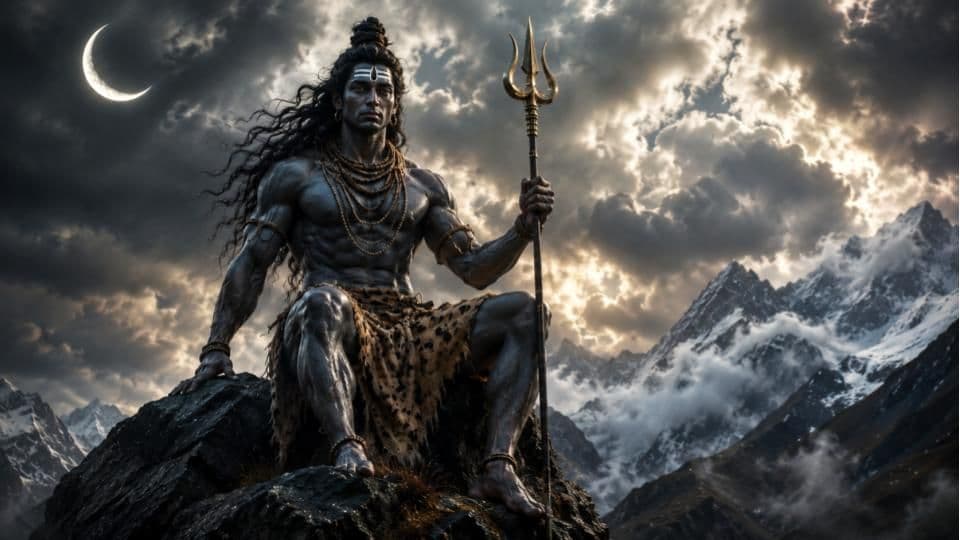
Shiva is often depicted with a distinctive blue neck, known as Nilkantha, symbolising his sacrifice in consuming poison to save the universe. His imagery is rich with symbolic elements, each reflecting profound spiritual concepts.
Together, these elements portray Shiva as a powerful, multifaceted deity, embodying both ascetic discipline and cosmic authority, guiding devotees through transformation, protection, and spiritual awakening.
Shiva, a revered deity in India, is worshipped in diverse forms that reflect regional traditions and cultural nuances.
This diverse array of worship practices not only underscores the rich and varied expressions of reverence for Shiva across different cultures and regions but also highlights the profound significance of his diverse forms in each culture.
Shiva, unlike Vishnu, does not typically incarnate in the traditional sense but is believed to manifest in various forms to serve specific purposes. While he may not be known for classic "avatars," representations such as
Shiva is featured prominently in the Puranas, particularly the Shiva Purana and the Linga Purana.
As a god of paradoxes, Lord Shiva is simultaneously a destroyer and creator, a householder and ascetic, a fierce protector and compassionate benefactor. His worship is vast and diverse, crossing cultural, regional, and sectarian boundaries. This diversity reflects the richness and complexity of Hindu religious practices, each offering a unique perspective on the endless cycle of life, death, and rebirth.
Wikipedia – Shiva
https://en.wikipedia.org/wiki/Shiva
Wikipedia – Trimurti
https://en.wikipedia.org/wiki/Trimurti
Wikipedia – Tandava
https://en.wikipedia.org/wiki/Tandava
Wikipedia – Linga Purana
https://en.wikipedia.org/wiki/Linga_Purana
British Library – Hindu Deities in Manuscripts
https://www.bl.uk/collection-guides/hindu-deities-in-manuscripts
Internet Sacred Text Archive – Hinduism Collection
https://www.sacred-texts.com/hin/index.htm
Bharatavani – Digital Library of Indian Knowledge
https://bharatavani.in/
Wisdom Library – Vishnu and Related Concepts
https://www.wisdomlib.org/
Academic and Cultural Studies
Indian Culture and Heritage Portal – Ministry of Culture, Govt. of India
https://www.indianculture.gov.in/
Other Scholarly or Cultural Sources
Ramana Maharshi Organisation – Shiva: The Destroyer and Transformer in the Hindu Trimurti
https://www.ramana-maharshi.org/shiva-the-destroyer-and-transformer-in-the-hindu-trimurti
Tales of Sanatan Dharma – The Untold Story of Pashupatastra
https://www.talesofsanatan.com/the-untold-story-of-pashupatastra-the-unuse-weapon-from-mahabharata
YouTube – The Evolution of Shiva from Rudra
https://www.youtube.com/watch?v=z2UPa1yqQdo