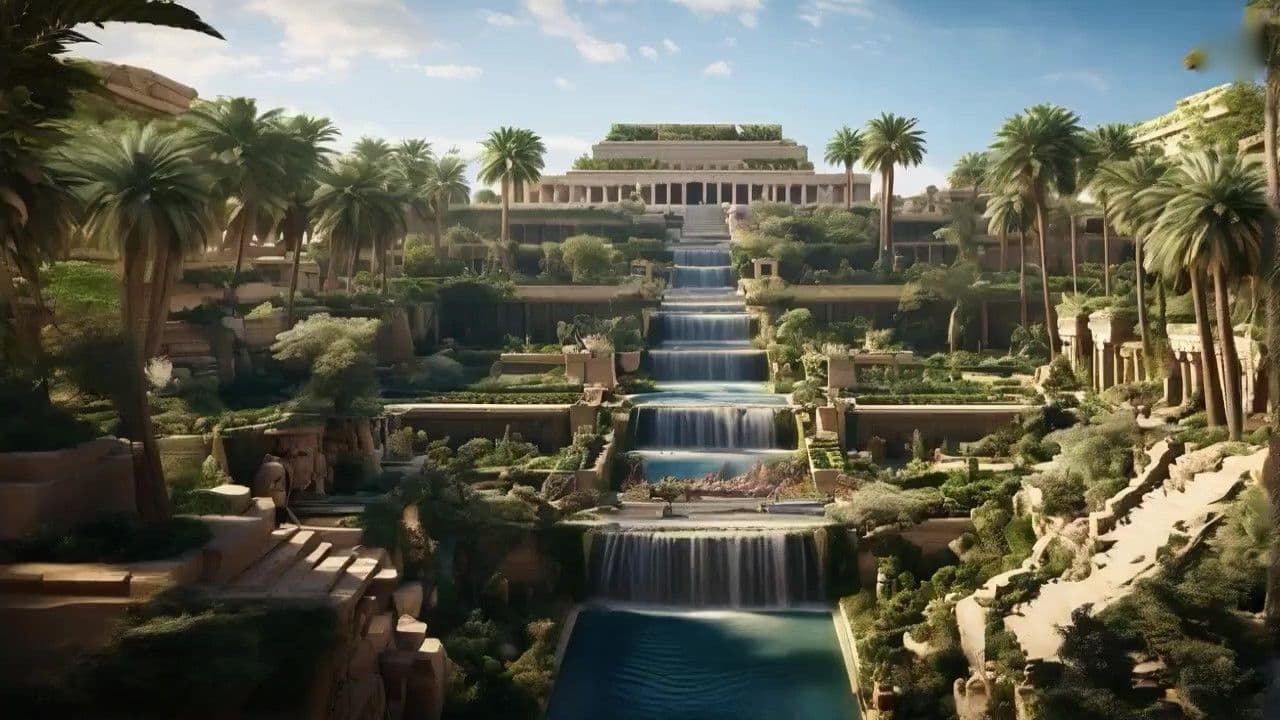

The Hanging Gardens of Babylon were an architectural marvel of the ancient world. They were reportedly built by Nebuchadnezzar II, the king of Babylon, in the 6th century BC as a gift to his wife Amytis, who missed the green hills and valleys of her homeland. The gardens have been described by ancient writers such as Strabo and Diodorus Siculus, who offered detailed descriptions of the lush, rising tiers of the gardens. However, their exact location remains a mystery and there is no archaeological evidence of their existence, leading some to question whether they ever existed at all.
Read More:
exploring the influence of the wonders of the world
The Hanging Gardens were described as a remarkable feat of engineering, featuring a complex watering system and an array of exotic plants and trees. They were said to have been built on a series of terraces, each rising above the other and supported by columns. The terraces were filled with soil deep enough to allow trees to root, and the whole structure was said to be irrigated by a system of wells and water wheels. The gardens are often depicted as a lush, green mountain rising in the middle of the desert landscape of ancient Babylon.
While the Hanging Gardens did not serve as a religious symbol like some other wonders of the ancient world, they were a testament to the power and wealth of the Babylonian empire. They were considered a wonder due to their size, the complexity of their irrigation system, and the fact that they represented such a stark contrast to the surrounding desert landscape. They also served as a symbol of Nebuchadnezzar II's love for his wife, representing a romantic and personal aspect in comparison to the more common political or religious motivations behind such grand constructions.
Whether they existed or not, the Hanging Gardens of Babylon have left an indelible mark on human culture. They are often cited as an early example of vertical gardening and have inspired many modern architectural designs. The idea of a lush, man-made mountain in the middle of a desert continues to captivate the human imagination, and the Hanging Gardens are still regarded as one of the Seven Wonders of the Ancient World.
According to ancient texts, the Hanging Gardens were not actually 'hanging' in the sense of being suspended from cables or ropes. The name comes from an inexact translation of the Greek word 'kremastos', which means not just 'hanging', but also 'overhang', referring to the gardens' terraced construction. Despite the uncertain existence of the Hanging Gardens, they have been depicted in numerous works of art and literature, serving as a symbol of the idyllic paradise.