Nobel Prize in Physics 2026: Francis Halzen and the Telescope Built From Antarctic Ice
Nobel Prize, Physics, Francis Halzen, IceCube, Neutrinos, Astronomy, Multi-Messenger Astronomy
06 Oct 2026

The 2026 Nobel Prize in Physics goes to a single laureate, Francis Halzen of the University of Wisconsin–Madison. The Royal Swedish Academy of Sciences honoured his decisive contributions to the IceCube Neutrino Observatory and to the discovery of high-energy neutrinos that originate far outside our solar system. The prize is worth 12 million Swedish kronor, about £900,000.
The award recognises an idea that once sounded close to impractical: turning a cubic kilometre of Antarctic ice into a detector for one of the most elusive particles in nature, and using it to open a new branch of astronomy.
In brief
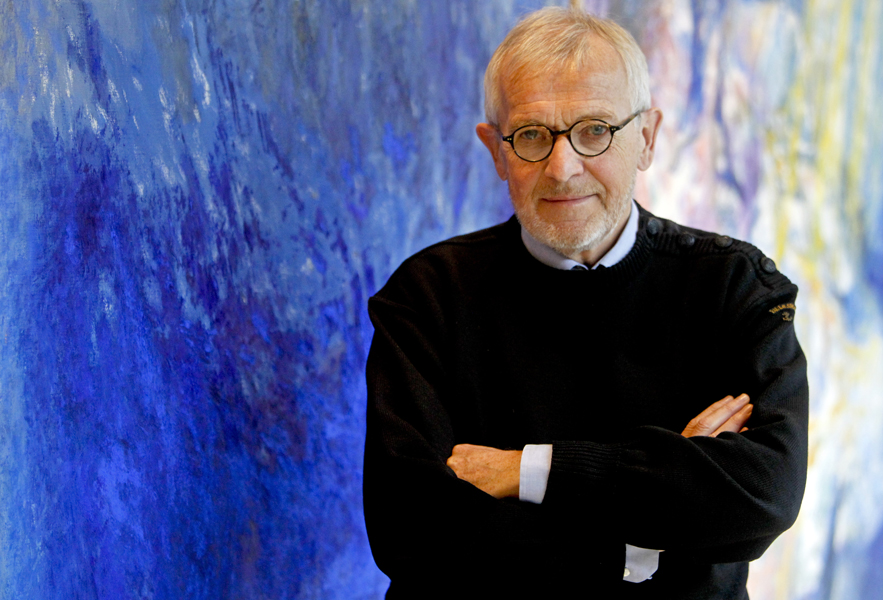
- Laureate: Francis Halzen, born 1944 in Tienen, Belgium; PhD from KU Leuven in 1969; at UW–Madison since 1972.
- What it recognises: the concept, construction and scientific leadership of IceCube, and the discovery of high-energy astrophysical neutrinos.
- Why it matters: neutrinos carry information from extreme cosmic environments that light and charged particles cannot deliver intact.
- What remains open: the sources of most cosmic neutrinos are still largely unidentified.
Why neutrinos?
Neutrinos are electrically neutral and nearly massless, and they almost never interact with matter. The Academy notes that around 65 billion solar neutrinos pass through a fingernail every second without being noticed. On the rare occasions when one collides with an atomic nucleus, a detector can register it.
That aloofness is what makes them useful. Light can be absorbed or scattered on its way across the universe, and charged cosmic rays are bent by magnetic fields, which scrambles any trace of where they came from. Neutrinos arrive without changing direction or losing energy. Because the processes that accelerate cosmic-ray protons to extreme energies also produce high-energy neutrinos, tracing those neutrinos back can point to the accelerators themselves. The Academy says such cosmic accelerators can reach energies up to a million times higher than laboratory machines on Earth, and the origin of the most energetic cosmic rays has been described as one of the universe's best-kept secrets.
Neutrino astronomy was not new in itself. Raymond Davis Jr. and Masatoshi Koshiba shared the 2002 Nobel Prize in Physics for detecting neutrinos from the Sun and from a supernova, and Takaaki Kajita and Arthur B. McDonald won in 2015 for showing that neutrinos change type. Halzen's contribution was to make it possible to catch the rare, very high-energy neutrinos that come from far beyond our solar system.
From a 1988 idea to a cubic-kilometre detector
Halzen first presented the concept of detecting neutrinos in South Pole ice in 1988, at a conference in Poland, together with physicist John Learned. The principle is simple. When a neutrino interacts in transparent ice, it produces a charged particle that emits a flash of light, and light sensors can record where and when it appears. Ice at the South Pole offers constant darkness at depth, very low radioactivity and geological stability, and an existing research station.
Turning the idea into hardware took decades. In 1992 a group of researchers and engineers began lowering light sensors into the glacier, and the predecessor experiment, AMANDA, was built up through January 2000. It worked, but it was too small to catch the rarest, most energetic neutrinos. Halzen has described waiting at home on Christmas Eve 1993 for word that the first cable had been installed. Early results were disappointing because bubbles in the upper ice blurred the light, but below roughly 1,400 metres the ice proved exceptionally clear.
IceCube was completed in 2011. It uses 5,160 light sensors on 86 cables, buried between 1,450 and 2,450 metres below the surface and spread through about a cubic kilometre of ice, around a billion tonnes. It is operated by an international collaboration of about 450 scientists from 58 institutions in 14 countries, led from UW–Madison and funded primarily by the U.S. National Science Foundation. The Nobel Committee's chair, Mark Pearce, said Halzen's tenacity and vision had "paved the way for a new kind of astronomy."
What IceCube found
The detector has to pick out a handful of cosmic neutrinos from a flood of background. More than 100 million cosmic-ray-induced particles from the atmosphere above Antarctica register every day, so researchers select events whose energies and properties fit cosmic neutrinos rather than atmospheric ones.
- 2013: IceCube reported the first evidence of high-energy neutrinos from outside the solar system. A couple of years later, the Academy says, the accumulated data left no doubt.
- 2017: IceCube detected a high-energy neutrino whose direction pointed to a distant active galaxy powered by a supermassive black hole, TXS 0506+056. Follow-up observations by other telescopes helped provide the first evidence of a source of high-energy cosmic rays.
- 2022: IceCube reported evidence of neutrino emission from the active galaxy NGC 1068, about 47 million light-years away. The Academy cautions that the evidence, with 79 neutrinos from its direction, is not yet robust enough to establish NGC 1068 as a source definitively.
- 2023: IceCube announced neutrino emission from the Milky Way, expected to arise when cosmic rays collide with interstellar gas.
These results helped establish what is now called multi-messenger astronomy, in which light, neutrinos, gravitational waves and cosmic rays are combined to study the same events.
What comes next
The field is still moving, and not every recent result has been a detection. In September 2026, a joint IceCube and HAWC analysis of the Galactic Centre, using 12 years of IceCube data, found no significant neutrino signal, although the gamma-ray data favour a hadronic origin. A search with LIGO, Virgo and KAGRA data, published in July, found no significant joint sources of gravitational waves and high-energy neutrinos. Researchers say better detectors are needed to settle these questions.
Several upgrades are under way:
- IceCube Upgrade: installed in 2025 and 2026 as the observatory's first significant expansion since completion. It aims to lower the energy threshold and calibrate the ice better, and IceCube expects first science data later this year.
- IceCube-Gen2: a proposed successor with an optical array of eight times the volume and radio detection to reach even higher energies.
- Open data: in May 2026 the collaboration released IceTracks-DR2, covering 14 years of neutrino track events for source searches. An earlier release was downloaded over 30,000 times in three years.
A prize for an unusual project
Halzen has called the award "a celebration of a very unusual project," crediting the many collaborators involved and the research environment at UW–Madison, where he says unconventional ideas can thrive. The university notes he is the sixth physicist connected to UW–Madison to win a Nobel Prize and the first UW–Madison faculty laureate since Howard Temin in 1975.
For the wider scientific community, the significance is less about a single particle than about a new instrument. Previous generations of astronomers learned to read the sky in visible light, radio, X-rays and gravitational waves. IceCube added a messenger that can escape environments where light cannot, and which may eventually settle where the universe's highest-energy particles come from.
Key facts
- Prize: Nobel Prize in Physics 2026
- Laureate: Francis Halzen (sole recipient)
- Awarded for: decisive contributions to IceCube and the discovery of high-energy astrophysical neutrinos
- Institution: University of Wisconsin–Madison
- Prize amount: SEK 12 million
- Observatory: IceCube Neutrino Observatory, South Pole, completed 2011
Sources
- Royal Swedish Academy of Sciences: The Nobel Prize in Physics 2026 (press release)
- Royal Swedish Academy of Sciences: Popular science background, Ice at the South Pole reveals cosmic particle accelerators
- University of Wisconsin–Madison: Francis Halzen named 2026 Nobel laureate in physics
- IceCube: Francis Halzen, IceCube principal investigator, wins 2026 Physics Nobel Prize
- Institute of Physics: IOP congratulates Francis Halzen
- IceCube: 14-year data release for neutrino source searches
- IceCube: Search for joint sources of LIGO/Virgo gravitational waves and high-energy neutrinos
- IceCube: Using IceCube and HAWC data to investigate the center of our galaxy
Share

Sara Srifi
Sara is a Software Engineering and Business student with a passion for astronomy, cultural studies, and human-centered storytelling. She explores the quiet intersections between science, identity, and imagination, reflecting on how space, art, and society shape the way we understand ourselves and the world around us. Her writing draws on curiosity and lived experience to bridge disciplines and spark dialogue across cultures.