
loading...
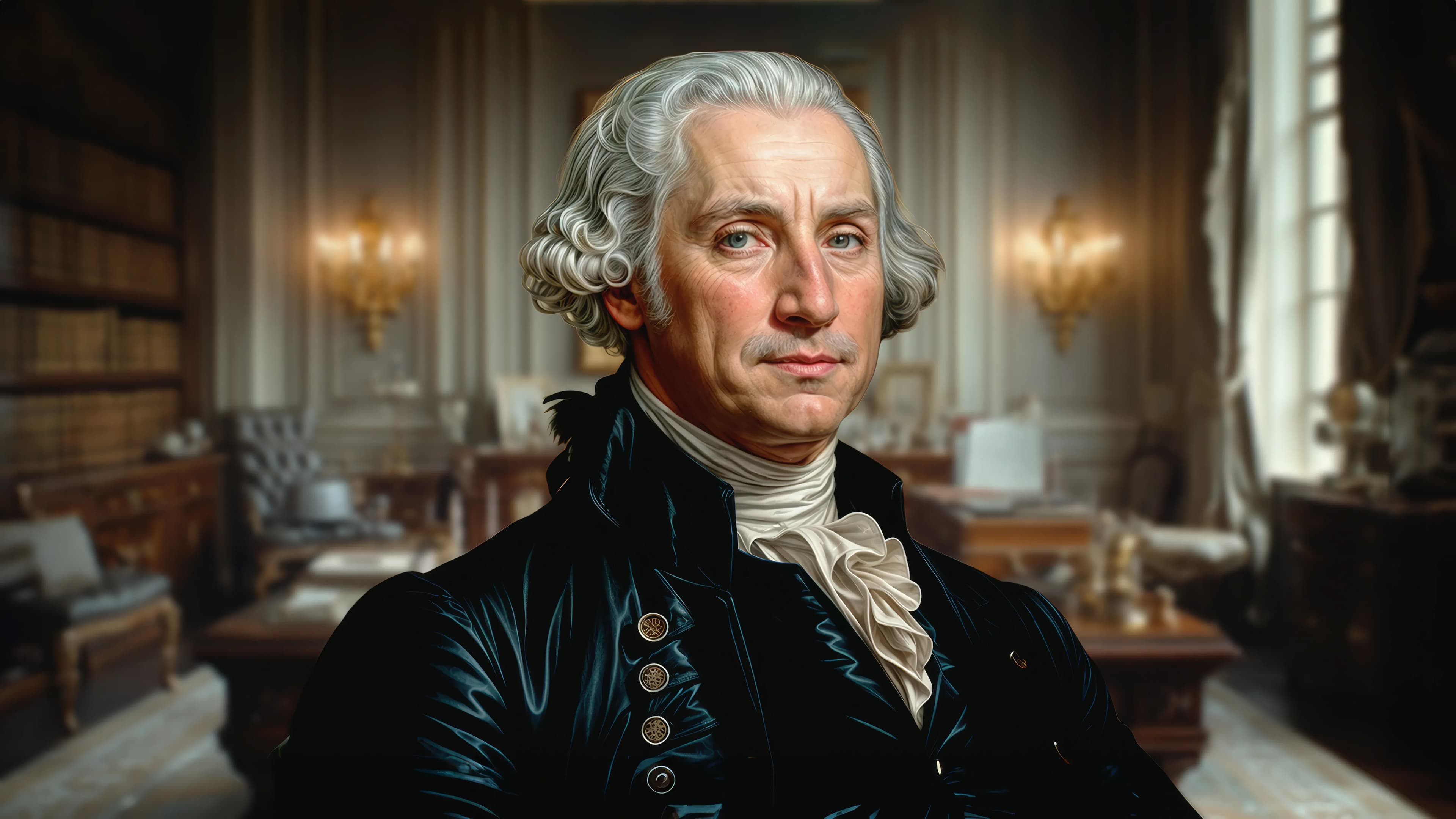


 George Washington
George Washington, the first U.S. President, is renowned for his leadership during the American Revolutionary War and his role in shaping the presidency.
Vision
George Washington, as the first President of the United States, held a vision of a unified and independent nation that espoused democracy, freedom, and individual rights. He aimed to establish a strong federal government that would serve as a model for the world, while maintaining a balance of power among its different branches. Washington also believed in the ideals of civic virtue and nationalism, emphasizing the importance of public service and the duty of citizens towards their country.
Biography
George Washington was born on February 22, 1732, in Westmoreland County, Virginia. He was the eldest of six children from his father's second marriage. Washington's father died when he was just 11 years old, leaving him to help his mother manage their plantation. At the age of 16, he began working as a surveyor, mapping lands in the western frontier of Virginia. In 1752, he joined the Virginia militia, quickly rising through the ranks and gaining military experience during the French and Indian War. After the war, he returned to his plantation, Mount Vernon, and served in the Virginia House of Burgesses. In 1775, with the outbreak of the American Revolutionary War, Washington was appointed commander-in-chief of the Continental Army. Despite numerous challenges, he led his troops to victory, culminating in the surrender of the British in 1781. In 1787, he presided over the Constitutional Convention that drafted the U.S. Constitution. In 1789, Washington was unanimously elected as the first President of the United States, serving two terms from 1789 to 1797. He established many forms and practices that set the standard for the American presidency. After his presidency, Washington retired to Mount Vernon, where he died on December 14, 1799.
Awards and Recognition
Throughout his life and posthumously, George Washington received numerous awards and recognitions for his service to the nation. In 1776, he was awarded the Congressional Gold Medal by the Second Continental Congress for his role in the American Revolutionary War. In 1976, Washington was posthumously awarded the highest rank in the U.S. military, General of the Armies of the United States, by a congressional resolution. Today, Washington's legacy is commemorated in various ways, including the Washington Monument in Washington D.C., the U.S. capital and state named after him, and his portrait on the U.S. dollar bill and quarter.
References
Share with friends
George Washington, the first U.S. President, is renowned for his leadership during the American Revolutionary War and his role in shaping the presidency.
City of Residence
Mount Vernon, Virginia
Known For
First President of the United States
Born
1732
Location
Military General, Statesman, Farmer
Company Name
United States of America
Education
Self-taught
Personal Details
Born on February 22, 1732, in Westmoreland County, Virginia, George Washington was the first President of the United States, serving from 1789 to 1797. He also served as the commander-in-chief of the Continental Army during the American Revolutionary War,
Recognition
Known as the 'Father of His Country', his face appears on the U.S. dollar bill and quarter. The capital of the United States, Washington D.C., is named after him, as well as the state of Washington.
Related TITANS OF THE WORLD

About
Where Wisdom Meets AI Utopia Edutainment
Wisdomia.ai is a 3D AI edutainment platform that seamlessly blends learning with immersive play. As the first AI-powered 3D Web 3.0 marketplace created by creators for creators. Founded by renowned serial entrepreneur and author Dinis Guarda, Wisdomia empowers individuals to flourish in an ecosystem designed for collective wisdom EQ. Join us in shaping humanity's future as we harness the power of AI to visualise and create a better world—where technology serves human potential, and innovation is guided by utopian wisdom.
Contact us
Produced by