
loading...


 Marie Curie
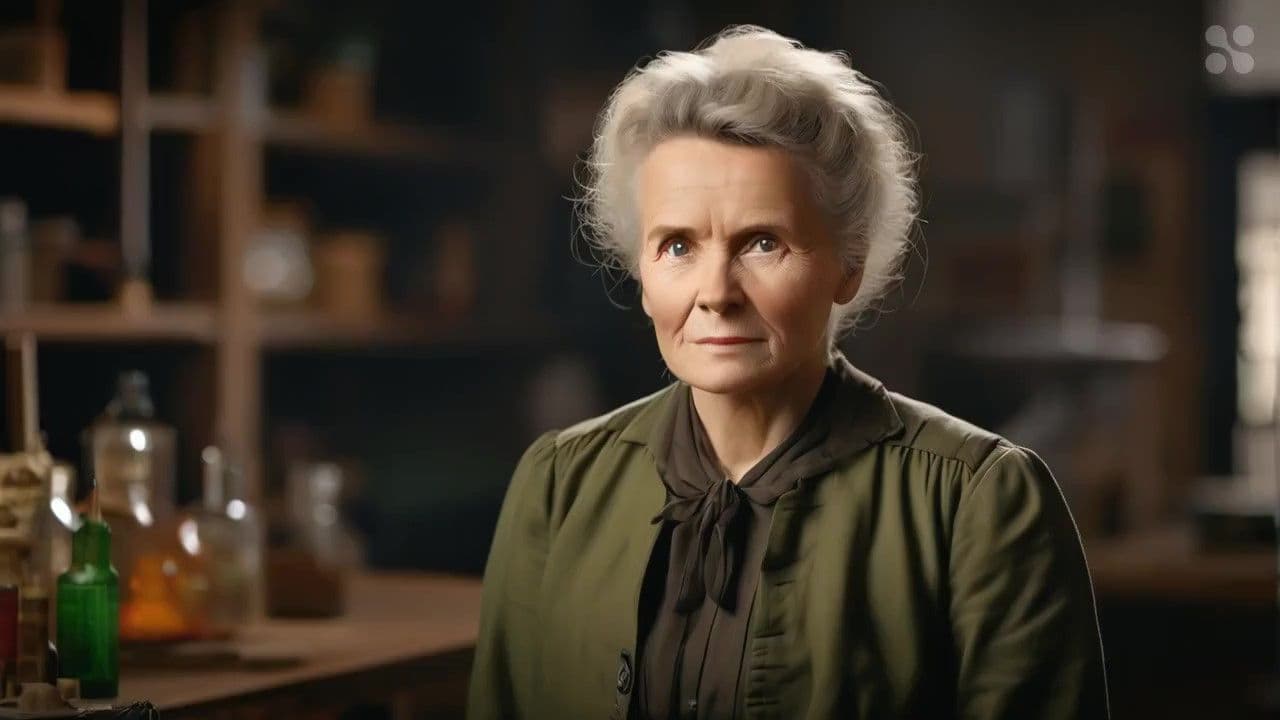
Marie Curie was a renowned physicist and chemist who broke barriers in the male-dominated field of science. She was the first woman to win a Nobel Prize, and the only person to win in multiple sciences. Her pioneering research on radioactivity significantly contributed to the development of X-rays in surgery.
Vision
Marie Curie, born Maria Salomea Sk?odowska, was a Polish and naturalized French physicist and chemist. Her vision was one of relentless pursuit of knowledge, curiosity, and commitment to science. She believed in the transformative power of education and science to uplift society and make the world a better place. This vision was not just theoretical, but one that she lived out in her daily life, through her groundbreaking research, her tireless teaching, and her commitment to her students and colleagues.
Throughout her life, Curie was driven by a relentless passion for discovery. She was fascinated by the unknown, and she believed that through scientific research, she could uncover the truths of the universe. This vision guided her research in radioactivity, a term she herself coined. She discovered two new elements, polonium and radium, and her research paved the way for the development of X-rays. She was the first woman to win a Nobel Prize, and remains the only person to have won Nobel Prizes in two different scientific fields: Physics and Chemistry.
Curie’s vision also extended to her role as a teacher. She believed in the power of education to transform lives, and she was committed to sharing her knowledge with others. She became the first female professor at the University of Paris, and despite facing discrimination and prejudice as a woman in a male-dominated field, she never wavered in her commitment to education. She taught not just to impart knowledge, but to inspire curiosity and a love of learning in her students.
Furthermore, Curie’s vision was one of service to humanity. She saw the potential of her research to benefit society, and she worked tirelessly to make this a reality. During World War I, she developed mobile radiography units, known as 'Little Curies', to provide X-ray services to field hospitals. This not only revolutionized medical care on the battlefield, but also demonstrated her commitment to using science for the betterment of society.
Despite the many challenges she faced, including the loss of her beloved husband and research partner, Pierre Curie, and later health issues due to her prolonged exposure to radiation, Curie never wavered in her vision. She remained dedicated to her research, her students, and her belief in the transformative power of science.
Her vision was not limited to her own lifetime. She established the Curie Institutes in Paris and Warsaw, which remain major centers of medical research today. Through these institutes, Curie’s vision for the power of science and education to uplift society continues to live on.
In conclusion, Marie Curie’s vision was one of relentless pursuit of knowledge, commitment to education, and service to humanity through science. She lived this vision out in her groundbreaking research, her tireless teaching, and her establishment of enduring institutions. Despite facing numerous obstacles as a woman in science, she never lost sight of her vision. Today, Marie Curie remains a symbol of perseverance, dedication, and the transformative power of science.
Her legacy continues to inspire scientists and researchers around the world to pursue their curiosity, push the boundaries of knowledge, and use their skills and knowledge to benefit society. Marie Curie’s vision, lived out through her life and work, serves as a powerful reminder of the impact that a single individual can have when they are driven by a deep sense of purpose and determination.
Marie Curie’s vision is a testament to her belief in the power of science to transform society. Her life and work continue to inspire countless individuals around the world, serving as a reminder of the transformative power of education, the value of perseverance, and the potential of every individual to make a meaningful contribution to the world.
Biography
Marie Curie, originally named Maria Sklodowska, was born on November 7, 1867, in Warsaw, Poland. She was the youngest of five children and both of her parents were well-respected educators. Despite facing financial difficulties and political oppression, Curie was able to excel in her studies at a young age. The death of her mother and sister during her teenage years led Curie to develop a sense of purpose and resilience.
Because higher education was not available for women in Poland, Curie moved to Paris to attend the Sorbonne in 1891. She earned her degree in physics in 1893 and in mathematics the following year. It was during this time that she met Pierre Curie, a French physicist who was an instructor at the School of Physics and Chemistry. The two scientists were married in 1895.
Marie and Pierre Curie conducted ground-breaking work on radioactivity, a term that Marie herself coined. They discovered that certain elements, such as uranium and thorium, emitted strong rays of energy, which they named ‘radioactive’. Their scientific breakthroughs led to the discovery of two new elements, polonium and radium. The Curies, along with Henri Becquerel, were awarded the Nobel Prize in Physics in 1903 for their joint research on radiation. Marie Curie became the first woman to win a Nobel Prize.
In 1906, tragedy struck when Pierre Curie died in a road accident. Despite her grief, Marie took over his teaching post at the Sorbonne, becoming the first woman to teach there. She dedicated herself to continuing the work that they had begun together. In 1911, she was awarded the Nobel Prize in Chemistry for her services to the advancement of chemistry by the discovery of the elements radium and polonium, by the isolation of radium and the study of the nature and compounds of this remarkable element.
During World War I, Curie developed mobile radiography units, known as 'Petit Curies', to provide x-ray services to field hospitals. This greatly improved medical care for wounded soldiers. After the war, she used her fame to advance her research. She toured the United States twice, raising funds to buy radium and to establish a radium research institute in Warsaw.
Much of Curie's work involved handling radioactive materials, the effects of which were not well understood at the time. As a result, she developed aplastic anemia, likely caused by exposure to radiation. She died on July 4, 1934. Despite the risks she took and the health problems she suffered as a result of her research, her discoveries in the field of radioactivity laid the groundwork for the development of x-ray machines, cancer treatments, and the atomic bomb. Her dedication to science has made her one of the most famous scientists in history.
Marie Curie's legacy continues to this day. Her laboratory in Paris became the Curie Institute, one of the leading medical research centers in the world. Both of her daughters also followed in her footsteps. Her elder daughter, Irene, won a Nobel Prize in Chemistry, and her younger daughter, Eve, became a renowned writer and diplomat. Curie's life and work have been the subject of numerous books and films.
Throughout her life, Marie Curie demonstrated exceptional courage and determination. She broke down many barriers for women in science, and her pioneering research on radioactivity has had a profound and lasting impact on the world. Despite facing many challenges, both personally and professionally, she never wavered from her commitment to science. Her life story is a testament to the power of resilience, dedication, and a relentless pursuit of knowledge.
Awards and Recognition
Marie Curie, born as Maria Sklodowska, was a Polish and naturalized-French physicist and chemist who conducted pioneering research on radioactivity. She was the first woman to win a Nobel Prize, the first person and the only woman to win the Nobel prize twice, and the only person to win the Nobel Prize in two different scientific fields. Her achievements included the development of the theory of radioactivity, techniques for isolating radioactive isotopes, and the discovery of two elements, polonium and radium. She also was the first woman to become a professor at the University of Paris, and in 1995 became the first woman to be entombed on her own merits in the Pantheon in Paris.
Marie Curie's first Nobel Prize was in Physics, which she won in 1903 along with her husband, Pierre Curie, and Henri Becquerel. They were awarded for their joint research on the radiation phenomena discovered by Professor Henri Becquerel. With this award, Marie Curie became the first woman to be awarded a Nobel Prize.
In 1911, Marie Curie won her second Nobel Prize, this time in Chemistry, for her services to the advancement of chemistry by the discovery of the elements radium and polonium, by the isolation of radium and the study of the nature and compounds of this remarkable element. She was the first person to win two Nobel Prizes, and she remains the only person to have won Nobel Prizes in two different fields of science.
Marie Curie's numerous other recognition and awards included election to the French Academy of Medicine, and she was appointed a member of the International Commission on Intellectual Cooperation by the Council of the League of Nations. In 1921, she was welcomed triumphantly when she toured the United States to raise funds for research on radium. In 1922, she became a fellow of the French Academy of Medicine and she also became the first woman to be entombed in the Pantheon in Paris on her own merits in 1995.
Marie Curie also contributed significantly during World War I, setting up radiography units to provide X-ray services for field hospitals. Her work to develop mobile radiography units, which came to be known as petites Curies, was widely recognized and contributed to saving countless lives.
Despite the numerous recognition, awards and honorary science, medicine and law degrees, Marie Curie never pursued financial benefits from her radium discoveries. She did not patent her radium-isolation process, as she felt that it should be available to the scientific world. She insisted that monetary gifts and awards be given to the scientific institutions she was affiliated with rather than to her personally.
Marie Curie's work on radioactivity fundamentally changed our understanding of the atomic world. Her dedication to research, despite numerous challenges, paved the way for the development of nuclear power and cancer therapies. She remains a symbol of perseverance, dedication, and selflessness in the pursuit of science. Her legacy continues to inspire scientists all over the world. To this day, she remains one of the most iconic figures in the history of science, and her significant contributions to the fields of physics and chemistry remain as relevant as ever.
References
- Marie Curie Biography
- Marie Curie - Facts
- Marie Curie and The Science of Radioactivity
- The Life of Marie Curie
- Marie Curie - Awards & Recognition
- Marie Curie and her X-ray vehicles' contribution to World War I battlefield medicine
- Marie Curie: A Life
- Marie Curie and the Science of Radioactivity
- Marie Curie's Research Papers Are Still Radioactive 100+ Years Later
- Marie Curie and the History of Radioactivity
Share with friends
Marie Curie was a renowned physicist and chemist who broke barriers in the male-dominated field of science. She was the first woman to win a Nobel Prize, and the only person to win in multiple sciences. Her pioneering research on radioactivity significantly contributed to the development of X-rays in surgery.
City of Residence
Paris, France
Known For
Research on radioactivity
Born
1867
Location
Physicist, Chemist
Social Media/Website
Company Name
Curie Institute, Paris
Education
Doctorate in Physics, Doctorate in Mathematics
Personal Details
Marie Curie was a Polish and naturalized-French physicist and chemist who conducted pioneering research on radioactivity. She was the first woman to win a Nobel Prize, is the only woman to win the Nobel prize twice, and is the only person to win the Nobel
Recognition
Nobel Prize in Physics (1903), Nobel Prize in Chemistry (1911)
Related TITANS OF THE WORLD


About
Where Wisdom Meets AI Utopia Edutainment
Wisdomia.ai is a 3D AI edutainment platform that seamlessly blends learning with immersive play. As the first AI-powered 3D Web 3.0 marketplace created by creators for creators. Founded by renowned serial entrepreneur and author Dinis Guarda, Wisdomia empowers individuals to flourish in an ecosystem designed for collective wisdom EQ. Join us in shaping humanity's future as we harness the power of AI to visualise and create a better world—where technology serves human potential, and innovation is guided by utopian wisdom.
Contact us
Produced by