
loading...


 Petra
PetraHistory
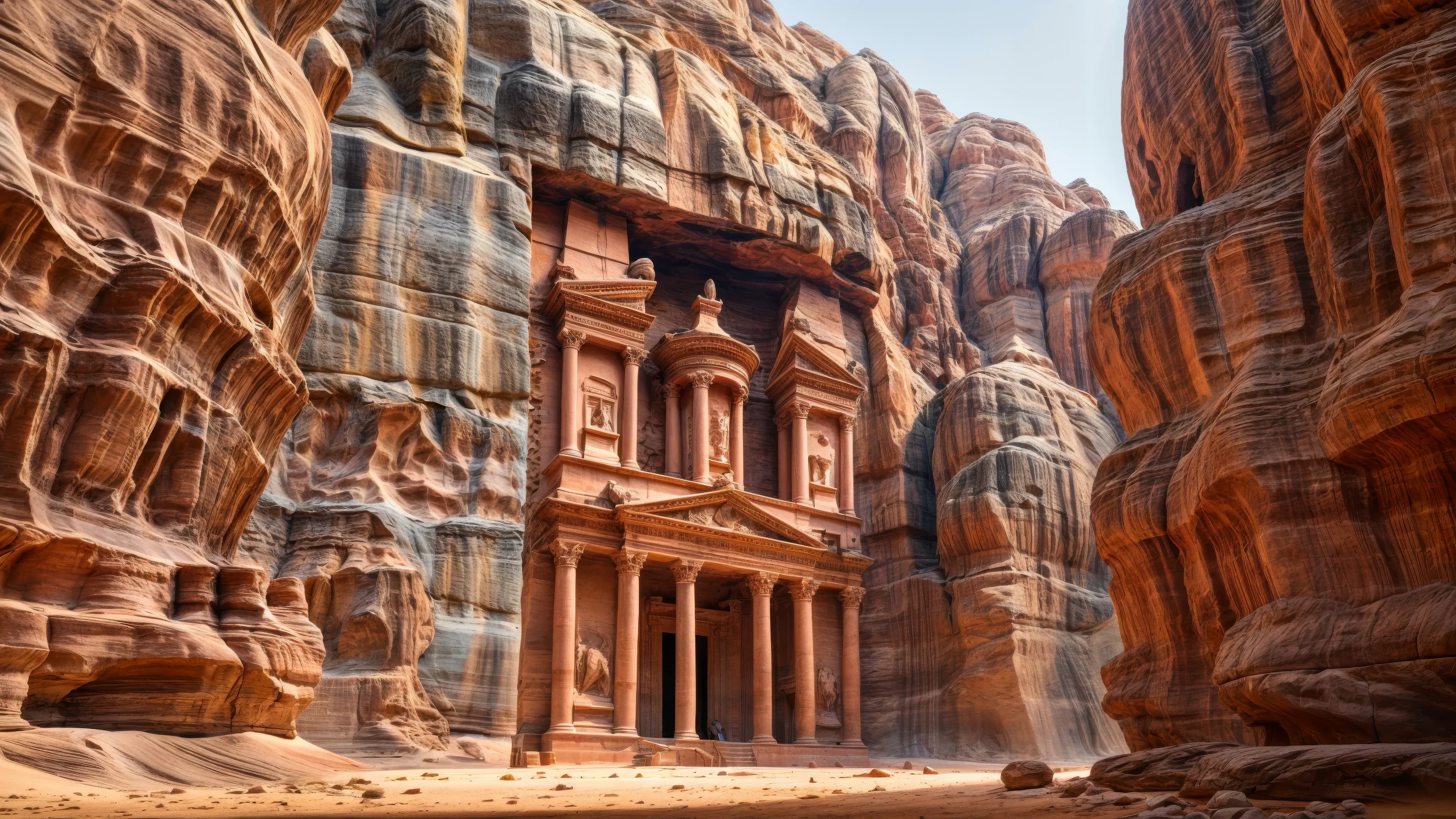
Petra, also known as the Rose City, is an ancient archaeological site located in the southwestern desert of Jordan. The city, believed to have been established as early as 312 BC as the capital city of the Nabataeans, is famous for its rock-cut architecture and water conduit system. Petra was a bustling trading hub, strategically located at the crossroads of major trading routes, including the Silk and Spice Roads, that linked China, India, Egypt, Greece, and Rome.
Architecture
Petra's architecture is unique due to its rock-cut style, with structures directly carved into the pink sandstone cliffs. The most famous amongst these structures is Al Khazneh, also known as The Treasury, standing around 40 meters high and intricately carved with Corinthian capitals, friezes, and figures. Other notable structures include the Monastery, the Roman Theater, and the Royal Tombs. The city also boasts an advanced water management system, with dams, cisterns, and water conduits carved into the cliffs, demonstrating the Nabataeans' understanding of hydraulics.
Cultural and Religious Significance
Petra holds significant cultural and religious importance. It was the capital of the Nabataean Kingdom and a key trading hub. The city's architecture reflects the Nabataeans' interaction with various cultures, including Roman, Egyptian, and Greek. As for its religious significance, Petra is home to many temples and tombs. The Nabataeans worshipped a pantheon of deities, with Dushara and Al-Uzza being the chief gods. Several temples dedicated to these gods, like the Qasr Al-Bint, are found in Petra.
Legacy
Petra's rediscovery brought it back into the limelight, and it's now one of the most visited tourist attractions in Jordan. It was named a UNESCO World Heritage site in 1985 in recognition of its historical, cultural, and architectural significance. Further, in 2007, Petra was named one of the New Seven Wonders of the World. It continues to captivate visitors with its grandeur and mystery, and archaeological work continues to uncover more about the city's history and the people who lived there.
Fun Facts
Petra is also known as the Rose City due to the pinkish hue of its sandstone cliffs. The site remained hidden to the Western world until the 19th century, earning it the nickname 'The Lost City.' Despite numerous excavations, it's estimated that only about 15% of the city has been uncovered, with the rest still lying underground, waiting to be discovered. Petra is also the setting for various films, including Indiana Jones and the Last Crusade.
References
Share with friends
Architectural Style
Nabatean classical architecture
Significance
Historic and archaeological city, famous for its rock-cut architecture and water conduit system.
Type of Structure
Archaeological city
Longitude
35.4444
Latitude
30.3285
Location
Jordan



About
Where Wisdom Meets AI Utopia Edutainment
Wisdomia.ai is a 3D AI edutainment platform that seamlessly blends learning with immersive play. As the first AI-powered 3D Web 3.0 marketplace created by creators for creators. Founded by renowned serial entrepreneur and author Dinis Guarda, Wisdomia empowers individuals to flourish in an ecosystem designed for collective wisdom EQ. Join us in shaping humanity's future as we harness the power of AI to visualise and create a better world—where technology serves human potential, and innovation is guided by utopian wisdom.
Contact us
Produced by


