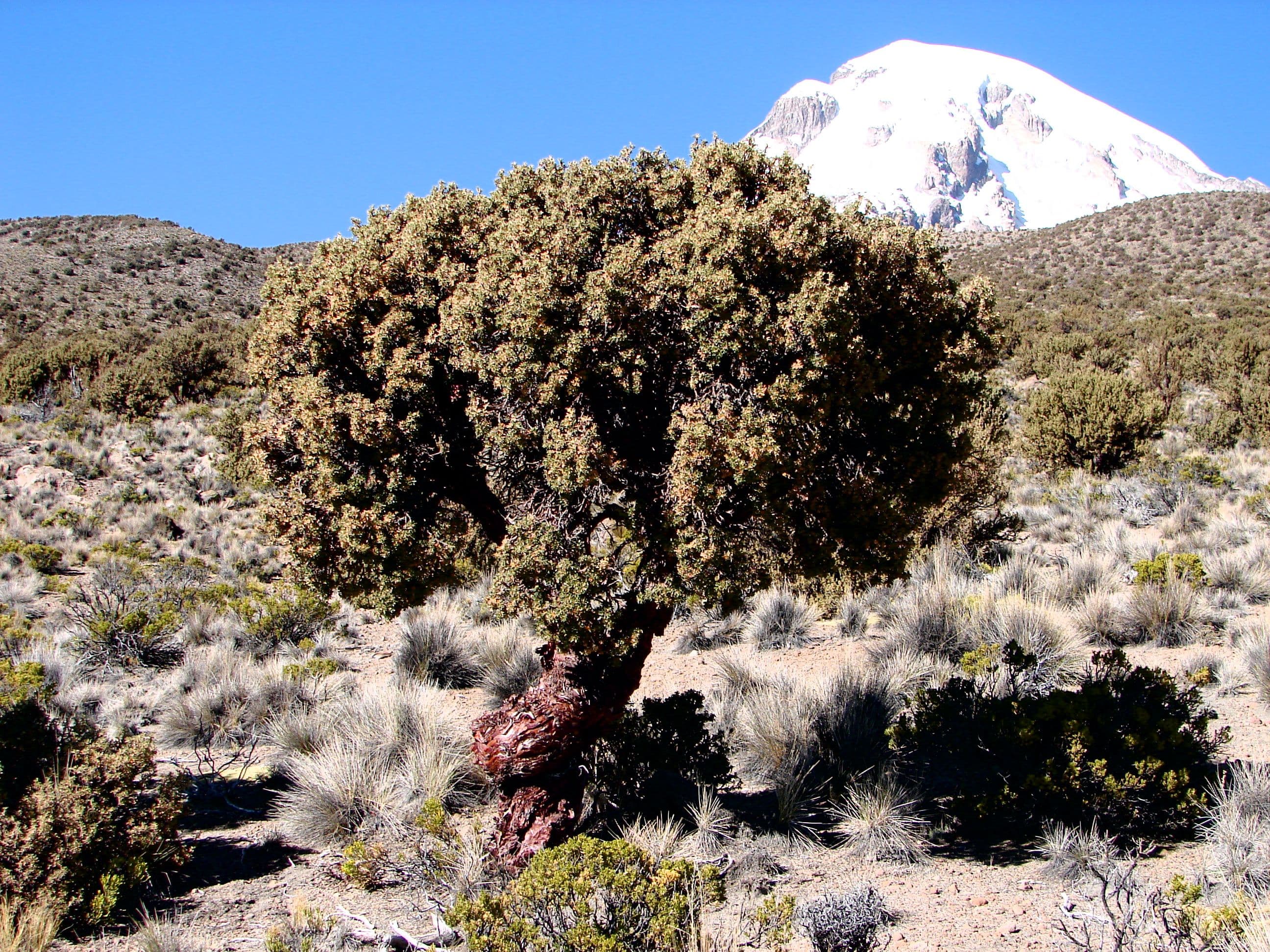

The Andean Polylepis is a unique and fascinating species of tree that is native to the high altitudes of the Andes Mountains in South America. The name Polylepis is derived from the Greek words poly, meaning many, and lepis, meaning scale, referring to the multiple layers of bark that characterize these trees. This bark is typically red-brown in color and peels off in paper-thin sheets, giving the tree a distinctive appearance.
The Polylepis genus is part of the Rosaceae family and comprises about 28 species, most of which are found in the Andes. These trees are remarkably resilient, capable of surviving in harsh conditions at altitudes of up to 5,000 meters above sea level, higher than any other tree species in the world. They play a crucial role in their ecosystems, providing habitat and food for a variety of wildlife, including several species that are found nowhere else on Earth.
Andean Polylepis forests are often referred to as elfin forests due to their gnarled and twisted appearance, a result of the strong winds and extreme temperatures they are exposed to. These forests are home to a rich biodiversity, including many endemic species. Among the wildlife that inhabit these forests are the Royal Cinclodes and Ash-breasted Tit-Tyrant, two critically endangered bird species that rely on Polylepis for their survival.
Despite their importance, Polylepis forests are under threat. Over the past several centuries, they have been significantly reduced by human activities such as logging, grazing, and agriculture. This has not only led to a loss of habitat for wildlife, but also contributed to soil erosion and water scarcity, as these trees play a crucial role in regulating water flow and preventing soil erosion.
Conservation efforts are underway to protect and restore these unique forests. In Peru and Bolivia, for example, local communities, non-governmental organizations, and government agencies are working together to plant new Polylepis trees and protect existing ones. These initiatives often involve the participation of local communities, who benefit from the services these forests provide such as firewood, fodder, and medicinal plants.
Polylepis trees are also important for their cultural significance. In the Andean region, they are often associated with sacred sites and are featured in local myths and legends. For instance, in Bolivia, the Polylepis is known as the qewña and is considered sacred by the indigenous Aymara and Quechua people, who use the tree in various rituals and ceremonies.
Research on Polylepis is ongoing, with scientists studying everything from their genetics and ecology to their role in climate change mitigation. These trees have been found to store a significant amount of carbon, making them important in the fight against global warming. Additionally, their ability to survive in extreme conditions could offer insights into how plants adapt to climate change.
However, there is still much to learn about these remarkable trees. For instance, the exact number of Polylepis species is still a matter of debate, with some experts suggesting there may be as many as 45. More research is needed to fully understand their ecology, distribution, and the threats they face, in order to develop effective conservation strategies.
In conclusion, the Andean Polylepis is a unique and important part of the Andean landscape. These trees are not only a testament to the resilience of life in one of the harshest environments on Earth, but also a vital component of their ecosystems, providing habitat for countless species and offering essential services to local communities. Despite the challenges they face, efforts are being made to ensure their survival, making them a symbol of hope for conservation in the Andes.
The Polylepis genus, commonly referred to as Andean Polylepis, is a group of trees and shrubs that are native to the Andean region in South America. These high-altitude species are known for their unique ability to survive in harsh, cold, and windy conditions, making them essential in the ecosystems of the Andes. Beyond their ecological significance, these trees have been and continue to be of great importance to the local human populations in various ways.
For centuries, the indigenous peoples of the Andes have interacted with the Andean Polylepis in their everyday lives. The trees have served as an important source of firewood due to their high resin content, which allows the wood to burn slowly and provides a substantial amount of heat. This is especially crucial in the high-altitude regions where other sources of heat are scarce. The wood from these trees is also used in construction, tool-making, and for crafting various household items.
The Andean Polylepis also plays a vital role in traditional medicine. The bark, leaves, and roots of the trees have been used by local communities to treat a variety of ailments. The bark is often used as a treatment for wounds and skin conditions, while the leaves are used to alleviate symptoms of respiratory illnesses. The roots have been used to treat stomach problems and as a general health tonic. These traditional uses of the tree highlight its importance in the cultural and medicinal practices of the Andean people.
Despite their significance, the Andean Polylepis forests are rapidly disappearing due to human activities. Over-harvesting for firewood and construction materials is one of the main threats to the survival of these forests. Additionally, the expansion of agricultural activities, particularly grazing, has led to significant habitat loss. The loss of these forests not only threatens the local biodiversity but also the traditional lifestyles of the indigenous communities that rely on them.
In response to these threats, conservation efforts are being implemented to protect and restore the Andean Polylepis forests. These efforts often involve local communities and aim to promote sustainable use of the forests. For example, initiatives have been launched to educate local populations about the importance of these trees and the need to conserve them. Community-based reforestation programs have also been established, encouraging locals to plant and care for new trees.
One innovative approach to conservation is the promotion of eco-tourism. By turning the forests into tourist attractions, locals can earn income from guiding tours and selling handicrafts made from non-timber forest products. This provides an economic incentive for locals to conserve the forests and can also help to raise awareness about the importance of these ecosystems.
The sustainable use of the Andean Polylepis is not only crucial for the survival of these unique forests, but also for the communities that depend on them. While the challenges are significant, the ongoing efforts to conserve these forests and promote sustainable use provide hope for the future. The Andean Polylepis serves as a powerful reminder of the intricate connections between humans and nature, and the importance of protecting our planet's biodiversity.
To summarize, the Andean Polylepis serves multiple functions for the local human populations. These trees are used as sources of firewood, construction materials, and medicine. However, they are under threat due to over-harvesting and habitat loss. Conservation efforts are underway to protect these forests and promote their sustainable use. These efforts involve educating local populations, implementing reforestation programs, and promoting eco-tourism. The sustainable use and conservation of these forests are vital not only for the survival of the forests but also for the communities that rely on them.
The Andean Polylepis, a genus of trees comprising about 28 species, is a significant component of the Andean highlands, having immense cultural and symbolic importance for the people living in these regions. The name Polylepis is derived from the Greek words 'poly' meaning 'many' and 'lepis' meaning 'scale', referring to the tree's unique characteristic of having many layers of bark. These trees are often referred to as 'paper trees' due to their peeling, paper-like bark.
The Andean Polylepis forests are regarded as sacred in several Andean cultures and are often protected under local laws. They are believed to be the abode of Apus, the mountain spirits, in Andean cosmology. These spirits are thought to control weather, fertility, and provide protection. Therefore, the forests are treated with great respect and reverence, with people often leaving offerings or performing rituals in these forests.
These trees also hold symbolic significance in Andean folklore and mythology. They are often associated with resilience and longevity, due to their ability to survive in extreme climatic conditions, at altitudes as high as 5000 meters, where few other trees can survive. The multi-layered bark of the Polylepis is seen as a metaphor for the layers of history and the resilience of the Andean people in the face of adversities. They are often featured in folktales and songs, symbolizing strength and endurance.
Moreover, the Polylepis trees have been historically important for the local communities for their practical uses. They provide important services like soil stabilization, water regulation, and carbon storage. They are also used for firewood, construction, and traditional medicine. The bark, leaves, and fruits of various Polylepis species have been used in traditional medicine for treating various ailments. In fact, the Quechua people have a saying, 'Polylepis, the tree that cures 40 diseases', illustrating the tree's importance in traditional medicine.
However, despite their cultural and ecological importance, the Polylepis forests are under threat due to deforestation and overexploitation. This has led to a decline in the population of these trees, causing concern among conservationists. Conservation efforts are being made to protect and restore these forests. These efforts often involve local communities, acknowledging the cultural importance of these trees and incorporating traditional knowledge in conservation strategies.
In recent years, there has been an increased interest in the study of Polylepis forests and their cultural significance. Researchers are studying the cultural practices associated with these forests and how they can be integrated into conservation strategies. There is also a growing recognition of the need to preserve traditional knowledge about these trees, including their medicinal uses, as this knowledge is often passed down orally and is at risk of being lost.
In conclusion, the Andean Polylepis, with their unique characteristics and cultural significance, are an integral part of the Andean landscapes and cultures. They are a testament to the resilience and strength of the Andean people and their deep connection with their environment. Despite the challenges, there is hope that with concerted conservation efforts and the active participation of local communities, these iconic trees will continue to thrive and inspire future generations.
The aesthetic and experiential aspects of the Andean Polylepis are truly remarkable. This unique ecosystem is not only a visual masterpiece, but also a visceral exploration of biodiversity and resilience. It is not just about what you see; it is about what you feel, hear, and smell. The interplay of senses provides a full immersive experience that is both breathtaking and unforgettable.
The Andean Polylepis, also known as the paper tree or quenoa, is a genus of trees native to the Andean region of South America. They are characterized by their multi-layered, paper-like bark, which peels off in thin sheets. This bark has a unique aesthetic appeal, with its intricate patterns and textures, and its earthy tones of brown and gold. It is no wonder that the Andean Polylepis has inspired countless artists, photographers, and nature enthusiasts.
Walking through a Polylepis forest is a multisensory experience. The rustling of the paper-like bark in the wind creates a unique soundscape, while the scent of the trees adds another layer to the experience. The air in a Polylepis forest is often cool and crisp, a result of the high altitudes at which these trees grow. This adds a tactile element to the experience, as the cool air contrasts with the warmth of the sun on your skin.
The aesthetic appeal of the Andean Polylepis extends beyond its physical attributes. The very existence of these trees, growing at such high altitudes and in such harsh conditions, is a testament to their resilience and adaptability. They serve as a powerful symbol of survival and endurance, adding a profound depth to their beauty.
From an experiential perspective, the Andean Polylepis offers a unique opportunity for exploration and discovery. These forests are rich in biodiversity, home to numerous species of birds, insects, and other wildlife. Many of these species are endemic to the Andean region, meaning they cannot be found anywhere else in the world. Exploring a Polylepis forest, therefore, is a journey into uncharted territory, where every step can lead to a new discovery.
The Andean Polylepis is also deeply intertwined with the cultural heritage of the Andean people. For centuries, these trees have been used for various purposes, from construction and fuel to medicinal uses. Walking through a Polylepis forest, one cannot help but feel a sense of connection to the generations of people who have lived and thrived in these landscapes.
In conclusion, the aesthetic and experiential aspects of the Andean Polylepis are multi-faceted and deeply enriching. They offer a unique blend of visual beauty, sensory immersion, ecological discovery, and cultural connection. Whether you are a nature enthusiast, an artist, a scientist, or simply a curious traveler, the Andean Polylepis promises an unforgettable experience.
The Andean Polylepis forests are a testament to the power of nature and the resilience of life. They are a living, breathing work of art, a symphony of sights, sounds, and sensations. They are a window into the past, a mirror of the present, and a beacon for the future. They are a reminder of our interconnectedness with the natural world, and of our responsibility to protect and preserve it for generations to come.
The Ecology and Distribution of the Polylepis Forests of the Andes
The Polylepis Problem: Where do We Go from Here?
Polylepis Forests—A Nearly Forgotten Ecosystem
Restoration of Degraded Ecosystems in the Andes: Can Polylepis Forests Recover?
Polylepis at the Tree Line: The Challenge of Conserving Andean Forests
Floristic and structural patterns of Polylepis forests in the Andes of central Ecuador
Management of Polylepis forests in the Andean highlands: A case from Bolivia
Ecology of Polylepis forests and their role in the hydrology of Andean watersheds
A revision of Polylepis (Rosaceae, Sanguisorbeae)
Phylogenetic Relationships within the Genus Polylepis (Rosaceae, Sanguisorbeae)
Phylogeography and conservation genetics of the Polylepis complex (Rosaceae) in the Andes
The Polylepis Problem: Where do We Go from Here?
A review of the effects of alien plant invasions on the Cape Floristic Region of South Africa
Impacts of climate change on the future distribution of the genus Polylepis in the Andes
Polylepis Forests—A Nearly Forgotten Ecosystem
Restoration of Degraded Ecosystems in the Andes: Can Polylepis Forests Recover?
Polylepis at the Tree Line: The Challenge of Conserving Andean Forests
Floristic and structural patterns of Polylepis forests in the Andes of central Ecuador
Management of Polylepis forests in the Andean highlands: A case from Bolivia
Ecology of Polylepis forests and their role in the hydrology of Andean watersheds
A revision of Polylepis (Rosaceae, Sanguisorbeae)
Phylogenetic Relationships within the Genus Polylepis (Rosaceae, Sanguisorbeae)
Phylogeography and conservation genetics of the Polylepis complex (Rosaceae) in the Andes
The Polylepis Problem: Where do We Go from Here?
A review of the effects of alien plant invasions on the Cape Floristic Region of South Africa
The Ecology and Distribution of the Polylepis Forests of the Andes
Impacts of climate change on the future distribution of the genus Polylepis in the Andes
Polylepis Forests—A Nearly Forgotten Ecosystem
*Restoration of Degraded Ecosystems in the Andes: Can Polylepis Forests Recover?
Polylepis at the Tree Line: The Challenge of Conserving Andean Forests
Floristic and structural patterns of Polylepis forests in the Andes of central Ecuador
Management of Polylepis forests in the Andean highlands: A case from Bolivia