
loading...


The Guggenheim Museum Bilbao is a museum of modern and contemporary art designed by Canadian-American architect Frank Gehry, and located in Bilbao, Basque Country, Spain. The museum was inaugurated on October 18, 1997, by King Juan Carlos I of Spain.
Overview
The Guggenheim Museum Bilbao is a museum of modern and contemporary art, designed by Canadian-American architect Frank Gehry, and located in Bilbao, Basque Country, Spain. It is one of the largest museums in Spain and one of the most famous in the world. It is part of the Solomon R. Guggenheim Foundation. The museum was inaugurated on October 18, 1997, by King Juan Carlos I of Spain.
The museum was the result of an agreement between the Basque Government and the Solomon R. Guggenheim Foundation. The Basque Government agreed to cover the costs of the building, the creation of the collection, and the management of the museum, while the Guggenheim Foundation committed to manage the institution and to expand its collection of contemporary art.
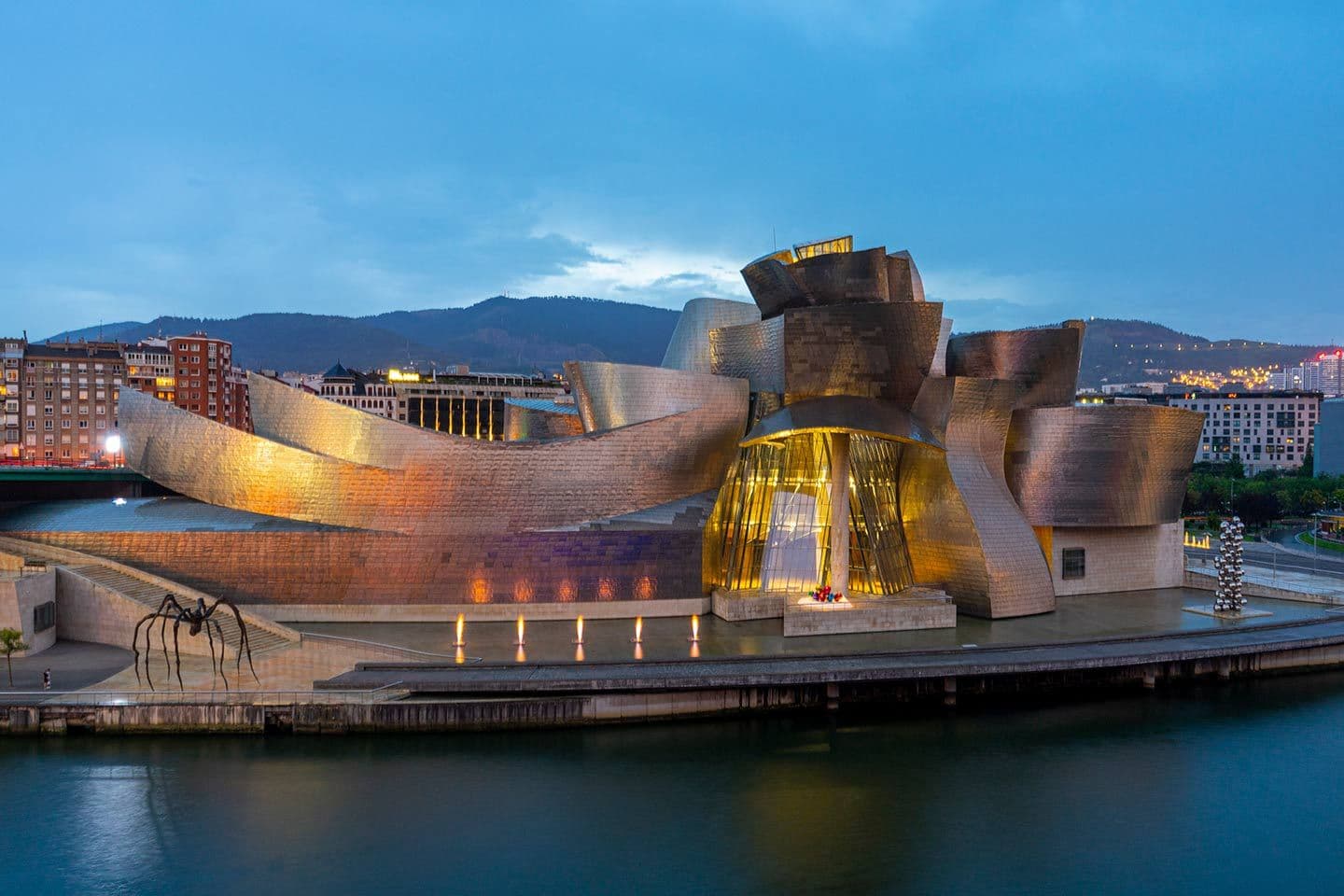
The design of the Guggenheim Museum Bilbao is a spectacular feat of architecture and engineering. The building is made up of a series of interconnected shapes, with the exterior covered in titanium panels. The museum is situated in a 32,500 square meter site on the banks of the Nervion River. It has 11,000 square meters of exhibition space, distributed over 19 galleries. Some of the galleries are classical orthogonal boxes, while others are free-form and irregularly shaped, allowing for a wide range of exhibition possibilities.
Frank Gehry's design is considered a masterpiece of deconstructivist architecture. The museum's exterior is a mix of orthogonal and curved forms, covered with shining titanium panels and glass. The building's dynamic, curvilinear forms were designed to appear random, echoing the chaotic complexity of modern life. Gehry used advanced computer modeling techniques, specifically a software called CATIA, which allowed him to design the complicated curved forms that characterize the building.
Inside, the museum offers a variety of experiences. The atrium is the heart of the museum and a key feature of Gehry's design. It's a towering, light-filled space that serves as the hub for the galleries. The museum's permanent collection includes works by some of the most important artists of the second half of the 20th century, such as Mark Rothko, Willem de Kooning, and Yves Klein. The museum also hosts a program of temporary exhibitions presenting works by contemporary artists and retrospectives of the major artists and movements of the 20th century.
The Guggenheim Museum Bilbao has had a significant impact on the city of Bilbao and the surrounding region. It has been credited with helping to transform Bilbao from an industrial city in decline into a thriving cultural and tourism destination, a phenomenon often referred to as the 'Bilbao effect'. The museum attracts over a million visitors per year, making it one of the most visited attractions in Spain. The economic impact of the museum has been significant, with studies estimating that the money generated by the museum has more than covered the initial investment made by the Basque Government.
Since its opening, the Guggenheim Museum Bilbao has received numerous awards and recognitions. In 1998, it was awarded the International Association for Bridge and Structural Engineering (IABSE) Outstanding Structure Award. In 1999, it received the European Museum of the Year Award. Time magazine included it in its 2007 list of the 100 best works of architecture in the world. In 2010, it was recognized by the Royal Institute of British Architects with the RIBA International Award.
The Guggenheim Museum Bilbao is not just a museum, it's a symbol of the transformation and modernization of Bilbao. Its iconic architecture and world-class art collection have made it a must-see destination for art lovers and tourists alike. Its success has inspired other cities around the world to invest in culture and the arts as a means to stimulate economic development and urban regeneration.
Key Highlights & Collections
The Guggenheim Museum Bilbao is a marvel of contemporary architecture and a symbol of the Basque Country's renewal and development. This iconic institution, located in Bilbao, Spain, was designed by Canadian-American architect Frank Gehry. The Guggenheim Museum Bilbao opened its doors in 1997, instantly garnering international acclaim for its innovative design and extensive art collection.
One of the key highlights of the museum is its unique architecture. The building itself is a magnificent work of art, constructed of titanium, glass, and limestone. Its design was inspired by the city's industrial past and the natural beauty of the area. The museum's curvilinear and deconstructivist structure appears random, but every curve and bend was meticulously calculated by Gehry and his team. The building's exterior is particularly stunning when it catches the sunlight, causing the titanium panels to shimmer and change color throughout the day.
The Guggenheim Museum Bilbao is not just an architectural masterpiece, but also home to a vast collection of contemporary and modern art. The museum's collection spans from the mid-20th century to the present day, featuring works from some of the most renowned artists of our time. The museum boasts more than 1,000 works in its permanent collection, featuring artists like Richard Serra, Anselm Kiefer, Willem de Kooning, and Andy Warhol.
One of the museum's most iconic installations is Richard Serra's 'The Matter of Time.' This colossal work, made of weathering steel, consists of a series of massive sculptures that visitors can walk through. The installation explores concepts of space and time, creating a unique and immersive experience for visitors. Another notable piece in the collection is Jeff Koons' 'Puppy,' a giant sculpture of a West Highland Terrier covered in thousands of flowers, located outside the museum entrance.
The Guggenheim Museum Bilbao also boasts an impressive collection of Basque art. As part of its mission to promote local culture and history, the museum features works by Basque artists like Eduardo Chillida, Jorge Oteiza, and Antoni Tàpies. These artists played a key role in shaping the Basque Country's unique artistic identity, blending traditional Basque themes with modern artistic styles.
The museum's commitment to showcasing groundbreaking contemporary art extends to its temporary exhibitions. Each year, the Guggenheim Museum Bilbao hosts several major exhibitions featuring works by leading international artists. Past exhibitions have included retrospectives on artists like David Hockney and Yoko Ono, as well as thematic exhibitions exploring topics like abstract expressionism and minimalism.
With its world-class collection and stunning architecture, the Guggenheim Museum Bilbao is a must-visit for art lovers and architecture enthusiasts alike. From its iconic exterior to the masterpieces within, the museum offers an unparalleled experience of contemporary and modern art. Whether exploring the vast permanent collection, discovering new artists in the temporary exhibitions, or simply marveling at the building's groundbreaking design, visitors to the Guggenheim Museum Bilbao are sure to be inspired and moved by the power of art and architecture.
In conclusion, the Guggenheim Museum Bilbao is not just a museum; it is a symbol of the Basque Country's resilience and creativity. It stands as a testament to the power of art to transform spaces, inspire individuals, and shape societies. With its breathtaking architecture and extensive collection of contemporary and modern art, the Guggenheim Museum Bilbao continues to be a beacon of artistic innovation and cultural dialogue, making it a key highlight in the world of art and architecture.
Visitor Experience
The Guggenheim Museum Bilbao is one of the most iconic museums in the world. Located in Bilbao, Spain, the museum is renowned not just for its stunning collection of modern and contemporary art, but also for its futuristic architecture that leaves visitors in awe. The museum offers an unparalleled visitor experience, merging the worlds of art, architecture, and culture in a way that few other institutions can match.
The visitor journey begins even before entering the museum, as the building itself is a work of art. Designed by renowned architect Frank Gehry, the museum is a spectacle of titanium, glass, and limestone, with curves and angles that seem to defy the laws of physics. The shimmering titanium panels that cover the building give it the appearance of a living, breathing creature, particularly when they catch the light of the sun or the glow of the city lights at night. The museum is a visual feast, irresistibly drawing the eyes of visitors and passersby alike.
Upon entering the museum, visitors are greeted by a spacious, light-filled atrium that serves as the hub of the museum. From here, nineteen galleries branch off, each with its own unique character. Some are classical, rectangular spaces, while others feature irregular shapes and unexpected angles, echoing the building’s distinctive exterior. The galleries are spread over three levels, connected by a system of glass elevators, staircases, and footbridges that add to the sense of exploration and discovery.
The museum’s collection is as diverse and fascinating as the building itself. It features works from the mid-20th century to the present, covering a wide range of styles and genres. Visitors can view masterpieces by renowned artists such as Picasso, Warhol, and Koons, as well as works by emerging artists. The museum also regularly hosts special exhibitions, showcasing works from other museums and private collections around the world.
One of the highlights of the visitor experience is the museum’s commitment to engagement and education. The museum offers a variety of programs and activities designed to enhance the visitor experience. These include guided tours, workshops, lectures, and film screenings, as well as interactive exhibits that invite visitors to engage with the artworks in a hands-on way. The museum also has a strong focus on inclusivity and accessibility, offering resources such as tactile guides and sign language tours for visitors with disabilities.
Visitors can also enjoy the museum’s restaurant and café, both of which offer stunning views of the surrounding city and river. The restaurant is particularly renowned, offering an innovative menu that combines traditional Basque cuisine with contemporary culinary techniques. The museum shop is another must-visit, offering a wide range of products inspired by the museum’s collection and architecture, from books and prints to jewelry and home decor.
The museum is set within a larger cultural district that includes a park, a theater, and other cultural institutions. Visitors can extend their experience by exploring these surrounding attractions, all of which are within walking distance of the museum. The museum also offers a variety of events and performances, from concerts and dance performances to film screenings and literary events, further enhancing the visitor experience.
In conclusion, a visit to the Guggenheim Museum Bilbao is not just a visit to a museum, but an immersive cultural experience. The museum offers a rich, diverse, and engaging visitor experience that combines world-class art with cutting-edge architecture, set within the vibrant cultural landscape of Bilbao. Whether you’re an art aficionado or a casual visitor, the Guggenheim Museum Bilbao offers an experience that is sure to inspire, engage, and delight.
References
Share with friends
The Guggenheim Museum Bilbao is a museum of modern and contemporary art designed by Canadian-American architect Frank Gehry, and located in Bilbao, Basque Country, Spain. The museum was inaugurated on October 18, 1997, by King Juan Carlos I of Spain.
Museum Name
Guggenheim Museum Bilbao
Location
Bilbao, Spain
Type of Museum
Art
Year Established
1997
Notable Collections/Features
Modern and contemporary art, works by artists such as Richard Serra and Jeff Koons
Website


About
Where Wisdom Meets AI Utopia Edutainment
Wisdomia.ai is a 3D AI edutainment platform that seamlessly blends learning with immersive play. As the first AI-powered 3D Web 3.0 marketplace created by creators for creators. Founded by renowned serial entrepreneur and author Dinis Guarda, Wisdomia empowers individuals to flourish in an ecosystem designed for collective wisdom EQ. Join us in shaping humanity's future as we harness the power of AI to visualise and create a better world—where technology serves human potential, and innovation is guided by utopian wisdom.
Contact us
Produced by