
loading...


The Solomon R. Guggenheim Museum, often referred to as The Guggenheim, is an art museum located in the Upper East Side neighborhood of Manhattan, New York City. It is the permanent home of a continuously expanding collection of Impressionist, Post-Impressionist, early Modern, and contemporary art and also features special exhibitions throughout the year.
Overview
The Solomon R. Guggenheim Museum, often referred to as The Guggenheim, is one of the most iconic and distinctive art museums in the world. Located on Fifth Avenue in Manhattan, New York City, the museum is a masterpiece of 20th century architecture, housing an impressive collection of modern and contemporary art.
The museum was established by Solomon R. Guggenheim, an American businessman and art collector. He was inspired to create a museum after his collection of non-objective art outgrew his private apartment. The Guggenheim Foundation was established in 1937, with the museum opening its doors to the public in 1959.
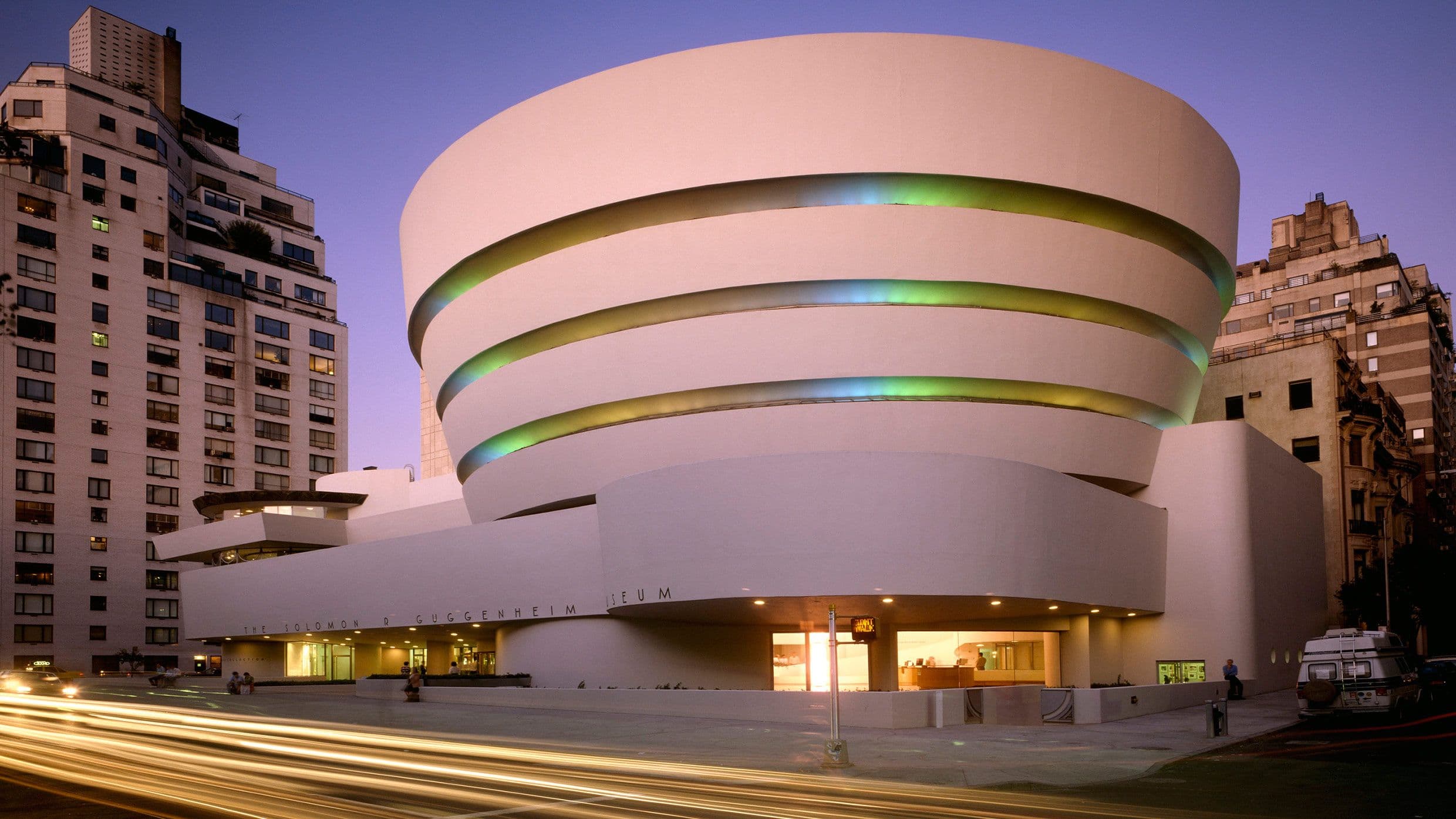
The design of the museum is as much a work of art as the collections it houses. The building was designed by Frank Lloyd Wright, one of the most influential architects of the 20th century. Wrights design was revolutionary, breaking away from traditional museum designs and instead creating a fluid, open space that allows visitors to experience the artwork in a unique way.
The building itself is a spiral, with a ramp that winds its way up the building, providing a continuous path for visitors to view the artwork. The building has no separate floors in the traditional sense, but instead is one continuous space. This allows for a unique viewing experience, with visitors able to view the artwork from different perspectives as they ascend the ramp.
The museum's collection is extensive and varied, with a focus on modern and contemporary art. The collection includes works by some of the most famous artists of the 20th century, including Pablo Picasso, Vasily Kandinsky, and Jackson Pollock. The museum also has an extensive collection of works by Frank Lloyd Wright, including many of his architectural drawings and models.
In addition to its permanent collection, the Guggenheim Museum also hosts a number of temporary exhibitions each year. These exhibitions often focus on a specific artist or theme and provide an opportunity for visitors to experience new and innovative art. The museum also hosts a number of educational programs and events, including lectures, workshops, and performances.
Over the years, the Guggenheim Museum has undergone a number of renovations and expansions. Most notably, in 1992, the museum underwent a major renovation that saw the addition of a ten-story tower. This tower provides additional exhibition space, as well as housing the museums administrative offices. In 2001, a further renovation saw the restoration of the museums original skylight, which had been covered over in the 1992 renovation.
The Guggenheim Museum is not just limited to its New York location. There are also Guggenheim museums in Bilbao, Spain and Venice, Italy, as well as the Guggenheim Abu Dhabi, which is currently under construction. Each of these museums is designed to reflect the unique culture and architectural style of its location, while still maintaining the Guggenheims commitment to showcasing modern and contemporary art.
The Solomon R. Guggenheim Museum is more than just a museum. It is a testament to the power of art and architecture, a place where visitors can experience the thrill of discovery and the joy of learning. Whether you are a seasoned art enthusiast or a first-time visitor, the Guggenheim Museum offers an unparalleled experience that is sure to inspire and delight.
Key Highlights & Collections
The Solomon R. Guggenheim Museum, often referred to as The Guggenheim, is an art museum located in Manhattan, New York City. It is the permanent home of a continuously expanding collection of Impressionist, Post-Impressionist, early Modern, and contemporary art and also features special exhibitions throughout the year. The museum was established by the Solomon R. Guggenheim Foundation in 1939 and is one of the best-known museums globally.
Designed by the renowned American architect Frank Lloyd Wright, the cylindrical building, wider at the top than at the bottom, was conceived as a temple of the spirit and is one of the 20th century's most important architectural landmarks. The building underwent an extensive expansion and renovation in 1992, adding additional exhibition space, a café and an auditorium. In 2008, the museum was further expanded with the addition of a new tower, which provides even more space for exhibitions and educational programs.
The Guggenheim Museum's collection has grown over the years and now includes more than 7,000 artworks. These range from the late 19th century through to the present day and represent a wide array of artistic styles and movements. The collection is particularly strong in Non-Objective art, a style of abstract art that emerged in Europe in the early 20th century. The museum's Non-Objective collection includes significant works by Wassily Kandinsky, Paul Klee, and Piet Mondrian, among others.
In addition to its Non-Objective holdings, the Guggenheim Museum's collection includes key examples of Surrealism, Minimalism, Pop Art, Conceptual Art, and other contemporary movements. Standout works include Marc Chagall's Paris Through the Window, Fernand Léger's The City, and Roy Lichtenstein's Roommates. The museum also holds an impressive collection of works by Pablo Picasso, including the iconic Woman Ironing and Le Moulin de la Galette.
Each year, the Guggenheim Museum presents several major temporary exhibitions, featuring works from its collection as well as loans from other institutions and private collections. These exhibitions often focus on a particular artist, period, or theme, providing visitors with the opportunity to explore in depth areas of art history that may be less represented in the museum's permanent collection.
Moreover, the Guggenheim Museum is committed to education and public programs. It offers a range of lectures, symposia, workshops, and performances designed to enhance visitors' understanding and appreciation of modern and contemporary art. The museum's education department also provides programs for students, teachers, families, and adults, including tours, classes, and hands-on art making workshops.
Furthermore, the Guggenheim Museum has a well-stocked library and a comprehensive archives department. The library's collection focuses on modern and contemporary art, architecture, and museology. It includes books, periodicals, exhibition catalogs, and gallery publications. The archives hold primary source material related to the museum's history, exhibitions, and collections.
As an art institution, the Solomon R. Guggenheim Museum continues to innovate and push the boundaries of what a museum can be. Through its compelling exhibitions, extensive collections, and innovative educational programs, it provides a platform for artists, scholars, and the public to engage with art in new and meaningful ways.
Visitor Experience
The Solomon R. Guggenheim Museum, often referred to as The Guggenheim, is a well-known art museum located in Manhattan, New York City. It is the permanent home of a renowned collection of Impressionist, Post-Impressionist, early Modern, and contemporary art and also features special exhibitions throughout the year. The museum was established by the Solomon R. Guggenheim Foundation in 1939 as the Museum of Non-Objective Painting, under the guidance of its first director, Hilla von Rebay. It adopted its current name in 1952, three years after the death of its founder Solomon R. Guggenheim.
The building itself, designed by Frank Lloyd Wright, is as much a work of art as the paintings it houses. With its unique, spiral ramp gallery, it is one of the 20th centurys most important architectural landmarks. The museum offers several programs for visitors of all ages and interests. From lectures, symposia, and film screenings to educational programs and performances, there are myriad ways to enhance your Guggenheim experience.
As a visitor, youll start at the top of the building and follow the gentle slope of the ramp downwards, around its large central atrium. This striking layout allows you to view artwork from different angles and perspectives, adding a unique dimension to your visit. Along the way, youll encounter works by artists such as Vincent van Gogh, Pablo Picasso, Marc Chagall, Wassily Kandinsky, and many others. The museum's collection is constantly evolving, so there's always something new to discover.
For those interested in delving deeper into the art on display, the museum provides audio guides that offer fascinating insights and background information on selected works in the collection. These guides are available in multiple languages, ensuring that visitors from around the world can fully engage with the exhibits. The Guggenheim also offers free guided tours, led by knowledgeable museum educators who can provide context and answer any questions you might have about the artworks.
In addition to the main exhibition spaces, there are also smaller galleries dedicated to photography and multimedia art. The Guggenheim's vast collection extends beyond the walls of the museum, with an online collection that can be explored from anywhere in the world. This digital platform allows you to explore over 7,000 artworks, including pieces from the Guggenheim’s extensive film, video, and new media collections.
The Guggenheim is not just about art - it's also a vibrant cultural center. The museum hosts a wide range of cultural and educational events, including music performances, film screenings, and artist talks. These events provide opportunities for visitors to engage with the art in new and exciting ways, and to learn more about the ideas and processes behind the works on display.
After exploring the museum, visitors can stop at The Wright, the museum's award-winning restaurant. Offering innovative dishes in a modern setting, The Wright is another highlight of any Guggenheim visit. The museum also has a café where you can grab a quick bite or a refreshing drink. For those who want a memento of their visit, the Guggenheim Store offers a wide selection of books, posters, and design objects inspired by the museum's collection and exhibitions.
The Guggenheim Museum is wheelchair accessible, and service animals are permitted. For visitors with visual, auditory, or mobility impairments, the museum offers a variety of accessible programs, services, and resources. These include sign language interpretation, assistive listening devices, and touch tours.
Visiting the Guggenheim is a memorable experience for art lovers and casual visitors alike. Its iconic building, impressive collection, and engaging programs make it a must-visit destination for anyone interested in modern and contemporary art.
References
Share with friends
The Solomon R. Guggenheim Museum, often referred to as The Guggenheim, is an art museum located in the Upper East Side neighborhood of Manhattan, New York City. It is the permanent home of a continuously expanding collection of Impressionist, Post-Impressionist, early Modern, and contemporary art and also features special exhibitions throughout the year.
Museum Name
Solomon R. Guggenheim Museum
Location
New York City, USA
Type of Museum
Art Museum
Year Established
1937
Notable Collections/Features
Works of Impressionist, Post-Impressionist, early Modern, and contemporary art
Website


About
Where Wisdom Meets AI Utopia Edutainment
Wisdomia.ai is a 3D AI edutainment platform that seamlessly blends learning with immersive play. As the first AI-powered 3D Web 3.0 marketplace created by creators for creators. Founded by renowned serial entrepreneur and author Dinis Guarda, Wisdomia empowers individuals to flourish in an ecosystem designed for collective wisdom EQ. Join us in shaping humanity's future as we harness the power of AI to visualise and create a better world—where technology serves human potential, and innovation is guided by utopian wisdom.
Contact us
Produced by