
loading...


The State Russian Museum, formerly the Russian Museum of His Imperial Majesty Alexander III, is the largest depository of Russian fine art in Saint Petersburg. The museum was established on April 13, 1895, upon the enthronement of Nicholas II to commemorate his father, Alexander III.
Overview
The State Russian Museum, officially named The Russian Museum of His Imperial Majesty Alexander III, is the world's largest depository of Russian fine art. It is also one of the most significant cultural institutions in Russia. The museum was established in 1895 in St Petersburg by decree of Emperor Nicholas II. Its initial collection was composed of artworks acquired from the Hermitage Museum, Alexander Palace, and the Imperial Academy of Arts.
Today, the extensive collection of the State Russian Museum covers all historical periods and development trends of Russian art, all main types and genres, and directions of Russian artistic schools over more than a thousand years: from the X to the XXI century. The collection of the Russian Museum numbers to about 400,000 exhibits and covers the complete history of artistic ideas and numerous art trends in Russia.
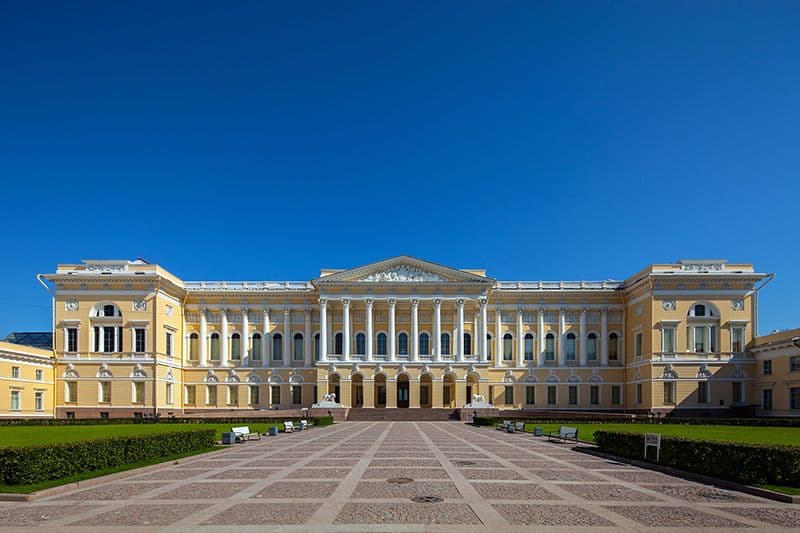
The museum's collection is housed in a unique architectural complex in the historic center of St Petersburg. The main building of the museum is the Mikhailovsky Palace, a splendid Neoclassical residence of Grand Duke Michael Pavlovich, designed by Carlo Rossi and built in 1819-1825. The museum also includes the Marble Palace and the Stroganov Palace, both located on the Palace Embankment, and the Mikhailovsky Castle, former residence of Russian emperors.
The Russian Museum possesses a unique collection of icons that represents different stages and main regional schools of Russian icon-painting. The earliest icons in the collection date back to the beginning of the 12th century. The museum's collection of folk art presents a vivid picture of the traditions and customs of the Russian people. The collection includes folk costumes, embroidery, fabrics, lace, artistic metalwork, carvings, painted trays, furniture, ceramics, and household objects.
The museum also houses a fine collection of Russian avant-garde works, created by such prominent artists as Wassily Kandinsky, Kazimir Malevich, Marc Chagall, and others. The museum's collection of the 20th-century art contains works representing all major trends and movements in Russian art of that period, including Socialist Realism, Severe style, and Nonconformist art.
Over its long history, the State Russian Museum has not only collected, but also created Russian art. The museum has its own workshops, where restoration and scientific work is carried out. The museum also organizes traveling exhibitions of its collections to various cities in Russia and abroad, participates in the organization of international projects, carries out scientific research, restores, publishes, educates, and is engaged in charity work.
The Russian Museum is also a research and educational center, where lectures, seminars, concerts, and creative meetings with artists are held. The museum's educational programs are designed for different age groups and are aimed at expanding knowledge about Russian art, developing aesthetic taste, and stimulating creative activity. The museum has a library with a rich collection of books, periodicals, and archive materials on theory and history of art.
As a cultural institution, the State Russian Museum plays a vital role in the life of Russia. The museum serves as a place where people can learn about and appreciate Russian art, culture, and history. Its extensive collection, unique architectural ensemble, and innovative educational programs make the Russian Museum a major center of cultural, scientific, and educational activities.
Today, in the era of digital technology, the Russian Museum is actively working on the creation of electronic resources, providing wide access to its collections and scientific materials. The museum's website and its pages in social media networks regularly publish information about new exhibitions, scientific research, and various events. The museum also develops various multimedia programs, creates virtual tours, and publishes electronic catalogues of its collections.
Thus, the State Russian Museum is not just a museum, it is a multi-functional cultural institution that combines a museum, scientific institute, educational center, restoration workshops, and a center of digital technologies. The museum's mission is to collect, study, and popularize Russian fine art for the benefit of present and future generations. The State Russian Museum is a symbol of national culture, a storehouse of art treasures, and a center of cultural and educational activities.
Key Highlights & Collections
The State Russian Museum, officially known as the Russian Museum of His Imperial Majesty Alexander III, is the world's largest depository of Russian fine art. It is located in Saint Petersburg, Russia. Since its establishment in 1895, the museum has been home to a vast collection of impressive Russian art, showcasing the cultural history of Russia from the 11th century to the present day.
The museum's collection contains over 400,000 exhibits covering the entire history of Russian fine art. The collection ranges from numismatic opus to modern visual art. The museum also houses a unique and extensive collection of folk and applied art, which provides an insight into the traditional Russian way of life and culture.
One of the key highlights of the museum is its collection of Russian icons. This collection, which is one of the largest in the world, includes rare and precious examples of Russian icon painting from the 12th to the 19th centuries. Notable pieces include The Trinity by Andrei Rublev and The Old Testament Trinity by Simon Ushakov.
The museum also boasts an impressive collection of Russian Avant-Garde art from the early 20th century. This includes works by famous artists such as Kazimir Malevich, Wassily Kandinsky, and Marc Chagall. The collection provides an in-depth look into this revolutionary period in Russian art history.
In addition, the museum hosts an extensive collection of 18th and 19th-century paintings and sculptures. This includes masterpieces by renowned artists such as Ivan Aivazovsky, Ilya Repin, and Vasily Vereshchagin. The collection showcases the brilliance of Russian Romanticism, Realism, and Impressionism.
Another highlight of the museum is its collection of Russian impressionist and post-impressionist art. This collection includes works by artists such as Konstantin Korovin and Valentin Serov, who were instrumental in introducing the impressionist style to Russian art.
The State Russian Museum also houses a vast collection of sculptures, ranging from ancient stone idols to works by modern sculptors. This collection includes works by great Russian sculptors such as Mark Antokolsky, Ivan Shadr, and Vera Mukhina.
Moreover, the museum is home to a large collection of graphic art. This includes drawings, watercolors, prints, and posters from various periods of Russian art history. The collection showcases the diversity and evolution of graphic art in Russia.
The museum also features a collection of Russian folk art. This collection includes traditional Russian crafts such as lacquer miniatures, wood carvings, and textiles. The collection provides a glimpse into the folk traditions and everyday life of Russian people in the past.
The State Russian Museum is not just a home for art but also an educational and research center. It offers a variety of educational programs and conducts scientific research in the field of Russian art history. The museum has a rich library containing more than 250,000 books and catalogs on art history, theory, and criticism.
Throughout its history, the State Russian Museum has developed and expanded its collections, becoming a major cultural institution in Russia. It is not just a showcase of Russian art, but also a reflection of the country's rich history and culture. The museum continues to play a crucial role in preserving, studying, and promoting Russian art in all its forms.
In conclusion, the State Russian Museum is a treasure trove of Russian art and culture. With its vast and diverse collections, it offers a comprehensive view of Russian art history. Whether you are an art enthusiast, a student, or just a curious visitor, the museum offers an enriching and enlightening experience.
Visitor Experience
The State Russian Museum, formally known as the Russian Museum of His Imperial Majesty Alexander III, is the first state museum of Russian fine arts in the country. Located in Saint Petersburg, it is one of the most prominent museums in Russia and has a rich collection of more than 400,000 exhibits, which cover the entire history of Russian fine art from the 10th century to the present day.
Visitors to the State Russian Museum are treated to an unrivaled display of Russian art and culture. The museum's collection showcases a wide variety of art forms, including painting, sculpture, graphics, numismatics, and folk art. Icon painting, an art form particularly associated with Russian culture, is well-represented in the museum's collection. Visitors can admire the works of great Russian artists such as Ivan Aivazovsky, Ilya Repin, Marc Chagall, Wassily Kandinsky, and many others.
The museum itself is located in the Mikhailovsky Palace, a grand historic building that is a work of art in its own right. The palace was designed by the architect Carlo Rossi and is considered one of the masterpieces of Russian neoclassicism. The palace's magnificent facade, grand halls, and lavish interiors provide a fitting setting for the museum's extensive collection.
Visitors can also explore the museum's various branches located throughout Saint Petersburg, each offering a unique perspective on Russian art and culture. These include the Marble Palace, the Stroganov Palace, the Mikhailovsky Castle, and the Summer Garden among others. Each location provides a unique ambiance and a distinct collection, making each visit a unique experience.
The museum also hosts a variety of educational programs, cultural events, and temporary exhibitions, providing a dynamic and engaging visitor experience. These programs range from lectures and seminars to workshops and guided tours, catering to a wide range of interests and age groups. The museum's temporary exhibitions often feature works from other museums and private collections, offering visitors the chance to see rare and unique pieces.
In addition to its exhibitions, the State Russian Museum also offers various facilities to enhance the visitor experience. These include a museum shop where visitors can purchase souvenirs and art reproductions, and a cafe where they can relax and enjoy a meal or a cup of coffee. There are also facilities for visitors with disabilities, ensuring that the museum is accessible to all.
The State Russian Museum provides a unique opportunity to immerse oneself in Russian art and culture. Its vast collection, housed in historically significant buildings, provides a comprehensive overview of Russian art history. The museum's various programs and facilities ensure that visitors can enjoy a rich and engaging experience. Whether you are a lover of art, a student of culture, or simply a tourist looking for a memorable experience, the State Russian Museum is a must-visit destination when in Saint Petersburg.
Visitors are advised to allot at least a few hours to fully explore the museum's extensive collection. The museum is open from Wednesday to Sunday, and tickets can be purchased online or at the museum's ticket office. It is recommended to check the museum's official website for the most current information on opening hours and ticket prices. Audio guides are available in several languages, providing detailed explanations about the artworks and their historical context.
In conclusion, the State Russian Museum offers a profound and unforgettable journey into the heart of Russian art and culture. Its extensive collection, displayed in magnificent historic buildings, provides a visual narration of Russia's artistic evolution. With a variety of exhibits, educational programs, and cultural events, the museum offers a rich and engaging experience for visitors of all ages and interests. Whether you're an art enthusiast, a history buff, or just a curious traveler, a visit to the State Russian Museum is sure to leave you with a deeper appreciation of Russia's artistic heritage and cultural legacy.
References
Share with friends
The State Russian Museum, formerly the Russian Museum of His Imperial Majesty Alexander III, is the largest depository of Russian fine art in Saint Petersburg. The museum was established on April 13, 1895, upon the enthronement of Nicholas II to commemorate his father, Alexander III.
Museum Name
State Russian Museum
Location
Saint Petersburg, Russia
Type of Museum
Art museum
Year Established
1895
Notable Collections/Features
Russian Fine Art, Icon collection, Folk Art, Decorative Art
Website


About
Where Wisdom Meets AI Utopia Edutainment
Wisdomia.ai is a 3D AI edutainment platform that seamlessly blends learning with immersive play. As the first AI-powered 3D Web 3.0 marketplace created by creators for creators. Founded by renowned serial entrepreneur and author Dinis Guarda, Wisdomia empowers individuals to flourish in an ecosystem designed for collective wisdom EQ. Join us in shaping humanity's future as we harness the power of AI to visualise and create a better world—where technology serves human potential, and innovation is guided by utopian wisdom.
Contact us
Produced by