Ancient Wisdom, Modern Minds: Are We Losing the Ability to Learn from Experience?
04 Nov 2026

AI Can Give Us Answers in Seconds. But are we losing the wisdom and cognitive skills that come from living, observing, and learning?
Today, I can ask AI almost anything.
How to build a business. How to improve agricultural productivity. How to make a financial decision. How to manage stress. Even how to live a meaningful life.
Within seconds, I can receive a detailed answer.
But I often wonder, does having the answer mean we have truly learned something?
I have spent much of my professional life working with technology, businesses and innovation. I firmly believe AI is transforming how we work, learn and solve problems.
Yet some of the most valuable lessons of my life did not come from technology, universities or business meetings.
They came from growing up in a small village in Rajasthan, observing how people lived, understanding the value of limited resources, experiencing different cultures, making mistakes in business, and learning to stay calm under pressure.
Looking back, I realise something important.
Knowledge can be transferred. Experience must be lived. Wisdom develops when we reflect on that experience and change how we act.
As AI makes knowledge almost instantly accessible, perhaps we need to ask whether we are giving equal importance to developing human judgment.
My First Classroom Was a Small Village
I grew up in Dhorimanna, a small village in Rajasthan, where life was simple, and resources were limited.
We didn't discuss sustainability, circular economies, mindfulness, or responsible consumption.
We practised them.
We passed down clothes and altered them for the next person. Materials were repaired or reused. Groceries arrived without the layers of packaging we see today. Water, food and other resources were treated carefully because waste was not an option.
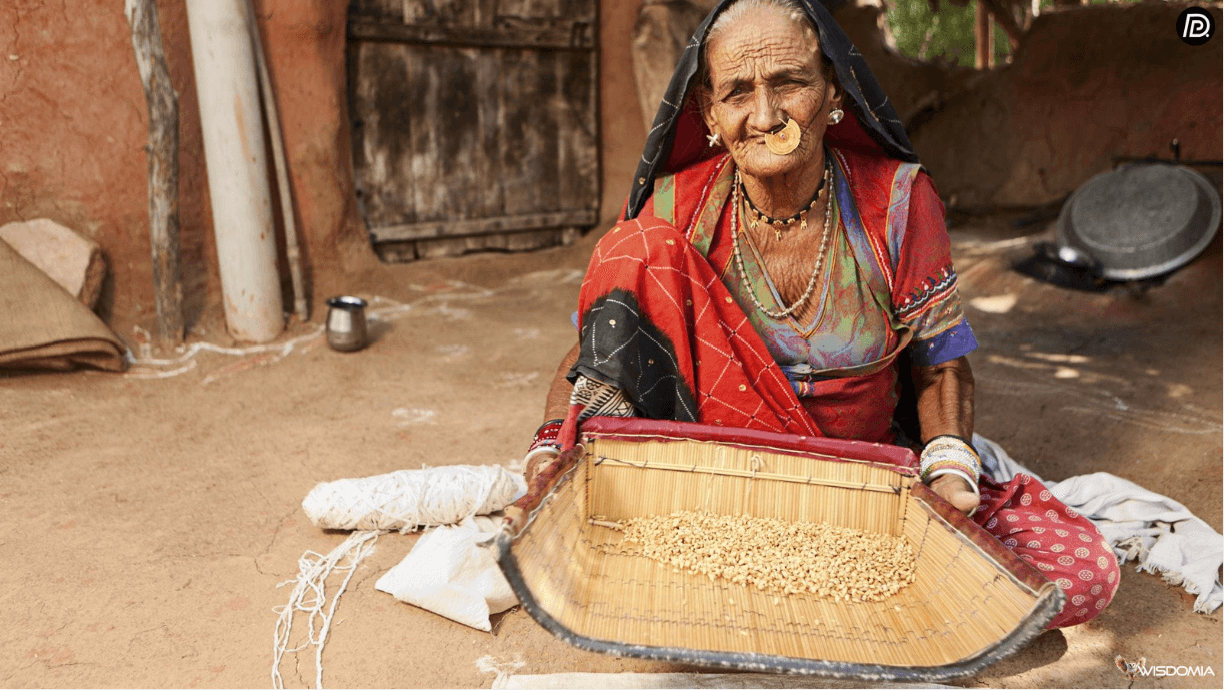
During school activities, creativity often meant making something useful from whatever was available rather than purchasing something new.
People shared resources, supported neighbours and lived closely with nature.
At the time, I did not consider these practices extraordinary.
They were simply part of everyday life.
Decades later, the world is investing billions in sustainability, circular economies and resource efficiency.
Many of the underlying principles are familiar to me from childhood.
Use what you need. Respect what you have. Repair before replacing. Share rather than waste.
These lessons were not taught through presentations or formal frameworks.
I learned them through observation, participation, and necessity.
That experience shaped how I think about sustainability today.
Technology can help us measure consumption, optimise resources and reduce environmental impact.
But unless people value those resources, technology alone cannot create a sustainable society.
The deeper lesson from my village is that responsible behaviour often begins with values, not regulations.
Modern Education Gives Us Information. Life Teaches Us Judgment.
My journey took me from Dhorimanna to Jodhpur, Maharashtra, Mumbai and eventually London.
Each place exposed me to different cultures, expectations and ways of working.
What seemed perfectly normal in one environment could be completely different in another.
That taught me adaptability.
Later, working across technology, financial institutions, and international businesses, I began to understand something else.
Professional knowledge matters, but understanding how people behave matters just as much.
A business proposal can look excellent on paper.
A partnership can appear commercially attractive.
A potential customer can express strong interest.
But experience teaches you to ask different questions.
Can this person actually deliver?
Does the customer have the budget and authority to make a decision?
Are the commitments realistic?
Is there sufficient trust?
What happens if the expected result does not materialise?
Financial projections alone rarely answer these questions.
They require observation, patience, experience and judgment.
Over the past few years, while building new technology initiatives, I have faced delayed decisions, financial pressures, unfulfilled commitments, and situations where promises did not match the actions that followed.
Some lessons have been expensive.
I have learned that an encouraging meeting is not a deal, a verbal commitment is not guaranteed revenue, and enthusiasm cannot replace due diligence.
AI can certainly help analyse these situations.
But the ability to recognise the difference between what people say and what they are prepared to do often comes from experience.
And sometimes, the most valuable learning comes from getting it wrong.
Yoga Taught Me That Clarity Begins Before Action
In my earlier article, Yoga for Stillness, Inner Strength & Outer Success, I explored the relationship between physical strength, inner balance and leadership.
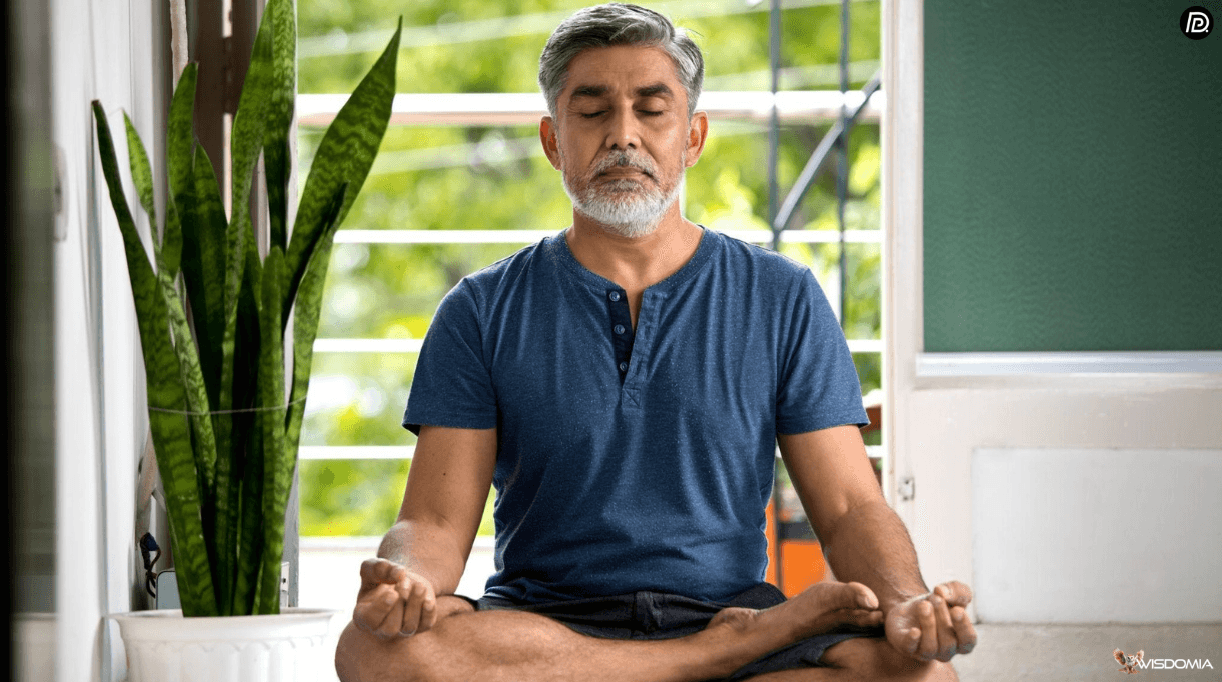
One distinction remains particularly important to me.
Exercise helps develop physical strength and endurance.
Yoga brings together movement, breathing and awareness, offering a way to develop greater inner balance.
In business, we are constantly encouraged to act.
Move faster. Respond immediately. Close the deal. Deliver results.
There is value in urgency.
But I have also learned that a quick decision isn't necessarily a good one.
Sometimes, the most useful thing we can do before an important decision is pause.
Even a few minutes of quiet reflection can help us identify whether we are acting from clarity or pressure.
I call this the Inner Compass Pause.
Before a significant decision, I try to ask:
Am I responding to the facts or reacting to frustration?
Am I pursuing this opportunity because it makes sense or because I have already invested so much in it?
Am I making a decision consistent with my values?
This does not guarantee the right answer.
But it helps reduce the influence of immediate emotions.
The lesson I take from yoga and mindfulness is practical:
Stillness is not the opposite of progress. Sometimes it is what makes better progress possible.
AI can provide more information to support a decision. But we still need the awareness to recognise our own assumptions, emotions and motivations.
Why Difficult Experiences Can Become Our Greatest Teachers
In a recent article on resilience, I compared life to a sine wave.
Sometimes everything seems to move forward.
Other times, progress slows, uncertainty increases, and challenges come from every direction.
I have experienced both.
During good times, we naturally focus on growth and opportunity.
During difficult times, we begin examining decisions more carefully.
Why did I trust that commitment?
Why did I underestimate the time required?
Should I have asked more questions?
Was I sufficiently prepared for the financial consequences?
What should I change next time?
These questions are uncomfortable, but they matter.
I have learned that resilience is not simply continuing to push harder.
Sometimes it means changing strategy, recognising a mistake, renegotiating expectations or stepping away from an opportunity.
Perseverance without learning can become repetition. Resilience requires adaptation.
This is where experience becomes wisdom.
Not because hardship automatically makes us stronger, but because reflection can help us make better decisions in the future.
And let's teach this more actively, especially to younger generations.
Failure should not simply be something to hide.
It should be something we examine, understand and learn from.
What Spirituality Adds to the Learning Process
My understanding of spirituality has evolved.
It began with the values I experienced in village life: simplicity, kindness, community, respect for nature and helping others.
Yoga and reflection have helped me become more aware of my thoughts and responses.
My long-standing connection with the Ramcharitmanas has also helped me remain grounded during difficult periods.
But I do not see spirituality as something limited to reading scriptures or following rituals.
For me, spirituality is the practice of bringing values into everyday behaviour.
It is visible in how we treat people.
How responsibly we use resources.
How we react when someone disappoints us.
How we behave when nobody is watching.
How we balance personal ambition with others' well-being.
In Dhorimanna, these values often showed up in daily actions rather than formal teachings.
A neighbour helping another family.
An elder sharing experience with younger people.
A community using limited resources responsibly.
These experiences shaped my understanding of Seva, service to others and the importance of living with awareness.
Today, I try to apply the same principles in a modern business environment.
A successful company should do more than generate revenue.
It should create value, use resources responsibly, honour commitments and contribute positively to society.
This is where I see spirituality and practical wisdom coming together.
Spirituality provides an ethical direction.
Experience tests our understanding.
Reflection helps us improve our behaviour.
Can AI Make Us Smarter but Less Experienced or losing cognitive skills?
We are now entering an era where AI can complete increasingly complex tasks.
A student can produce an essay without researching the subject independently and applying cognitive or analytical skills.
An entrepreneur can prepare a business strategy without personally examining the market.
A professional can generate recommendations without fully understanding their assumptions.
This is not necessarily bad.
AI can dramatically improve productivity, provide access to expertise and help people develop ideas they could not otherwise pursue.
But the way we use it matters.
Research published by Microsoft and Carnegie Mellon University in 2025 examined how knowledge workers use generative AI.
It found an association between greater confidence in AI and lower self-reported critical-thinking effort in the tasks studied.
That does not prove AI makes people less intelligent.
It does suggest a question worth taking seriously.
When technology makes answers easier to obtain, are we still making enough effort to understand them?
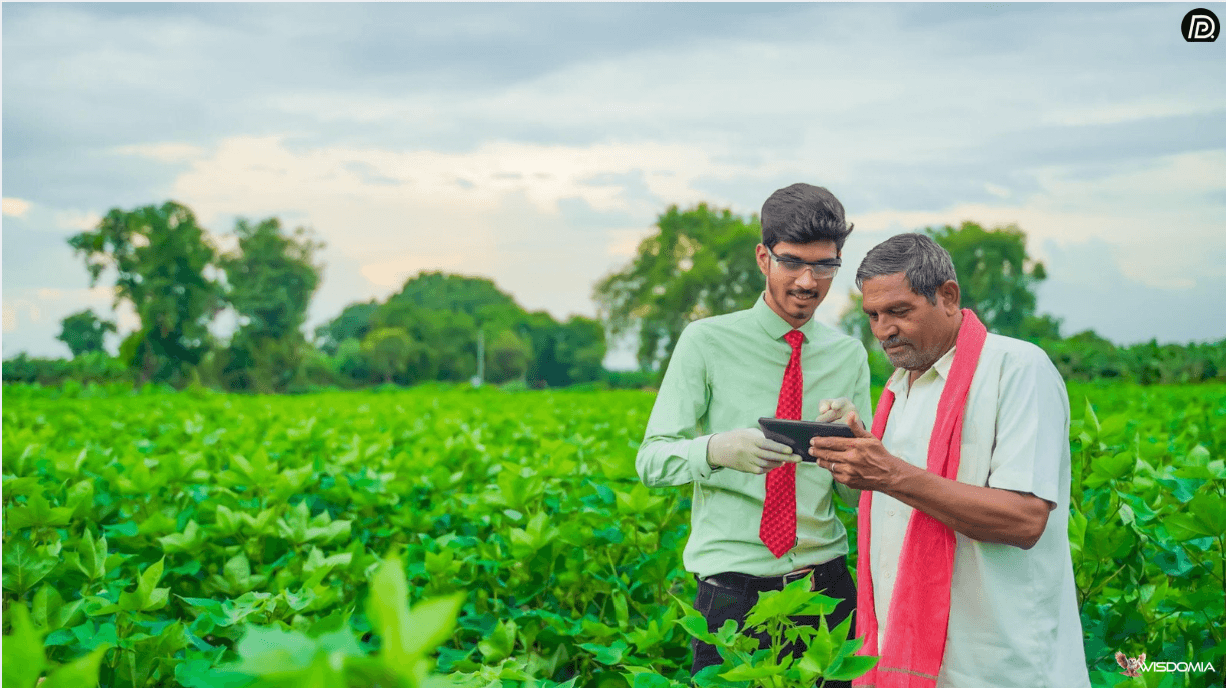
I see this particularly clearly in agriculture.
An AI platform can analyse weather forecasts, soil information, crop conditions and market signals.
But a farmer who has cultivated the same land for decades may recognise something important that the data does not fully capture.
The solution is not to reject AI or disregard the farmer.
It is to combine scientific intelligence with practical experience.
The same applies to business.
AI can analyse a partnership proposal.
But it cannot guarantee that the people involved will honour their commitments.
It can recommend a strategy.
But the person implementing that strategy must still manage relationships, uncertainty and consequences.
AI should enhance human experience, not persuade us that experience or cognitive, analytical skill is unnecessary.
What Are We Teaching the Next Generation?
This question concerns me.
Young people today have extraordinary access to information.
They can learn almost any subject through AI tutors, online courses and digital platforms.
But are we giving them enough opportunities to observe, experiment, make mistakes and discover things independently?
I believe learning needs a balance.
Learn from books and technology.
But also learn from people.
Visit farms, factories and communities.
Build something yourself.
Understand how resources are produced and consumed.
Work with people from different backgrounds.
Ask experienced professionals not only what succeeded, but what went wrong.
And allow yourself time to think before searching for the answer.
I would particularly encourage young entrepreneurs not to confuse a convincing presentation with a viable business.
An excellent business plan is useful.
But it must eventually survive customers, cash flow, competition, operational realities and human behaviour.
No amount of information can completely replace those experiences.
Perhaps education in the AI age should place greater emphasis on three questions:
What do you know?
What have you experienced?
What have you learned from it?
The third question may be the most important.
Seven Practical Ways to Build Wisdom in the AI Age
Based on my journey from village life to technology and international business, these are the practices I value most.
1. Observe before you conclude.
Many things become clearer when you take time to understand people, circumstances and the environment before forming an opinion.
2. Use AI to challenge your thinking.
Form your own view first. Then ask AI to identify weaknesses, missing evidence and alternative possibilities.
3. Learn from the people around you.
A farmer, artisan, experienced colleague, or community elder may offer lessons not readily captured in digital information.
4. Treat resources as valuable.
Time, money, energy, relationships and natural resources all require responsible management. This is one of my strongest lessons from Dhorimanna.
5. Pause before important decisions.
Use breathing, yoga, prayer or quiet reflection to examine whether you are acting from clarity or pressure.
6. Turn setbacks into changed behaviour.
After a disappointment, identify what you will do differently. Reflection without practical change has limited value.
7. Think beyond your immediate success.
Ask whether your actions benefit others, protect trust and create something sustainable.
These principles may sound simple.
But consistently practising them is what makes them valuable.
What This Means for the Future of AI
As AI becomes more capable, I believe its greatest opportunity isn't just to provide answers faster.
It is to help people make better decisions.
Imagine an AI assistant that does more than generate a business plan.
It challenges unrealistic assumptions.
It asks whether enough evidence exists.
It identifies potential effects on employees, customers, communities and the environment.
It encourages a student to understand the reasoning behind an answer.
It helps a farmer combine scientific recommendations with local experience.
It reminds decision-makers that efficiency is not the only measure of success.
Such technology would not need to claim that machines possess human wisdom.
Instead, it would strengthen human judgment.
This also connects with my interest in developing ethical approaches to AI informed by accumulated human wisdom.
But these ideas must be translated into transparent safeguards and tested in real situations.
The objective should not be to replace human thinking with AI, but to make it more informed, reflective, and responsible.
That, to me, is a more meaningful vision of technological progress.
From a Small Village to an AI-Powered World
Looking back on my journey, I see an interesting connection.
In Dhorimanna, I learned to value resources, relationships and community.
As I moved through different cities and countries, I learned to adapt.
Working in technology taught me the importance of knowledge, systems and innovation.
Building businesses taught me about trust, uncertainty, financial discipline and the consequences of decisions.
Yoga and spiritual practices helped me understand the importance of inner balance.
The challenges of recent years continue to teach me patience, resilience, and the need to improve my judgment.
None of these lessons replaces the others.
Together, they shape how I think and act.
I still make mistakes.
I still face uncertainty.
And I am still learning.
But perhaps that is precisely the point.
Wisdom is not a qualification we acquire once.
It is something we continue developing throughout life.
The world will keep changing.
Technology will become more intelligent.
AI will make many tasks easier.
But I hope we do not lose the desire to observe, question, reflect, experience and learn for ourselves.
Because progress is not only about how much we know or how quickly we can act. It is also about the quality of the decisions we make and the values behind them.
A Final Reflection
I often think about how different life was during my childhood in Rajasthan compared with the world we live in today.
We had limited information, fewer resources and far less technology.
Yet everyday life taught us patience, resourcefulness, cooperation and respect for nature.
Today, we have extraordinary tools and almost unlimited access to information.
The challenge is to use them without losing those valuable human qualities.
I do not believe we need to choose between ancient wisdom and modern technology.
We need both.
Let AI expand our knowledge. Let experience develop our judgment. Let spirituality and human values guide our actions.
That is the balance I continue striving for.
And perhaps that is the real opportunity of the AI age, not simply to build more intelligent machines, but to become wiser human beings.
Share

Dilip Pungliya
Industry Expert & Contributor
Dilip Pungliya is a business leader, Artificial Intelligence consultant, blockchain advisor, metaverse solution expert, data leader, technologist, and business, process, & technology architect. As a board member and significant shareholder of ztudium, Dilip brings a wealth of experience in business leadership and data technology. In his role as the Managing Partner of the ztudium Group, he benchmarks his strategic acumen in steering effective strategy and framework development for the company. Dilip also plays a pivotal role in his family's limited company in India, VPRPL, where he oversees operations and strategic planning. His professional journey includes impactful collaborations with esteemed organisations such as Shell, the Department for Environment Food and Rural Affairs, Deutsche Bank, ICBC Standard Bank Plc, BNP Paribas, and HSBC Investments. Beyond his professional endeavours, Dilip is deeply committed to philanthropy and charitable work, particularly during the global challenges presented by the COVID-19 pandemic.