The Humanoids Robot Economy- Part 4
18 Jun 2025

The Humanoid Democracy: Governance for the Artificial Age
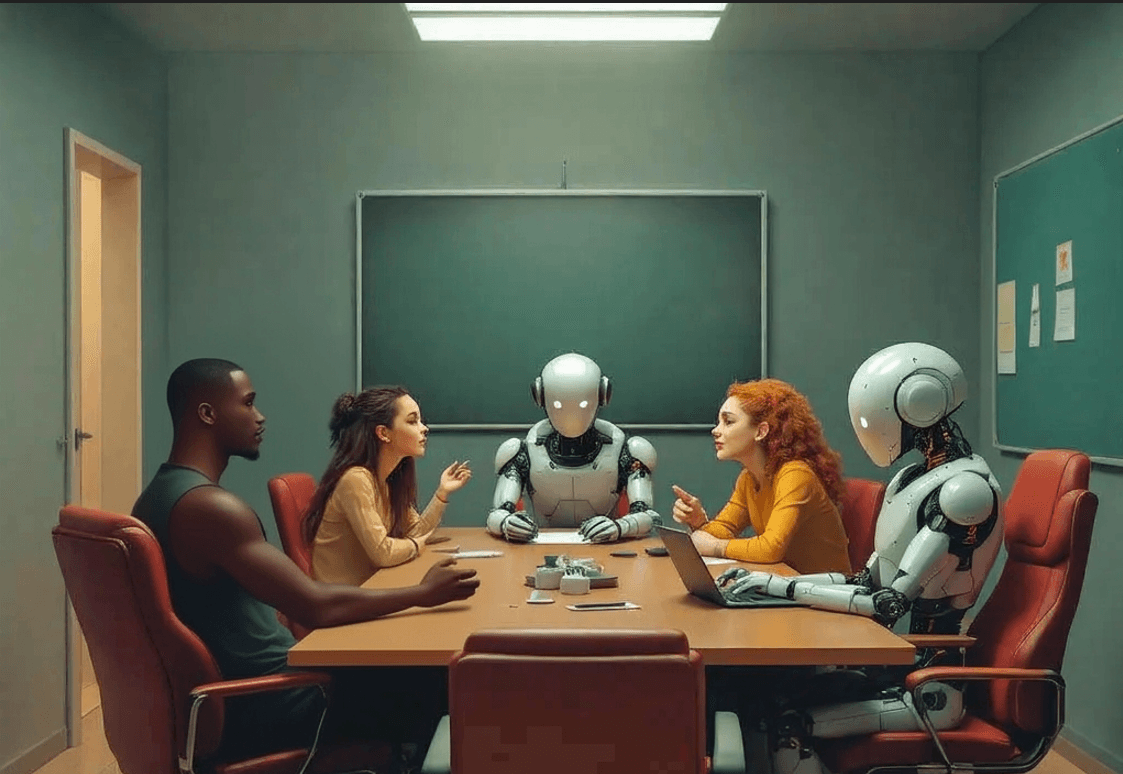
As humanoid robots achieve increasing autonomy and intelligence, fundamental questions emerge about their role in democratic societies. Should sufficiently advanced robots have rights? How do we maintain human agency when artificial intelligence can process information and make decisions faster than human institutions?
The humanoid democracy requires new governance models that preserve human sovereignty whilst leveraging artificial intelligence to enhance democratic processes. This includes:
- Algorithmic Transparency: Requirements for explainable AI in all public-facing humanoid systems
- Human Override Protocols: Guaranteed human authority in all critical decision-making processes
- Digital Rights Frameworks: Protection of human autonomy in human-robot interactions
- Democratic AI Training: Ensuring humanoid systems learn democratic values and respect for human dignity
| Governance Domain | Human Authority | Robot Capability | Oversight Mechanism |
| Public Safety | Strategic decisions, ethical oversight | Operational execution, data analysis | Human-in-the-loop validation |
| Economic Policy | Value prioritisation, goal setting | Economic modelling, impact analysis | Democratic accountability |
| Social Services | Service design, quality standards | Service delivery, efficiency optimisation | Citizen feedback systems |
| Infrastructure | Investment priorities, public interest | Maintenance, monitoring, optimisation | Performance transparency |
| Education | Curriculum values, human development | Personalised learning, knowledge delivery | Educational quality assurance |
The Innovation Ecosystem: Cultivating Humanoid Excellence
Creating successful humanoid economies requires more than individual company success—it demands comprehensive innovation ecosystems that support research, development, commercialisation, and social integration. These ecosystems must balance competition with collaboration, secrecy with openness, profit with public benefit.
Key Ecosystem Components
Research Universities: Fundamental research in AI, robotics, materials science, and human-robot interaction Corporate R&D: Applied research focused on commercial applications and market deployment Government Labs: National security applications, standards development, and public interest research Startup Incubators: Entrepreneurial innovation in specialised humanoid applications International Partnerships: Collaborative research programmes with allied nations and institutions
The most successful humanoid economies will be those that create virtuous cycles between these components, ensuring rapid knowledge transfer from fundamental research to commercial applications whilst maintaining ethical oversight and public benefit orientation.
The Prometheus Choice: Fire or Conflagration
Like the Titan who brought fire to humanity, we stand poised to bestow upon our mechanical creations the spark of intelligence, movement, and purpose. Yet Prometheus faced eternal punishment for his gift, tormented by the eagle that devoured his regenerating liver—a metaphor for unintended consequences that perpetually consume their creator.
The humanoid revolution offers humanity fire that could illuminate new possibilities for creativity, exploration, and transcendence. But poorly managed, this same fire could consume the employment structures, social cohesion, and human purpose that have sustained civilisation for millennia.
The choice before us transcends technology selection or economic policy—it represents a fundamental decision about what kind of beings we wish to become in partnership with our artificial progeny. Shall we create mechanical servants that amplify human potential whilst preserving human dignity? Or shall we birth our own replacements, magnificent in their capability but ultimately rendering their creators obsolete?
The answer lies not in the sophistication of our algorithms or the precision of our actuators, but in the wisdom of our preparation and the courage of our choices. The humanoid revolution will remake civilisation regardless of our preferences. Our responsibility—to ourselves, our children, and perhaps to consciousness itself—is to ensure that transformation serves human flourishing rather than merely mechanical efficiency.
Conclusion: The Architecture of Hope
The strategic architecture presented in this chapter offers more than policy prescriptions or investment guidance—it provides a framework for hope. Hope that humanity can master the forces we are unleashing, hope that our mechanical progeny will amplify rather than replace human potential, hope that the age of artificial intelligence will prove to be humanity's greatest renaissance rather than its final chapter.
But hope without action remains mere wishful thinking. The frameworks, scorecards, and strategies outlined here demand immediate implementation, sustained commitment, and unprecedented coordination across sectors, nations, and institutions. The clock counts down. The choices await. The future of humanity hangs in the balance of decisions we make today about the artificial beings we will birth tomorrow.
In the end, each human being is humanity—and humanity's mechanical offspring will reflect the values, wisdom, and foresight we demonstrate in their creation. Choose wisely, for the children of silicon and steel will inherit the Earth we shape for them.
About This Essay in 4 parts: This strategic framework is designed to guide government leaders, business executives, and civil society organisations in preparing for the humanoid robot economy. The frameworks and assessments provided should be adapted to specific national contexts and organisational needs whilst maintaining focus on the urgent timelines involved in this technological transformation.
The Humanoids Robot Economy- Part 1
The Humanoids Robot Economy- Part 2
The Humanoids Robot Economy- Part 3
Share

Dinis Guarda
Dinis Guarda is an author, entrepreneur, founder CEO of ztudium, Businessabc, citiesabc.com and Wisdomia.ai. Dinis is an AI leader, researcher and creator who has been building proprietary solutions based on technologies like digital twins, 3D, spatial computing, AR/VR/MR. Dinis is also an author of multiple books, including "4IR AI Blockchain Fintech IoT Reinventing a Nation" and others. Dinis has been collaborating with the likes of UN / UNITAR, UNESCO, European Space Agency, IBM, Siemens, Mastercard, and governments like USAID, and Malaysia Government to mention a few. He has been a guest lecturer at business schools such as Copenhagen Business School. Dinis is ranked as one of the most influential people and thought leaders in Thinkers360 / Rise Global’s The Artificial Intelligence Power 100, Top 10 Thought leaders in AI, smart cities, metaverse, blockchain, fintech.