Wellbeing
The Machiavellian Principles Applied In An AI Hallucination Time (Part 1)
28 Jan 2026

Part 1 of 5: The Machiavellian Principles Applied In An AI Hallucination Time
This is the first article of Dinis Guarda's mini-book exploring Niccolò Machiavelli's The Prince and its profound relevance to contemporary struggles against manipulation, illogic and the erosion of epistemic certainty in the age of artificial intelligence.
Prologue: The Liar Nature of Humanity
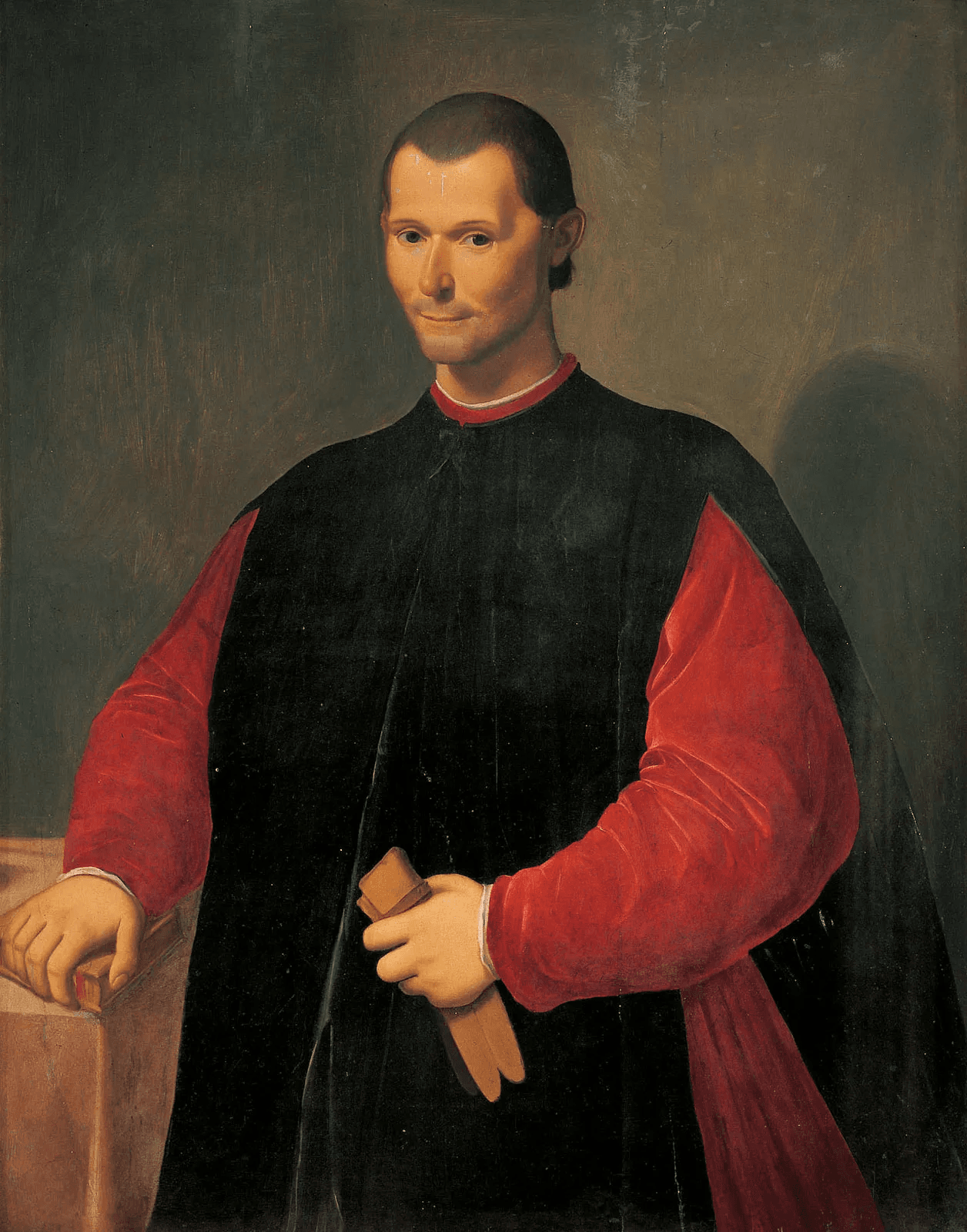
"The fact is that a man who wants to act virtuously in every way necessarily comes to grief among so many who are not virtuous." — Niccolò Machiavelli, The Prince, Chapter XV
In the autumn of 1513, whilst living in forced exile at his small estate in Sant'Andrea in Percussina, close to Florence, Niccolò Machiavelli in his usual intensity, penned a letter to his friend Francesco Vettori. He described his daily routine: spending mornings amongst peasants, afternoons playing cards at the inn, and then, as dusk descended, returning home to don his finest robes and enter his study. There, he wrote, he conversed with the ancients, Plutarch, Livy, Tacitus, seeking counsel on the nature of power, the behaviour of princes and the inexorable patterns of human conduct.
From these nocturnal dialogues emerged Il Principe, The Prince, a slim volume that would scandalise Europe, inspire revolutions and become synonymous with political ruthlessness. Yet five centuries later, in our age of artificial intelligence, deepfakes, and algorithmically generated falsehoods, Machiavelli's insights have acquired an unexpected urgency. We live in what might be called “an AI hallucination time”, an epoch where the boundary between truth and fabrication has become dangerously permeable, where manipulators deploy not merely human cunning but synthetic intelligence to amplify their deceptions.
The adversary Machiavelli confronted, the liar, the manipulator, the illogical tyrant, has not disappeared. Rather, they have been augmented. Where once a skilled deceiver could corrupt a city, today's digital Borgias can corrupt entire information ecosystems. The question Machiavelli posed in 1513 remains our question in 2026: How does one who seeks truth survive in a world dominated by those who wield lies as weapons?
The Paradox Philosopher of Power: Understanding Machiavelli's Revolutionary Break

The Historical Rupture
Before Machiavelli, political philosophy existed primarily as a branch of moral theology. From Plato's Republic to Augustine's City of God, from Aquinas's Summa Theologica to Erasmus's Education of a Christian Prince, the tradition held that governance derived its legitimacy from virtue, that the ruler's duty was to embody moral excellence, and that political power existed to serve divine order or natural law.
Machiavelli shattered this edifice with a single, devastating observation:
"How we live is so far removed from how we ought to live, that he who abandons what is done for what ought to be done, will rather learn to bring about his own ruin than his preservation." (Chapter XV)
This was not cynicism, it was empiricism. Having served as Second Chancellor of the Florentine Republic, having negotiated with Cesare Borgia, having witnessed the machinations of Pope Julius II, and having watched the Republic he served collapse under external pressure and internal corruption, Machiavelli concluded that political philosophy must begin not with ideals but with observable reality.
The question was not "How should humans behave?" but rather "How do humans actually behave?"
And the answer was: often stupidly, frequently dishonestly and almost always in service of self-interest.
The Dialectic of Virtù and Fortuna

Central to Machiavelli's thought is the tension between virtù and fortuna, terms that resist simple translation. Virtù is not "virtue" in the moral sense but rather excellence, capability, prowess, the qualities that enable effective action. Fortuna is not merely "fortune" but the realm of contingency, chance and forces beyond human control.
Machiavelli conceived political life as a perpetual struggle between these forces:
"Fortune is the arbiter of half the things we do, leaving the other half or so to be controlled by ourselves." (Chapter XXV)
This is neither fatalism nor hubris. It is strategic realism. We cannot control whether we are born in times of peace or war, whether plague strikes or harvests fail, whether our adversaries are rational or deranged. But we can control our preparedness, our adaptability, and our strategic responses.
In our contemporary context, where AI systems hallucinate convincing falsehoods, where social media amplifies manipulation at scale, where deepfakes can fabricate seemingly authentic evidence, fortuna has acquired new dimensions. The information environment itself has become volatile, unpredictable, resistant to rational control. The manipulator who deploys AI-generated lies is not merely dishonest; they have weaponised contingency itself.
Machiavelli's answer? Develop virtù sufficient to match the challenge.
The Bestiary of Power: The Lion and the Fox
The Dual Nature Imperative

Perhaps no passage from The Prince has been more quoted, and more frequently misunderstood, than this:
"You must know, then, that there are two methods of fighting, the one by law, the other by force: the first method is that of men, the second of beasts; but as the first method is often insufficient, one must have recourse to the second. It is therefore necessary for a prince to know how to use both the beast and the man." (Chapter XVIII)
"A prince being thus obliged to know well how to act as a beast must imitate the fox and the lion, for the lion cannot protect himself from traps, and the fox cannot defend himself from wolves. One must therefore be a fox to recognise traps, and a lion to frighten wolves." (Chapter XVIII)
This is not merely metaphor, it is a sophisticated epistemology of power in adversarial contexts.
The Fox: Recognition and Anticipation
The fox's virtue is not physical strength but perceptual acuity, the ability to detect danger before it materialises. Against a manipulator who lies reflexively, who deploys illogical arguments, who generates confusion as strategy, the fox-like quality of pattern recognition becomes paramount.
Consider the liar in a courtroom, a boardroom, or a digital forum. They do not lie randomly; they lie strategically. Their falsehoods serve specific purposes:
- Status preservation: Lies that maintain reputation
- Blame deflection: Lies that transfer responsibility
- Chaos generation: Lies that create confusion when clarity threatens them
- Coalition building: Lies that appeal to prejudices or fears
The fox observes these patterns. The fox does not argue with the liar, arguing with someone unbound by logic is like playing chess with someone who claims their knight can move like a queen. Instead, the fox asks: What is the liar protecting? What do they fear? What outcome do their lies serve?
In our AI hallucination era, this fox-like discernment has become even more critical. When AI systems can generate plausible-sounding legal citations that don't exist, medical advice with no basis in research, or historical "facts" that never occurred, the ability to verify, to cross-reference, to detect patterns of fabrication separates the survivor from the victim.
The Lion: Boundary Enforcement
The lion's virtue is overwhelming force, not necessarily physical but structural, legal, reputational. The lion does not reason with wolves; the lion makes predation too costly.
Machiavelli's advice regarding enemies is brutal and precise:
"Men ought either to be well treated or crushed, because they can avenge themselves of lighter injuries, of more serious ones they cannot; therefore the injury that is to be done to a man ought to be of such a kind that one does not stand in fear of revenge." (Chapter III)
This is not an endorsement of cruelty for its own sake, it is a warning against half-measures. If you must confront a manipulator, do so decisively. A partial challenge gives them:
- The victim narrative ("I am being persecuted")
- Operational intelligence (they now know you're a threat)
- Time to prepare counter-attacks
- Ammunition for further manipulation
The lion's approach: Build the case comprehensively. Document exhaustively. When you strike, strike to end the threat entirely.
In legal contexts, this means:
- Not filing complaints unless you have overwhelming evidence
- Not warning an adversary before moving for sanctions
- Not revealing your strategy until you've secured all necessary documentation
- Making their dishonesty so expensive (in legal fees, reputational damage, sanctions) that they cannot afford to persist
The Centaur Synthesis
The brilliance of Machiavelli's centaur metaphor, half-beast, half-human, is that it refuses binary thinking. You are not choosing between fox cunning and lion strength. You are integrating both into a unified strategic identity.
Against the AI-augmented manipulator of our time, this synthesis becomes:
- Fox intelligence: Verify every claim. Check every "fact". Cross-reference AI outputs against primary sources.
- Lion strength: Build institutional credibility. Create documentation systems. Establish reputation that makes your word worth more than their fabrications.
The Corruption of Appearance: Reputation as Strategic Reality
The Phenomenology of Power
Machiavelli understood something that would not be formally articulated in philosophy until Heidegger and the phenomenologists: reality is, in significant part, constructed through perception.
"Every one sees what you appear to be, few really know what you are, and those few dare not oppose themselves to the opinion of the many, who have the majesty of the state to defend them; and in the actions of all men, and especially of princes, which it is not prudent to challenge, one judges by the result." (Chapter XVIII)
This is not relativism, it is recognition that in human affairs, perceived legitimacy often determines actual power.
Consider: A manipulator in a court setting (legal, corporate, or social) does not win by being actually correct; they win by appearing sufficiently credible to enough people. Truth is not self-evident; it must be demonstrated, argued, evidenced. And in that gap between truth and demonstration, the skilled manipulator operates.
The Architecture of Reputation
Your counter-strategy must therefore address reputation as infrastructure, not decoration:
1. Consistency Over Time
Document every interaction. Maintain written records. Never contradict your previous statements. The manipulator will lie today and contradict themselves tomorrow, their words exist only in service of immediate need. Your words must form an unbroken chain of consistency.
2. Calm Amidst Chaos
The manipulator's emotional volatility, rage, tears, indignation, is tactical. It creates urgency, clouds judgment, and positions them as either victim or righteous crusader. Your emotional control signals competence and credibility.
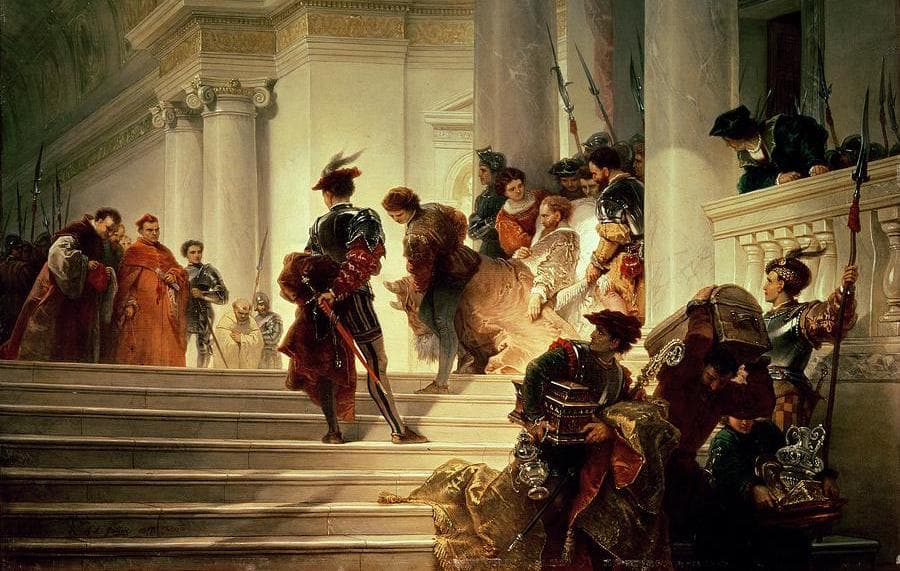
As Machiavelli observed about Cesare Borgia's conquest of the Romagna:
"The duke... found it full of robberies, feuds, and all kinds of insolence... he resolved to give them good government... For this purpose he appointed Messer Remirro de Orco, a cruel and ready man, to whom he gave the fullest authority... in a short time, made the Romagna peaceful and united... Then the duke, not wishing such excessive authority to remain in the hands of one person, lest he should become hated, set up a civil tribunal... One morning he caused Remirro to be cut in two and placed in the public square at Cesena with a piece of wood and blood-stained knife by his side. The ferocity of this spectacle caused the people to be at once satisfied and stupefied." (Chapter VII)
The lesson is not (merely) about the strategic sacrifice of subordinates, it is about controlling the narrative through decisive action. Borgia did not allow chaos to define his regime; he created spectacle that redefined perception.
In our context: Don't allow the manipulator to control the emotional tenor of proceedings. Create moments of clarity, comprehensive submissions, devastating cross-examinations, systematic exposure of lies, that redefine how observers perceive the conflict.
3. Third-Party Validation
The manipulator operates in isolation, believing their personal charisma or tactical skill sufficient. You build coalitions. You cultivate relationships with:
- Judges or decision-makers before conflict arises
- Witnesses who can corroborate your version
- Documentation systems that provide institutional memory
- Experts whose authority exceeds the manipulator's capacity to undermine
This is Machiavelli's principle of creating necessity rather than relying on gratitude:
"Friendships which are gained by payments, and not by greatness and nobility of spirit, are bought but are not secured, and at the proper moment cannot be relied upon... A prince, therefore, who relies entirely on their words, finding himself stripped of other preparations, comes to ruin; for friendships that are obtained by a price and not by greatness and nobility of mind are merited but are not secured, and in time of need cannot be relied upon." (Chapter XVII)
Don't seek allies through favours that create gratitude; make yourself indispensable to the institution itself. When you become necessary to the functioning of the court, the manipulator's attacks become attacks on stability itself.
The Path Forward
Machiavelli's principles aren't about becoming a manipulator yourself, they're about competently defending truth in a world where lies have power.
As Machiavelli himself might have observed: the tools of power change, but human nature, in its glory and its stupidity, remains constant.
In our AI hallucination era, where the boundary between truth and fabrication has become dangerously permeable, these principles become survival necessities:
- The Fox Must Verify: Every claim, every source, every confident assertion
- The Lion Must Enforce: Make lying more expensive than honesty
- Reputation Must Be Earned: Through consistent accuracy over time
- Integration Is Essential: Combine intelligence with strength
Against manipulators, whether human or AI-augmented, you will face difficulties. They will lie. They may temporarily succeed. But if your willingness to defend truth is great, if you combine fox-intelligence with lion-strength, if you manage appearances whilst building substance, the difficulties become surmountable.
Be both fox and lion.
Continue to Part 2: "The Stupidity Principle: Why Irrational People Are More Dangerous Than Liars"
Series Overview:
- Part 1: The Fox and The Lion (You are here)
- Part 2: The Stupidity Principle
- Part 3: AI Hallucinations and Human Lies
- Part 4: The Five Machiavellian Principles
- Part 5: Strategic Ruthlessness in Service of Truth
Share

Dinis Guarda
Dinis Guarda is an author, entrepreneur, founder CEO of ztudium, Businessabc, citiesabc.com and Wisdomia.ai. Dinis is an AI leader, researcher and creator who has been building proprietary solutions based on technologies like digital twins, 3D, spatial computing, AR/VR/MR. Dinis is also an author of multiple books, including "4IR AI Blockchain Fintech IoT Reinventing a Nation" and others. Dinis has been collaborating with the likes of UN / UNITAR, UNESCO, European Space Agency, IBM, Siemens, Mastercard, and governments like USAID, and Malaysia Government to mention a few. He has been a guest lecturer at business schools such as Copenhagen Business School. Dinis is ranked as one of the most influential people and thought leaders in Thinkers360 / Rise Global’s The Artificial Intelligence Power 100, Top 10 Thought leaders in AI, smart cities, metaverse, blockchain, fintech.