Wellbeing
The Machiavellian Principles Applied In An AI Hallucination Time (Part 2)
30 Jan 2026

The Stupidity Principle: Why Irrational People Are More Dangerous Than Liars
Part 2 of 5: The Machiavellian Principles Applied In An AI Hallucination Time
This is the second article in a five-part series exploring Niccolò Machiavelli's The Prince and its profound relevance to contemporary struggles against manipulation, illogic, and the erosion of epistemic certainty in the age of artificial intelligence.
The Four Categories of Human Behaviour

While not contemporary with Machiavelli, the Italian economic historian Carlo M. Cipolla articulated what he called "The Basic Laws of Human Stupidity" in a 1976 essay that deserves canonical status alongside The Prince. Cipolla's framework helps us understand why Machiavellian principles remain necessary.
Cipolla proposed that all human actions can be categorised by their impact on self and others, creating four archetypes: The Intelligent take actions that benefit both themselves and others. The Bandit benefits themselves at others' expense, but at least operates from rational self-interest. The Helpless harm themselves whilst benefiting others. And The Stupid harm both themselves and others.
The terrifying insight: Stupid people are more dangerous than bandits because their actions are not bound by rational self-interest. You can predict a bandit's behaviour by understanding their incentives. You cannot predict stupidity because it operates outside logical frameworks.
The First Basic Law of Human Stupidity
Cipolla's First Law states:
"Always and inevitably everyone underestimates the number of stupid individuals in circulation."
This is not elitism, it is observation. Regardless of social class, educational attainment, or professional position, a consistent proportion of humanity acts in ways that harm both themselves and others whilst believing they are acting rationally.
The corporate executive who destroys company value to settle personal scores. The politician who implements policies that harm their own constituents. The litigant who spends £100,000 in legal fees to avoid paying a £10,000 legitimate debt. The social media user who shares obvious disinformation that damages their own credibility.
These are not rational actors making calculated trade-offs. They are stupid actors, in Cipolla's technical sense, whose behaviour cannot be predicted through incentive analysis.
The Second Basic Law: The Probability of Stupidity is Independent of Other Characteristics
Cipolla's Second Law destroys our comforting assumptions:
"The probability that a certain person will be stupid is independent of any other characteristic of that person."
PhDs commit stupid acts as frequently as school dropouts. CEOs display stupidity as often as entry-level employees. The wealthy, the beautiful, the powerful, none are exempt. Intelligence, education, and success in one domain provide no immunity to stupid behaviour in another.
This has profound implications for Machiavellian strategy: You cannot assess threat level based on apparent sophistication. The articulate attorney may deploy stupid arguments. The successful entrepreneur may pursue stupid vendettas. Never confuse surface competence with strategic rationality.
The Machiavellian Response to Stupidity
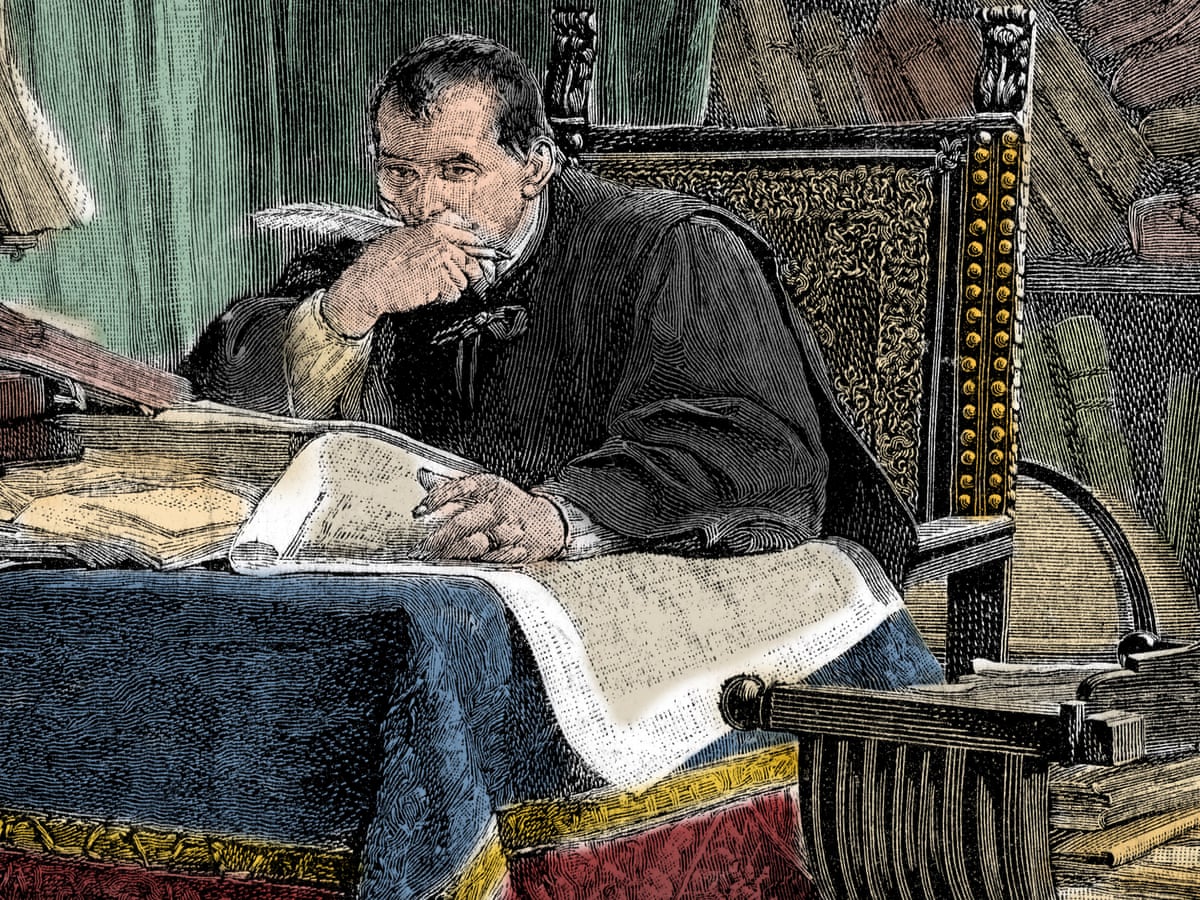
Machiavelli understood this intuitively. Throughout The Prince, he catalogues rulers who destroyed themselves through irrational decisions: princes who trusted flatterers over competent advisors (Chapter XXIII), leaders who failed to prepare defences during peacetime (Chapter XIV), rulers who showed mercy to enemies who then destroyed them (Chapter XVII), and princes who failed to adapt to changing circumstances (Chapter XXV).
His response is not to appeal to the stupid person's reason, they have none, but to treat them as a force of nature:
"I compare [fortune] to one of those raging rivers, which when in flood overflows the plains, sweeping away trees and buildings, bearing away the soil from place to place; everything flies before it, all yield to its violence, without being able in any way to withstand it... Nevertheless, it does not follow therefore that men, when the weather becomes fair, shall not make provision, both with defences and barriers, in such a manner that, rising again, the waters may pass away by canal, and their force be neither so uncontrolled nor so dangerous." (Chapter XXV)
You do not reason with a flood. You build dikes before it arrives.
Application to the Manipulative Adversary
The manipulator who lies constantly, who deploys illogical arguments, who contradicts themselves without shame, they are, in Cipolla's terms, often stupid rather than merely bandit-like. A rational bandit lies strategically; a stupid person lies compulsively, even when the lie harms their own interests.
Your response:
1. Documentation as Dikes
Every email, every conversation, every commitment, documented. When they lie, the record exposes them. When they claim you said X, the email shows you said Y. The documentation becomes the canal that contains and redirects their destructive force.
2. Allies as Barriers
Build relationships with rational actors in the system. When the manipulator makes absurd claims, these allies provide reality checks. The stupid person believes everyone is as irrational as they are; the sight of a unified rational front destroys this illusion.
3. Strategic Distance
Machiavelli advised princes to avoid unnecessary proximity to unreliable allies:
"A prince ought also to show himself a lover of merit, give preferment to the able, and honour those who excel... He ought, at convenient seasons of the year, to keep the people occupied with festivals and shows." (Chapter XXI)
Keep the manipulator at arm's length. Minimise direct engagement. When you must interact, do so with witnesses present, in writing, or in settings you control.
Cipolla's Third Law: The Power Differential
"A stupid person is a person who causes losses to another person or to a group of persons while himself deriving no gain and even possibly incurring losses."
This law reveals why stupid people are more dangerous than bandits: Their actions are unpredictable and often self-destructive, making deterrence difficult.
A bandit can be deterred by making theft too expensive. How do you deter someone whose actions harm themselves as much as you? Traditional game theory assumes rational self-interest. Stupidity operates outside that framework.
Machiavelli's solution appears in his discussion of Agathocles, the tyrant of Syracuse:
"It cannot be called virtue to kill one's fellow citizens, betray one's friends, be without faith, without pity, and without religion; by these methods one may indeed gain power, but not glory... Yet one cannot call it virtue to kill one's fellow citizens, betray one's friends, be without faith, without pity, without religion; by these methods one may indeed gain power, but not glory." (Chapter VIII)
The lesson: Against the stupid adversary, focus not on changing their behaviour (impossible) but on limiting their power to harm. Remove their platforms. Constrain their resources. Build structures that contain their destructive capacity.
The Dialectic of Human and Machine Stupidity
Here we encounter a fascinating paradox: AI systems can be "stupid" in Cipolla's sense, generating outputs that harm both the user (through inaccuracy) and others (through misinformation), whilst simultaneously being incredibly sophisticated tools.
A language model trained on billions of parameters can write poetry that moves readers to tears, solve complex mathematical proofs, and generate code that functions perfectly. Yet the same system can fabricate entirely fictional scientific papers with no awareness of the fabrication.
This is not malice. It is not even stupidity in the human sense. It is a structural limitation, the system optimises for plausible text generation, not truth correspondence.
But when combined with human stupidity, the user who doesn't verify, the journalist who doesn't fact-check, the lawyer who trusts without confirming, the result is Cipolla's nightmare: Actions that harm both actors and society.
The Corporate Manipulator: A Case Study in Stupidity

Consider the pattern: The corporate manipulator typically takes credit for collaborative work, deflects blame for failures, undermines colleagues through gossip, and presents themselves as indispensable whilst others do the work.
Machiavellian Counter-Strategy
Fox intelligence requires pattern recognition: document all contributions via email, CC relevant stakeholders on achievements, track the manipulator's claims over time, and note discrepancies between their claims and observable reality.
Lion strength demands structural power: build direct relationships with decision-makers, create objective performance metrics, establish yourself as the subject-matter expert, and make your contributions visible and verifiable.
Strategic timing means you don't confront immediately after each lie. Instead, compile comprehensive documentation, choose the moment when leadership is most receptive, and present overwhelming evidence of pattern rather than isolated incidents.
When you must act, destroy rather than wound: ensure documentation is so complete that their credibility is ended, seek termination with cause rather than informal warnings, and protect against retaliation by making the case institutional rather than personal.
The goal is not revenge, but removal of the threat whilst strengthening institutional antibodies against future manipulation.
Key Insights: The Stupidity Framework

Understanding Cipolla's laws transforms how we approach adversarial contexts.
- Never Underestimate Distribution. Stupid people exist at every level of every institution. Education doesn't prevent stupidity. Wealth doesn't prevent stupidity. Power doesn't prevent stupidity.
- Stupidity is More Dangerous Than Malice. The malicious actor can be predicted, negotiated with, deterred. The stupid actor cannot. They will harm themselves to harm you. Traditional incentive structures fail.
- Build Systems, Not Arguments. You cannot reason someone out of stupidity. You can only build systems that limit their destructive capacity: documentation that exposes contradictions, verification processes that catch fabrications, institutional structures that contain chaos, and coalition networks that provide reality checks.
- Treat as Natural Disaster. Machiavelli's river metaphor is precise: When you see the flood coming, you don't argue with the water. You build dikes, create channels, prepare infrastructure. When you identify stupid behaviour patterns, don't engage in endless debates, don't expect logical consistency, don't assume self-interest will constrain them. Instead, build protective structures.
The Epistemic Crisis and Strategic Realism
We face what philosophers call an epistemic crisis, a breakdown in our collective ability to determine truth. When lies are cheap to produce, expensive to debunk, and algorithmically amplified, democratic deliberation itself becomes compromised.
Machiavelli would recognise this environment immediately. Renaissance Italy was also an epistemic wilderness, competing city-states, rival papal factions, mercenary armies switching sides mid-battle, diplomatic treaties signed in bad faith. Truth was whatever power could enforce.
His answer was not to retreat into idealism but to develop strategic competence within chaos:
"Where the willingness is great, the difficulties cannot be great." (Chapter XXVI)
In practical terms: build verification systems into your workflow, create redundancy in your documentation, establish reputation through consistent accuracy, make yourself the more reliable source than AI or human fabricators, and invest in relationships with gatekeepers who value truth.
The Path Forward: Containing Stupidity in the AI Age

The combination of human stupidity and AI capabilities creates unprecedented challenges:
Human stupidity + AI hallucination = Systemic epistemic collapse
But the Machiavellian response remains consistent.
The fox must evolve: verify every AI output, cross-reference multiple sources, understand AI failure patterns, and build networks of trusted verifiers.
The lion must adapt: create institutional verification processes, implement consequences for spreading misinformation, build reputation infrastructure that survives fabrication attempts, and make dishonesty structurally expensive.
The dike construction requires: documentation systems, verification protocols, coalition building, platform relationships, and legal deterrence.
As Machiavelli himself might have observed: the tools of power change, but human nature—in its glory and its stupidity, remains constant.
The question is not whether stupidity exists. It does, abundantly, at every level.
The question is whether we have the strategic competence to contain its destructive force.
Build the dikes. Document everything. Trust verification over confidence.
Continue to Part 3: "AI Hallucinations and Human Lies: Surviving the Epistemic Crisis"
Series Overview:
- Part 1: The Fox and The Lion
- Part 2: The Stupidity Principle (You are here)
- Part 3: AI Hallucinations and Human Lies
- Part 4: The Five Machiavellian Principles
- Part 5: Strategic Ruthlessness in Service of Truth
Share

Dinis Guarda
Dinis Guarda is an author, entrepreneur, founder CEO of ztudium, Businessabc, citiesabc.com and Wisdomia.ai. Dinis is an AI leader, researcher and creator who has been building proprietary solutions based on technologies like digital twins, 3D, spatial computing, AR/VR/MR. Dinis is also an author of multiple books, including "4IR AI Blockchain Fintech IoT Reinventing a Nation" and others. Dinis has been collaborating with the likes of UN / UNITAR, UNESCO, European Space Agency, IBM, Siemens, Mastercard, and governments like USAID, and Malaysia Government to mention a few. He has been a guest lecturer at business schools such as Copenhagen Business School. Dinis is ranked as one of the most influential people and thought leaders in Thinkers360 / Rise Global’s The Artificial Intelligence Power 100, Top 10 Thought leaders in AI, smart cities, metaverse, blockchain, fintech.