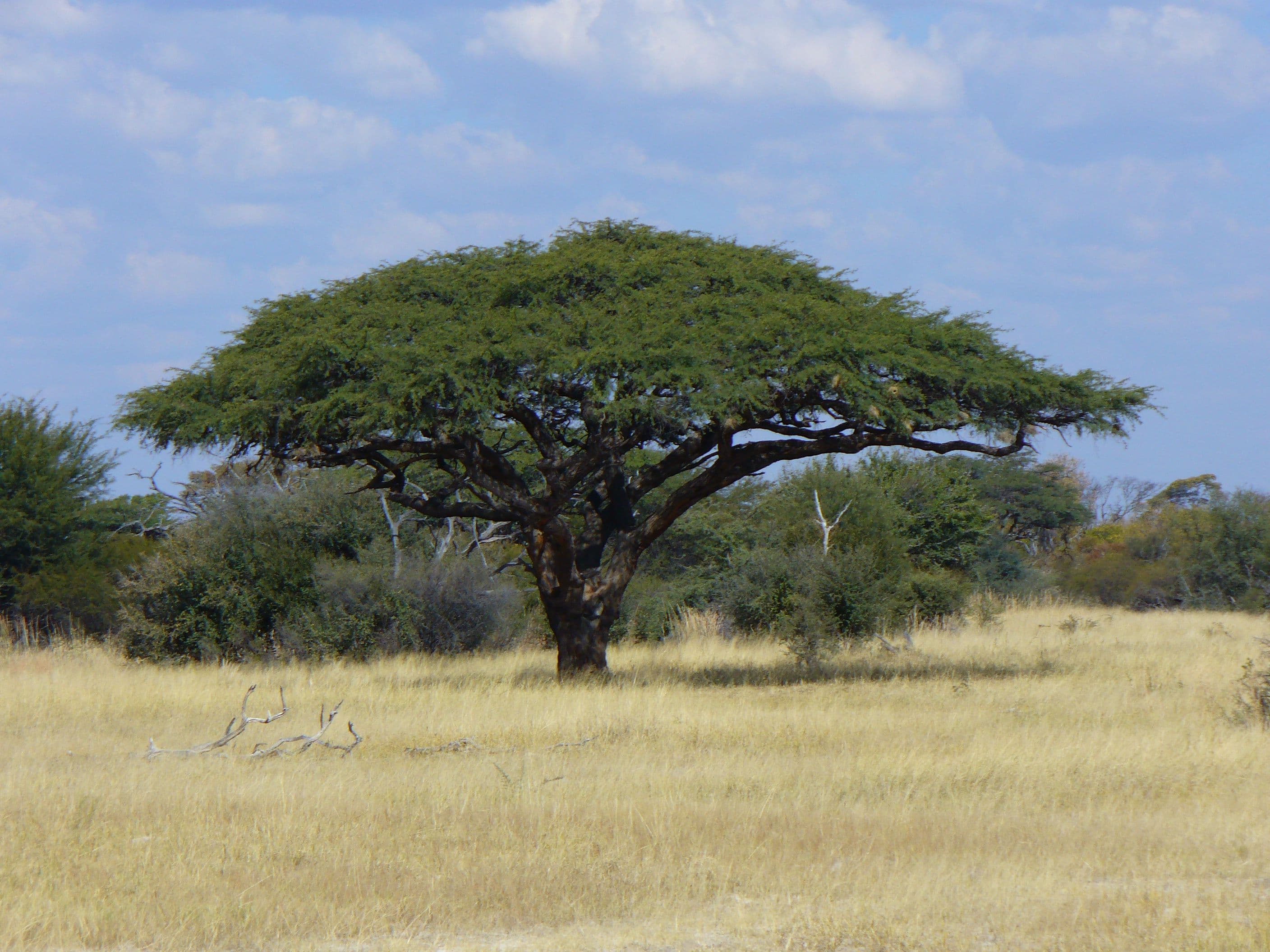

The Camel Thorn Tree, scientifically known as Vachellia erioloba, is a species of tree native to the arid regions of Southern Africa. It is one of the most widespread tree species in these regions, found predominantly in Namibia, Botswana, and South Africa. The name Camel Thorn is derived from the fact that camels, along with other animals, often feed on the tree's leaves and pods.
The Camel Thorn Tree is a deciduous tree, meaning it sheds its leaves annually. It typically grows between 5 and 17 meters high, although some specimens have been known to reach up to 30 meters. It has a deep taproot system that allows it to access groundwater in arid environments, a crucial survival trait in its native habitat. The tree's bark is rough and greyish-brown, providing excellent camouflage in the sandy environments it typically inhabits.
The tree is known for its large, curved thorns that can reach up to 5 cm in length. These thorns serve a critical role in the tree's defense mechanism against herbivores. They are paired and have a characteristic 'V' shape, with one thorn pointing forward and the other backwards. The thorns are sharp enough to pierce the skin and strong enough to potentially puncture a vehicle tire.
The Camel Thorn Tree produces a dense, dark shade thanks to its lush, green leaf canopy. The leaves are bipinnate, meaning they are divided into two sets of leaflets. These leaflets are small, typically only about 5mm in length, and are a rich green color. This provides a sharp contrast to the often barren, sandy landscapes in which the tree is found.
The tree produces yellowish flowers that are small and spherical. They typically bloom between July and September. Following the flowering period, the tree produces large, brown seed pods. These pods are a major source of food for many animals in the region, including elephants, giraffes, and antelope. The pods are also consumed by humans, who roast and grind them to make a coffee substitute.
The wood of the Camel Thorn Tree is exceptionally hard and dense, making it resistant to termites and other pests. This has made it a popular choice for fence posts, building material, and fuelwood. It is also used in the creation of high-quality furniture and flooring. The trees' resilience and slow growth rate, however, have led to overharvesting in some areas, leading to conservation concerns.
Despite these challenges, the Camel Thorn Tree plays a vital role in its ecosystem. Its deep root system helps prevent soil erosion, while its leaves and pods provide a crucial food source for a wide range of animals. The tree's dense shade also provides a vital refuge for animals and humans alike from the harsh desert sun.
Interestingly, the Camel Thorn Tree has a symbiotic relationship with several species of ants. These ants live in the thorns of the tree and feed on the tree's nectar. In return, the ants defend the tree from herbivores by attacking any animal that comes too close. This mutualistic relationship provides benefits for both the tree and the ants.
Scientifically, the Camel Thorn Tree has been used in studies on desertification and climate change due to its ability to survive in harsh environments. Its seeds have been studied for their potential use in biofuel production, while the tree's gum has been investigated for its potential medicinal properties.
In conclusion, the Camel Thorn Tree is a remarkable species that plays a crucial role in the ecosystems of Southern Africa. Its unique adaptations to its arid environment, its importance as a food source for various animals, and its potential uses in various industries make it a tree of significant interest to scientists, conservationists, and locals alike.
The Camel Thorn Tree, scientifically known as Vachellia erioloba, is a significant tree species native to arid regions of Southern Africa. It has been a crucial resource for humans, particularly those living in these harsh environments, and has played an indispensable role in their survival and prosperity. This tree is not only valued for its aesthetic appeal but also for its multiple uses that have significantly impacted human life.
One of the key uses of the Camel Thorn Tree is in the construction sector. The wood of this tree is hard and durable, making it an excellent material for building huts, fences, and other structures. It has also been used to create tools and utensils, such as spoons and bowls, which are not only functional but also carry cultural significance in many communities. The wood is also resistant to termites, an important quality in termite-prone regions. The bark is tough and has been used for making ropes, mats, and baskets, providing a sustainable source of material for these everyday items.
Another fundamental use of the Camel Thorn Tree is as a source of fuel. The wood makes high-quality firewood and charcoal, providing heat and a means to cook food. This is especially important in arid regions where other sources of fuel may not be readily available. In addition, the tree's ability to survive in harsh conditions and its slow growth rate make it a sustainable source of fuel.
The Camel Thorn Tree also plays a significant role in traditional medicine. The bark, leaves, and pods have been used in various treatments. The bark is often used to treat coughs, colds, and eye infections. The leaves are used for treating boils and abscesses, while the pods are used for stomach ailments. The gum from the tree has been used as a bonding agent and as a soothing ingredient in cough syrups and lozenges.
The tree also provides a rich source of nutrition for both humans and animals. The seed pods are high in protein and can be eaten raw or cooked. They are often ground into a flour and used for baking. Animals, particularly elephants and giraffes, feed on the leaves and pods of the tree. The tree's ability to retain water in its roots also provides a crucial source of hydration for animals during dry periods.
The Camel Thorn Tree has also been used in rituals and ceremonies. The tree is considered sacred in some cultures and is often used as a place of worship or for conducting traditional ceremonies. It is also believed to have spiritual properties, protecting against evil spirits and bringing good luck.
In addition to the above uses, the Camel Thorn Tree also plays a crucial role in maintaining the ecological balance of the regions it inhabits. Its deep roots help prevent soil erosion, a serious problem in arid regions. The tree also provides habitat and food for a variety of wildlife, contributing to biodiversity.
Despite its many benefits, the Camel Thorn Tree faces threats from overexploitation and habitat loss. Overharvesting for firewood and charcoal production, coupled with land clearing for agriculture, has led to a decline in the number of these trees in certain areas. This not only threatens the survival of the tree but also disrupts the balance of the ecosystems they support.
Conservation efforts are underway to protect and preserve the Camel Thorn Tree. These include laws restricting the felling of these trees and initiatives to educate communities about the importance and sustainable use of these trees. Through these efforts, it is hoped that the Camel Thorn Tree will continue to thrive and support the communities and ecosystems that depend on it for many years to come.
The Camel Thorn Tree, scientifically known as Vachellia erioloba, is an iconic tree species native to the arid regions of Southern Africa, particularly Namibia and South Africa. The tree gets its name from the belief that camels, along with other animals, consume its pods. The tree is also commonly referred to as the giraffe thorn, as it forms part of the diet of giraffes in the region. The Camel Thorn tree is an integral part of the Southern African ecosystem and holds significant cultural and symbolic significance in the communities it inhabits.
The tree's cultural significance is mainly rooted in its utility for the local communities. The hard, dense wood of the Camel Thorn tree is used for making tools, fence posts and fuelwood. It is resistant to termites and rot, making it especially valuable in the arid regions it is found. The pods of the tree, rich in protein, are used as fodder for livestock. The tree's bark is also used for tanning hides, and its gum for food and medicine.
The Camel Thorn tree is revered for its resilience and adaptability. It is capable of surviving in harsh, dry climates with extreme temperatures, making it a symbol of strength and endurance. In many cultures, the tree is seen as a symbol of life in the desert, providing sustenance and shelter to a wide range of animals and insects.
In the symbolic realm, the Camel Thorn tree is often seen as a connection between the earthly and spiritual realms. In some African cultures, the tree is believed to house ancestral spirits. It is often the site of religious ceremonies and rituals, and its presence is thought to bring blessings and protection. It is not uncommon to find these trees near sacred sites or graveyards, as they are believed to provide a link to the ancestors.
The tree is also a symbol of prosperity and abundance. It is one of the few trees that bear fruit in the dry season, signifying hope and survival in challenging times. The tree's ability to provide shade, food and shelter in the harsh desert environment is seen as a symbol of provision and sustenance.
The Camel Thorn tree also holds a special place in the folklore of the region. One popular legend tells of how the tree came to grow in the desert. According to the tale, the tree was originally a giant who was turned into a tree by a powerful sorcerer for his wicked deeds. The giant's tears became the tree's seeds, and his hair turned into the tree's thorns. This legend serves as a moral lesson about the consequences of evil actions and the power of transformation.
There are several conservation efforts in place to protect the Camel Thorn tree due to its cultural and ecological significance. It is listed as a protected tree in South Africa, and cutting down a Camel Thorn tree without a permit is an offense. Despite this, the tree is still under threat from deforestation and climate change. Conservationists are working to raise awareness about the importance of the tree and encourage sustainable practices.
In conclusion, the Camel Thorn tree is much more than just a tree. It is a symbol of resilience, a provider of sustenance, a link to the spiritual realm, and a central figure in folklore and culture. Its cultural and symbolic significance underscores the importance of preserving this unique species for future generations.
The Camel Thorn Tree, scientifically known as Vachellia erioloba, is a tree that is native to the arid regions of Southern Africa. It is aptly named after the long, sharp thorns that cover its branches, reminiscent of a camels hump, and the fact that camels are often seen browsing on their pods. The Camel Thorn Tree is a species that is aesthetically pleasing and offers a unique experiential aspect to those who encounter it. Its towering height, gnarled branches, and captivating silhouette against the clear African sky create a picturesque vista that is both exotic and striking.
The Camel Thorn Tree is a true testament to the resilience and adaptability of nature. Despite the harsh conditions of its native habitat, it thrives and flourishes, providing not only a visual spectacle but also a vital role in the ecosystem. The tree is a source of shelter and food for a variety of wildlife, and its deep root system helps to stabilize the soil and prevent erosion. The tree is also an important source of firewood and timber for local communities.
Aesthetically, the Camel Thorn Tree is truly a sight to behold. It can reach heights of up to 17 meters, and its thick, robust trunk is covered in a dark, rough bark that contrasts beautifully with the pale, silvery-green leaves. The tree is also adorned with clusters of bright yellow flowers, which turn into large, woody pods as they mature. These pods are a source of nutrition for many animals, including giraffes, elephants, and of course, camels. The gnarled, twisted branches of the tree are often draped with lichens and mosses, adding to the overall aesthetic appeal of the tree.
The experiential aspect of the Camel Thorn Tree is also worth noting. For the local people, the tree is a symbol of life and survival. It provides shade in the scorching heat, firewood for cooking, and its pods are used as a source of food. For visitors, the sight of a Camel Thorn Tree standing tall and proud in the midst of the arid African landscape is a profound and unforgettable experience. The shadow of the tree provides a cool respite from the sun, and the sound of the wind rustling through its leaves is a gentle reminder of the vitality of nature, even in the most inhospitable of environments.
The Camel Thorn Tree is also a popular subject in art and photography. Its unique form and character make it an ideal subject for capturing the essence of the African wilderness. The contrast between the dark, rugged bark and the delicate, feathery leaves is a visual delight, and the sight of the tree silhouetted against a fiery African sunset is a scene that leaves a lasting impression. The tree also features prominently in local folklore and legends, adding a layer of mystique and intrigue to its already captivating persona.
In conclusion, the Camel Thorn Tree is a species that offers a unique blend of aesthetic and experiential attributes. Its striking appearance, ecological role, and cultural significance combine to create a truly unforgettable encounter. Whether you are a local resident, a visitor exploring the African wilderness, or an artist seeking inspiration, the Camel Thorn Tree is a testament to the beauty, resilience, and diversity of nature. It is a symbol of life in the arid regions of Southern Africa, a beacon of hope and survival in an otherwise harsh and unforgiving landscape. It stands as a reminder of the power and persistence of nature, and the intricate interplay of life and environment that defines our planet.