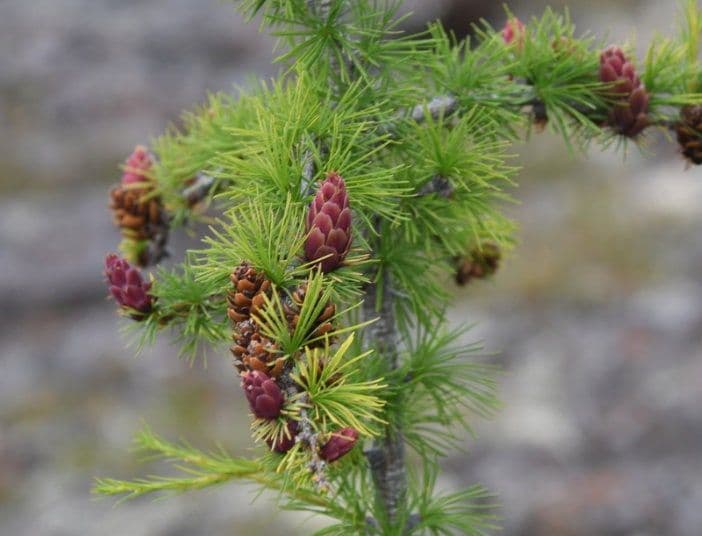

The Dahurian Larch, also known as Larix gmelinii, is a species of larch native to eastern Siberia and northeastern Mongolia. This tree species belongs to the Pinaceae family and is one of the most cold-hardy trees in the world. The Dahurian Larch is a deciduous conifer, meaning it sheds its needles in the autumn. As it grows, it typically forms a pyramidal or conical shape.
The Dahurian Larch can grow up to 20-50 meters tall, with a trunk diameter of about 1 meter. The bark of this tree is grey-brown, fissured and rugged. Its leaves, known as needles, are pale to bright green, turning bright yellow before they fall in autumn. The tree produces cone-like fruits that are small, egg-shaped, and brownish in colour. These cones are about 2-3 cm long, with scales that are almost hidden by the long hairs at the scale edge.
The Dahurian Larch prefers bright, sunny locations and grows best in well-drained soils. It is also found in a wide range of soil types, including sandy, loamy, and clay soils, and can tolerate acidic, neutral, and alkaline pH levels. The tree is resistant to most pests and diseases, making it a relatively low-maintenance species.
In its native habitats, the Dahurian Larch forms vast forests, often in pure stands or mixed with other larch species. These forests play a crucial role in the local ecosystem, providing habitat for a variety of wildlife species and playing a significant role in carbon sequestration. Dahurian Larch wood is used in construction, particularly in rural areas, and for making furniture, paper, and other products.
Despite its economic and ecological importance, the Dahurian Larch is facing threats due to climate change. Rising temperatures, changing precipitation patterns, and increasing incidents of pests and diseases are impacting its growth and survival. The species is also threatened by deforestation and habitat loss due to human activities.
Conservation measures for the Dahurian Larch include protecting its habitats, promoting sustainable forestry practices, and researching its adaptability to climate change. These efforts are key to ensuring the survival of this species and the ecosystems it supports.
The Dahurian Larch is a remarkable tree species with unique adaptations to survive in harsh climatic conditions. Its ability to withstand severe cold makes it an important species in the boreal forests of Siberia and Mongolia. Despite the challenges it faces, the Dahurian Larch remains a symbol of resilience and adaptability in the face of changing environmental conditions.
Research is ongoing to understand more about the Dahurian Larch, its ecology, and its responses to environmental changes. These studies are crucial to inform conservation strategies and help mitigate the impacts of climate change on this important species. The Dahurian Larch, with its iconic conical shape, bright green needles, and ability to thrive in extreme cold, is a testament to the incredible diversity and adaptability of nature.
As we continue to face the challenges of climate change, it is increasingly important to understand and protect species like the Dahurian Larch. These trees not only contribute to the biodiversity of our planet but also play a crucial role in the fight against climate change by sequestering carbon. By understanding the Dahurian Larch and its needs, we can better protect our natural world and ensure the survival of this and other species for future generations.
Ultimately, the Dahurian Larch is more than just a tree. It is part of a complex and interconnected ecosystem, providing habitat and food for countless species, contributing to the carbon cycle, and playing a crucial role in the survival of the boreal forests. Protecting the Dahurian Larch means protecting these ecosystems and the many species that depend on them, emphasising the importance of conservation efforts not just for individual species, but for entire ecosystems.
The Dahurian Larch (Larix gmelinii) is a species of larch native to Eastern Siberia and parts of Mongolia, China, and Korea. It thrives in cold, harsh climates and is known for its hardiness and adaptability. Humans have long found uses for this tree, from the construction industry to traditional medicine.
In the construction industry, the Dahurian Larch is prized for its durable and resistant wood. The wood is resistant to rot and pests, making it an ideal material for building homes, furniture, and boats. The wood is also used for making musical instruments, particularly in China and Korea, where it is valued for its acoustic properties. Its wood is also used in the creation of veneers, pulpwood, and plywood due to its strength and durability.
Apart from construction, the Dahurian Larch has been used for centuries in traditional medicine. The bark, leaves, and resin of the tree are believed to have healing properties. In Siberian folk medicine, the bark is used to treat infections and inflammations, while the leaves are used for their antiseptic properties. The resin, known as larch turpentine, is used to treat skin ailments and respiratory conditions.
The Dahurian Larch also plays a crucial role in the ecosystem. It is a pioneer species, meaning it is often one of the first trees to colonize previously disrupted or damaged ecosystems. As such, it plays a vital role in reforestation efforts, particularly in areas affected by logging or wildfires. It helps to stabilize the soil and provides a habitat for various species of wildlife.
Despite its many uses, the Dahurian Larch is at risk due to logging and habitat loss. Overharvesting for its valuable timber has led to a decline in its population in some areas. Additionally, climate change poses a significant threat to this cold-loving species. Efforts are underway to conserve the Dahurian Larch, including reforestation projects and sustainable harvesting practices.
In recent years, the Dahurian Larch has also been gaining popularity in the horticulture industry. It is being increasingly used in landscaping and as a bonsai tree due to its attractive shape and color. Its ability to withstand harsh climates also makes it a popular choice for urban landscaping in colder regions. Furthermore, it is often used as a windbreak tree in agricultural fields due to its dense foliage and sturdy structure.
Another unique use of the Dahurian Larch is in the production of a traditional Russian drink known as Tarasun. This alcoholic beverage is made by fermenting the sap of the tree. The sap is collected in the spring, fermented, and then distilled to produce the final product. Tarasun is known for its unique, slightly sweet flavor and is a popular traditional drink in Siberia.
In conclusion, the Dahurian Larch is a versatile tree that has been used by humans for centuries. Its durable wood, medicinal properties, and ecological role make it an important species. However, it is essential to ensure its conservation for future generations to continue benefiting from this remarkable tree.
It is our responsibility as stewards of the environment to respect and protect the Dahurian Larch. This not only means acknowledging its importance but also taking active steps to conserve its habitats and prevent overharvesting. By doing so, we can ensure the survival of the Dahurian Larch and continue to benefit from its many uses.
The Dahurian Larch (Larix gmelinii) is a species of larch native to eastern Siberia and Mongolia. Its name stems from the Dahuria region, a historical area located in the Transbaikalia between Mongolia and the Lake Baikal. As a tree species, the Dahurian Larch stands as a symbol of strength and longevity, capable of thriving in some of the harshest climates in the world. This species has a deep cultural and symbolic significance, particularly within the regions where it naturally grows.
In the local cultures, the Dahurian Larch is revered for its resilience. It stands strong and tall, even in the face of extreme cold and arid conditions. This has made it a symbol of strength, survival, and resilience. It is not uncommon for the tree to be used in local lore and storytelling, often being portrayed as a figure of defiance and steadfastness. The tree's ability to thrive in harsh conditions makes it a testament to the strength of life and the power of endurance.
In addition to its symbolic significance, the Dahurian Larch has a practical cultural significance as well. The wood of the larch is highly valued for its toughness and durability. It has been used for centuries in the construction of buildings, boats, and furniture. In many ways, the Dahurian Larch is a cornerstone of the local economy. It provides both a source of income and a material resource that is instrumental in the everyday life of the people.
The Dahurian Larch is a tree that symbolizes the bond between humans and nature. It is a part of the local ecosystem, and its survival is intertwined with the survival of the people. The tree's existence is a testament to the power of adaptation and the resilience of life. It is a reminder of the interconnectedness of all living things and the importance of preserving and respecting our natural environment.
In the realm of spirituality, trees often hold a sacred significance, and the Dahurian Larch is no exception. In many indigenous cultures, it is seen as a link between the earth and the heavens, a bridge between the physical and the spiritual. Some believe that the tree holds a special energy or spirit, a life force that is both unique and powerful. It is revered as a sacred entity, and its presence is often incorporated into spiritual practices and rituals.
The Dahurian Larch is not just a tree; it is a symbol of endurance, a testament to the power of nature, and a beacon of hope. It stands as a reminder that life can thrive even in the harshest of conditions. It is a symbol of strength and resilience, a testament to the indomitable spirit of life. The tree is a part of the landscape, a part of the culture, and a part of the people. Its significance is deeply rooted in the history and culture of the regions where it grows.
The Dahurian Larch also has a significant role in the fight against climate change. It is one of the few tree species that can survive in the harsh conditions of the Siberian tundra. As global warming continues to threaten our planet, the Dahurian Larch stands as a beacon of hope. Its ability to sequester carbon and thrive in harsh conditions makes it a crucial player in our efforts to combat climate change.
Despite the harsh conditions in which it grows, the Dahurian Larch is a beautiful tree. Its branches are laden with cones, and in the spring, it is adorned with soft, green needles. In the autumn, these needles turn a golden color before they fall, creating a stunning display of nature's beauty. This aesthetic appeal adds to the tree's cultural and symbolic significance, making it a beloved part of the landscape.
In conclusion, the Dahurian Larch is more than just a tree. It is a symbol of resilience and strength, a testament to the power of nature, and a beacon of hope in the fight against climate change. It has a deep cultural and symbolic significance, and its presence is a reminder of the interconnectedness of all living things. Whether it is through its practical uses, its role in local lore, or its spiritual significance, the Dahurian Larch is a tree that holds a special place in the hearts of the people.
The Dahurian Larch (Larix gmelinii) represents a marriage of aesthetic appeal and natural resilience. Native to Eastern Siberia, Mongolia, and Northeast China, this deciduous conifer brings a distinctive aura to the environments it inhabits. From its unique visual characteristics to the sensory experiences it offers, the Dahurian Larch is a tree that epitomizes beauty in the face of adversity.
Its aesthetic appeal lies in its distinct features. In the spring, the tree bursts forth with soft, light-green needles that contrast beautifully with its rough, dark brown bark. These needles turn a golden yellow in the fall before dropping, creating a striking visual display. The Dahurian Larch grows in a conical shape, with branches that droop slightly, adding to its visual charm. The tree can reach heights of up to 30 meters, making it a majestic presence in the landscape.
The bark of the Dahurian Larch is deeply fissured and furrowed, adding texture and depth to its appearance. The tree also produces small, oval-shaped cones that provide a delightful contrast to the soft needles. These cones start off as a light green before turning brown as they mature, offering yet another layer of visual interest. The overall aesthetic of the Dahurian Larch is one of rustic elegance. It is a tree that embodies the raw beauty of the natural world, with its unique features coming together to create a visually pleasing entity.
Experiencing the Dahurian Larch is not just about visual appreciation; it is also about engaging with the tree through other senses. The tree's needles, when crushed, release a fresh, pine-like scent that is both soothing and invigorating. In the fall, as the needles turn golden and fall, they create a rustling sound that adds an auditory element to the experience of the tree. The feel of the rough bark, the sight of the falling needles, the smell of the fresh, pine-like scent - all these elements come together to create a multi-sensory experience that is as enriching as it is unique.
The Dahurian Larch is not just a tree; it is a testament to the strength and resilience of nature. It thrives in harsh, cold climates, withstanding temperatures as low as -50 degrees Celsius. It grows in poor, sandy soils, demonstrating its ability to adapt and thrive in challenging conditions. This resilience adds to the tree's aesthetic appeal, as it stands tall and majestic, defying the harsh conditions in which it grows.
Furthermore, the Dahurian Larch plays a crucial role in its ecosystem. It provides shelter and food for a variety of wildlife, contributing to biodiversity. It also contributes to the health of the forest ecosystem by fixing nitrogen in the soil, promoting the growth of other plants. Experiencing the Dahurian Larch is thus also about understanding and appreciating its role in maintaining the balance of nature.
The Dahurian Larch is a tree that has much to offer, from its aesthetic appeal to the multi-sensory experiences it provides. It is a tree that invites you to engage with it, to take in its beauty, to appreciate its resilience, to understand its vital role in the ecosystem. It is a testament to the wonders of nature, a symbol of strength and adaptability, a source of sensory delight. The Dahurian Larch, in all its rustic elegance and natural resilience, truly is a tree to be experienced and appreciated in all its facets.
In conclusion, the Dahurian Larch is a blend of aesthetic charm and experiential richness. Its beauty lies not just in its visual appeal but also in the experiences it offers, from the fresh, pine-like scent of its needles to the rustling sound of its falling leaves. Its resilience adds a layer of admiration to its aesthetic allure, making it a tree that embodies the strength and beauty of nature. Experiencing the Dahurian Larch is thus an immersive journey, one that engages the senses and deepens appreciation for the natural world.
Plants For A Future: Larix Gmelinii
The Gymnosperm Database: Larix Gmelinii
Global Biodiversity Information Facility: Larix Gmelinii
Nature: Quantum teleportation with light from a quantum dot embedded in a 3D photonic nanostructure
Wiley Online Library: The Dahurian Larch dominance change in the forest-tundra ecotone