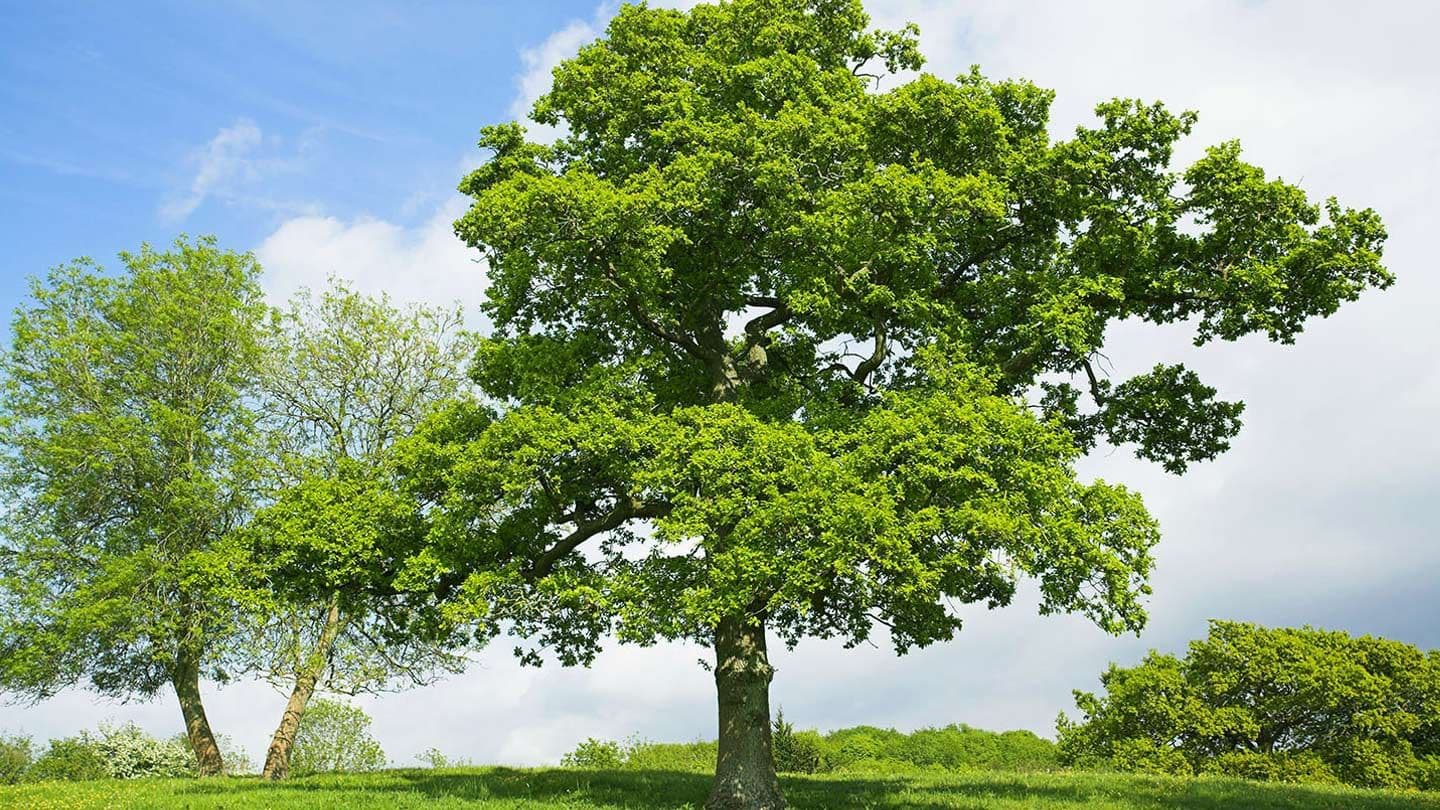

The English Oak, scientifically known as Quercus robur, is a deciduous tree native to Europe, including the United Kingdom, hence its common name. It is one of the most widely recognized and loved trees in the UK. Its importance extends beyond its aesthetic value, as it plays a significant role in mythology, symbolism, and practical uses. It is a species of flowering plant in the beech and oak family Fagaceae.
The English Oak is known for its strength and longevity, with some specimens known to live for over a thousand years. It is a large tree, typically growing up to 20-40 meters tall. The bark of the English Oak is broadly fissured and has a grey-brown color. It has a broad, spreading crown and a short trunk. The leaves of the English Oak are alternately arranged, and they have a characteristic lobed margin. The tree produces acorns, which are its fruits, in the autumn. These acorns are a crucial source of food for many wildlife species.
The English Oak has a long history of use in construction due to its strength and durability. It has been used in the construction of ships, buildings, furniture, and barrels. The wood is also used for fuel. Besides, the bark of the English Oak contains tannins, which have been used in the tanning of leather. The tree also has medicinal uses. For example, an infusion of the bark has been used to treat diarrhea, and the acorns have been used to make a coffee substitute.
The English Oak is not just valued for its practical uses, it also has significant cultural and symbolic importance. In many cultures, the oak tree is considered sacred and is associated with gods of thunder and lightning due to its tendency to attract lightning strikes. In English folklore, the oak tree is often associated with strength, endurance, and longevity. It is also a symbol of national identity, and it features prominently in many English landscapes and works of literature.
The English Oak is a host to a wide variety of wildlife. Its acorns provide food for a range of birds and mammals, including jays, pigeons, squirrels, and deer. The tree also provides habitat for many insects, including several species of moth, beetle, and gall wasp. The presence of these insects, in turn, attracts birds and bats. The tree also supports many species of lichen, moss, and fungi.
Despite its importance, the English Oak is facing several threats. These include climate change, pests, diseases, and habitat loss due to urbanization. However, efforts are being made to conserve the tree. These include tree planting initiatives and research into disease resistance. The English Oak is also protected by law in many parts of its range.
The English Oak has a slow growth rate, and it may take several decades for a seedling to mature into a full-grown tree. The tree has a remarkable ability to regenerate from damage. It can produce new shoots from the stump if the tree is cut down, and it can also produce epicormic shoots from the trunk and branches. This ability to regenerate makes the English Oak a resilient species.
Despite the challenges, the English Oak continues to be a beloved tree. It is celebrated for its beauty, its strength, and its contribution to the ecosystem. Whether gracing a park, a street, or a countryside, the English Oak is an integral part of the landscape and a symbol of national pride. To many, the English Oak is not just a tree, but a living testament to the history and character of the nation.
The English Oak, known scientifically as Quercus robur, is a species of flowering plant in the beech and oak family Fagaceae. Native to most of Europe and into Asia, it has been introduced to other parts of the world, including North America, where it is known as the English Oak. The English Oak has a broad, spreading crown and is easily identified by its lobed leaves and acorns, which are borne in cups or 'cupsules'. It is a deciduous tree, meaning it loses its leaves in the fall and grows new ones in the spring. The English Oak is one of the most iconic trees in the British landscape and holds a significant place in the country's history and culture.
Throughout history, English Oak has been used by humans in various ways. The wood of the English Oak is hard, strong, and durable, making it ideal for use in construction, furniture making, and for shipbuilding. In the past, the English navy relied heavily on the English Oak for its ships. The 'wooden walls' of England, as they were known, were largely constructed from English Oak. The heartwood of the English Oak is also highly resistant to decay, making it ideal for outdoor use, such as in the construction of fences and gates.
The English Oak has been used for centuries in the production of barrels for the ageing of wines and spirits. The oak's unique properties, including its density and the presence of tannins, give the beverages a distinct flavour and character. English Oak barrels are particularly prized in the production of whiskey and some wines. The bark of the English Oak has also been used in the tanning industry due to its high tannin content. These tannins were extracted to produce tannic acid, which was used to tan hides and skins.
But the use of English Oak is not limited to its wood. The tree has also played a significant role in folklore and tradition. The English Oak is often associated with strength and endurance, and it is considered a symbol of national identity in England. It has been featured in many myths and legends, and it is often depicted in art and literature. The English Oak is also often planted as a commemorative tree, to mark significant events or to honour individuals. Throughout history, many important meetings and events have taken place under the branches of an English Oak, including the signing of treaties and the crowning of kings.
The English Oak also plays a significant role in the ecosystem. It provides habitat and food for a variety of wildlife, including birds, insects, and small mammals. The acorns produced by the English Oak are a vital food source for many species, and the tree's dense canopy provides shelter for many others. The English Oak is also a host for many species of fungi, some of which are edible and some of which play important roles in nutrient cycling. The English Oak also plays a role in carbon sequestration, helping to mitigate the effects of climate change.
In recent years, the English Oak has also been used in urban landscaping. It is a popular choice for parks and large gardens due to its size and longevity. The English Oak is also often used in street planting due to its resistance to pollution and its ability to tolerate a range of soil types. The English Oak is also often used as a shade tree, thanks to its broad canopy.
Despite its numerous uses and benefits, the English Oak is not without its threats. Pests and diseases, including Oak decline and Oak processionary moth, pose significant challenges to the health and survival of English Oak populations. Changes in land use, including the conversion of woodlands to agricultural land, also pose threats to the English Oak. Conservation efforts are therefore crucial to ensure the survival of this iconic tree for future generations.
In conclusion, the English Oak is a species that has had a profound impact on human history and culture, and continues to play a significant role in a variety of human activities. From its use in construction and the production of beverages, to its role in folklore and tradition, the English Oak is a tree that is truly intertwined with human life. Its ecological importance, as well as its aesthetic appeal, make it a vital part of our landscapes. As we continue to interact with and utilise this magnificent tree, it is crucial that we also take steps to protect and conserve it for future generations.
The English Oak, scientifically known as Quercus robur, is an iconic tree with deep cultural and symbolic significance. It is one of the most common species of oak found within the British Isles, but its influence extends far beyond the geographical bounds of England, permeating various facets of art, mythology, and tradition across Europe and the world.
The English Oak is commonly associated with strength, endurance, and longevity, attributes reflected in its sturdy trunk and expansive canopy. This symbolism dates back thousands of years, with numerous ancient cultures venerating the oak tree as a powerful entity. In Celtic mythology, for instance, the oak was considered the King of Trees, a sacred symbol of wisdom and strength. For the Druids, a group of Celtic learned people, oak groves were sacred spaces for conducting rituals and ceremonies.
In Norse mythology, the oak tree was associated with Thor, the god of thunder, signifying protection and power. Even in Greek mythology, the oak was sacred to Zeus, the king of the gods, and was considered a symbol of courage, power, and wisdom. In Roman culture, oak leaves formed the crown of the victorious, symbolising glory, honour, and accomplishment.
In the Christian tradition, the English Oak has often been used as a symbol of faith and endurance. Saint Boniface, an English missionary and bishop, is said to have chopped down an enormous oak tree that was central to German pagan worship, replacing it with a fir tree, which he claimed was a more fitting symbol of God's love. This act, and the subsequent growth of Christianity in Germany, further solidified the symbolic significance of the English Oak as a representation of transformation and spiritual growth.
Throughout history, the English Oak has also been associated with royalty, particularly within the United Kingdom, where it is considered a national emblem. The Royal Oak is a well-known symbol in British history, referring to the oak tree in which King Charles II hid to escape the Roundheads following the Battle of Worcester in 1651. This event is commemorated every year in Britain on Royal Oak Day, reinforcing the tree's symbolic association with strength, survival, and resilience.
In addition to its cultural and symbolic significance, the English Oak has played a crucial role in various practical and economic aspects. It has been extensively used in shipbuilding, construction, and furniture making due to its strength, durability, and resistance to disease and insect attacks. The oak tree's acorns also provided food for livestock, representing sustenance and prosperity.
Furthermore, the English Oak has significant environmental importance. As a keystone species, it supports a wide range of flora and fauna, with hundreds of species of insects, birds, and mammals relying on it for habitat and food. The tree also plays a crucial role in soil stabilization and carbon sequestration, contributing to climate change mitigation efforts.
In literature and art, the English Oak has been a recurring motif, representing various themes ranging from strength and endurance to wisdom and rebirth. It has been a subject of poems, novels, paintings, and sculptures, reflecting its enduring cultural significance and influence.
In conclusion, the English Oak, with its rich cultural, symbolic, and practical significance, is not just a tree but a living testament to the intertwined history of human and natural realms. Its imposing stature, longevity, and resilience make it a powerful symbol, and its role in supporting biodiversity and mitigating climate change underlines its environmental importance. Whether in mythology, history, art, or everyday life, the English Oak continues to inspire, protect, and sustain, truly embodying its status as an icon of strength and endurance.
The English Oak, scientifically known as Quercus robur, is a majestic tree that holds an elevated position in the aesthetics and experiences of the British landscape. Renowned for its robustness and longevity, the English Oak is a symbol of strength and endurance, traits that are often depicted in various forms of art and literature.
From an aesthetic standpoint, the English Oak is a magnificent sight to behold. Its broad, spreading canopy and gnarled branches give it a grand, imposing presence. The tree's bark, a rich tapestry of grey and brown, is deeply furrowed and textured, creating a visually pleasing contrast against the vibrant green of its leaves. The leaves themselves are an integral part of the tree's aesthetic appeal. Shaped like an elongated oval with a series of lobes or waves on the edges, they provide a lush, verdant backdrop for the acorns, the tree's fruit, which add a touch of rustic charm.
In different seasons, the English Oak presents a variety of aesthetic experiences. In spring, the tree bursts into life with fresh, bright green leaves that shimmer in the light. Come summer, the mature leaves turn a deeper shade of green and the tree stands in its full glory, providing a cool, shaded refuge under its vast canopy. Autumn transforms the tree into a spectacle of colors as the leaves turn from green to hues of yellow, brown, and russet, before they fall off, leaving the tree in a state of hibernation during winter.
The English Oak is also a key element in landscape architecture, used for its aesthetic value to enhance parks, gardens, and streetscapes. Its grandeur and scale make it a focal point in any landscape, drawing the eye and providing a sense of solidity and permanence. The tree's ability to create shade and its autumnal color changes are also exploited to create visually appealing landscapes.
From an experiential perspective, the English Oak offers a variety of sensory experiences. The rustling of its leaves in the wind, the texture of its bark, the shade it provides on a hot summer day, and even the smell of its wood all contribute to a rich multi-sensory experience. This is perhaps why the tree features prominently in many outdoor recreational activities, such as picnics, nature walks, and bird watching. It is not uncommon to see children clambering up its sturdy branches or families having a picnic under its shade.
The English Oak's experiential offerings extend beyond the sensory. The tree is a habitat for a variety of wildlife, from birds and insects to small mammals, providing opportunities for wildlife observation and photography. Its acorns are a source of food for many animals, making the tree a vital part of the ecosystem.
The English Oak also has a cultural and historical significance that enhances the experiential aspect. The tree has been a part of numerous myths, legends, and folklore, often symbolizing strength, resilience, and wisdom. It has been a silent witness to historical events, with some oaks, known as 'veteran trees', believed to be hundreds, if not thousands, of years old.
The aesthetic and experiential aspects of the English Oak are also reflected in its use in various industries. The tree's wood is valued for its strength, durability, and beauty, making it a preferred choice for furniture, flooring, and barrel-making. The unique grain pattern and warm, rich color of the wood add to its aesthetic appeal, while its strength and durability enhance the experience of using oak-made products.
In conclusion, the English Oak is much more than just a tree. It is a grand spectacle of nature, a provider of sensory experiences, a home for wildlife, a bearer of history, and a source of material for various industries. Its aesthetic and experiential aspects make it an integral part of the landscape, enriching our lives in many ways.