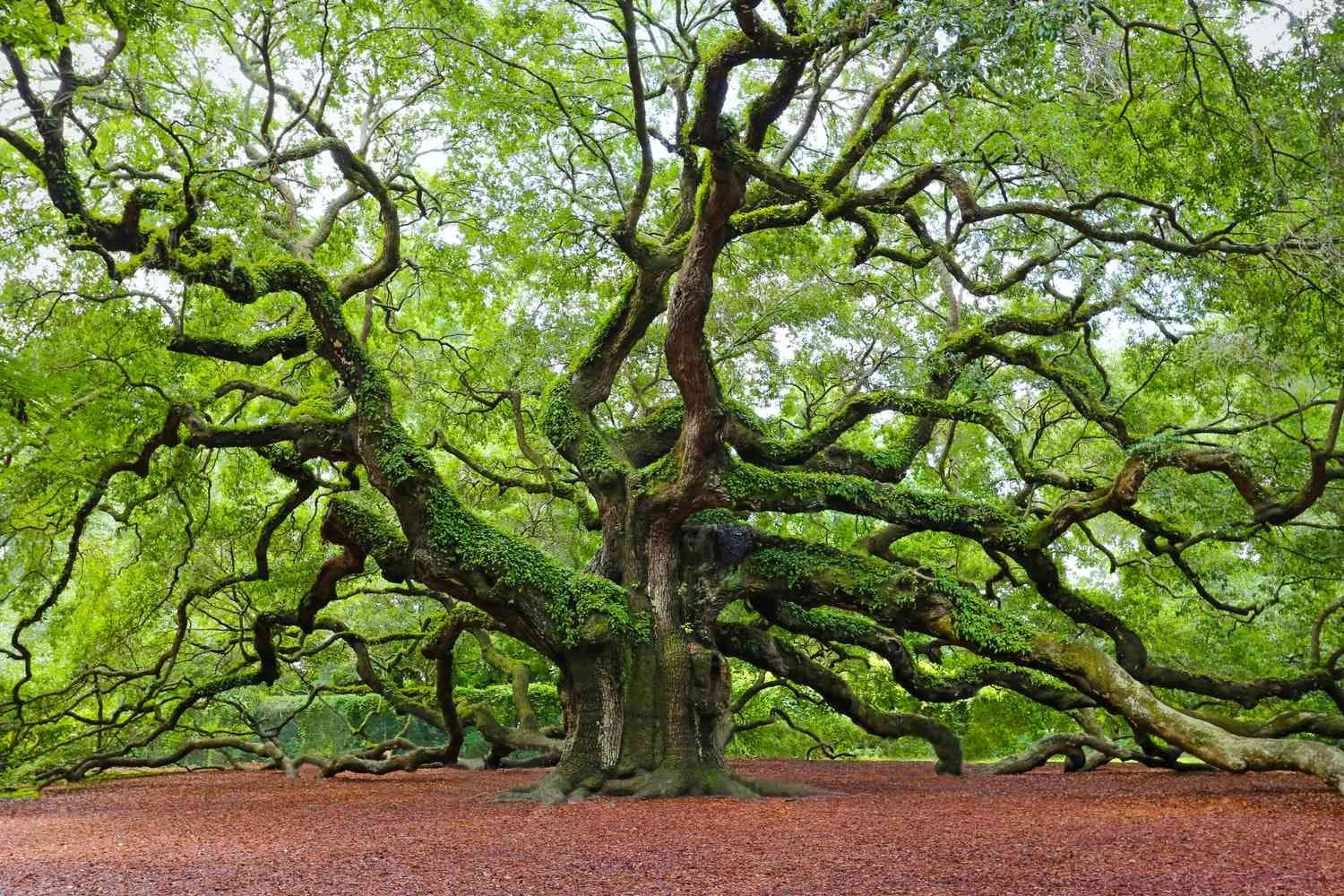

The live oak, scientifically known as Quercus virginiana, is a type of evergreen oak tree native to the southeastern United States. Unlike many other types of oak trees, live oaks do not lose their leaves in the winter; instead, they stay green year-round, hence the name 'live oak'. These trees are known for their distinctive, often sprawling shape, with branches that can reach out over 100 feet from the trunk.
Live oaks are extremely hardy and adaptable trees. They can withstand a variety of soil conditions, from sandy to clayey, and can thrive in both dry and wet environments. They prefer full sun but can tolerate partial shade. Their roots are deep and extensive, which not only helps them stay anchored in the ground but also makes them highly drought-tolerant.
These trees are slow growers, typically gaining only about a foot in height per year. However, they can live for hundreds of years, with some specimens estimated to be over a thousand years old. Because of their longevity, live oaks have often been used to mark historical sites or events. For instance, several live oaks planted in the 18th century are still standing in the historic district of Savannah, Georgia.
The wood of the live oak is extremely hard and strong, making it valuable for uses that require durability and resistance to wear, such as shipbuilding. In the 19th century, live oak wood was heavily used in the construction of U.S. Navy warships, including the famous USS Constitution, which earned the nickname 'Old Ironsides' partly due to the strength of its live oak hull.
Live oaks also play a significant role in the ecosystem. Their acorns provide food for a variety of wildlife, including deer, squirrels, and a variety of bird species. Their large, dense canopies offer shelter for many creatures, and their fallen leaves contribute to the leaf litter that nourishes the soil.
The live oak tree is also a popular choice for landscaping due to its impressive size, beautiful shape, and year-round greenery. However, because of its large size and extensive root system, it needs plenty of space to grow and should not be planted too close to buildings or other structures.
There are several pests and diseases that can affect live oaks, including oak wilt, a fungal disease that can kill the tree, and the southern pine beetle, which can cause significant damage. However, with proper care and maintenance, these trees can resist most threats and continue to thrive for centuries.
Live oaks have a rich cultural significance in the American South. They are a common feature in Southern Gothic literature and are often associated with strength, endurance, and deep-rooted Southern tradition. Their iconic shape and size have also made them popular subjects for photography and painting.
In conclusion, the live oak is a remarkable tree with a unique combination of beauty, strength, and longevity. Its adaptability and hardiness make it a valuable tree for both ecological and economical purposes. Whether as a historical landmark, a source of durable wood, or a symbol of Southern heritage, the live oak holds a special place in the American landscape.
Live Oak trees, scientifically known as Quercus virginiana, are majestic and durable trees that have been a significant part of human history and culture. Due to their large size, longevity, and unique aesthetic appeal, these trees have been an integral part of landscapes in the southern United States for centuries.
Historically, Live Oaks have been used by humans for their strong and durable wood. The wood from these trees is incredibly dense and resistant to decay and damage from insects, making it an ideal material for construction. In the 19th century, Live Oak wood was highly sought after for shipbuilding. The USS Constitution, one of the U.S. Navys first frigates, was constructed with Live Oak, earning it the nickname Old Ironsides because of the woods ability to repel British cannon fire during the War of 1812.
Beyond their practical use, Live Oaks have also been a part of human spirituality and symbolism. In many cultures, the oak tree symbolizes strength, endurance, and longevity. These trees have been the center of rituals and ceremonies, and have served as important landmarks. In the southern United States, the presence of a Live Oak often signifies a historically important location.
Today, Live Oaks continue to be used by humans in a variety of ways. They are prized for their beauty and are often used in landscaping and city planning. These trees serve as a habitat for many species of birds and insects, contributing to biodiversity in urban areas. Live Oaks are also important for environmental health, as they help to improve air quality, reduce stormwater runoff, and provide shade, reducing energy consumption in the summer months.
Live Oaks have been used for their acorns as a source of food. The acorns of the Live Oak are larger than those of other oak species and were a staple food for Native Americans. The acorns can be ground into a flour and used for baking or thickening soups and stews. The acorns are also an important food source for wildlife, including deer, squirrels, and birds.
Despite their many uses, the interaction of humans with Live Oaks has not always been positive. Urban development and the spread of disease have posed significant threats to these trees. Oak wilt, a fungal disease, has devastated populations of Live Oaks in some areas. Efforts to protect and conserve these trees are critical, not only for their cultural and historical significance, but also for their ecological role.
Live Oaks have been planted in memory of people and events, serving as living monuments. The Emancipation Oak in Hampton, Virginia, for instance, is a historic Live Oak where the first Southern reading of President Lincolns Emancipation Proclamation was held. Today, this tree is a symbol of freedom and a site of remembrance.
In parks and gardens, Live Oaks provide a perfect setting for relaxation and recreation. Their expansive canopy offers shade and a peaceful ambiance, making these areas a preferred spot for picnics, games, and other outdoor activities. Children often enjoy climbing these sturdy trees, while others find tranquility in simply sitting under them and admiring their grandeur.
In conclusion, the interaction of humans with Live Oaks is multifaceted. These trees provide us with material resources, contribute to our environment, serve as symbols and landmarks, and enhance our landscapes. They connect us with our past and remind us of our responsibility to conserve and respect nature. As we continue to interact with Live Oaks, it is our duty to ensure their survival for future generations to appreciate and benefit from.
The Live Oak is a symbol of strength, durability, and survival. This resilient tree, native to the southern United States, has played an important role in various cultures and societies throughout history. From the Native Americans to the colonial settlers, the Live Oak has been revered for its long lifespan, ability to withstand harsh conditions, and the valuable resources it provides.
For the Native American tribes, the Live Oak held spiritual significance. It was seen as a sacred entity, embodying the enduring spirit of nature. Some tribes believed that these trees were inhabited by spirits and they would often hold ceremonies and rituals under their massive branches. The acorns of the Live Oak were also used as a food source, ground into a nourishing flour and used in various dishes. The Live Oak, therefore, symbolized sustenance, strength, and spiritual connection to the tribes.
During the colonial period, the Live Oak became an important symbol of resistance and survival. The tree’s strong, dense wood made it an ideal material for shipbuilding. It was used to construct the hulls of ships, providing protection and durability on the open seas. The USS Constitution, famously known as 'Old Ironsides' was built primarily from the wood of Live Oaks. This ship stood as a symbol of American strength and resilience during the War of 1812, gaining its nickname due to its ability to repel British cannonballs.
The use of Live Oak in shipbuilding also holds a symbolic connection to the African American experience during the era of slavery. Enslaved Africans were often forced to cut down these majestic trees and use their wood to build ships. The strength and resilience of the Live Oak thus became a metaphor for the struggles and survival of the African American community during this dark period in history.
In the southern United States, the Live Oak is a symbol of the Old South. It is often found on historic plantations and is a common sight in southern cities like Savannah, Georgia, and Charleston, South Carolina. The towering Live Oak, draped in Spanish moss, has become an iconic image associated with southern charm and hospitality. Despite its ties to a history of slavery and racial injustice, the Live Oak continues to stand as a symbol of endurance and growth, reflecting the evolving narrative of the South.
Today, the Live Oak is valued for more than just its historical and cultural significance. It is appreciated for its ecological importance as well. Live Oaks play a crucial role in maintaining biodiversity by providing habitat and food for various wildlife species. They also contribute to climate regulation by absorbing carbon dioxide, a major greenhouse gas, and releasing oxygen.
The Live Oak, with its sprawling branches and deep roots, is also often used as a symbol in literature and art. It represents strength, permanence, and the interconnectedness of life. Its image evokes a sense of resilience and continuity, making it a popular motif in various forms of creative expression. In many ways, the Live Oak embodies the narratives of the cultures and societies it has been a part of, carrying their histories in its rings and branches.
In conclusion, the Live Oak is more than just a tree. It is a symbol that carries a rich tapestry of cultural and historical significance. From its spiritual importance to Native American tribes to its role in shipbuilding and its depiction in art and literature, the Live Oak holds a multifaceted symbolism. It stands as a testament to survival and resilience, reflecting the enduring spirit of the cultures and societies that have revered it throughout history.
The Live Oak is a majestic testament to the beauty and resilience of nature. Known scientifically as Quercus Virginiana, this tree is native to the southeastern United States and is revered for its longevity, strength, and aesthetic appeal. A mature Live Oak can reach up to 80 feet in height and spread its branches up to 100 feet wide, creating an expansive canopy that provides ample shade and a sense of tranquility.
With its wide-reaching branches and dense foliage, the Live Oak tree presents a grand and impressive sight. Its leaves are glossy, dark green on top and pale underneath, giving the tree a two-tone effect that is visually striking. The bark is thick and furrowed, adding an additional layer of texture and visual interest. In the fall, the tree produces acorns that add another element of visual appeal and also provide sustenance for local wildlife.
The Live Oak tree is not only beautiful to look at, but it also offers a rich and immersive experience for those who choose to spend time under its branches. The large canopy provides relief from the sun on hot summer days, making it a popular place for picnics and outdoor gatherings. The sound of the wind rustling through the leaves and the sight of birds and squirrels making their nests in the branches add to the sense of peacefulness and connection with nature.
A walk under a Live Oak can be a transformative experience. The sheer size and age of the tree can inspire feelings of awe and wonder. There is a sense of history and continuity that comes from being in the presence of a tree that has stood for hundreds of years. Many Live Oaks have witnessed significant events in history and are often considered local landmarks. This experience of connection with the past can be deeply moving and profound.
The aesthetic beauty of the Live Oak tree has also made it a popular choice in landscape design. Its wide-spreading branches and year-round greenery make it a focal point in any garden or park. It is often used in alley planting, where lines of Live Oaks are planted to create a stunning visual corridor. The tree also provides a critical habitat for various types of wildlife, adding another layer of aesthetic and experiential richness.
The Live Oak tree is not just visually appealing; it also offers a sensory experience that engages multiple senses. The sound of the wind in the leaves, the feel of the rough bark under your hands, the smell of the fresh air and greenery - all these elements come together to create a holistic experience that is both calming and invigorating. The tree's substantial size and presence also provide a sense of shelter and protection, enhancing the feeling of peace and tranquility.
The aesthetic and experiential qualities of the Live Oak tree make it a cherished part of the southern landscape. Its beauty and majesty inspire artists and photographers, while its shade and shelter make it a favorite spot for relaxation and reflection. The tree's longevity and resilience also serve as a symbol of strength and endurance, making it a source of inspiration and admiration.
In conclusion, the Live Oak tree is a remarkable blend of aesthetic appeal and experiential richness. Its grandeur and beauty are matched only by the depth and diversity of experiences it offers to those who come under its branches. Whether you are appreciating its visual charm or seeking shelter under its wide-spreading canopy, the Live Oak tree is sure to leave a lasting impression.
The Live Oak continues to stand as a symbol of strength, resilience, and timeless beauty. Its presence is a reminder of the enduring power of nature and our deep and abiding connection with it. Whether through its aesthetic appeal or the experiences it offers, the Live Oak tree touches lives, evokes emotions, and stands as a living testament to the majesty and magic of the natural world.
USDA Forest Service: Quercus virginiana (Live Oak)
University of Florida IFAS Extension: Southern Live Oak
Arbor Day Foundation: Live Oak
Encyclopedia Britannica: Live Oak
Gardening Know How: Live Oak Tree Care
ScienceDirect: Quercus virginiana
USDA Plants Database: Quercus virginiana
Florida Native Plant Society: Quercus virginiana