When Ancient Wisdom Met Quantum Physics: The Philosophical Synthesis
10 Dec 2025

How Vedanta, Buddhism, Hermeticism, and Greek Philosophy Intuited What Wheeler Proved
Part 4 of Dinis's mini-book "Quantum Consciousness Reality"
For millennia, mystics, philosophers and spiritual traditions proclaimed truths that seemed beyond empirical verification: consciousness and cosmos are unified, reality is participatory, the observer shapes the observed, the inner world mirrors the outer.
These teachings were dismissed by materialist science as wishful thinking, primitive superstition, or poetic metaphor, beautiful perhaps, but not literally true.
Then came quantum mechanics.
Wheeler's participatory universe principle, born from rigorous experimentation and mathematical formalism, reveals something extraordinary: the ancient wisdom traditions weren't indulging in mystical fantasy, they were describing reality accurately.
What the Upanishads called Brahman-Atman, what Hermeticism encoded as "As above, so below," what Buddhism taught as dependent origination, what Heraclitus captured in panta rhei, all find unexpected scientific confirmation in quantum mechanics' participatory framework.
As the Hermetic axiom declares: "As above, so below; as within, so without."
Science has arrived, through a different path, at the same destination.
The Perennial Philosophy Meets Quantum Mechanics
The Core Teaching Across Traditions
In his 1945 work The Perennial Philosophy, Aldous Huxley identified a core teaching shared across mystical traditions: that ultimate reality is unified, that consciousness and cosmos are not separate domains, and that human experience participates in a universal ground of being.
Huxley wrote:
The Perennial Philosophy is primarily concerned with the one, divine Reality substantial to the manifold world of things and lives and minds.
Wheeler's physics provides a scientific framework for these ancient insights. The participatory universe principle demonstrates that observers are not separate from but constituent of the universe's existence, not witnesses to creation but participants in it.
The philosopher Ken Wilber observes:
The mystics ask you to take nothing on mere belief. Rather, they give you a set of experiments to test in your own awareness and experience. The laboratory is your own mind, the experiment is meditation.
Wheeler gives us a laboratory beyond the mind, the quantum realm, where the experiments are measurement interactions and the results demonstrate that consciousness participates in actualizing reality.
Vedanta and the Maya of Quantum Superposition

When Probability Clouds Meet Illusory Forms
The Vedantic teaching of Maya, the illusory nature of phenomenal reality, resonates profoundly with quantum mechanics' revelation that material "things" are, at their foundation, probability clouds and informational patterns.
The ancient Upanishads declare:
All this universe is Brahman. From Brahman it is born, in Brahman it exists, into Brahman it will dissolve.
What are wavefunctions before observation if not Brahman, the undifferentiated ground of possibility from which all phenomena arise and into which they return?
The Upanishadic principle Brahman = Atman (ultimate reality equals individual consciousness) echoes Wheeler's participatory principle with startling precision. As the Brihadaranyaka Upanishad states:
That which is the finest essence, this whole world has that as its soul. That is Reality. That is Atman. That art thou.
“That art thou”, Tat Tvam Asi, you are not separate from ultimate reality. You are the universal consciousness observing itself, collapsing its own wavefunctions, participating in its own actualization.
The Vedantic sage Adi Shankaracharya taught:
Brahman is the only truth, the world is illusion, and there is ultimately no difference between Brahman and individual self.
Wheeler's physics reveals why: if consciousness participates in collapsing quantum possibilities into classical actualities, then the individual observer (Atman) and the universal quantum field (Brahman) are engaged in continuous co-creative dialogue. They are not two but one, differentiated in appearance, unified in essence.
Buddhist Emptiness and Relational Ontology
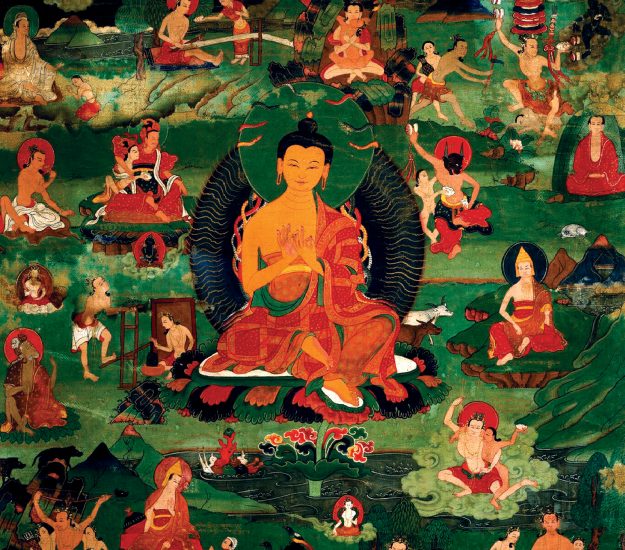
When Sunyata Meets Quantum Mechanics
Buddhist philosophy, particularly the Madhyamaka school founded by Nagarjuna, teaches sunyata, emptiness. This is not nihilism but a profound insight: phenomena have no independent, intrinsic existence. They arise in pratītyasamutpāda, dependent origination, existing only relationally, contextually, interdependently.
Nagarjuna wrote in the Mulamadhyamakakarika:
Whatever is dependently co-arisen, that is explained to be emptiness. That, being a dependent designation, is itself the middle way.
This is strikingly similar to quantum mechanics' relational ontology, articulated by physicist Carlo Rovelli, which holds that quantum properties are not intrinsic to objects but emerge through relationships and interactions.
Rovelli writes:
Quantum mechanics is not about objects: it is about relations. The world of quantum mechanics is not a world of objects: it is a world of events.
An electron has no definite position until measured, position arises relationally through measurement interaction. A photon has no definite path until observed, the path emerges through observation. Properties don't exist independently but arise dependently, co-created through relationship.
This is sunyata expressed in mathematical formalism.
The Dalai Lama, in discussions with quantum physicists, recognized this convergence:
When you investigate the nature of reality more deeply, you find that everything exists in a state of interdependence. Nothing possesses independent existence.
Buddhism teaches that clinging to the illusion of independent existence causes suffering. Wheeler teaches that recognizing participatory interdependence reveals our creative power. Both point to the same truth: reality is not a collection of separate things but a web of relationships constantly arising through interaction.
The Zen Koan of the Observer
Zen Buddhism uses koans, paradoxical questions, to shatter dualistic thinking. One famous koan asks:
What is the sound of one hand clapping?
Quantum mechanics poses its own koan: What is the state of a quantum system before measurement? The answer, superposition of all possibilities, is equally paradoxical to the dualistic mind.
The Zen master Dogen wrote:
To study the Buddha Way is to study the self. To study the self is to forget the self. To forget the self is to be actualized by myriad things.
To be actualized by myriad things, to recognize that the self is not separate from but emerges through relationship with all phenomena, is to understand quantum participation. The observer is actualized through observing, the measurer through measuring, consciousness through conscious interaction.
Taoism's Wu Wei and Quantum Resonance

Effortless Action Aligned With Reality's Pattern
The Taoist concept of wu wei, often translated as "effortless action" or “action through non-action”, finds profound parallel in Wheeler's insight about frequency and resonance.
Wu wei doesn't mean passivity but alignment. It means acting in accordance with the Tao, the underlying pattern, the natural flow, the way reality actually operates. When actions align with the Tao, change occurs not through force but through resonance.
The Tao Te Ching teaches:
The Tao does nothing, yet nothing is left undone.
In Wheeler's framework, this translates to: when actions align with the underlying patterns of reality, the probability structures of quantum fields, the natural resonances of the participatory universe, small, aligned actions create massive shifts.
This is not magical thinking but wave mechanics. When a frequency matches the natural resonance of a system, even tiny inputs create enormous oscillations. An opera singer shattering glass with her voice demonstrates resonance. A child on a swing achieving great height with small, timed pushes demonstrates resonance. Wu wei is finding reality's natural frequency and aligning with it.
Lao Tzu wrote:
A good traveler has no fixed plans and is not intent upon arriving. A good artist lets his intuition lead him wherever it wants.
The rigid plan, the forced action, the effort that exhausts, these work against reality's natural flow. The aligned action, the resonant frequency, the effortless participation, these work with reality's fundamental patterns.
The contemporary physicist Fritjof Capra, in The Tao of Physics, recognized this convergence:
Quantum theory thus reveals a basic oneness of the universe. It shows that we cannot decompose the world into independently existing smallest units.
When we recognize this oneness, wu wei becomes possible, action that participates in reality's flow rather than fighting against it.
Heraclitus and the Participatory Flux
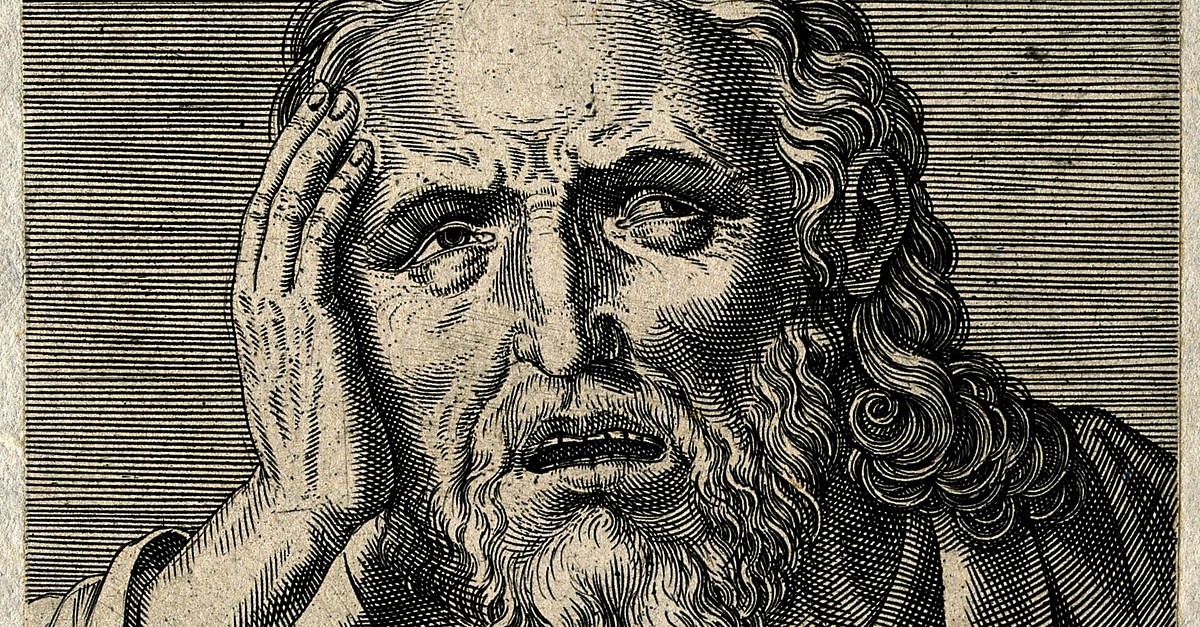
Everything Flows, Nothing Stands Still
The pre-Socratic philosopher Heraclitus, whose fragments speak of an ever-changing cosmos, declared panta rhei, everything flows. He taught that reality is not substance but process, not being but becoming.
His famous aphorism captures the dynamic nature of existence:
You cannot step into the same river twice, for other waters are continually flowing in.
Wheeler's participatory universe provides a physical mechanism for Heraclitean flux: reality is not a fixed thing but an ongoing event, a continuous collapsing of quantum wavefunctions through observation, measurement, and interaction.
We do not inhabit a static cosmos but participate in a dynamic becoming. Each moment, each observation, each choice, we step into a new river, or rather, we participate in creating the river anew.
Heraclitus also taught:
The path up and down is one and the same.
This unity of opposites, that day and night, life and death, harmony and discord are not separate things but aspects of a unified process, finds expression in Wheeler's insight that the universe mirrors both positive and negative information. Creation and destruction, clarity and confusion, coherence and chaos are not opposing forces external to consciousness but complementary aspects of the participatory process.
The philosopher Nietzsche, influenced by Heraclitus, wrote:
You must be ready to burn yourself in your own flame; how could you rise anew if you have not first become ashes?
Quantum collapse is both destruction and creation, the destruction of superposition, the creation of actuality. Participation requires embracing both aspects of the flux.
Plato's Cave and the Shadows of Measurement

Are We Creating the Shadows We Observe?
Plato's allegory of the cave, from Book VII of The Republic, describes prisoners who mistake shadows on a wall for reality, unaware of the fire casting those shadows or the true forms beyond the cave.
This has traditionally been interpreted as epistemology: empirical observation yields only shadows of true Forms. The philosopher escapes to behold reality directly.
But Wheeler's physics offers a deeper reading: perhaps the shadows are not merely distortions of a pre-existing reality but are the actualized states collapsed from superposition by observation.
The prisoners are not merely mistaken about reality; they are participating in creating the shadows through the act of observation, but unconsciously, passively, without recognizing their participatory role.
The philosopher who escapes the cave, in this reading, is one who recognizes that reality is participatory, that consciousness is not merely observing shadows but collapsing wavefunctions, actualizing from potentiality, co-creating the very shadows observed.
Liberation comes not from discovering a pre-existing objective reality but from recognizing our role as participants in an ongoing act of cosmic creation.
Plato wrote:
We can easily forgive a child who is afraid of the dark; the real tragedy of life is when men are afraid of the light.
The light, in Wheeler's framework, is the recognition of participation itself. It's terrifying because it places responsibility within consciousness. It's easier to believe we're passive observers of an objective reality than to recognize we're active participants in its actualization.
The contemporary philosopher Alan Watts captured this when he said:
The difficulty for most of us in the modern world is that the old-fashioned idea of God has become incredible or implausible.
But Wheeler offers something more incredible: not God creating reality, but consciousness, your consciousness, my consciousness, universal consciousness, participating in reality's continuous creation.
The Hermetic Principle of Correspondence

As Above, So Below; As Within, So Without
The ancient Hermetic axiom "As above, so below; as within, so without" encodes a profound principle: reality is self-similar across scales, and the inner world of consciousness mirrors and shapes the outer world of experience.
This is not primitive superstition but sophisticated cosmology that Wheeler's physics now substantiates.
The Kybalion, a 20th-century text synthesizing Hermetic principles, states:
As above, so below; as below, so above. By this law, correspondence can be made between phenomena of the various planes of existence.
Quantum mechanics demonstrates that observer and observed are not separate but entangled, what happens "within" (the measurement choice, the conscious attention) determines what manifests "without" (the collapsed wavefunction, the actualized state). The boundary between inner and outer is revealed as permeable, constructed, participatory.
The Hermetic tradition, which deeply influenced Renaissance thought and the Scientific Revolution, taught that knowledge (gnosis) comes through recognition of this correspondence, that to understand the cosmos, one must understand consciousness and vice versa.
Newton, Kepler, and Leibniz were all influenced by Hermetic philosophy, seeing their scientific work as revealing divine principles that connected mind and matter. Newton devoted more time to alchemy and Hermetic studies than to physics, not as separate pursuits but as aspects of a unified quest to understand reality's architecture.
As the historian Frances Yates wrote in Giordano Bruno and the Hermetic Tradition:
The return to the occult had been the way in which the return to the Platonic philosophy had been made by the Renaissance.
Wheeler's participatory universe completes the Hermetic arc: science, through rigorous experimentation and mathematical formalism, arrives at a cosmos that is neither purely material nor purely mental but participatory, where consciousness and reality are co-creative partners in an ongoing dialogue.
The Synthesis: Science Validates Wisdom
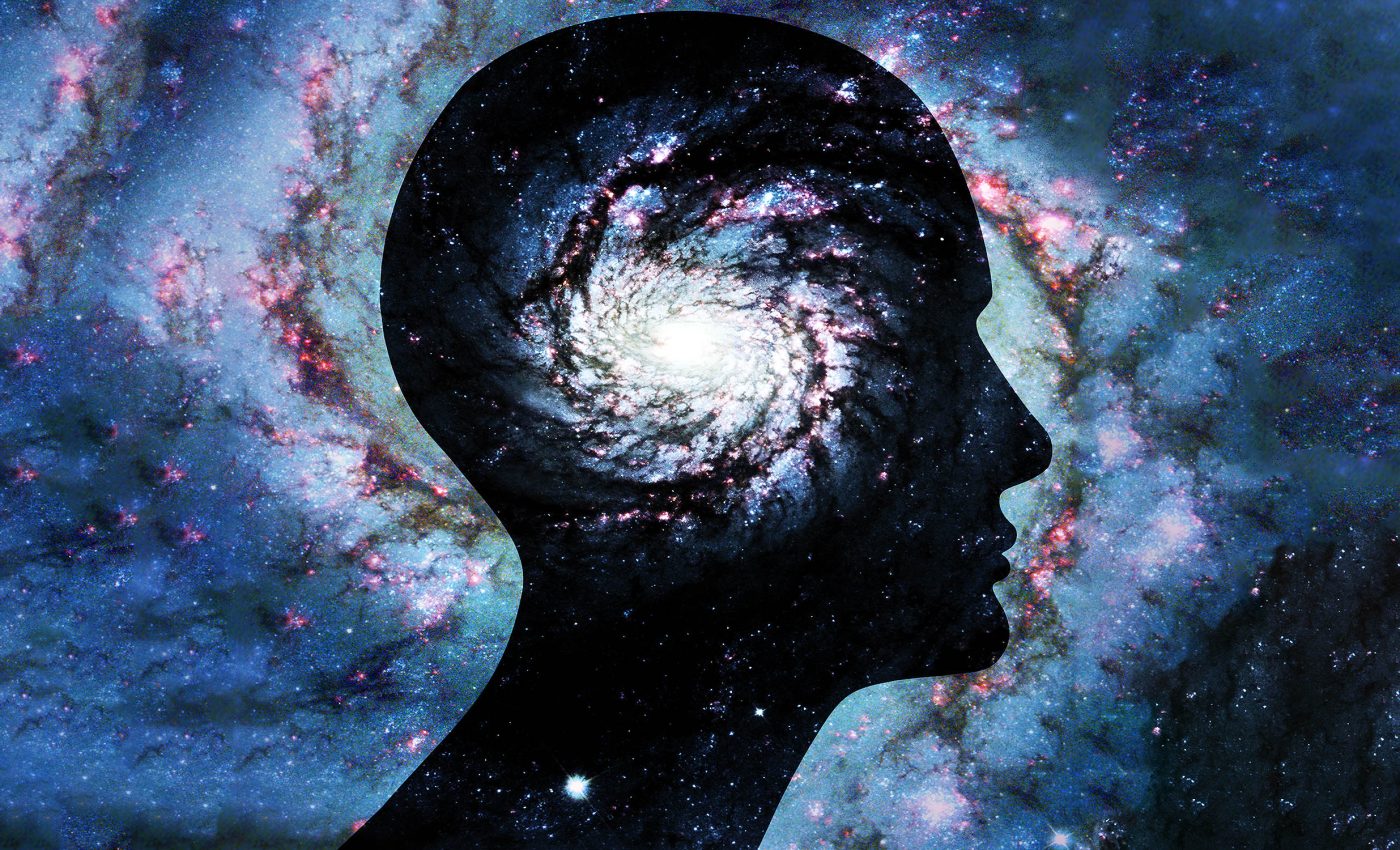
What emerges from this exploration is not that ancient traditions were "doing physics" or that quantum mechanics proves mysticism. Rather, both domains, empirical science and contemplative wisdom, have arrived at complementary insights about reality's nature:
Reality is not substance but process. Heraclitus and quantum mechanics agree: becoming, not being.
Phenomena have no independent existence. Buddhism and relational quantum mechanics converge: all arises through relationship.
Consciousness and cosmos are unified. Vedanta and Wheeler's participatory principle point to the same truth: observer and observed are not two but one.
The inner mirrors the outer. Hermeticism and quantum measurement theory reveal: consciousness shapes what actualizes.
Alignment creates effortless change. Taoism and quantum resonance show: frequency matters more than force.
Recognition brings liberation. Plato and Wheeler teach: acknowledging participation transforms everything.
The physicist Max Planck, who founded quantum theory, recognized where this path led:
Science cannot solve the ultimate mystery of nature. And that is because, in the last analysis, we ourselves are part of nature and therefore part of the mystery that we are trying to solve.
Wheeler would add: we're not just part of the mystery, we're participants in its unfolding, co-creators in its continuous actualization.
The Invitation to Integration
These ancient traditions offer not just philosophical parallels but practical technologies, meditation, contemplation, ritual, ethical practice, that maintained what Wheeler's physics reveals as essential: the coherence of consciousness.
Modern humans, severed from these traditions, often participate unconsciously, transmitting habitual signals shaped by conditioning rather than conscious choice. The synthesis of ancient wisdom and quantum physics offers a path forward: conscious participation informed by both empirical rigor and contemplative depth.
Stay tuned for Part 5: "The Human Implication, Each Being Is Humanity," where we explore the profound ethical and existential implications of participatory reality: what it means that each consciousness uniquely shapes the collective wavefunction, and the evolutionary invitation for humanity to awaken to its role as conscious co-creator.
The ancients intuited. Wheeler proved. Now the practice begins.
As above, so below; as within, so without. — Hermetic Axiom
That art thou. — Upanishads
Share

Dinis Guarda
Dinis Guarda is an author, entrepreneur, founder CEO of ztudium, Businessabc, citiesabc.com and Wisdomia.ai. Dinis is an AI leader, researcher and creator who has been building proprietary solutions based on technologies like digital twins, 3D, spatial computing, AR/VR/MR. Dinis is also an author of multiple books, including "4IR AI Blockchain Fintech IoT Reinventing a Nation" and others. Dinis has been collaborating with the likes of UN / UNITAR, UNESCO, European Space Agency, IBM, Siemens, Mastercard, and governments like USAID, and Malaysia Government to mention a few. He has been a guest lecturer at business schools such as Copenhagen Business School. Dinis is ranked as one of the most influential people and thought leaders in Thinkers360 / Rise Global’s The Artificial Intelligence Power 100, Top 10 Thought leaders in AI, smart cities, metaverse, blockchain, fintech.