The Trinity of Signals: How Identity, Information, and Action Shape Reality
05 Dec 2025

The Three Mechanisms Through Which Consciousness Participates in Creation
Part 2 of Dinis's mini-book "Quantum Consciousness Reality"
Wheeler's participatory universe proves that consciousness shapes reality. But how does it shape reality? Through what specific mechanisms does human awareness participate in collapsing quantum possibilities into lived experience?
The answer lies in three fundamental signal categories that every conscious being transmits continuously: Identity (who we are), Information (what we send), and Action (the frequency of our choices).
These are not abstract philosophical concepts. They are precise mechanisms through which consciousness interfaces with quantum possibility, the measurement basis, the coherence of signals, and the frequency effects that determine which quantum states actualize into experience.
As Aristotle recognized millennia ago:
"We are what we repeatedly do. Excellence, then, is not an act, but a habit."
Wheeler's physics reveals why Aristotle was right, and how the mechanism actually works.
Signal One: Identity, The Architecture of Self
Who You Think You Are Determines What You Can Observe
In quantum mechanics, measurement requires choosing what to measure. Will you measure a particle's position or its momentum? Its spin up-down or left-right? The measurement basis, the question you ask, determines which property actualizes and which remains uncertain.
This is not a limitation of measurement technology. It's fundamental to quantum reality itself. As Heisenberg's uncertainty principle proves, certain pairs of properties cannot simultaneously have definite values. Measure one precisely, and the other becomes maximally uncertain.
Identity, in Wheeler's participatory framework, functions as the measurement basis for human consciousness. The self-concept you hold determines which questions you're prepared to ask, which possibilities you're prepared to observe, which aspects of reality you collapse from superposition into actuality.
If you conceive yourself as powerless, you collapse wavefunctions that confirm powerlessness. If you hold the identity of creator, of agent, of participant, you actualize possibilities aligned with agency and creative potential.
This is not magical thinking. It's quantum mechanics applied to the most complex quantum system we know: human consciousness interfacing with reality.
The Science of Identity
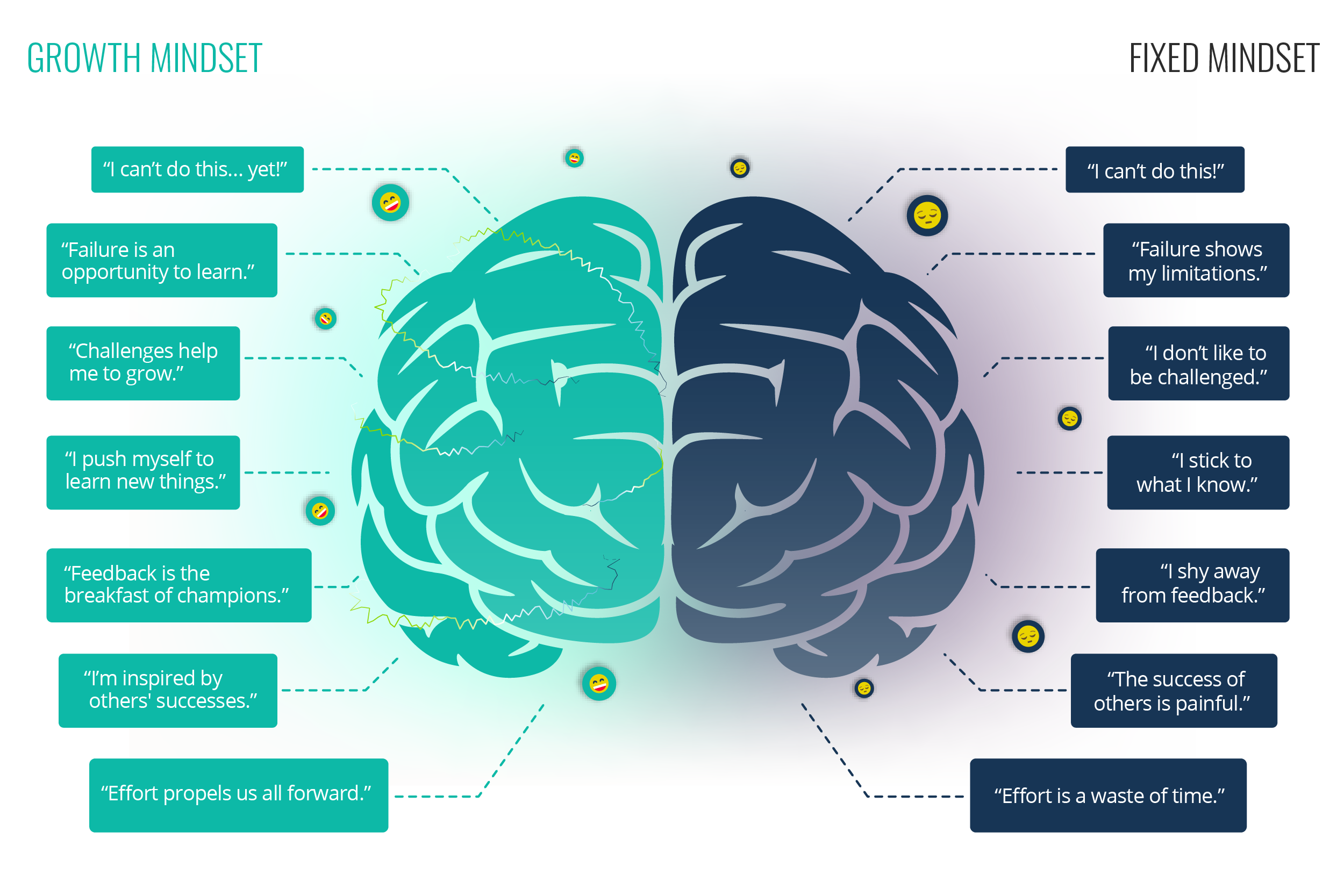
The psychological research validates this quantum framework. Carol Dweck's groundbreaking work on mindsets demonstrates empirically that self-conception, identity, dramatically influences outcomes. Students who conceive of intelligence as fixed perform differently from those who see it as developable, not because of inherent capacity but because identity shapes which possibilities are explored and actualized.
As Dweck writes:
“The view you adopt for yourself profoundly affects the way you lead your life.”

Neuroplasticity research by Michael Merzenich and Norman Doidge has shown that the brain literally rewires itself based on consistent patterns of thought and action. The physical substrate of consciousness responds to the signals of identity. We are not merely discovering who we are; we are, through the participatory process Wheeler described, creating who we are through the questions we ask and the measurements we take.
The philosopher William James recognized this over a century ago:
The greatest discovery of my generation is that human beings can alter their lives by altering their attitudes of mind.
Ancient Wisdom, Quantum Mechanism
The ancient philosophical traditions understood this intuitively. The Delphic maxim "Know Thyself" was not merely an invitation to self-discovery but a recognition that self-knowledge is self-creation.
In Vedantic philosophy, the concept of “Tat Tvam Asi”, “Thou Art That”, points to the fundamental identity between individual consciousness and cosmic consciousness. The Upanishads declare:
As a person thinks, so he becomes.
Wheeler's physics provides the mechanism for this ancient wisdom. Identity is not static essence but dynamic signal, a continuous transmission that shapes the collapsing of possibility into actuality.
Signal Two: Information, The Terms of Negotiation
The Universe Mirrors Everything You Transmit
The second signal category in Wheeler's framework is information, the terms you send the universe in your ongoing negotiation with reality. This maps precisely onto Wheeler's "it from bit" principle: all physical reality arises from informational exchanges, from binary yes-or-no answers extracted through observation.
But here's Wheeler's crucial insight:
the universe mirrors all information, not merely positive information.
Fear is information. Doubt is information. Avoidance is information. Each of these signals negotiates reality just as surely as clarity, courage, and commitment.
This is not the watered-down optimism of pop psychology but the rigorous consequence of quantum information theory. The wavefunction describing all possible states collapses based on the measurement interaction, and in the complex system of human consciousness engaging with environmental potentiality, every thought, every emotion, every habitual pattern of attention constitutes a measurement interaction.
Fear as Informational Signal
Fear, from this perspective, is not merely an unpleasant subjective experience but an informational signal that collapses possibility spaces toward threat-confirming outcomes. This occurs not through mystical attraction but through the focusing of attention, the priming of perceptual filters, and the shaping of action tendencies.

Cognitive neuroscience research by Joseph LeDoux on the amygdala's fear circuitry demonstrates that fearful attention literally changes what aspects of the environment are perceived and responded to.
As the neuroscientist Antonio Damasio observes:
"We are not thinking machines that feel; rather, we are feeling machines that think."
The emotional signals we transmit shape the informational exchanges through which reality crystallizes.
Doubt Creates Noise, Clarity Creates Coherence
Similarly, doubt operates as informational signal. When we doubt, we send ambiguous, incoherent signals, what quantum physicists would call "noise." Quantum systems respond to noise with decoherence, the loss of quantum properties and the collapse into mixed states rather than pure states.
The analogue in human experience is the chaotic, directionless unfolding that occurs when signals are inconsistent.
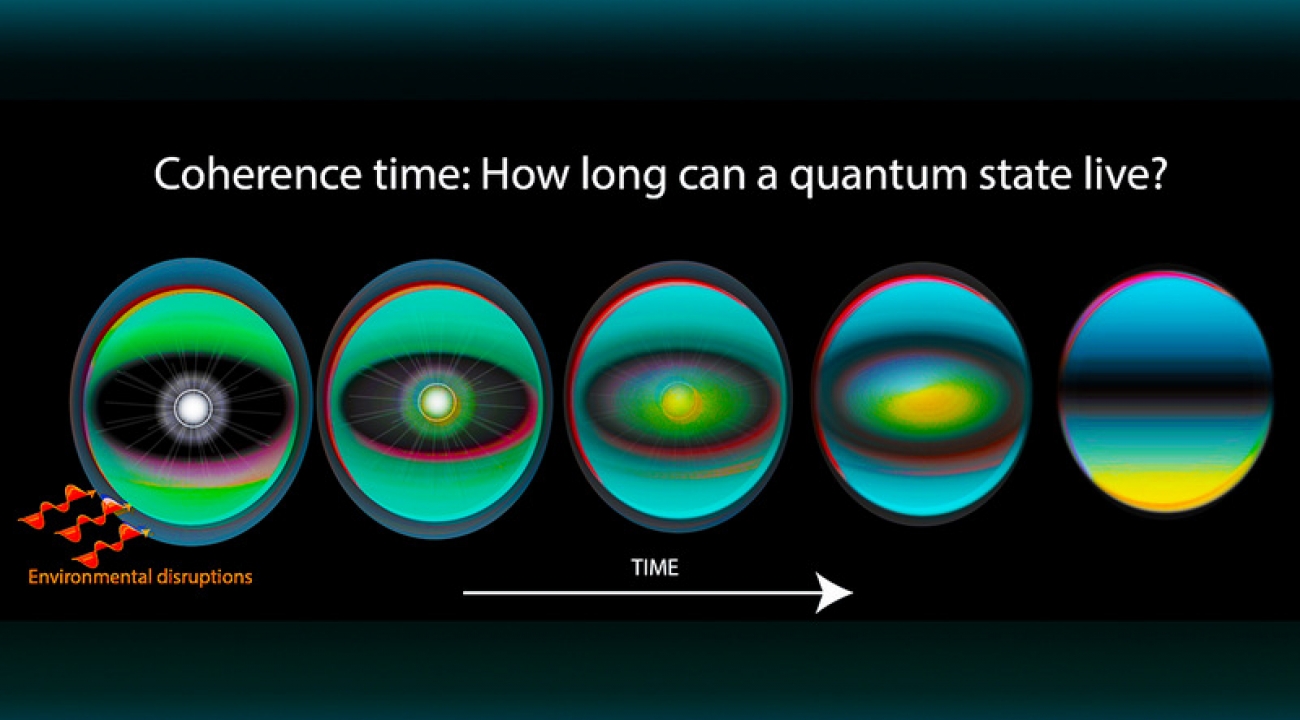
The positive corollary is equally profound: clarity functions as coherent information. When we transmit clear, consistent, aligned signals, when identity, emotion, thought, and action point in the same direction, we send what physicists call a "coherent quantum state."
Such states can exhibit quantum phenomena including interference, entanglement, and the actualization of low-probability outcomes through constructive interference of probability amplitudes.
Quantum Cognition: The Emerging Science
This is not merely metaphor. Research in quantum cognition by Jerome Busemeyer, Peter Bruza, and Diederik Aerts has demonstrated that human decision-making, concept combinations, and memory retrieval often violate classical probability theory in ways that are precisely predicted by quantum probability models.
While controversial, these findings suggest that consciousness may genuinely exhibit quantum properties, that the brain-mind system may operate, at least partially, according to quantum rather than classical rules.
If this is so, then the informational signals we transmit, through thought, emotion and attention, genuinely shape the probability fields from which experience actualizes.
As physicist Henry Stapp argues:
"Quantum mechanics provides a theoretical framework in which consciousness plays an essential role in the dynamical evolution of physical systems."
We are not merely describing reality through information; we are, as Wheeler insisted, constituting reality through informational exchanges.
Signal Three: Action, The Frequency of Choice

Reality Responds to Patterns, Not Events
The third signal is action, or more precisely, the frequency of action. As Wheeler demonstrated through his research, reality does not respond to isolated events but to repeated patterns. Quantum mechanics operates through probabilities, and probabilities manifest through multiple trials.
A single coin flip tells you little; ten thousand flips reveal the underlying probability structure.
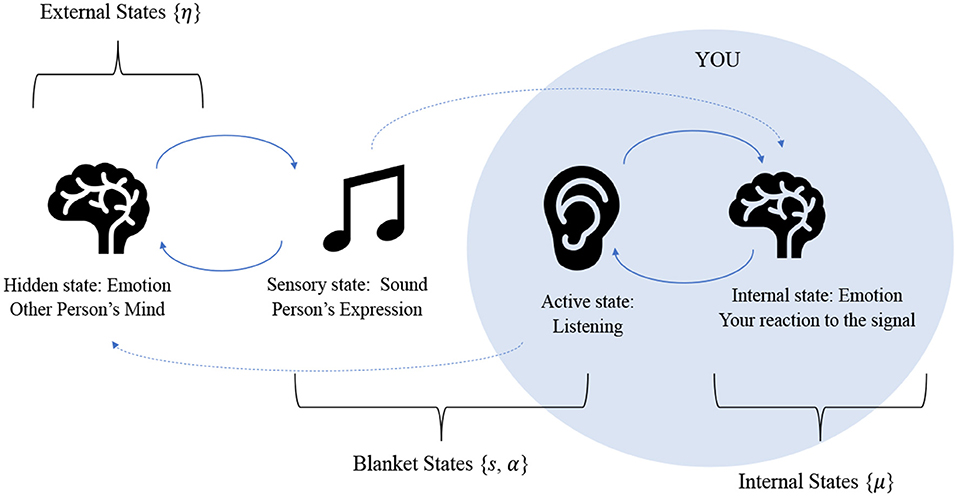
Human behavior operates similarly. The brain is a prediction engine, as Karl Friston's free energy principle demonstrates, it constantly generates models of the world and updates them based on incoming sensory data. But these models are not built from single instances; they emerge from statistical regularities, from the patterns that repeat.
When we perform an action once, we create a single data point, a single measurement that collapses a single wavefunction. But when we repeat an action consistently, we establish a frequency, a resonance pattern that shapes probability fields dramatically.
The Neuroscience of Repetition
This is not mysticism but statistics: repeated behaviors create strong priors in Bayesian inference, making certain outcomes exponentially more probable.
The neuroscience is clear. Donald Hebb's principle, confirmed by decades of research, states that "neurons that fire together wire together." Repeated patterns of neural activity strengthen synaptic connections, making those patterns easier to activate in future. At the level of behavior, this manifests as habit, the crystallization of repeated action into automatic pattern.
As the psychiatrist Viktor Frankl observed:
Between stimulus and response there is a space. In that space is our power to choose our response. In our response lies our growth and our freedom.
But growth and freedom emerge not from single choices but from the frequency of aligned choices repeated over time.
The Quantum Zeno Effect: Measurement Freezing Reality
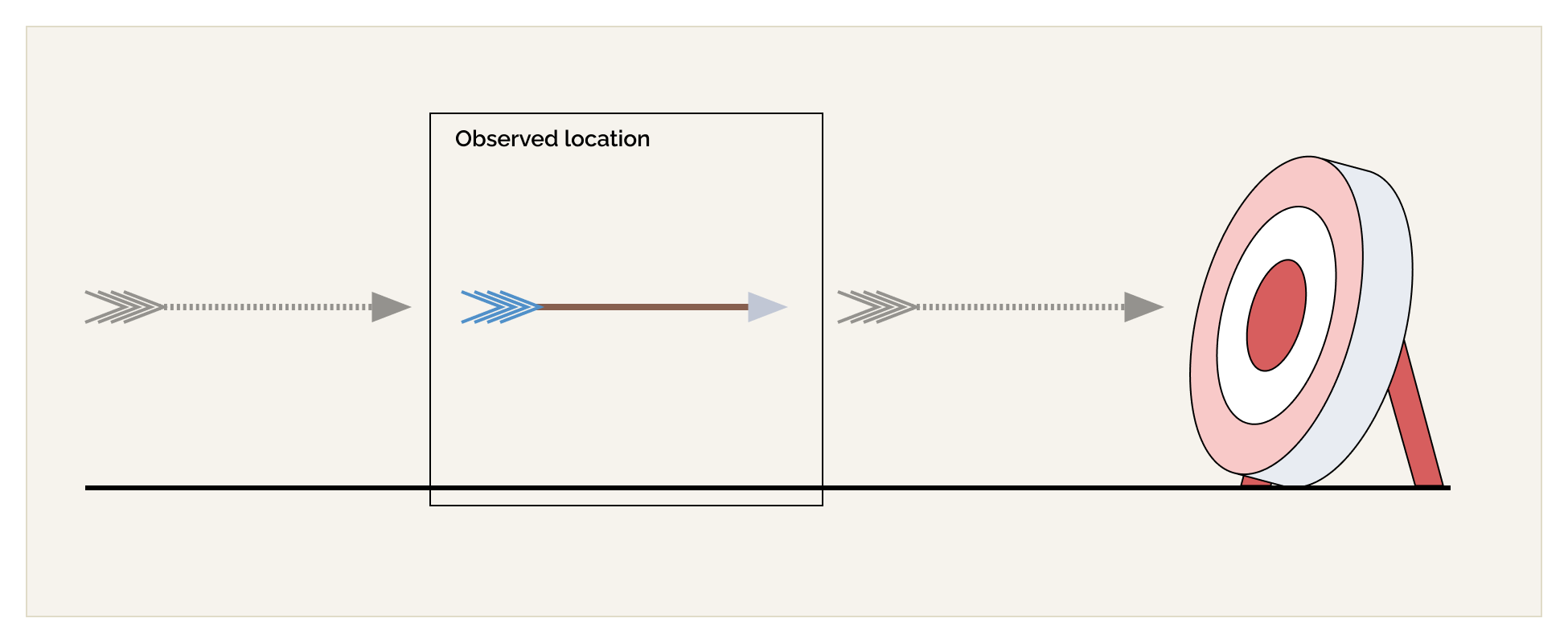
Wheeler's insight goes deeper. At the quantum level, repeated measurements can induce what is known as the quantum Zeno effect, the phenomenon whereby continuously measuring whether a quantum system remains in its initial state prevents it from transitioning to other states. The system is "frozen" by measurement.
This was first experimentally verified by Wayne Itano and colleagues in 1990. By repeatedly measuring quantum states, they literally prevented transitions that would otherwise occur naturally.
The inverse effect also exists: the quantum anti-Zeno effect, where measurements can accelerate transitions. The frequency and timing of measurements, of conscious attention, of intentional action, directly influences the evolution of quantum systems.
Why Small Habits Create Massive Change

Applied to human life, this suggests something profound: tiny choices repeated with consistency do not merely accumulate linearly but can create massive shifts through the shaping of underlying probability fields.
This is why small habits, as James Clear documents in Atomic Habits, compound into transformative change. It is not willpower or motivation but frequency, the repeated signal that reshapes the architecture of possibility.
Clear writes:
You do not rise to the level of your goals. You fall to the level of your systems.
Wheeler's physics explains why: systems are frequency patterns, and frequency patterns reshape probability fields at the quantum level.
Ancient Practice, Modern Mechanism
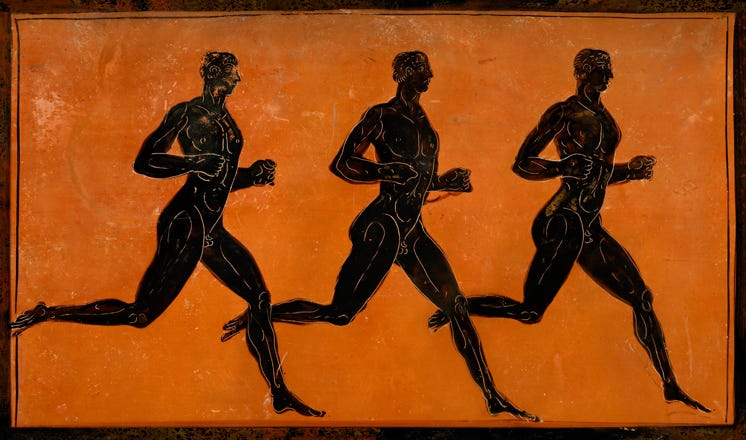
Ancient wisdom traditions understood this as spiritual practice. The Buddhist concept of "right effort" emphasizes consistent, repeated alignment of thought and action. The Stoic practice of askesis, regular exercises in virtue, recognizes that character is formed through habitual choice. The Confucian emphasis on ritual (li) acknowledges that repeated patterns of behavior shape both individual and social reality.
As the Stoic philosopher Epictetus taught:
First say to yourself what you would be; and then do what you have to do.
Wheeler's physics provides the mechanism: reality responds to repeated signals, to consistent measurements, to the frequency with which we collapse wavefunctions in particular directions.
The Trinity in Action: How the Signals Work Together
These three signals do not operate in isolation but in dynamic interplay:
Identity sets the measurement basis, it determines what questions you're prepared to ask reality, what possibilities you're open to observing.
Information determines the quality of your signals, whether you're transmitting coherent clarity or incoherent noise, whether your emotional and cognitive patterns align or conflict.
Action establishes the frequency, through repeated choices, you create resonance patterns that exponentially reshape probability fields, making certain futures vastly more probable than others.
Send nothing, hold no clear identity, transmit confused information, take no consistent action, and reality remains in superposition, a chaos of unrealized potential.
Send noise, hold contradictory self-concepts, transmit conflicting emotional signals, take inconsistent actions, and reality reflects that incoherence back to you.
Send clarity, hold a coherent identity, transmit aligned information, take repeated consistent action, and reality shifts, as probability fields reshape to align with the resonance pattern you have established.
The Participatory Imperative

Wheeler's framework is not passive observation but active participation. You are always transmitting these three signals. The question is not whether you participate but how you participate.
Unconsciously? Reactively? Based on conditioning and fear? Or consciously? Deliberately? As an awakened co-creator recognizing your role in collapsing quantum possibilities into lived reality?
As the physicist Amit Goswami puts it:
Consciousness, not matter, is the ground of all being.
The trinity of signals, identity, information, action, represents the precise mechanisms through which consciousness participates in shaping the matter and experience that emerge from quantum possibility.
You are not a victim of reality. You are a participant in its ongoing creation through every signal you transmit in every moment.
The Question Moving Forward
Now that you understand the three signals, the question becomes intensely practical:
What identity are you holding as your measurement basis? Who have you decided you are, and how does that decision limit or expand what you're prepared to observe?
What information are you transmitting? Are your thoughts, emotions, and attention patterns coherent and aligned, or are they sending noise that creates decoherence in your probability fields?
What actions are you repeating with frequency? What habits, what patterns, what consistent behaviors are creating the resonance that shapes which quantum states freeze into your reality through the Zeno effect?
These are not abstract philosophical questions. They are the most practical questions you can ask, because they determine the reality you participate in creating.
Stay tuned for Part 3: "The Mirror Universe, Positive and Negative Information," where we explore why the universe reflects all signals impartially, how coherence versus decoherence shapes outcomes, and the profound implications of Jung's shadow work for quantum participation.
The mechanisms are clear. The practice is yours to implement.
"We are not discovering a pre-existing objective reality frozen in amber. We are participating in its ongoing creation—a continuous collapsing of quantum possibility into actuality through the choices we make, the attention we sustain, the coherence we maintain."
Share

Dinis Guarda
Dinis Guarda is an author, entrepreneur, founder CEO of ztudium, Businessabc, citiesabc.com and Wisdomia.ai. Dinis is an AI leader, researcher and creator who has been building proprietary solutions based on technologies like digital twins, 3D, spatial computing, AR/VR/MR. Dinis is also an author of multiple books, including "4IR AI Blockchain Fintech IoT Reinventing a Nation" and others. Dinis has been collaborating with the likes of UN / UNITAR, UNESCO, European Space Agency, IBM, Siemens, Mastercard, and governments like USAID, and Malaysia Government to mention a few. He has been a guest lecturer at business schools such as Copenhagen Business School. Dinis is ranked as one of the most influential people and thought leaders in Thinkers360 / Rise Global’s The Artificial Intelligence Power 100, Top 10 Thought leaders in AI, smart cities, metaverse, blockchain, fintech.