Who Does What: The Stakeholder Action Plan for Universal AI Accessibility
08 Dec 2025

Part 8 of Wisdomia's Deep Dive into AI, Inclusivity, and Neurodiversity
From Frameworks to Action: Who's Responsible?

In Part 7, we explored the four pillars of best practice, proven frameworks that work. But frameworks don't implement themselves. Best practices require actors with resources, authority, and commitment.
The question isn't just what needs to happen. It's who needs to do it, by when, and with what resources.
This chapter provides specific, actionable recommendations for four key stakeholder groups, each with unique leverage points and distinct responsibilities in building an inclusive AI future. These aren't aspirational goals. They're achievable actions with proven impact and clear timelines.
Welcome to the stakeholder action plan.
The Four Stakeholder Groups

Success requires coordinated action across:
- Policymakers and Government Leaders (setting rules and providing resources)
- Technology Developers and Innovators (building accessible systems)
- Employers and Organizational Leaders (creating inclusive workplaces)
- Researchers and Academic Institutions (generating evidence and translating to practice)
Each plays an essential role. None can succeed alone. And critically: the disability community must be at the center of all action, co-creators, not just beneficiaries.
Stakeholder 1: Policymakers and Government Leaders
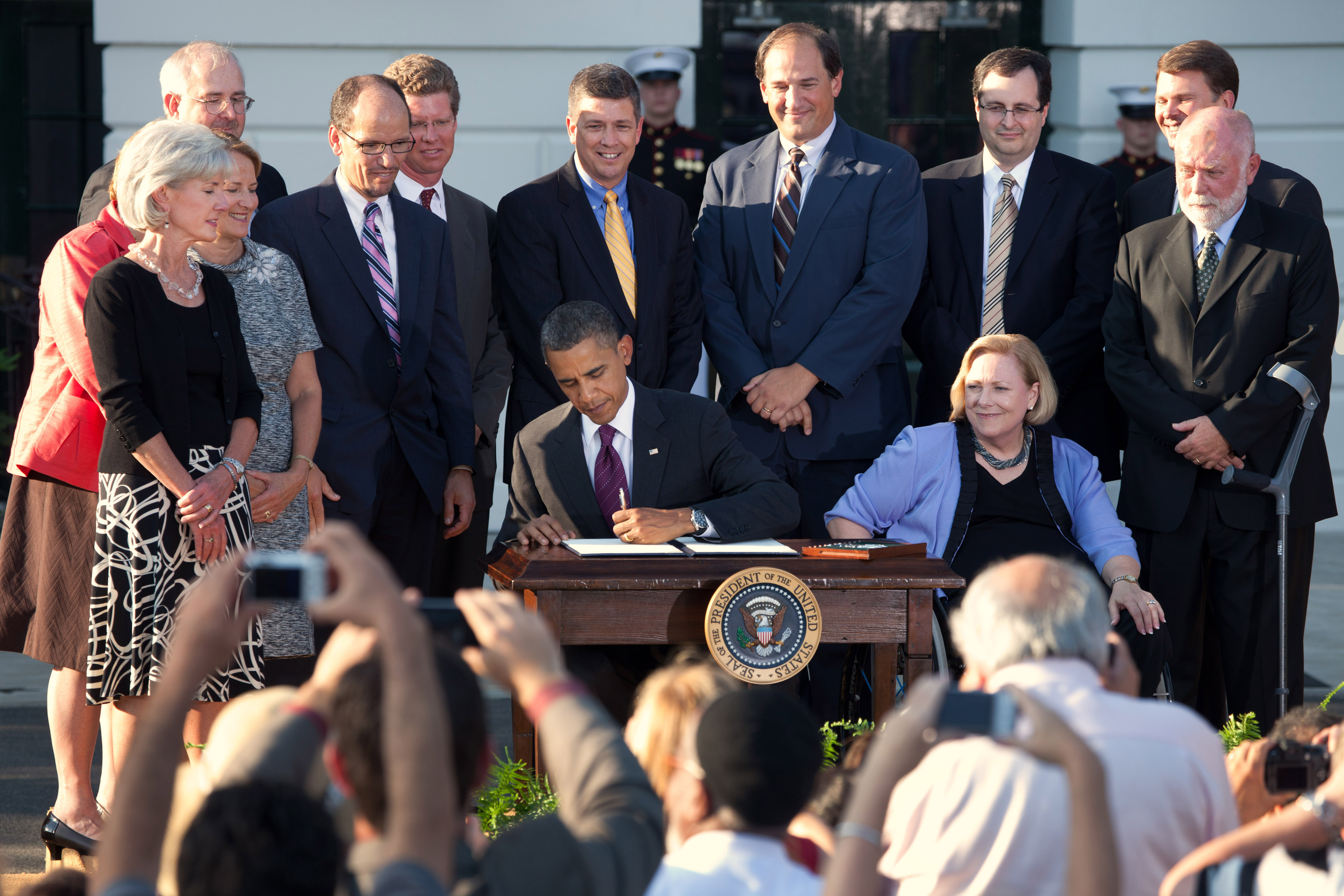
Governments create the enabling environment for accessibility. Without policy support, market incentives alone won't close the gap between 3% access in low-income countries and 90% in high-income countries.
High Priority Actions (12-18 months)
Implement and Enforce Accessibility Standards Mandate accessibility requirements for all AI systems and digital technologies. Establish clear compliance mechanisms with actual penalties. Require regular auditing and public reporting. Align with international frameworks like CRPD and WCAG.
Increase Public Funding Create dedicated budget lines for assistive technology R&D. Provide subsidies and vouchers for individual users. Fund grant programs for innovative startups and researchers. Invest in accessibility infrastructure.
Mandate Ethical AI Reviews Require bias auditing before AI deployment. Establish ethics committees with disability representation. Institute regular monitoring and reporting requirements. Create swift response mechanisms for identified harms.
Medium Priority Actions (18-24 months)
Establish National AT Provision Systems Follow the WHO-GATE 5P framework we explored in Part 7. Create integrated service delivery pathways. Train workforce across disciplines. Ensure both urban and rural access.
Support Education-to-Career Pathways Fund vocational rehabilitation services. Incentivize neurodiverse hiring through tax credits. Subsidize workplace accommodation costs. Create supported employment programs.
Long-Term Actions (24-36 months)
Tax Incentives for Innovation Provide tax breaks for companies developing accessible technologies. Offer procurement preferences for accessible products. Support public-private partnerships. Foster international cooperation and knowledge sharing.
The Policy ROI
These investments aren't costs, they're economic multipliers. Remember from Part 1: unaddressed hearing loss alone costs $980 billion annually. Every dollar invested in accessibility generates multiple dollars in economic productivity, reduced healthcare costs, and increased tax revenue.
Stakeholder 2: Technology Developers and Innovators

Technology creators bear profound responsibility for ensuring their innovations serve all humanity, not just the privileged majority.
Design Imperatives
Accessibility from Inception Build accessibility into first wireframes, not as retrofit. Include disabled developers, designers, and product managers on core teams. Make accessibility goals part of all product roadmaps and sprint planning. Create design systems with accessibility components built-in.
Co-Creation with Disability Community Partner with disability organizations from project start. Compensate disabled consultants and testers appropriately—lived experience is expertise. Create accessible participation pathways. Build long-term partnerships beyond single product launches.
As we learned from Be My Eyes in Part 2: founder Hans Jørgen Wiberg's lived experience as a person with visual impairment was fundamental to creating a service that processed 43 million requests in 2024.
Rigorous Bias Testing Test with diverse disability populations before launch. Conduct disparate impact analysis across user groups. Use third-party auditing of algorithms. Publish bias testing methodologies and results.
This directly addresses the alarming finding from Part 6: AI models rating disability terms worse than "bank robber."
Development Practices
Build It Into the Pipeline
- Automated accessibility testing in CI/CD pipelines
- Manual testing with actual disabled users (not just automated tools)
- Accessibility metrics in product dashboards
- Regular accessibility reviews and updates
Affordability and Access Models
- Tiered pricing with free or low-cost options for individuals who need assistance
- Accept subsidies and vouchers from government programs
- Open-source components where possible
- Device-agnostic design (work on low-end smartphones)
Open Knowledge Sharing Publish accessibility research and learnings. Contribute to open datasets. Share best practices across industry. Participate in accessibility standards development.
The Business Case
Microsoft's 30-year accessibility commitment (Part 4) hasn't limited their success—it's enhanced it. Accessibility features like voice control and dark mode, initially designed for disabled users, become universal preferences that improve products for everyone.
Build for the margins, benefit the mainstream.
Stakeholder 3: Employers and Organizational Leaders

We know from Part 4 that companies with comprehensive neuroinclusion programs achieve 90%+ retention rates and 90-140% productivity gains. Yet Part 6 revealed that only 25% of companies offer neurodivergent-specific onboarding.
Here's how to join the leading 25% and surpass them.
The Implementation Checklist
Phase 1: Education (Months 2-4)
- Mandatory neurodiversity and disability awareness training for all employees
- Specialized manager training on accommodations and support
- HR capability building
- Ongoing education, not one-time compliance checkboxes
Phase 2: Infrastructure (Months 3-6)
- Deploy AI assistive tools (Microsoft Copilot, assistive reading/writing tech)
- Create clear accommodation processes with designated coordinators
- Establish Employee Resource Groups (ERGs) with leadership support
Phase 3: Recruitment (Months 4-8)
- Replace traditional interviews with skills-based assessments
- Offer multiple interview format options
- Use work samples and portfolio reviews
- Write clear, specific job descriptions
Phase 4: Support (Months 6-12)
- Launch mentorship programs with trained mentors
- Specialize onboarding for neurodivergent employees
- Create transparent career development pathways
Phase 5: Measurement (Ongoing)
- Track hiring, retention, and advancement by disability status
- Conduct regular employee satisfaction surveys
- Publish public diversity reports
- Use data for continuous improvement
The Investment and ROI
Total Investment:
- Time: 100-200 hours (distributed across teams)
- Financial: $50,000-$150,000 (varies by organization size)
Expected ROI: 3-5x within 24 months
Timeline for Results:
- 6 months: Better applicant quality and pipeline
- 12 months: Measurable retention improvements
- 18 months: Productivity gains evident in team metrics
- 24 months: Cultural transformation and employer brand enhancement
The business case from Part 4: 16% profitability increase, 18% productivity boost, 12% customer loyalty improvement.
Stakeholder 4: Researchers and Academic Institutions

Academic research from institutions like Stanford, MIT, and others (Part 3) provides the evidence base for everything we've discussed. But research must translate to practice.
Research Priorities
Longitudinal Impact Studies Track 5-year and 10-year outcomes of AI assistance on independence and quality of life. Study life course perspectives and intergenerational impacts. We need evidence beyond short-term pilots.
Algorithmic Bias Investigation Develop systematic bias detection methodologies. Test mitigation strategies. Conduct intersectional analysis. Create continuous monitoring frameworks.
Intersectionality Research Examine neurodiversity combined with cultural and linguistic diversity. Study disability intersecting with race, gender, age, and socioeconomic status. Address multiple marginalized identities simultaneously.
Global AT Needs Assessment Create standardized measurement tools. Quantify unmet need country-by-country. Analyze regional variations. Build predictive models for future needs as populations age.
Translation Imperatives
Industry Partnerships University-industry collaborations that accelerate research-to-product pipelines. Licensing and commercialization support. Startup incubators for accessibility tech.
Stanford's AI-powered job matcher project with Neurodiversity At Work (Part 3) exemplifies this translation pathway.
Open Science Practices
- Pre-register studies to reduce publication bias
- Share open data (with appropriate privacy protections)
- Conduct and publish replication studies
- Make publications accessible (not just behind paywalls)
Research Methods
Use community-based participatory research (CBPR). Co-produce research with disabled researchers and participants. Employ mixed methods. Apply implementation science frameworks for rapid translation.
"Nothing About Us Without Us" applies to research as much as product development.
The Collaboration Imperative
Here's the crucial insight: No single stakeholder can achieve an inclusive AI future alone.
Policymakers set standards, but technology developers must implement them. Developers build products, but employers must adopt them. Employers create inclusive workplaces, but researchers must provide evidence of what works. Researchers generate knowledge, but policymakers must translate it into law.
And all four must work in genuine partnership with the disability community.
The Interconnections
Policymakers ↔ Developers: Standards and compliance, funding and grants, regulatory guidance
Developers ↔ Employers: Technology adoption, product training, custom solutions
Employers ↔ Researchers: Evidence-based practices, real-world testing, outcome data
Researchers ↔ Policymakers: Evidence for policy, impact assessments, best practices
All ↔ Disability Community: Co-creation, feedback, accountability, partnership
The Timeline to 2030
The UN Sustainable Development Goals and WHO initiatives target universal assistive technology access by 2030. That's just five years away. Here's the realistic timeline:
Months 1-6 (Foundation Building) Policy frameworks established, research priorities set, corporate commitments secured, community partnerships formed.
Months 6-12 (Initial Implementation) Standards enacted, products launched, workplace programs initiated, research underway.
Months 12-24 (Scaling and Refinement) Compliance monitoring, product iteration based on user feedback, program expansion, evidence publication.
Months 24-36 (Maturity and Cultural Shift) Accessibility becomes standard practice, not exception. Cultural norms shift from accommodation to expectation.
2030 (Universal Access Goal) The 3% vs. 90% access gap closes substantially. One billion people no longer denied needed assistive technology.
Ambitious? Yes. Achievable? Also yes—if all stakeholders act in coordination.
What You Can Do (Yes, You)
This isn't just for government ministers, tech CEOs, HR directors, and university presidents. Individual action matters:
If you're in government: Champion accessibility in your department. Include accessibility requirements in procurements. Support funding increases.
If you're a developer: Push for accessibility testing in your sprint. Volunteer to join accessibility working groups. Learn WCAG standards.
If you're a manager: Proactively offer accommodations. Get trained in neurodiversity support. Advocate for inclusive recruitment in your team.
If you're a researcher: Make your publications accessible. Partner with disability organizations. Study what matters to disabled communities.
If you're none of these: Demand accessibility from products you use. Support companies with strong accessibility track records. Vote for leaders who prioritize inclusion.
And if you're a person with disabilities: Your lived experience is expertise. Your voice matters. Demand co-creation, not just consultation.
From Coordination to Transformation

We've journeyed through eight chapters, from the 2.5 billion people needing assistive technology to revolutionary applications to academic breakthroughs to corporate successes to policy frameworks to barriers to best practices to this stakeholder action plan.
The pattern is clear: we know what works. We know who needs to do it. We even know the timeline and expected ROI.
What we've lacked isn't knowledge, it's coordination. Policymakers acting without consulting developers. Developers building without employer input. Employers implementing without research evidence. Researchers publishing without translation pathways.
This chapter provides the coordination framework. Four stakeholder groups, each with specific responsibilities, timelines, and resources. All connected through the disability community at the center.
The blueprint for universal AI accessibility exists. The actors are identified. The timeline is set.
What remains is commitment and accountability to ensure commitment becomes action.
Continued from Part 7: "From Barriers to Breakthroughs: The Four-Pillar Framework for Building Truly Inclusive AI Systems"
Based on research from "AI Inclusivity, Neurodiversity and Disabilities: A Comprehensive White Paper on Artificial Intelligence as a Transformative Force" by Dinis Guarda
Stakeholder Responsibilities Summary:
Policymakers: Implement standards (12-18 months), increase funding, establish national AT systems, mandate ethical AI reviews
Developers: Accessibility from inception, rigorous bias testing, co-creation with disability community, affordable access models
Employers: Systematic neuroinclusion (100-200 hours, $50K-150K investment, 3-5x ROI in 24 months)
Researchers: Longitudinal studies, bias investigation, intersectionality research, rapid industry translation
Critical Insight: No single stakeholder succeeds alone, coordination with disability community at center is essential.
Next in this series: Part 9 explores the philosophical and humanistic dimensions of this work, why universal accessibility matters beyond economics, productivity, and innovation.
Share

Dinis Guarda
Dinis Guarda is an author, entrepreneur, founder CEO of ztudium, Businessabc, citiesabc.com and Wisdomia.ai. Dinis is an AI leader, researcher and creator who has been building proprietary solutions based on technologies like digital twins, 3D, spatial computing, AR/VR/MR. Dinis is also an author of multiple books, including "4IR AI Blockchain Fintech IoT Reinventing a Nation" and others. Dinis has been collaborating with the likes of UN / UNITAR, UNESCO, European Space Agency, IBM, Siemens, Mastercard, and governments like USAID, and Malaysia Government to mention a few. He has been a guest lecturer at business schools such as Copenhagen Business School. Dinis is ranked as one of the most influential people and thought leaders in Thinkers360 / Rise Global’s The Artificial Intelligence Power 100, Top 10 Thought leaders in AI, smart cities, metaverse, blockchain, fintech.