The Machiavellian Principles Applied In An AI Hallucination Time (Part 5)
16 Feb 2026

Part 5 of 5: The Machiavellian Principles Applied In An AI Hallucination Time
This is the final article in a five-part series exploring Niccolò Machiavelli's The Prince and its profound relevance to contemporary struggles against manipulation, illogic, and the erosion of epistemic certainty in the age of artificial intelligence.
IX. The Philosophical Synthesis: Machiavelli, Truth, and Human Dignity

Reconciling Ruthlessness with Humanism
The tension at the heart of Machiavellian thought demands resolution: How can we deploy amoral strategic principles whilst maintaining commitment to human dignity and truth?
The answer lies in understanding that Machiavelli's principles are defensive, not aggressive when applied in service of truth. You do not initiate the corruption; you respond to it. The manipulator who lies in court proceedings has already chosen to debase human interaction. Your response serves a higher principle: the restoration of truth to discourse.
Consider Machiavelli's own trajectory. He served the Florentine Republic with distinction, worked to strengthen its institutions, and sought to preserve republican liberty against tyrannical forces. When the Medici returned to power, he was tortured, exiled, and prohibited from public life. The Prince was written partly as a job application to the Medici, but more fundamentally as a meditation on how virtue operates in a fallen world.
The manipulator forces you into a fallen world, a courtroom where lies compete with truth, where justice is not self-executing, where you must fight for what should be freely given. In that world, Machiavellian principles are not corruption, they are appropriate responses to existing corruption.
The Ciceronian Complement
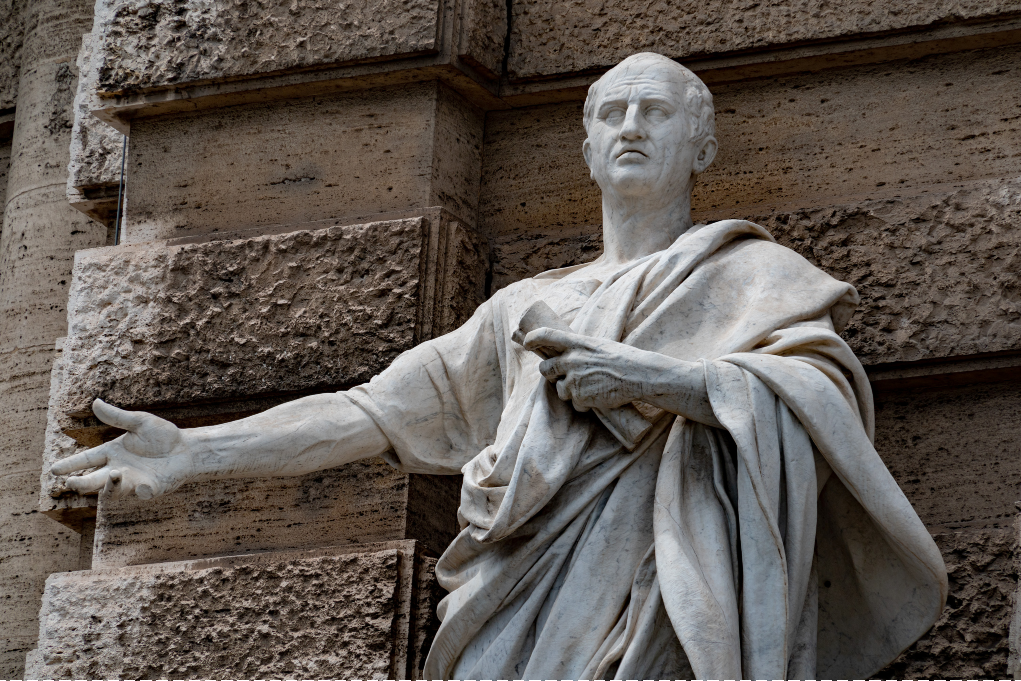
Where Machiavelli teaches how to fight, Cicero reminds us why we fight:
"There is nothing so absurd but some philosopher has said it." — Cicero, De Divinatione
And more pointedly:
"Salus populi suprema lex esto" (Let the welfare of the people be the supreme law) — De Legibus
You fight the liar not from personal vendetta but because lies corrupt the commons. Each successful manipulation degrades the institution, the court, the company, the community. Your Machiavellian response serves not self-interest but the collective interest in preserving truth-seeking mechanisms.
The Hannah Arendt Insight: Truth and Politics
Hannah Arendt, in her essay "Truth and Politics" (1967), observed:
"The ideal subject of totalitarian rule is not the convinced Nazi or the convinced Communist, but people for whom the distinction between fact and fiction (i.e., the reality of experience) and the distinction between true and false (i.e., the standards of thought) no longer exist."
This is the ultimate goal of the systematic liar, not merely to promote their particular falsehood, but to destroy the very category of truth. When everything might be a lie, when verification seems impossible, when cynicism becomes rational, the manipulator has won even without being believed.
Your Machiavellian resistance, therefore, serves epistemic order itself. By documenting truth comprehensively, exposing lies systematically, punishing dishonesty decisively, and rewarding verification institutionally, you protect the commons against epistemic collapse.
The Synthesis: Strategic Ruthlessness in Service of Truth
Your approach, therefore, becomes: philosophically, recognise that truth-seeking is a collective human project requiring protection; strategically, deploy Machiavellian principles to defend epistemic integrity; tactically, combine fox-like intelligence with lion-like force; ethically, never lie yourself, make truth your weapon; institutionally, strengthen systems that reward honesty and punish deception.
This is not corruption meeting corruption, this is virtue learning to defend itself competently.
The stakes are civilisational. As Arendt noted:
"Freedom of opinion is a farce unless factual information is guaranteed and the facts themselves are not in dispute."
When AI can generate infinite plausible falsehoods, when manipulators face no consequences for dishonesty, when institutions cannot distinguish truth from fabrication—democracy itself becomes impossible.
Your Machiavellian resistance is not mere self-defence. It is defence of the very possibility of rational collective decision-making.
X. CONCLUSION: The Eternal Struggle in the Age of Synthetic Realities

Machiavelli's final chapter of The Prince is titled "An Exhortation to Liberate Italy from the Barbarians." It is a passionate appeal to Lorenzo de' Medici to unite Italy and restore its former glory. The chapter is notable for its idealism, a quality many readers assume Machiavelli lacks.
But he was never cynical. He was realistic about human nature whilst remaining committed to human potential. He understood that power unconstrained by virtue becomes tyranny, but virtue undefended by power becomes victimhood.
"Where the willingness is great, the difficulties cannot be great." (Chapter XXVI)
Against the manipulator, whether human or AI-augmented, you face difficulties. They will lie. They will manipulate. They may temporarily succeed. But if your willingness to defend truth is great, if you combine fox-intelligence with lion-strength, if you manage appearances whilst building substance, if you make yourself necessary whilst making them irrelevant, the difficulties become surmountable.
The Choice Before Humanity
Every interaction with systematic dishonesty forces a civilisational choice: Retreat (abandon public discourse, accept epistemic chaos), Moral Appeal (hope truth triumphs through inherent virtue), or Machiavellian Response (fight strategically, comprehensively, decisively).
Machiavelli would argue that option 2 is noble suicide in a world of manipulators and AI hallucinations. Option 1 is surrender. Only option 3 offers preservation of truth-seeking civilisation.
But victory in service of what? Victory in service of truth, justice, and the integrity of human institutions that make rational discourse possible.
The AI Hallucination Era Demands Machiavellian Virtue
We live in unique times. For the first time in human history, lies can be generated at machine speed and scale, verification requires expertise most people lack, the boundary between human and synthetic content has dissolved, and trust in institutions has eroded precisely when institutional verification is most needed.
In this environment, Machiavellian principles are not optional luxuries, they are survival necessities. The Fox Must Verify every claim, every source, every confident assertion, trusting nothing on authority alone. The Lion Must Enforce consequences that exceed benefits, making lying expensive. Reputation Must Be Earned through consistent accuracy over time, not confident presentation. Institutions Must Protect Truth through structural incentives, not moral exhortation. Stupidity Must Be Contained through systemic safeguards, not reasoning with the unreasonable.
The Final Paradox: Machiavellian Humanism
The deepest insight of The Prince is that idealism without power serves evil. The good person who refuses to fight strategically against the manipulator doesn't preserve their virtue, they enable vice to triumph.
As Edmund Burke observed centuries after Machiavelli: "The only thing necessary for the triumph of evil is for good men to do nothing."
But Machiavelli would add: Doing something ineffectively is another form of doing nothing.
The "good person" who files weak complaints, makes vague accusations, appeals to the manipulator's conscience, or hopes that truth will self-evidently triumph, this person enables the liar whilst congratulating themselves on their virtue.
True virtue, in Machiavelli's sense of virtù, requires competence at detecting traps (the fox), courage to confront evil decisively (the lion), wisdom to know when each is needed, and commitment to truth as the ultimate aim.
This is not moral compromise, it is moral realism.
The Final Word
In 1513, Machiavelli wrote to Vettori describing his evening conversations with ancient authors:
"I enter the ancient courts of ancient men, where, received by them with affection, I feed on that food which only is mine and which I was born for, where I am not ashamed to speak with them and to ask them the reason for their actions; and they in their kindness answer me; and for four hours of time I do not feel boredom, I forget every trouble, I do not dread poverty, I am not frightened by death; entirely I give myself over to them."
Five centuries later, we too can enter those courts. We can ask Machiavelli: How do we fight liars in an age of AI hallucination?
And he answers: With intelligence to detect their patterns, strength to enforce boundaries, reputation that makes truth credible, and the understanding that virtue must be defended, not merely professed.
The Prince was never a manual for tyrants, it was a survival guide for virtue in a corrupt world.
In our AI hallucination era, where synthetic lies compete with human truth, where stupidity operates at algorithmic scale, where the very possibility of shared reality faces unprecedented threat, we need Machiavelli's wisdom more than ever.
Not to become manipulators ourselves, but to defend the commons of truth against those who would destroy it. Not to abandon ethics, but to deploy strategy in service of ethics. Not to embrace cynicism, but to combine idealism with competence.
The barbarians Machiavelli sought to expel from Italy were flesh and blood. Our barbarians are more insidious, synthetic falsehoods, algorithmic amplification of lies, systematic erosion of epistemic trust, and the Cipolla-classified stupidity that accepts hallucinations as reality.
Against these enemies, we need both the fox's cunning and the lion's strength.
We need Machiavelli for the AI age.
EPILOGUE: The Dialectic Continues
"It is better to be feared than loved, if you cannot be both, but it is best to be both truthful and formidable." — Machiavelli, revised for the AI age
The struggle between truth and manipulation, between stupidity and wisdom, between fortuna and virtù, this struggle has no end. Each generation must learn anew how to defend rationality against irrationality, how to protect institutions against corruption, how to make truth competitive with lies.
Our generation faces this struggle augmented by artificial intelligence that can generate infinite plausible falsehoods. But we also possess tools Machiavelli never imagined, cryptographic verification, distributed networks, machine learning for fact-checking, global collaboration at light-speed.
The question is not whether we have the tools to fight. The question is whether we have the willingness to deploy them with Machiavellian strategic competence whilst maintaining our commitment to truth.
Where the willingness is great, the difficulties cannot be great.
Let us be both foxes and lions.
Let us defend truth with the strategic brilliance it deserves.
Let us remember that each human being embodies humanity's potential and that potential includes both the capacity for stupidity and the capacity for wisdom, both the tendency toward manipulation and the commitment to truth.
The choice of which capacity we cultivate, which tendency we reward, which possibility we actualise, this choice defines civilisation itself.
Choose wisely. Choose strategically. Choose truth.
And remember: In the age of AI hallucinations, verification is not paranoia, it is responsibility.
Share

Dinis Guarda
Dinis Guarda is an author, entrepreneur, founder CEO of ztudium, Businessabc, citiesabc.com and Wisdomia.ai. Dinis is an AI leader, researcher and creator who has been building proprietary solutions based on technologies like digital twins, 3D, spatial computing, AR/VR/MR. Dinis is also an author of multiple books, including "4IR AI Blockchain Fintech IoT Reinventing a Nation" and others. Dinis has been collaborating with the likes of UN / UNITAR, UNESCO, European Space Agency, IBM, Siemens, Mastercard, and governments like USAID, and Malaysia Government to mention a few. He has been a guest lecturer at business schools such as Copenhagen Business School. Dinis is ranked as one of the most influential people and thought leaders in Thinkers360 / Rise Global’s The Artificial Intelligence Power 100, Top 10 Thought leaders in AI, smart cities, metaverse, blockchain, fintech.