Chinese New Year 2026: Galloping Into the Year of the Fire Horse
17 Feb 2026

Every year, a single date ignites the world's most spectacular cultural celebration. Chinese New Year 2026 falls on Tuesday, February 17 and this year, the occasion carries a weight that happens only once every six decades. As the Year of the Snake quietly bows out, the Fire Horse gallops in with blazing energy, marking a generational milestone for over 1.5 billion people across the globe.
This year's Spring Festival begins on February 17, launching 15 days of celebration that culminate with the Lantern Festival on the first full moon of the new lunar year. This is more than a date on a calendar. It is the world's most widely observed festival, a journey of renewal, remembrance and hope that reshapes economies, fills airports and lights up the night sky with fire.
What Is Chinese New Year? Context and Global Significance

Chinese New Year , also known as Lunar New Year 2026 or the Spring Festival , traces its roots more than 3,500 years to the Shang Dynasty, when agrarian communities held rituals to honor deities and ancestors at the close of winter. Today, it remains the cornerstone of Chinese cultural identity.
The Chinese calendar, which underpins the Lunar New Year, is a lunisolar calendar based on astronomical observations of the Sun's position in the sky and the Moon's phases. The year begins on the date of the second new Moon after the winter solstice, which always occurs in late December, meaning the first day of Lunar New Year can fall anywhere between January 21 and February 20.
Approximately 1.5 billion people celebrate Chinese New Year worldwide, including over 1.3 billion in China and millions across the global diaspora. Few cultural events match its reach.
Chinese New Year 2026: Dates, Duration & Key Moments
- Chinese New Year's Eve (Reunion Night): February 16, 2026
- First Day of the New Year: February 17, 2026
- Public Holiday in Mainland China: February 15–23 (8 days)
- Lantern Festival (Closing Celebration): March 3, 2026
- Total Festival Duration: 16 days
The 2026 celebration will officially begin on February 17 and extend through 16 days until the Lantern Festival on March 3, though preparations begin eight days earlier on February 9, with families cleaning homes, shopping for new clothes, and preparing the red envelopes that will be distributed to younger generations and unmarried friends and relatives. -
This pre-festival cleaning ritual, called Sao Chen, is not mere housekeeping. Sweeping out the old is a symbolic act: making space for fresh luck to enter.
Chinese Zodiac 2026: The Year of the Fire Horse
The Seventh Animal in the Cycle
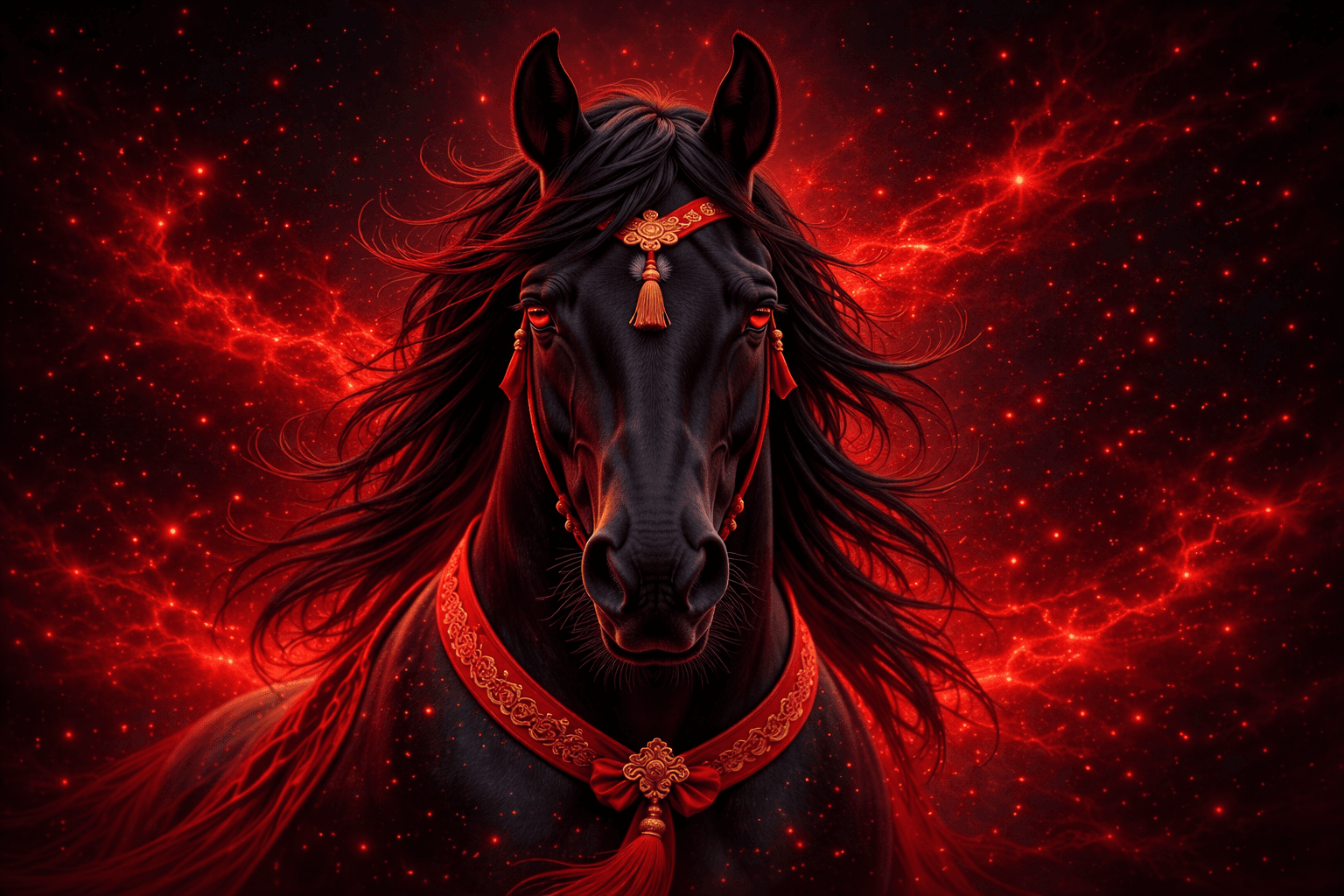
In 2026, the zodiac shifts to the Horse, specifically the Fire Horse, beginning on February 17. The "Fire" designation comes from the way zodiac years are paired with one of five elements, creating combinations that repeat across a longer cycle. Culturally, Horse years are often framed as energetic, more motion than pause, more momentum than contemplation. And the Fire Horse, in particular, is widely described as turning up the dial: energetic, determined, action-oriented.
2026 marks the Year of the Fire Horse , a rare and special combination that occurs once every 60 years. The previous Fire Horse year was 1966, remembered for its transformative energy and cultural upheaval. For most people alive today, this is the first and possibly only, Fire Horse year they will consciously experience.
The Symbolism of the Horse
The horse was the most frequent transport means in ancient society and is considered No. 1 of the most important six animals in China. Strong, powerful, and elegant, horses in Chinese culture have always been the representative of heroes and talents.
The ancient proverb 马到成功 (mǎ dào chéng gōng) , "success arrives with the horse" , defines the spirit of 2026: swift momentum, bold action, tangible results.
People born in the Year of the Horse are energetic, confident, free-spirited, and naturally charismatic. They're quick thinkers with a love for adventure and independence. However, they can also be impulsive, stubborn, and easily restless. The Fire element intensifies all of these traits, adding passion, visibility, and transformative drive.
Chinese New Year Traditions: Ancient Customs, Living Practices
The Reunion Dinner
At the heart of Lunar New Year celebrations is the reunion dinner on Lunar New Year's Eve, which falls on February 16, 2026. A traditional reunion dinner features many dishes, including steamed or fried fish, rice cakes and balls, noodles, and dumplings , each carrying special meaning. Dumplings, shaped like gold ingots, symbolize wealth. Fish, whose Chinese name sounds like the word for "surplus," represents abundance. Noodles signify longevity.
In northern China, people traditionally eat dumplings and noodles, while in the south, Nian Gao (sticky rice cake) is a must-have, symbolizing rising fortunes. In Cantonese communities, the Yusheng prosperity toss , a communal mixing of raw fish and vegetables with chopsticks , has become one of the festival's most joyful (and gloriously chaotic) rituals.
Red Envelopes (Hongbao)
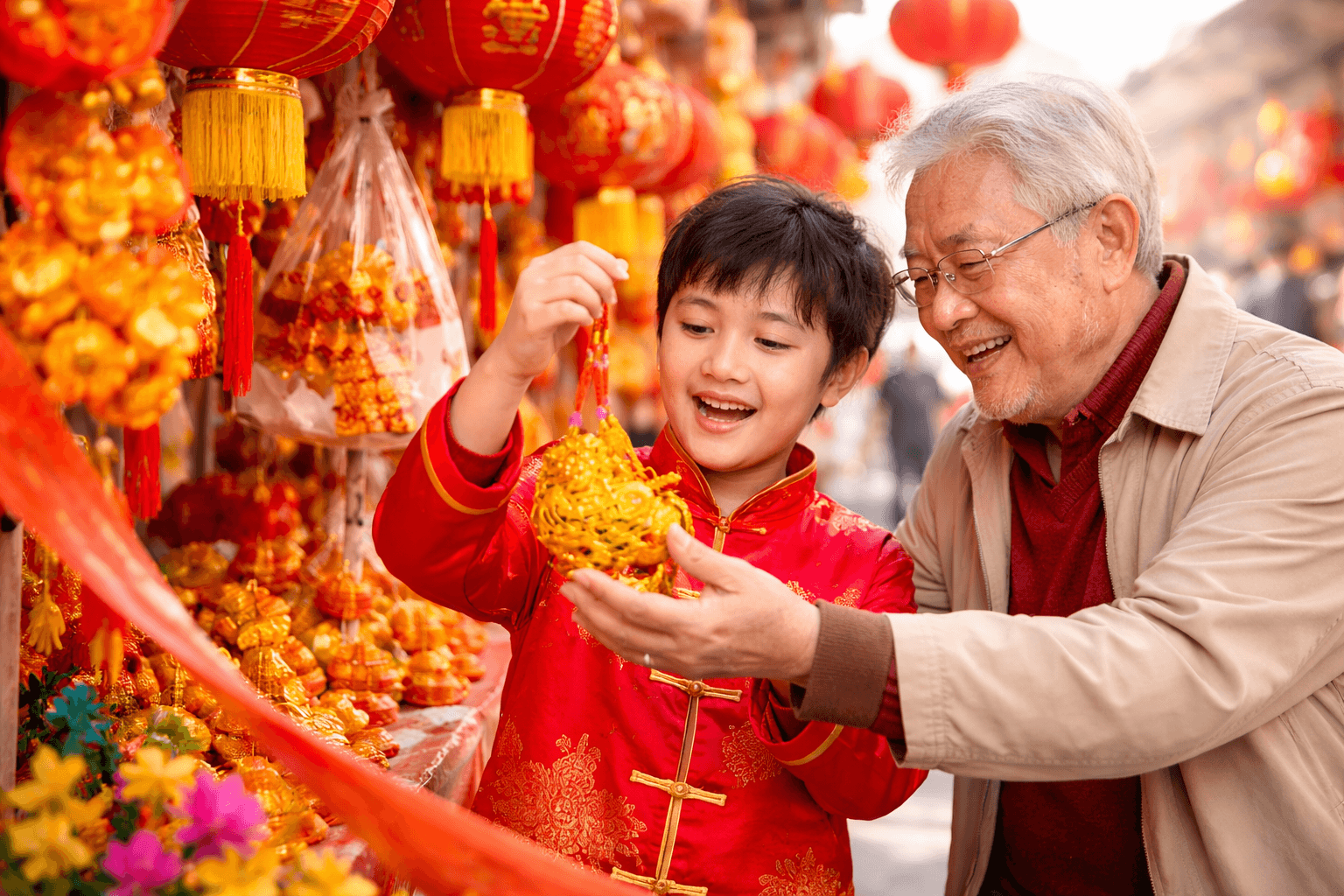
The giving of hongbao , red envelopes containing "lucky money" ,is among the most beloved Chinese New Year traditions. For children, one of the most anticipated customs is the giving of red envelopes containing money, typically offered by elders as "lucky money," wrapped in the holiday's signature color.
Amounts inside are chosen carefully: the number 8 (bā, sounds like "wealth") is prized, while 4 (sì, sounds like "death") is universally avoided.
Fireworks, Red Decor & Protective Taboos
Red is widely associated with luck, joy, prosperity, and protection in Chinese culture, and it is everywhere during the Lunar New Year, through banners, clothing, door decorations, and envelopes. Fireworks and firecrackers are tied to one of the best-known Lunar New Year legends: the story of Nian, a monster said to appear at the new year, frightened away by loud noises and the color red.
Equally important are the taboos: no sweeping on New Year's Day (to avoid sweeping away good luck), no scissors or sharp objects (cutting away fortune), and no negative words in the first moments of the year.
How Chinese New Year 2026 Is Celebrated Around the World
In China
The Spring Festival triggers Chunyun (春运), the world's largest annual human migration. In 2025, authorities reported over 9 billion inter-regional passenger trips across China during the 40-day travel period, a 7.1% increase from the previous year, making it the largest annual human migration on the planet. Workers, students, and families cross the country by train, bus, plane and car to reunite.
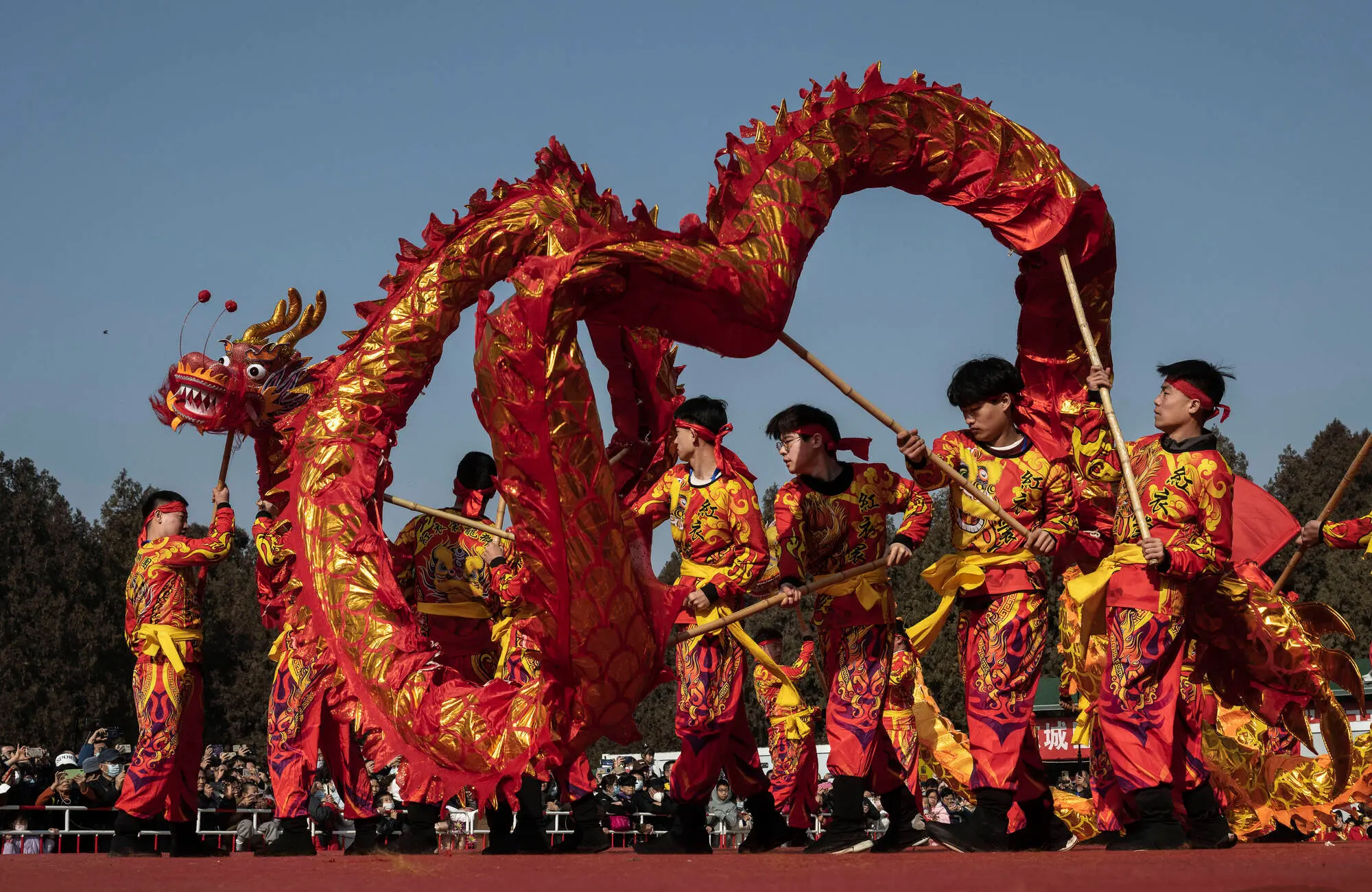
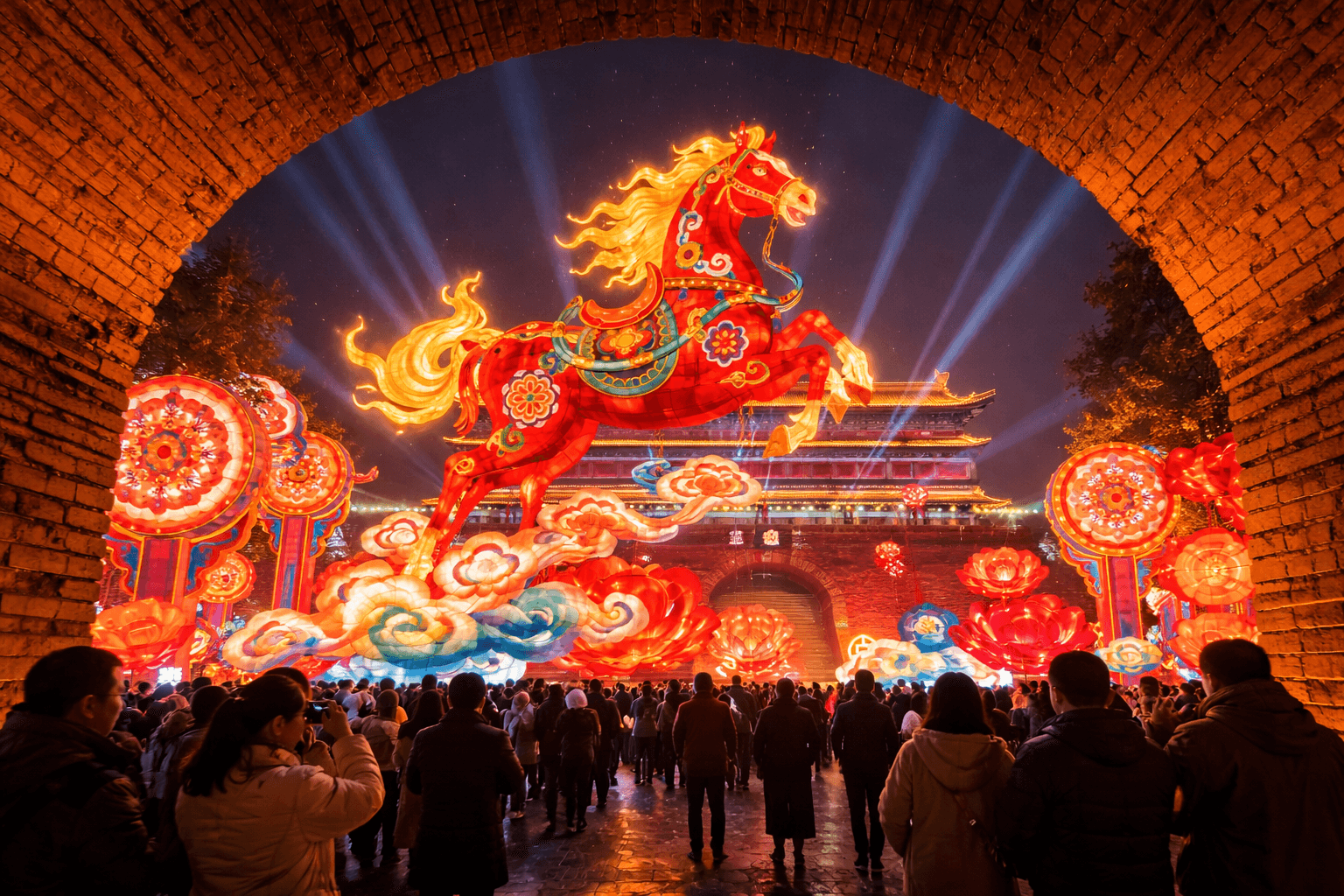
Cities erupt with temple fairs, dragon dances, and fireworks. Beijing's Temple of Heaven, Xi'an's ancient city walls, and Shanghai's waterfront become canvases for spectacular illuminated celebrations.
Globally
Chinese New Year celebrations worldwide span every continent. Communities outside China , such as San Francisco, London, and Singapore, host elaborate Chinese New Year parades and events, blending local flavors with traditional customs.
- San Francisco (USA): Home to the largest Chinese New Year parade outside Asia
- London, UK: Trafalgar Square transforms into a festival of dragon dances and cultural performances
- Sydney, Australia: Darling Harbour and Chinatown host one of the Southern Hemisphere's most vibrant events
- Singapore & Malaysia: Government-endorsed multiday festivals celebrating shared cultural heritage
- Vietnam: Tết, the Vietnamese Lunar New Year, shares the same date and is celebrated with equal national fervor
The Economic and Digital Power of Chinese New Year 2026
An Economic Force Without Equal
Tourism revenue during the Chinese New Year holiday reached almost 633 billion yuan in 2024, up dramatically from about 376 billion yuan a year earlier and surpassing the level of 514 billion yuan in 2019 before Covid. Consumer spending surges across retail, food, gifting, and travel, while global supply chains feel the ripple: Chinese factories slow or shut for up to two weeks, affecting manufacturing timelines in electronics, textiles, and consumer goods worldwide.
The Digital Red Envelope Revolution
WeChat's introduction of digital hongbao during Chinese New Year 2014 fundamentally changed how hundreds of millions exchange these gifts, with the platform partnering with CCTV's Spring Festival Gala , China's most-watched television special with over 700 million viewers , to promote the feature through an interactive "shake" game where viewers could win red envelopes by shaking their smartphones during the broadcast.
In 2024, over 10 billion digital hongbao were sent via WeChat during the holiday week. This seamless fusion of ancient ritual and modern technology is perhaps Chinese New Year's most vivid emblem of cultural evolution.
What Makes Chinese New Year 2026 Uniquely Special

Once in 60 Years: The Fire Horse Returns
The 2026 Chinese New Year celebration carries special significance as it marks the arrival of the Fire Horse, a rare combination that occurs only once every 60 years within the Chinese sexagenary cycle. This rarity has elevated cultural awareness globally, from artisan markets in Beijing to luxury brands releasing limited-edition Fire Horse collections.
A Post-Pandemic Global Surge
With international flight capacity approaching and in some routes exceeding pre-2019 levels, 2026 is poised to see one of the most globally connected Spring Festivals in recent memory. Traditional customs remain central to Chinese New Year, but younger, urban consumers are reinterpreting them, keeping symbolic meaning while adapting form, channel, and expression. This explains why digital rituals, experiential spending, and premium products coexist naturally during Chinese New Year.
The Year of Intentional Action
Spiritually and culturally, a Fire Horse year is read as an invitation to move, to pursue ambitions set aside during the Snake's introspective 2025. For individuals, businesses, and communities, 2026 carries a symbolic call: act boldly, embrace momentum, let go of hesitation.
Why Chinese New Year Matters to All of Us
Chinese New Year 2026 is not simply a holiday for one culture. It is a reminder that the oldest human impulses , to gather, to honor, to hope, to begin again, are universal. Whether you light a firecracker in Chengdu, share a dumpling in San Francisco, or simply pause to acknowledge the turning of the lunar wheel, you are participating in something ancient and very much alive.
The Fire Horse asks all of us to move forward with intention. To carry the best of what was, and ride boldly into what can be.
新年快乐 (Xīnnián kuàilè) — Happy New Year.
Frequently Asked Questions About Chinese New Year 2026
Q: When is Chinese New Year 2026? Lunar New Year 2026 falls on Tuesday, February 17th, and celebrations culminate with the Lantern Festival on March 3rd. Only the first 7 days are considered a public holiday in China (February 17th–23rd).
Q: What animal is Chinese New Year 2026? Chinese New Year 2026 is a Year of the Horse, more specifically the Fire Horse, starting from February 17th, 2026, and lasting until February 5th, 2027.
Q: What does the Year of the Fire Horse mean? The Fire Horse symbolizes bold energy, passion, and transformative momentum. The Horse, ranking seventh among the twelve zodiac animals, symbolizes energy, success, speed, and perseverance. The Fire element adds passion, drive, and enthusiasm to this already dynamic zodiac sign, creating a year characterized by bold moves, transformative energy, and restless momentum.
Q: How many people celebrate Chinese New Year globally? Approximately 1.5 billion people celebrate Chinese New Year worldwide, including over 1.3 billion in China and millions across the global diaspora.
Q: What are the key Chinese New Year 2026 traditions? Core traditions include the reunion dinner on New Year's Eve, giving red envelopes (hongbao), fireworks, wearing red, displaying spring couplets (chunlian), dragon and lion dances, and the Lantern Festival at the close of the 16-day celebration.
Q: How is Lunar New Year 2026 different from previous years? 2026 marks the rare return of the Fire Horse, a once-in-60-years zodiac event. Combined with a post-pandemic surge in global travel, record digital engagement, and a generational cultural milestone, this year's Spring Festival is expected to be one of the most widely and vibrantly observed in living memory.
Share

Sara Srifi
Sara is a Software Engineering and Business student with a passion for astronomy, cultural studies, and human-centered storytelling. She explores the quiet intersections between science, identity, and imagination, reflecting on how space, art, and society shape the way we understand ourselves and the world around us. Her writing draws on curiosity and lived experience to bridge disciplines and spark dialogue across cultures.