Yat Siu – Building Digital Freedom: The Visionary Behind Web3's Property Rights Revolution
15 Jan 2026

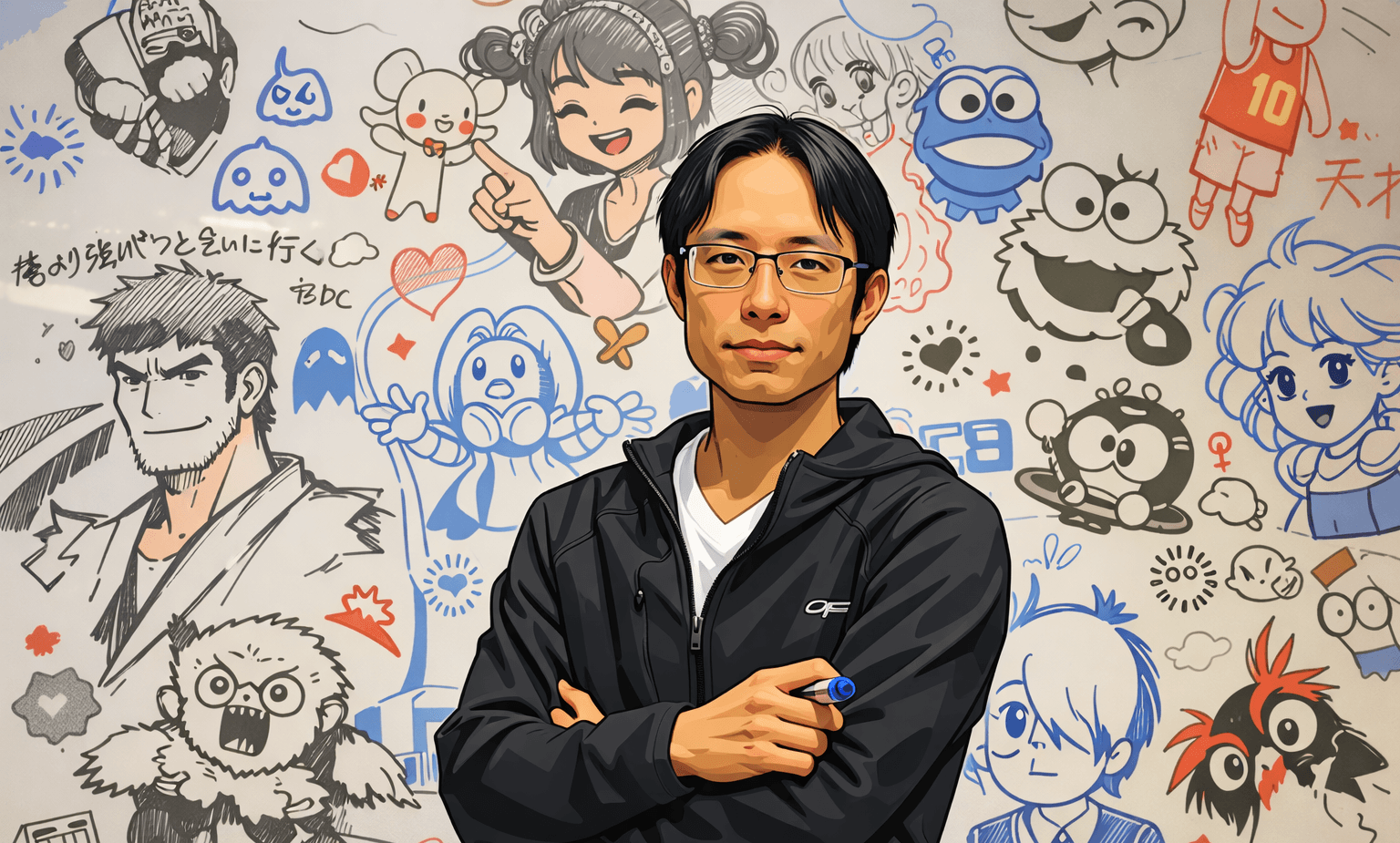
Yat Siu, the executive chairman of Animoca Brands, has spent decades reimagining digital ownership. From his early career at Atari Germany to building one of the world's most influential Web3 investment portfolios, Siu's journey represents a fundamental challenge to how we think about property, capitalism, and freedom in the digital age.
Yat Siu is often described as a pioneer of Web3, but that label barely captures the scope of his vision. His work isn't simply about blockchain technology or cryptocurrency, it's about redefining who owns what in the digital spaces where billions of people now spend their lives. His journey from a classically trained musician in Vienna to the architect of a multi-billion-dollar digital property rights movement charts not only the evolution of the internet but a profound reimagining of economic fairness in the modern era.
From Music to Machines: The Early Years of a Digital Pioneer
A Musical Foundation in Vienna
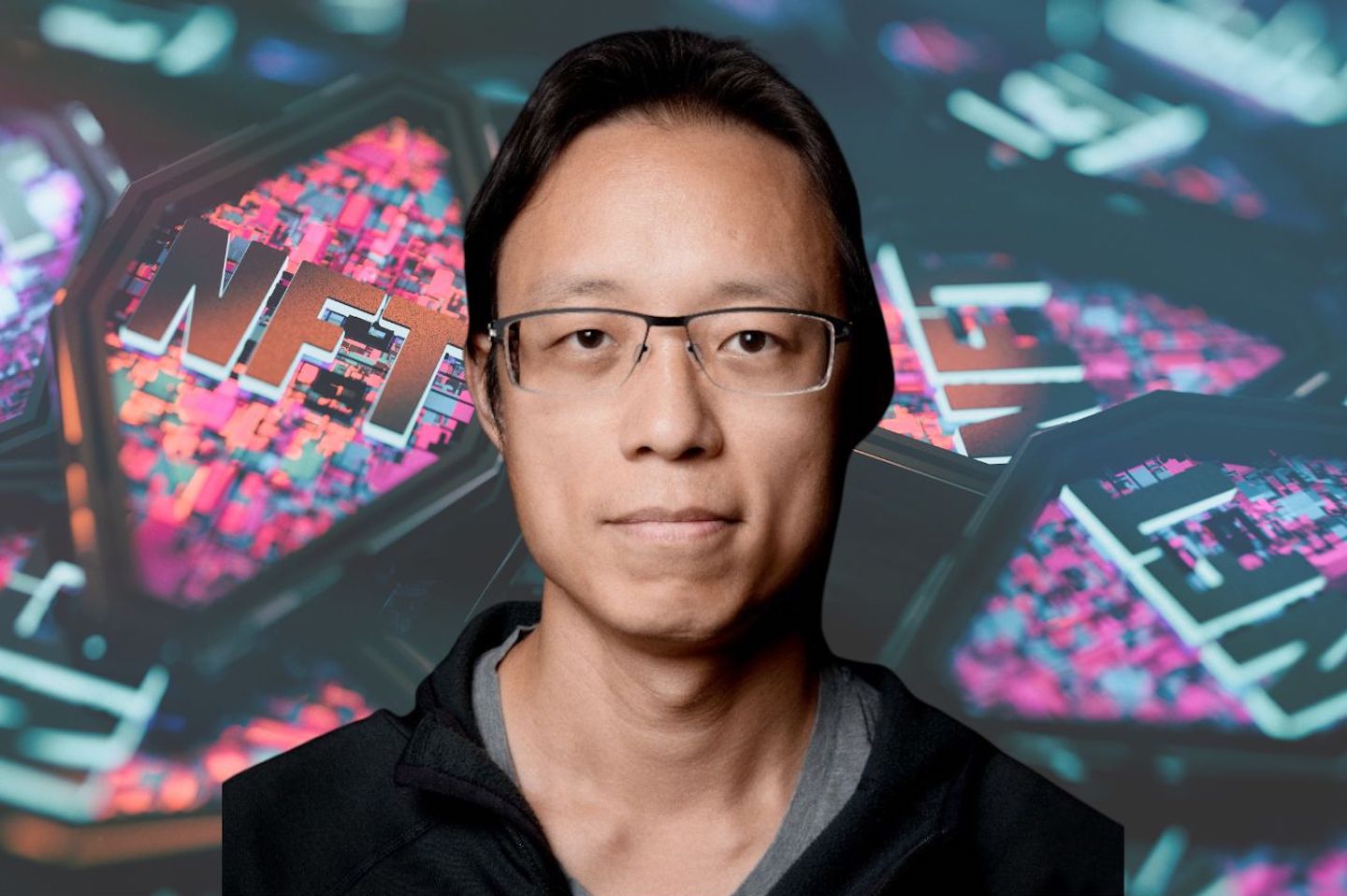
Born in 1973 and raised in Vienna, Austria, Yat Siu grew up in a household steeped in music and culture. His mother, from Taiwan and born in Lisbon, conducted for an orchestra, while his father, born in Hong Kong, first worked as an instrumentalist before becoming a businessman. Young Yat studied at the Music and Arts University of the City of Vienna, training in cello, flute, and piano.
According to the South China Morning Post, he "implies he was pushed" into becoming a musician like his parents. This classical training, though not ultimately his chosen path, instilled in him a sense of structure, creativity and the value of intellectual property that would later inform his thinking about digital ownership and creator rights.
The Atari Beginning

Siu's first job was at Atari Germany in the late 1980s and early 1990s, during the golden age of gaming. This early exposure to digital entertainment and software development planted the seeds for what would become a lifelong focus on gaming, digital assets, and eventually blockchain technology. The Atari experience taught him how digital content could create value and capture imagination, lessons that would prove crucial decades later.
Building Asia's Digital Infrastructure
In 1996, Siu made a pivotal decision to move to Hong Kong. There, he established Hong Kong Cybercity, which was later renamed Freenation. The South China Morning Post called it "Asia's first free web page and e-mail provider." At a time when internet access was still a luxury, Siu democratised connectivity, foreshadowing his later mission to democratize digital ownership.
In 1998, he founded Outblaze, a pioneering cloud computing and messaging company that would reach over 75 million customers at its peak. The business thrived on robust anti-spam protection and multilingual services. In 2009, he sold part of his business to IBM's Lotus Software Division, which opened its first cloud computing laboratory in Hong Kong with the assets it acquired. This exit validated Siu's vision and provided capital for his next chapter.
The Pivot to Digital Property: Animoca Brands and the Web3 Revolution

The CryptoKitties Epiphany
The founding of Animoca Brands marked Siu's transition from traditional digital services to blockchain-based gaming and digital assets. The pivotal moment came when Animoca was acquiring a company called Fuel Powered, which shared an office with Axiom Zen, the creators of CryptoKitties. CryptoKitties, one of the first successful NFT projects, demonstrated that digital items could have provable scarcity and ownership.
This was Siu's "eureka moment." He realized that blockchain technology could solve a fundamental problem: in traditional digital environments, users never truly own anything. Platforms control everything. But with blockchain, individuals could finally have verifiable property rights in digital spaces.
Animoca Brands inked a deal with Axiom Zen, agreeing to exclusively license, distribute and publish the popular CryptoKitties collection. This partnership launched Animoca into the blockchain gaming space and set the stage for an investment strategy that would reshape the industry.
A Contrarian Vision During the Crypto Winter
While 2022 and 2023 brought catastrophic failures in crypto, including the collapse of FTX and Terra Luna, Animoca Brands not only survived but thrived. The web3 giant raised $110 million and was valued just south of $6 billion.
How did they do it? Siu's answer is rooted in fundamentals rather than speculation. At TechCrunch Disrupt, he explained that Meta's $10 billion investment in the metaverse was "not enough" because Meta's platform takes half of user revenue, whereas The Sandbox returns 95% to creators.
This isn't just a business model, it's a philosophy: digital property rights enable a more equitable distribution of wealth created online.
The Philosophy: Property Rights as Digital Freedom
Data as Modern Labor
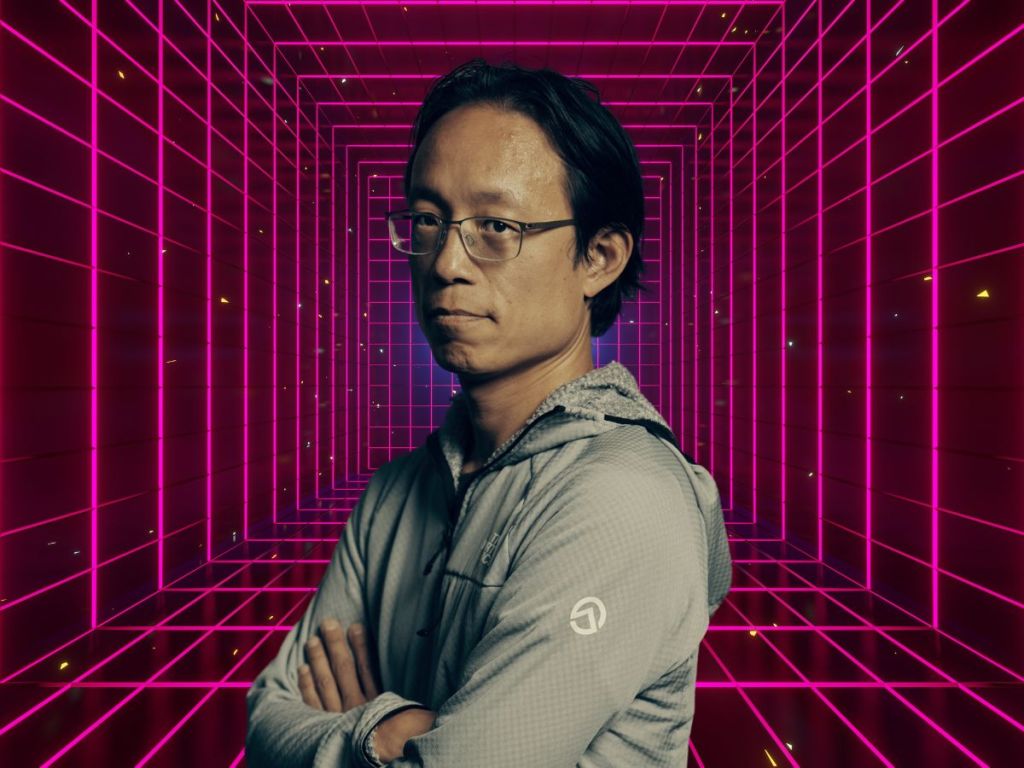
Siu's core argument is deceptively simple yet profound: in the digital economy, data has become a form of labor. He explained that while the physical world thrives on property ownership as the foundation of capitalism, the digital economy has yet to offer similar opportunities for individuals. Currently, users generate enormous value through their time, attention, creativity, and data, but platforms like Google, Facebook, and Spotify capture nearly all of it.
Sui noted that
"the most powerful companies in the world today are not energy companies or resource companies, they're tech companies and they're not powerful because they make software. They're powerful because they control our data."
Web3 and blockchain technology offer a solution: tokens that represent ownership in network effects, allowing individuals to hold capital assets in the digital realm for the first time.
Comparing Economies: Property Rights and Prosperity
Siu draws direct parallels between property rights in physical nations and prosperity. He pointed out the correlation between the International Property Rights Index and the Gross Domestic Product Index:
"Places that have almost no property rights […] are in the bottom 20% [of GDPI]. But the countries that have very strong property rights, South Korea, USA, Japan, most of Europe, enjoy very, very high property rights."
If property rights are essential for economic flourishing in the physical world, Siu argues, they are equally essential in the digital world. He told CoinDesk that "property rights and capitalism are the foundation that allows for democracy to happen."
Stakeholder Capitalism and Web3
Siu envisions Web3 as a corrective to extractive platform capitalism. He explained:
"Our mission is very much about driving digital property rights, and one of our big things is financial literacy and stakeholder capitalism. Web3 changes the equity and income/outcome because we all become involved and have ownership."
This vision extends beyond just gaming or NFTs. It's about fundamentally restructuring economic participation so that value created by users flows back to them rather than being captured entirely by platforms.
The TED Stage: Articulating the Dream of Digital Ownership
A Moment of Clarity for the Mainstream
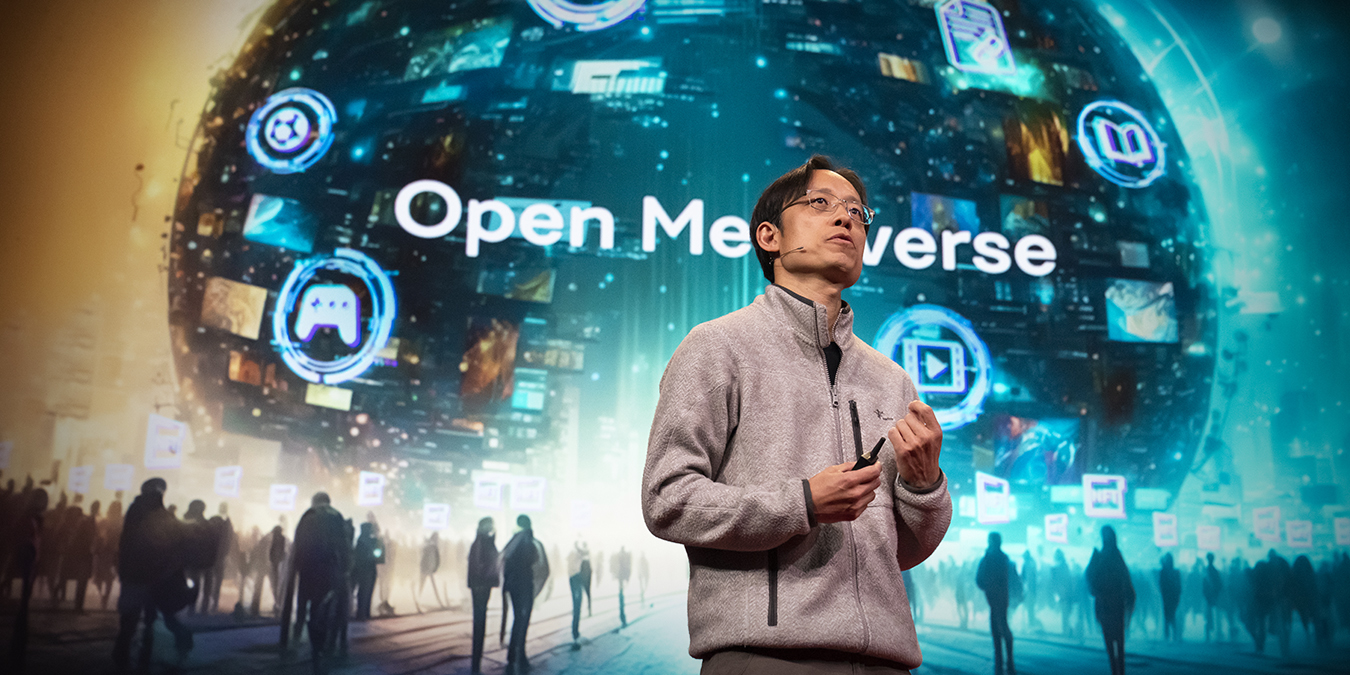
In April 2023, Yat Siu took the TED stage in Vancouver to deliver a talk titled "The Dream of Digital Ownership, Powered by the Metaverse." The timing was precarious. Web3 had just endured a brutal year with the collapse of major platforms, plummeting NFT volumes, and widespread skepticism.
Yet Siu's message resonated. He underscored a paramount online concern: data collection. Any platform can erase users' digital presence arbitrarily, lacking proper due process. He explained that data has evolved into contemporary labor, lacking adequate compensation, and that the present web2 landscape is characterized by data "theft."
He stated:
"In order to ensure our digital freedom, that we not be slaves to either platforms or any of the future AIs, we must also have true digital property rights."
His TED Talk has since become a touchstone for understanding the philosophical underpinnings of Web3 beyond the hype and speculation.
Metrics That Matter
In his TED Talk and subsequent writings, Siu highlighted tangible metrics demonstrating the open metaverse's growth:
- At the beginning of 2023, DAO treasuries represented around $12 billion in value, and at the time of writing (January 13, 2025), the total treasury value of DAOs was around $32 billion.
- NFTs achieved a staggering $24 billion in sales, with a substantial portion flowing directly to creators and owners, in sharp contrast to web2 platforms like Spotify, which allocated only a third of their earnings to creators in the same timeframe.
These aren't abstract concepts. They represent real wealth creation and redistribution in favor of individuals over platforms.
Animoca Brands: Building the Largest Web3 Portfolio

Investment Strategy: A Levered Bet on Altcoins
Animoca Brands is not just a gaming company. It's a venture capital powerhouse with over 600 companies and projects in its portfolio. Siu explained:
"We have 573 companies in our investment portfolio, of which 165 or so are in gaming. So obviously, it's a big point in our portfolio, but it's not everything we do."
The company's strategy is what Siu calls "a levered bet on altcoins." Most of the portfolio consists of early-stage token investments, actively managed by a dedicated trading team focused on yield generation and volatility arbitrage. This approach has generated massive returns when markets are favorable, though it also exposes the company to the volatility inherent in the crypto space.
Key Projects and Subsidiaries
Animoca's portfolio reads like a who's who of Web3:
- The Sandbox: An open metaverse platform bringing real-world cities and brands into Web3 spaces
- Mocaverse: A digital identity and reputation system for Web3
- Open Campus: An educational initiative leveraging blockchain technology
- Investments in OpenSea, Dapper Labs, Axie Infinity, and hundreds more
There are 380 companies in the group and portfolio. Thirty of them are subsidiaries. This vast ecosystem creates powerful network effects. When Animoca invests in a company, that company benefits from connections to the entire portfolio, and vice versa.
Revenue and Growth
Despite market volatility, Animoca has shown impressive financial performance. The company's Digital Assets Advisory unit reported $165 million in revenue for 2024, marking a 116% increase from the previous year. This revenue stream, which involves managing and advising on digital asset portfolios, has now surpassed traditional gaming revenue.
The company also reported $314 million in total revenue for 2024, demonstrating diversified income streams from incubated projects, investment activity, and advisory services.
The Road to Public Markets: Nasdaq and Beyond

A Return to Public Trading
In November 2025, Animoca Brands announced plans to list on the Nasdaq through a reverse merger with Currenc Group. The deal is expected to close in third-quarter 2026, after shareholder and regulatory approvals.
The proposed merger
"will result in the world's first publicly-listed, diversified digital assets conglomerate, giving investors on Nasdaq direct access to the growth potential of the trillion-dollar altcoin digital economy through a single, diversified vehicle spanning DeFi, AI, NFTs, gaming, and DeSci," Yat Siu said.
This marks Animoca's return to public markets after being delisted from the Australian Securities Exchange in 2020 due to regulatory concerns over its crypto activities. The timing reflects both the maturation of the crypto industry and improved regulatory clarity in the United States under a more crypto-friendly administration.
Following the transaction, Animoca shareholders will own 95% of the merged company. This structure ensures continuity of vision and control while providing access to public market capital.
Expanding into New Territories
Animoca's ambitions extend beyond gaming and NFTs. Chief Strategy Officer Keyvan Peymani told CNBC that the company will focus on expanding its stablecoin and real-world asset tokenization initiatives in 2026.
In August 2025, Animoca announced a Hong Kong joint venture with Standard Chartered and Hong Kong Telecommunications called Anchorpoint Financial, which will apply for a stablecoin issuer license. This move positions Animoca at the intersection of traditional finance and Web3.
Additionally, the company is partnering with Provenance Blockchain Labs to launch a real-world asset marketplace, and with Republic to tokenize Animoca shares on the Solana blockchain, allowing global investors to gain exposure through digital tokens.
Challenges and Resilience: Navigating Market Volatility

The Time of Troubles
2023 was a tumultuous year for Web3, with unprecedented confusion, uncertainty, and the removal of major names, such as TerraUSD, Luna, and FTX, that had up to that point been regarded as deities in the industry.
Much of 2024 remained uncertain. Yet Siu maintained his conviction. He told Forkast:
"When you look at the investing scene, despite the fact that it appears like this pullback, most of the pullback is in traditional business models, in the Web2 space. In Web3, people are still investing very heavily."
This wasn't blind optimism. It was based on fundamentals: the technology works, the use cases are real, and the economic model is superior to extractive Web2 platforms.
Altcoin Underperformance
One significant challenge has been the underperformance of altcoins relative to Bitcoin. In 2024, while Bitcoin reached new all-time highs, many altcoins struggled. This directly impacts Animoca's portfolio value, as most of its holdings are in tokens from early-stage startups rather than Bitcoin or Ethereum.
However, Siu takes the long view. He believes that as Web3 infrastructure matures and regulatory clarity improves, altcoins will capture more value, particularly those with real utility in gaming, identity and digital property rights.
Building Through Bear Markets
Siu's conviction has been tested over the years in this volatile space with more twists and turns than a Colombian Telenovela, yet he remains 100% committed to building Web3.
The company has continued to invest, expand its portfolio, and build infrastructure even during market downturns. This strategy positions Animoca to capture outsized returns when markets recover.
The Global Vision: Digital Property Rights for All

Asia's Unique Opportunity
Siu has consistently emphasized Asia's potential to lead the Web3 revolution. He added that while people of Asia spend more time on the internet today than on any other continent, there is still so much room to grow. "Unlike the rest of the world, which has almost 100% penetration in the West," Asia is only around 67% continent-wide internet adoption.
This creates enormous opportunities. As billions more people come online in Asia, they can do so with Web3 infrastructure that gives them true ownership from day one, rather than being dependent on extractive Web2 platforms.
Expansion in the Middle East
Animoca Brands has been expanding into key markets such as Saudi Arabia and the UAE. These regions have been more welcoming to Web3 innovation, with progressive regulatory frameworks and government support.
Siu has noted that while these regions have embraced Web3, there's still work to be done. He acknowledged the lack of venture capital in the UAE as a significant challenge:
"Dubai and Abu Dhabi have done a lot for Web3, but there's still a shortage of VCs investing in seed-stage startups."
He believes founder-driven VC investment will be key to developing the region's tech ecosystem.
Regulation and Trust
One of Web3's biggest challenges is establishing trust in an environment where many transactions are anonymous. To address this, Animoca Brands is exploring solutions like Mocaverse ID, a reputation layer for Web3, which would allow users to build and maintain trust within decentralized ecosystems while preserving their privacy.
Siu also addressed regulatory concerns. He discussed how regulation for gaming and NFTs will likely evolve differently from financial regulation, expecting them to be treated more like collectibles or consumer goods, subject to consumer protection laws.
Accolades and Recognition

Yat Siu's contributions have earned him numerous honors:
- Global Leader of Tomorrow at the World Economic Forum
- Young Entrepreneur of the Year at the DHL/SCMP Awards
- Recognition as one of Cointelegraph's top 100 notable people in blockchain
- Member of the advisory board of BAFTA (British Academy of Film and Television Arts)
- Director of the Asian Youth Orchestra
These recognitions span technology, business, and the arts, reflecting the multidimensional nature of Siu's contributions and interests.
A Legacy in Three Acts: Infrastructure, Philosophy, and Transformation
Yat Siu's career can be understood as a three-act narrative:
Act I: Infrastructure (1990s-2000s)
Building the foundational digital infrastructure of Asia through internet service providers, email platforms, and cloud computing. These ventures democratized access and prepared entire regions for the digital age.
Act II: Philosophy (2010s)
Articulating a coherent vision for digital property rights, stakeholder capitalism, and the economic potential of blockchain technology. Through writings, talks, and thought leadership, Siu provided the intellectual framework for Web3's promise.
Act III: Transformation (2020s-present)
Building the largest Web3 investment portfolio in the world, creating practical systems for digital ownership, and preparing to bring this vision to public markets. This is where philosophy meets infrastructure at scale.
The Question That Drives Everything
In various interviews and talks, Siu returns to a fundamental question: What kind of digital world do we want to live in?
Do we want one where a handful of platforms capture all the value created by billions of users? Or do we want one where property rights, ownership, and economic participation are distributed fairly?
Siu told Forkast:
"At the core of it, it's still the same mission, just to deliver true digital property rights to all. We believe that ownership generally is a driver of innovation and is the driver of growth overall."
This question is not just technical or economic. It's fundamentally about freedom, agency, and human dignity in an increasingly digital world.
As Siu himself noted, without digital property rights, we risk becoming "digital dependents," where our online lives, identities and economic activities are entirely controlled by others. Web3, blockchain and the open metaverse offer an alternative: a future where digital freedom is as fundamental as physical freedom.
Looking Forward: 2025 and Beyond
As we move deeper into 2025, the vision Siu has been building for over a decade is coming into sharper focus. He wrote:
"I expect 2025 to be a year of pivotal growth for Web3 and the open metaverse, with an acceleration in the paradigm shift toward property rights for our online lives."
Despite enduring a series of disasters in 2023 and languishing in a long downturn, the open metaverse is still here, still growing, and in good shape. The infrastructure is maturing, institutional support is growing, and regulatory clarity is improving.
With Animoca's planned Nasdaq listing, expansion into stablecoins and real-world assets, and continued growth in gaming and digital property rights, Yat Siu's influence on how we think about ownership in digital spaces will only grow.
He has shown that conviction, coupled with a clear philosophical foundation and relentless execution, can reshape entire industries. From a classically trained musician in Vienna to the architect of digital property rights for billions, Yat Siu's journey is far from over. And the world he's helping to build, where users truly own their digital lives, is only just beginning to take form.
Share

Dinis Guarda
Dinis Guarda is an author, entrepreneur, founder CEO of ztudium, Businessabc, citiesabc.com and Wisdomia.ai. Dinis is an AI leader, researcher and creator who has been building proprietary solutions based on technologies like digital twins, 3D, spatial computing, AR/VR/MR. Dinis is also an author of multiple books, including "4IR AI Blockchain Fintech IoT Reinventing a Nation" and others. Dinis has been collaborating with the likes of UN / UNITAR, UNESCO, European Space Agency, IBM, Siemens, Mastercard, and governments like USAID, and Malaysia Government to mention a few. He has been a guest lecturer at business schools such as Copenhagen Business School. Dinis is ranked as one of the most influential people and thought leaders in Thinkers360 / Rise Global’s The Artificial Intelligence Power 100, Top 10 Thought leaders in AI, smart cities, metaverse, blockchain, fintech.