The AI Odyssey: Yoshua Bengio
08 Jan 2026

Welcome to Wisdomia's AI Odyssey Series.
This series explores the long journeys behind the minds and ideas shaping artificial intelligence, not through hype, but through depth, patience and responsibility. At Wisdomia, we believe understanding technology begins with understanding the people, values and questions that drive it. The AI Odyssey invites you to step beyond algorithms and into the human stories, ethical tensions and civilisational choices that define the age of AI.
The AI Odyssey: Yoshua Bengio

In the history of human thought, some ideas arrive quietly. They do not announce themselves with fanfare or immediate revolution. They emerge through patient work, through years spent in the wilderness of theory, where few venture and even fewer stay. Deep learning was one of those ideas. And Yoshua Bengio was one of the people who refused to leave.
Today, artificial intelligence touches nearly every corner of modern life. The systems that recognize faces, translate languages, recommend music, and assist doctors in diagnosis all trace their lineage back to a framework that, for decades, most researchers considered a dead end. Neural networks inspired by the brain's architecture were dismissed as computationally impractical, theoretically limited, and scientifically unfashionable. Yet Bengio and a small circle of collaborators believed otherwise. They saw something others missed: that learning itself could be learned, that machines might discover their own representations of reality, and that depth, layers upon layers of abstraction, held the key to intelligence.
This is the story of how one mathematician's stubbornness helped reshape the future, and how that same person became one of the most thoughtful voices warning us about what we have created.
The Patient Architect

Yoshua Bengio did not set out to become a celebrity scientist. Born in Paris in 1964 and raised in Montreal, he entered the world of artificial intelligence during what historians now call the "AI winter", a period when funding dried up, enthusiasm collapsed, and neural networks were considered a failed experiment from a bygone era. The field had pivoted toward other approaches: symbolic reasoning, expert systems, decision trees. The brain-inspired models that had captured imaginations in the 1960s were largely abandoned.
Bengio completed his doctorate at McGill University in 1991, focusing on neural networks at precisely the moment when doing so seemed professionally risky. His early work explored how these systems might learn sequences and temporal patterns, probing the fundamental question of how machines could extract meaning from raw data without being explicitly programmed with rules. While others chased more fashionable research directions, Bengio pursued what he found intellectually compelling, even beautiful: the idea that intelligence emerges not from hand-coded knowledge but from learning representations of the world.
This was not romantic idealism. It was a mathematical conviction. Bengio understood that the world is structured in hierarchies of concepts, from pixels to edges to shapes to objects to scenes, and that a machine capable of discovering these layers automatically might achieve something remarkable. The challenge was making it work.
The Wilderness Years

Throughout the 1990s and early 2000s, Bengio continued developing the theoretical foundations of deep learning alongside a small community of believers. He published papers that few read, gave talks to modest audiences, and trained students in techniques the broader field viewed as obsolete. The work was technically demanding, mathematically intricate and stubbornly theoretical. Support vector machines dominated machine learning. Statistical methods were ascendant. Neural networks languished.
But something was shifting beneath the surface. Computational power was increasing. Datasets were growing larger. And Bengio, working with collaborators like Geoffrey Hinton and Yann LeCun, was solving crucial problems that had stymied earlier neural network research. How do you train networks with many layers? How do you prevent them from forgetting what they learn too early in the process? How do you make learning efficient enough to handle real-world complexity?
In 2006, Hinton published breakthrough work on "deep belief networks," demonstrating that neural networks could be pre-trained in unsupervised ways to learn useful representations. Bengio immediately recognised the significance and built upon it. He and his students began publishing a series of papers that established deep learning as a coherent field with solid theoretical grounding and practical potential. They developed new training algorithms, explored different architectures and demonstrated that depth genuinely mattered, that stacking layers of computation allowed machines to learn increasingly abstract and powerful representations.
By the time the world noticed, Bengio had already been working on these ideas for two decades.
The Breakthrough

The recognition came suddenly and dramatically. In 2012, a neural network crushed the competition in a major image recognition challenge. The system, developed by Hinton's student Alex Krizhevsky, used techniques that Bengio and others had been refining for years: deep convolutional layers, dropout for regularisation, GPU acceleration. Suddenly, everyone wanted to understand deep learning.
What followed was an explosion of interest and application. Neural networks began outperforming traditional methods in speech recognition, machine translation, drug discovery, and game playing. Companies hired machine learning researchers by the hundreds. Governments poured funding into AI initiatives. And Bengio found himself at the center of a technological revolution he had helped architect.
His contributions were both theoretical and practical. He advanced our understanding of how neural networks generalise, why depth enables learning of complex functions, and how unsupervised learning could extract structure from unlabeled data. His work on sequence modeling led to advances in natural language processing. His research group at the Montreal Institute for Learning Algorithms (MILA) became one of the world's premier AI research centers, training a generation of scientists who would go on to lead labs at major universities and companies.
In 2018, Bengio shared the Turing Award, often called the Nobel Prize of computing, with Hinton and LeCun, officially recognised as one of the three "godfathers of deep learning." The award acknowledged not just specific discoveries but decades of foundational work that made modern AI possible.
Yet by the time he received this honor, Bengio's focus was already shifting toward something more urgent.
The Weight of Consequences

Success changes perspective. As deep learning systems grew more capable, Bengio began grappling with questions that extended far beyond technical performance. What happens when these systems become powerful enough to transform labor markets, influence elections, or make life-and-death decisions? What happens when they become better than humans at an increasing range of cognitive tasks? What happens when we build something we cannot fully understand or control?
These were not hypothetical concerns. Bengio watched as the tools he helped create spread rapidly through society with minimal oversight. He saw AI systems deployed in criminal justice, healthcare and finance without adequate testing. He observed how machine learning could amplify biases, invade privacy and concentrate power. And he began to worry about something more profound: the trajectory toward artificial general intelligence and what it might mean for humanity's future.
Bengio has described how his thinking evolved:
"I used to think that the prospect of intelligent machines was something that was very far away, perhaps hundreds of years. Now I think it could happen much sooner, and I'm very concerned about what could happen if we're not prepared."
This was not a rejection of his life's work. It was a deepening of responsibility. Bengio began dedicating significant time and energy to questions of AI safety, ethics and governance. He became one of the most prominent voices advocating for careful, thoughtful development of increasingly powerful systems.
From Laboratory to Society

In 2017, Bengio helped organise a major conference that brought together AI researchers, ethicists, policymakers and civil society representatives to discuss the societal implications of artificial intelligence. The Montreal Declaration for Responsible AI emerged from this effort, articulating principles for ensuring AI systems respect human rights, promote wellbeing and remain under meaningful human control.
The declaration emphasised values that Bengio had been articulating with increasing urgency: that AI development should be:
- Transparent and accountable
- Its benefits should be distributed equitably
- Diversity and inclusion must be priorities
- Democratic participation should guide major decisions about AI's role in society.
These were not just abstract principles. They represented a vision of how the AI revolution might unfold differently than many technological transitions of the past.
Bengio has argued passionately that the AI community cannot be neutral observers of their own creation.
"We're not just scientists working on interesting problems," he has said. "We're building technologies that will reshape civilisation. That comes with profound responsibilities."
He has called for researchers to consider the downstream consequences of their work, for companies to prioritise safety over speed, and for governments to establish regulatory frameworks that protect human autonomy and flourishing.
This stance has required courage. The AI industry moves fast and rewards rapid deployment. Raising concerns about safety or calling for regulatory oversight risks being dismissed as alarmist or anti-innovation. Yet Bengio has been willing to be unpopular, to speak uncomfortable truths, to insist that moving quickly without wisdom is not progress.
The Long View
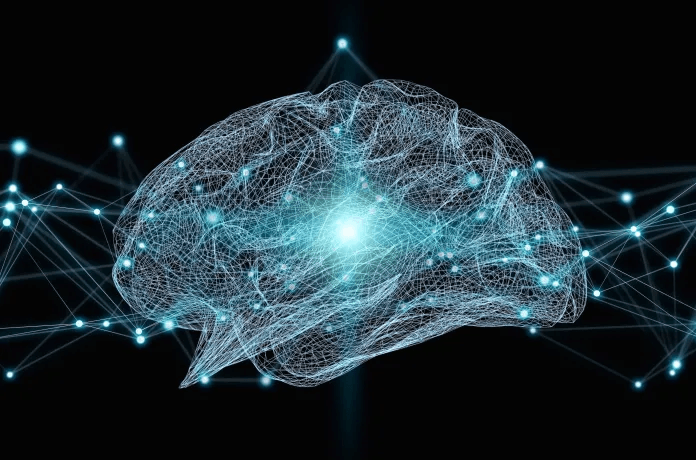
What distinguishes Bengio's approach to AI safety is its intellectual seriousness. He focuses on concrete challenges and tractable problems: how to make AI systems more interpretable, how to align them with human values, how to prevent unintended consequences and how to ensure they remain robust under novel conditions.
He has highlighted the "alignment problem", the challenge of ensuring that as AI systems become more capable, they pursue goals that genuinely reflect human wellbeing rather than pursuing objectives in ways that inadvertently cause harm. This is not a simple technical puzzle. It requires interdisciplinary collaboration between computer scientists, philosophers, social scientists, and policymakers. It demands humility about what we understand and honesty about what we do not.
Bengio has emphasised that current AI systems, despite their impressive capabilities, lack genuine understanding. They are pattern matching machines, extraordinarily good at finding statistical regularities in data but fundamentally different from human intelligence in crucial ways.
"The systems we have today are narrow," he has explained. "They're very good at specific tasks but brittle, lacking common sense, unable to generalise the way humans do."
This limitation provides some safety margin, but it may not last.
The trajectory toward more general intelligence raises profound questions. What does it mean to create systems that might eventually surpass human cognitive abilities? How do we maintain meaningful control over entities more intelligent than ourselves? How do we prevent concentration of such power in the hands of a few corporations or nations? These questions do not have easy answers, but Bengio insists they cannot be ignored.
Teaching Intelligence

Throughout his career, Bengio has remained deeply committed to education and mentorship. MILA, the research institute he founded and directs, has become a model for how AI research can be conducted with both scientific excellence and ethical awareness. The institute emphasises open collaboration, interdisciplinary engagement, and conscious reflection on the societal impact of AI.
Bengio's students have gone on to leadership positions throughout the AI ecosystem, carrying with them not just technical skills but also values instilled by their mentor: intellectual honesty, collaborative spirit, and awareness of responsibility. This may prove to be one of his most enduring contributions, shaping not just the field's technical direction but its culture and conscience.
He has argued that AI education must evolve beyond purely technical training. Future AI practitioners need to understand history, philosophy, ethics, and social science. They need to think critically about power, justice, and human flourishing. They need to see their work as embedded in society rather than separate from it.
"We need a much broader conversation about AI," Bengio has said, "one that includes everyone who will be affected by these technologies, which is to say, everyone."
The Shape of Things to Come

Bengio's vision for AI's future is neither utopian nor dystopian. It is conditional. He believes that artificial intelligence could help solve many of humanity's greatest challenges: disease, climate change, poverty, ignorance. But he also recognises that without wisdom and foresight, these same technologies could amplify inequality, erode freedom and create unprecedented risks.
He has called for what might be described as "civilisational maturity" in our approach to AI. This means resisting the temptation of short-term thinking, refusing to prioritise economic competition over human welfare and building institutions capable of governing technologies more powerful than any that have come before. It means creating spaces for democratic deliberation about the kind of future we want, rather than allowing that future to be determined by whoever moves fastest.
In recent years, Bengio has become increasingly vocal about the risks posed by advanced AI systems, even as he continues advancing the field's technical foundations. He has signed open letters calling for careful consideration before training ever-more-powerful models. He has advocated for international cooperation on AI governance, arguing that these challenges transcend national boundaries. And he has urged the AI community to think seriously about scenarios they might prefer to dismiss as speculative.
This dual role, innovator and cautionary voice, is difficult to maintain. Yet Bengio embodies both aspects naturally. He remains intellectually excited about the scientific challenges of machine learning while deeply concerned about its trajectory. He celebrates what has been achieved while warning about what might come next. He holds both hope and worry in tension, refusing to resolve that tension through either blind optimism or paralysing pessimism.
Intelligence, Examined
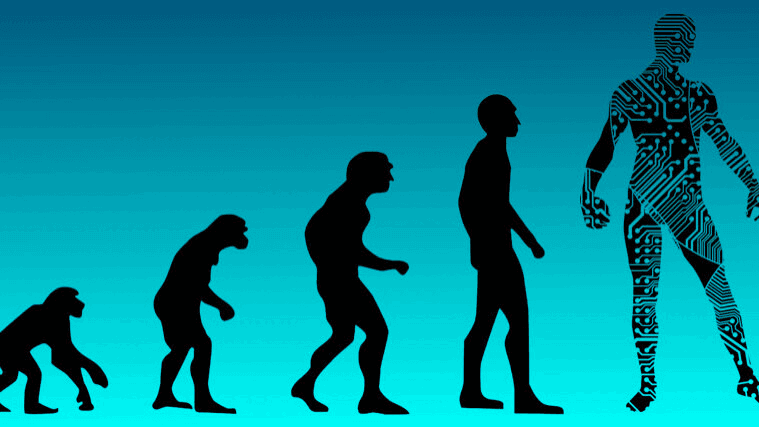
Perhaps the deepest question running through Bengio's work is: what is intelligence itself? The attempt to create artificial intelligence forces us to examine what we mean by understanding, reasoning, learning, and consciousness. These are ancient philosophical questions given new urgency by modern technology.
Bengio has explored the nature of representation learning, how systems build internal models of the world, and what this reveals about cognition more broadly. He has investigated how knowledge can be transferred across domains, how abstract concepts emerge from concrete examples, and how learning can be made more efficient through the right architectural choices. Each technical advance doubles as a philosophical probe into the nature of mind.
Yet he has also been clear about what current AI systems lack. They do not possess genuine understanding or consciousness. They do not have goals or desires in any meaningful sense. They are tools, remarkably sophisticated tools, but tools nonetheless. The question is whether this will always be true, and what happens if it changes.
Bengio has suggested that we may need fundamentally new approaches to achieve truly intelligent systems, ones that incorporate elements we do not yet understand, like consciousness, intentionality, and the ability to reason about causation rather than just correlation. This intellectual honesty, this willingness to acknowledge the limits of current paradigms even while advancing them, reflects a scientific maturity that the field urgently needs.
The Journey Continues
Yoshua Bengio's story is not finished. He remains deeply engaged in research, pushing the boundaries of what machine learning can do while simultaneously working to ensure it develops safely and beneficially. He continues training students, building institutions and participating in global conversations about AI governance.
His journey teaches us something essential about the nature of intellectual work. Progress often requires patience, the willingness to pursue ideas when they are unfashionable, and the courage to question your own creations. It requires both technical brilliance and ethical seriousness, both ambition and humility, both confidence and doubt.
The AI revolution that Bengio helped create is still in its early stages. The systems we have today, impressive as they are, likely represent only a small fraction of what will eventually be possible. How this revolution unfolds, whether it leads to flourishing or catastrophe, whether it empowers or enslaves, whether it serves the many or the few, depends on choices we make now.
Bengio has spent his life thinking deeply about intelligence, both artificial and natural. He has explored how patterns emerge from data, how layers of abstraction enable understanding, and how learning systems can discover structure in the world. But perhaps his most important insight is simpler and more human: that power without wisdom is dangerous, that capability without values is blind, and that creating something extraordinary carries with it extraordinary responsibility.
In the end, the AI odyssey is not just about machines learning to think. It is about humans learning to think wisely about machines, about understanding what we are building, why we are building it, and what kind of world we want to live in. Yoshua Bengio's contribution to that conversation may prove as important as his contribution to the technology itself.
The journey from abstract mathematics to working systems took decades of patient effort. The journey from working systems to beneficial intelligence will require something more: collective wisdom, democratic governance, and the recognition that some questions cannot be answered by algorithms alone. They require us to reflect on who we are and who we wish to become.
Share

Sara Srifi
Sara is a Software Engineering and Business student with a passion for astronomy, cultural studies, and human-centered storytelling. She explores the quiet intersections between science, identity, and imagination, reflecting on how space, art, and society shape the way we understand ourselves and the world around us. Her writing draws on curiosity and lived experience to bridge disciplines and spark dialogue across cultures.