The Hubble Space Telescope: Humanity's Window to the Universe
09 Jan 2026

A Revolutionary Eye in the Sky
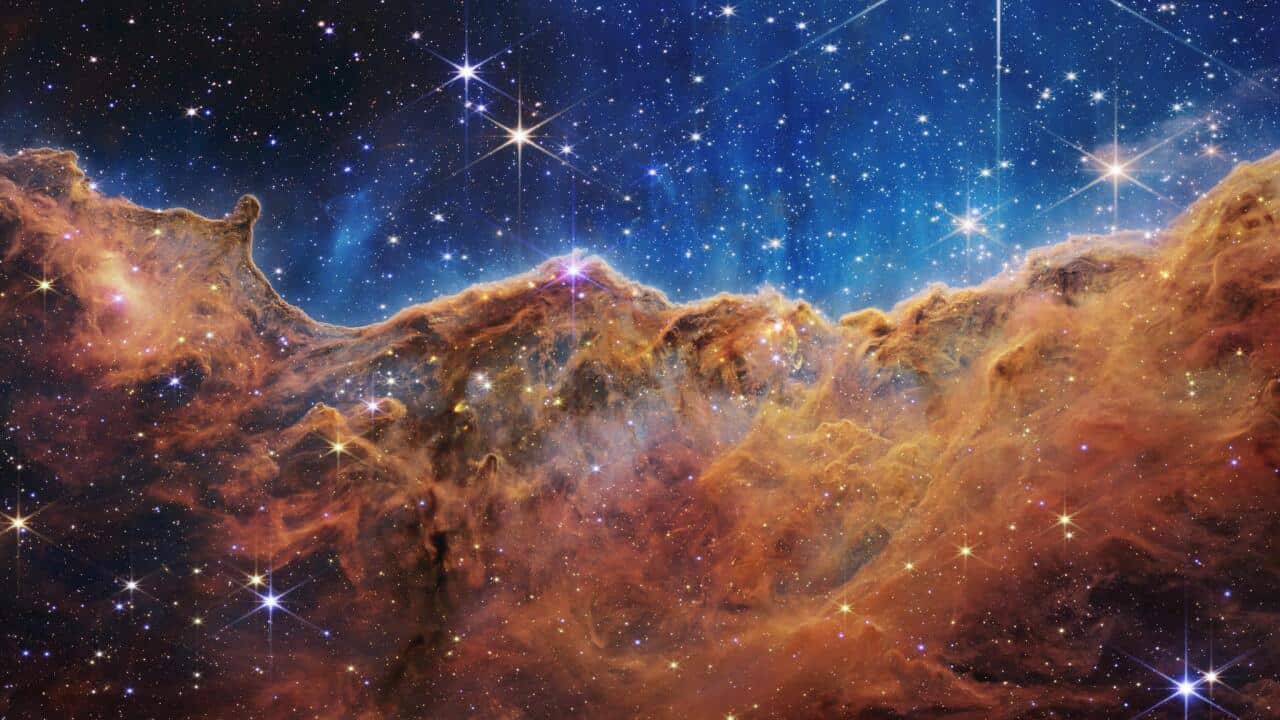
For over three decades, the Hubble Space Telescope has transformed our understanding of the cosmos, capturing images that have not only advanced scientific knowledge but also inspired wonder in millions of people worldwide. Launched in 1990, this remarkable observatory orbits Earth at an altitude of approximately 340 miles, traveling at speeds of about 17,000 miles per hour while peering deep into the universe with unprecedented clarity.
Named after astronomer Edwin Hubble, who discovered that the universe is expanding, this telescope represents one of humanity's most ambitious scientific endeavors. Its story is one of triumph, perseverance and the relentless human drive to understand our place in the cosmos.
The Vision Behind the Mission

The concept of a space-based telescope dates back to the 1920s, but it wasn't until the Space Age that this dream became feasible. Scientists recognised a fundamental problem: Earth's atmosphere, while essential for life, acts as a distorting lens for astronomical observations. Turbulence in the atmosphere causes stars to twinkle, a phenomenon romantic to poets but frustrating to astronomers seeking precision.
By placing a telescope above the atmosphere, scientists could eliminate this distortion entirely. The result would be images of extraordinary sharpness and the ability to observe wavelengths of light that Earth's atmosphere blocks, including crucial ultraviolet and infrared radiation that reveals hidden aspects of celestial objects.
From Crisis to Triumph
Hubble's journey hasn't been without challenges. Shortly after launch, scientists discovered a devastating flaw: the telescope's primary mirror had been ground to the wrong shape, an error of just 2.2 micrometers that rendered images blurry and threatened the entire mission. This moment could have been the end of Hubble's story, but instead, it became a testament to human ingenuity.
In 1993, astronauts aboard Space Shuttle Endeavour performed a daring repair mission, installing corrective optics that essentially gave Hubble "contact lenses." The mission was a stunning success, and Hubble began sending back the crystal-clear images scientists had dreamed of. This repair, along with four subsequent servicing missions, extended Hubble's life far beyond its original 15-year design lifespan.
Transforming Our Understanding of the Universe
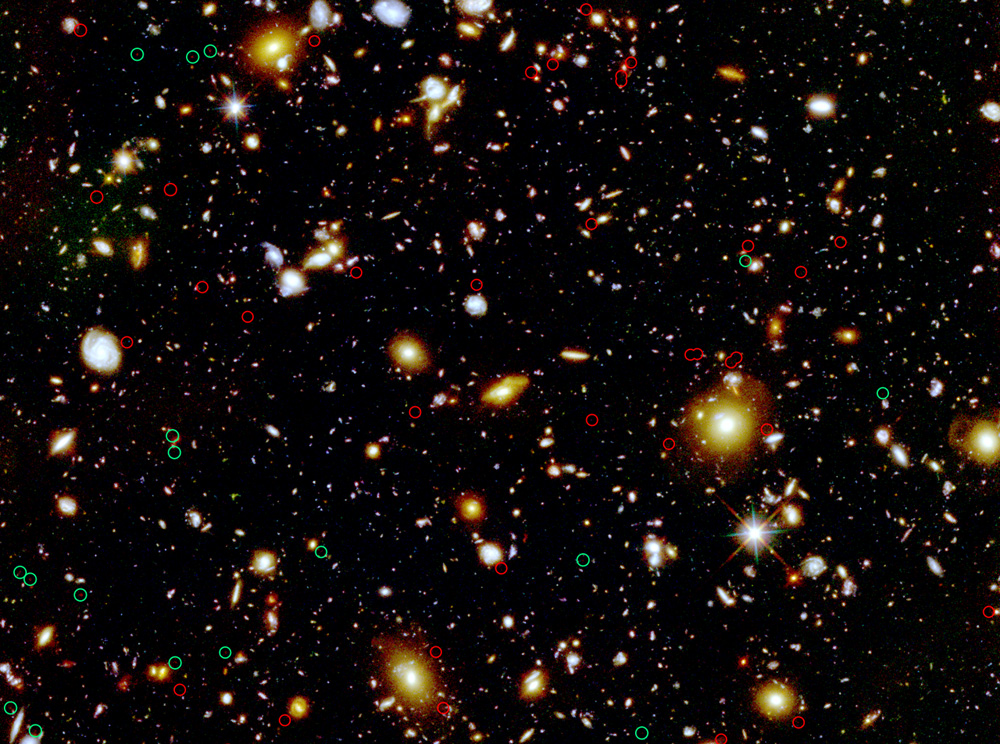
Hubble's scientific contributions are extraordinary and numerous. The telescope has helped astronomers determine the age of the universe with unprecedented precision, calculated at approximately 13.8 billion years old. By observing distant galaxies and measuring their motion, Hubble provided crucial evidence for the accelerating expansion of the universe, leading to the discovery of dark energy, one of the most profound mysteries in modern physics.
The telescope has observed galaxies in their infancy, showing us what the universe looked like just hundreds of millions of years after the Big Bang. It has captured the life cycles of stars, from their birth in colorful nebulae to their dramatic deaths in supernova explosions. Hubble has even studied the atmospheres of planets orbiting distant stars, opening the field of exoplanet characterisation.
Perhaps one of Hubble's most famous contributions is the Hubble Deep Field images. By pointing at seemingly empty patches of sky and collecting light for days, Hubble revealed thousands of previously unknown galaxies, demonstrating that the universe is far more crowded and complex than anyone imagined.
Iconic Images That Inspire

Beyond its scientific achievements, Hubble has given us some of the most beautiful images ever captured. The Pillars of Creation in the Eagle Nebula, showing towering columns of gas and dust where new stars are born, has become an icon of space exploration. The stunning spirals of galaxies, the ethereal beauty of planetary nebulae, and the violent collisions between galaxies have not only advanced science but have also brought the beauty of the cosmos into homes, classrooms, and museums worldwide.
These images serve a purpose beyond aesthetics. They make the abstract concrete, transforming distant astronomical concepts into visual experiences that inspire the next generation of scientists, engineers, and dreamers.
The Technology Behind the Wonder

Hubble is a sophisticated machine, measuring 43.5 feet long and weighing approximately 27,000 pounds. Its primary mirror, 7.9 feet in diameter, collects light from distant objects. This light is then directed to various scientific instruments, each designed to analyze different aspects of that light.
The telescope carries cameras for visible light photography, spectrographs that break light into its component colors to reveal the chemical composition and motion of objects, and sensors for ultraviolet and infrared observations. These instruments have been upgraded during servicing missions, keeping Hubble at the forefront of astronomical research despite its age.
Hubble's pointing system is remarkably precise, able to hold steady on a target without deviating more than the width of a human hair as seen from a mile away. This stability is achieved through a system of gyroscopes, reaction wheels, and fine guidance sensors that lock onto guide stars.
Wisdom for the Present and Future
The Hubble Space Telescope teaches us profound lessons that extend beyond astronomy. It demonstrates the value of long-term investment in pure research, showing how curiosity-driven exploration yields unexpected benefits. The technologies developed for Hubble have found applications in medicine, industry, and everyday life.
Hubble also reminds us of the importance of perseverance. The mirror flaw could have been a catastrophic failure, but through creativity, teamwork, and determination, it became merely a temporary setback. This lesson applies far beyond space exploration.
Furthermore, Hubble exemplifies international cooperation at its best. While NASA leads the mission, the European Space Agency has been a crucial partner, and astronomers from around the world use Hubble's data. The telescope demonstrates that humanity's greatest achievements often come through collaboration rather than competition.
The Legacy Continues
As Hubble ages, new observatories like the James Webb Space Telescope are extending its legacy, peering even deeper into space and time. Yet Hubble continues to operate, still making discoveries and capturing stunning images. The telescope that was supposed to operate for 15 years has now been studying the universe for more than twice that long.
Hubble's greatest legacy may be how it changed our relationship with the cosmos. It made the universe feel closer and more real, transforming distant abstractions into vivid realities. It showed us that we live in a universe of breathtaking beauty and complexity, one worthy of our curiosity, our wonder, and our continued exploration.
A Window That Changed Everything
The Hubble Space Telescope stands as one of humanity's greatest scientific achievements. It has expanded our knowledge, challenged our theories, and inspired our imaginations. Every image it captures is a reminder of how much there is to discover and how far human ingenuity can take us when we dare to look beyond our immediate surroundings.
As we continue to push the boundaries of exploration, Hubble reminds us that the pursuit of knowledge is one of humanity's noblest endeavors. It teaches us that by looking outward to the stars, we often discover profound truths about ourselves and our place in this vast, mysterious, and magnificent universe we call home.
The journey of discovery continues, one star, one galaxy, one revelation at a time.
Share

Sara Srifi
Sara is a Software Engineering and Business student with a passion for astronomy, cultural studies, and human-centered storytelling. She explores the quiet intersections between science, identity, and imagination, reflecting on how space, art, and society shape the way we understand ourselves and the world around us. Her writing draws on curiosity and lived experience to bridge disciplines and spark dialogue across cultures.