How AI Is Rewiring the Learning Brain: The Hidden Costs of Cognitive Convenience
29 Dec 2025

What happens when we outsource thinking to ChatGPT? New neuroscience reveals surprising effects on memory, creativity, and critical thinking.
Every day, millions of students and professionals turn to ChatGPT and similar AI tools to draft essays, solve problems, and generate ideas. The promise is simple: work faster, work smarter. But groundbreaking neuroscience research is revealing an uncomfortable truth, when AI does the thinking for us, our brains respond by doing less thinking themselves.
Welcome to the age of "cognitive debt," where the immediate convenience of AI assistance may come with long-term costs to our learning, memory, and critical thinking abilities. Understanding how AI is literally rewiring our learning brains isn't just academic curiosity—it's essential wisdom for navigating an AI-saturated world.
The MIT Study That Went Viral
In June 2025, MIT Media Lab researcher Dr. Nataliya Kosmyna released a study titled "Your Brain on ChatGPT" that sent shockwaves through education and technology circles. The research asked a deceptively simple question: What happens to your brain when you use AI to write?
Over four months, 54 participants wrote essays under three conditions: using ChatGPT, using traditional search engines, or using only their brains. Researchers monitored brain activity using electroencephalography, revealing significant differences in brain connectivity patterns.
The results were striking. Brain-only participants exhibited the strongest, most distributed neural networks. Search engine users showed moderate engagement. And ChatGPT users displayed the weakest connectivity, with cognitive activity scaling down in relation to external tool use.
When participants who had been using ChatGPT were suddenly asked to write without it, they showed reduced alpha and beta brain connectivity, indicating under-engagement, their brains had essentially learned to disengage.
What Is Cognitive Debt?

Think of cognitive debt like financial debt. When you borrow money, you get immediate purchasing power but accumulate interest that must eventually be paid. When you outsource thinking to AI, you get immediate productivity but may accumulate cognitive debt—a gradual erosion of the mental processes behind independent thinking, creativity, and memory.
Unlike financial debt, there's no "payment plan" to recover lost cognitive capacity. The neural pathways that weren't used begin to weaken. The mental muscles that weren't exercised atrophy.
The research highlighted an underappreciated truth: writing is thinking. Drafting an essay forces the brain to structure ideas, weigh arguments, and connect dots. When AI takes over too much of that process, it doesn't just polish language, it bypasses cognition.
Students in the brain-only group could often recall and even recite their essays, because they had genuinely worked through the ideas. In contrast, ChatGPT users struggled to accurately quote their own work—they hadn't truly written it, so they couldn't remember it.
How AI Changes Brain Connectivity
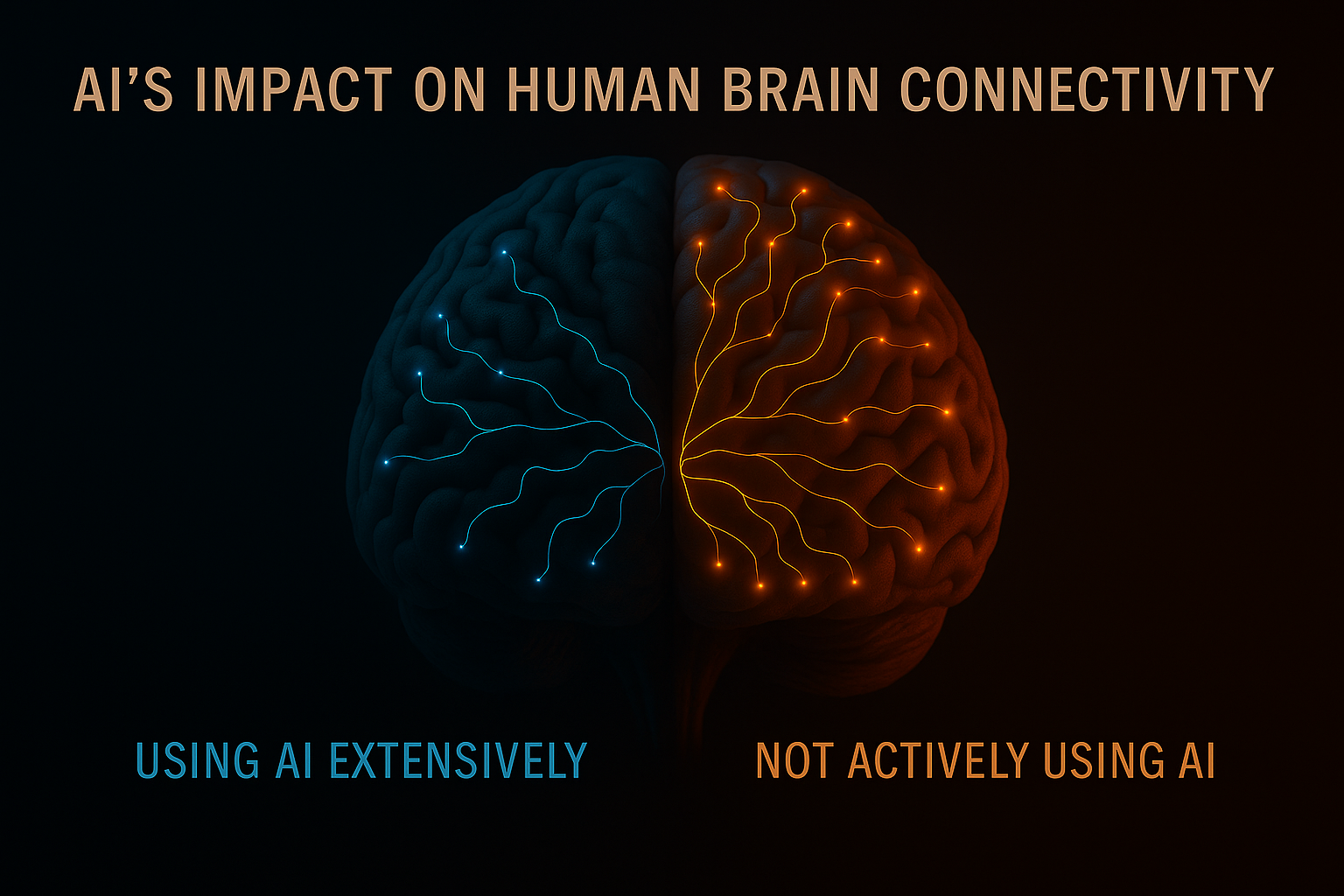
The neuroscience reveals exactly how AI assistance alters brain function:
Weakened Neural Networks
Brain connectivity systematically scaled down with the amount of external support: the brain-only group exhibited the strongest, widest-ranging networks, the search engine group showed intermediate engagement, and AI assistance elicited the weakest overall coupling.
This isn't just a temporary state, it's evidence of the brain adapting to new conditions. When AI does the heavy cognitive lifting, the brain learns it doesn't need to maintain those robust neural connections.
Reduced Cognitive Engagement
The reduction of cognitive load leads to a shift from active critical reasoning to passive oversight. Users of AI tools reported using less effort in tasks such as retrieving and curating information, and instead focused on verifying or modifying AI-generated responses.
This transformation is subtle but profound. Instead of being creators, we become editors. Instead of thinking deeply, we supervise shallowly.
Memory Formation Impairment
Perhaps most concerning is AI's impact on memory. Memory is tied to attention, effort, and repetition. AI reliance may interrupt this process. When you don't wrestle with material yourself, your brain doesn't encode it properly. The information passes through you without leaving lasting traces.
The Learning Paradox

Here's the paradox: AI makes tasks feel easier, but that ease is precisely the problem.
While lower cognitive loads often improve productivity by simplifying task completion, users generally engage less deeply with the material, compromising the cognitive load necessary for building and automating robust mental frameworks.
Just as muscles need resistance to grow stronger, brains need cognitive challenge to maintain their capacity. When we remove struggle from learning, we remove growth.
Not All AI Use Is Harmful
.png)
Before panic sets in, it's crucial to understand the nuance. The MIT study revealed something fascinating: participants who built foundational skills without AI and then incorporated it later exhibited higher memory recall and activation of brain regions similar to search engine users.
The key variable isn't whether you use AI, it's when and how you use it.
Early reliance on AI may impair memory, meaning-making, and idea synthesis, all of which are essential to critical thinking. At the same time, the integration of AI tools after the brain has deeply worked with the material and made strong neural connections may actually support critical thinking and cognitive engagement.
Think of it like learning to play guitar. You need to develop finger strength, muscle memory, and basic chord knowledge through practice. Once you have those foundations, electronic tuners and chord apps become helpful tools rather than crutches that prevent skill development.
The Homogenisation Effect
Beyond individual cognitive impacts, AI is creating a collective creativity crisis. Essays created by AI users were more homogeneous within the group, while the brain-only group had more diverse answers.
When everyone relies on the same AI systems trained on similar data, thinking becomes standardized. Unique perspectives, creative connections, and original insights, the very things that make human intelligence valuable, begin to disappear.
Researchers discovered consistent homogeneity across named entities, language patterns, and topics within the AI group. In other words, AI users began to think alike, write alike, and even structure arguments alike.
What This Means for Different Groups
For Students

The implications for education are profound. If students outsource essay writing to AI during the years when their brains are most plastic and capable of developing critical thinking skills, they may graduate without ever having developed those capacities.
Students relying on AI for scientific inquiries produced lower-quality reasoning than those using traditional search engines, as the latter required more active cognitive processing to integrate diverse sources of information.
The convenience is tempting, but the cost is your cognitive development during critical learning years.
For Professionals

Knowledge workers face a different challenge. If professionals outsource reports and emails, they may be trading short-term efficiency for long-term erosion of critical faculties.
The very skills that made you valuable, analysis, synthesis, creative problem-solving—can degrade when consistently outsourced to AI. In a rapidly changing job market, maintaining cognitive flexibility and depth may be more important than ever.
For Educators

Teachers must grapple with a difficult reality: students are already using these tools. The results suggest that solo work is crucial for building strong cognitive skills, and early or excessive dependence on AI could hinder the development of critical thinking and deep encoding of information.
The challenge isn't preventing AI use, that ship has sailed. It's structuring learning so students develop foundational capacities before incorporating AI as an enhancement tool.
Practical Strategies for Healthy AI Use

How can we harness AI's benefits while avoiding cognitive debt? Here are evidence-based strategies:
Build First, Augment Later
Use AI after you think. Draft your own ideas first, then use AI to refine, critique, or expand—not replace—your thinking.
Develop your initial analysis, argument structure, or creative concept independently. Only then use AI as a collaborator to strengthen what you've already built.
Protect Learning Stages
Let students and beginners struggle through problems before introducing AI as a tool. Building foundational skills first makes later augmentation safer.
If you're learning something new—a language, a skill, a subject—resist the temptation to rely on AI during the foundational phase. Let your brain do the hard work of building neural pathways.
Question Your Motivation
Ask why you need it: Are you using ChatGPT because it truly adds value, or just because it's easier than thinking?
Honest self-assessment is crucial. If the main benefit is avoiding cognitive effort, that's a red flag that you're accumulating cognitive debt.
Maintain Cognitive Challenge
Like physical exercise, your brain needs regular challenge to maintain capacity. Cognitive challenge in learning tasks strengthens neural pathways, boosts memory, and builds critical thinking.
Deliberately engage in tasks that require sustained focus, deep analysis, and original thinking. Read complex material, solve difficult problems, write without assistance. These aren't optional luxuries—they're essential maintenance for cognitive health.
Use AI Strategically, Not Habitually
Reserve AI for tasks where it genuinely adds value: researching unfamiliar topics, generating alternative perspectives, catching errors, or handling routine tasks that don't benefit from deep cognitive engagement.
Avoid using AI for tasks that build the cognitive skills you want to maintain: creative thinking, complex problem-solving, learning new concepts, or developing original arguments.
The Broader Context: AI and Neuroscience
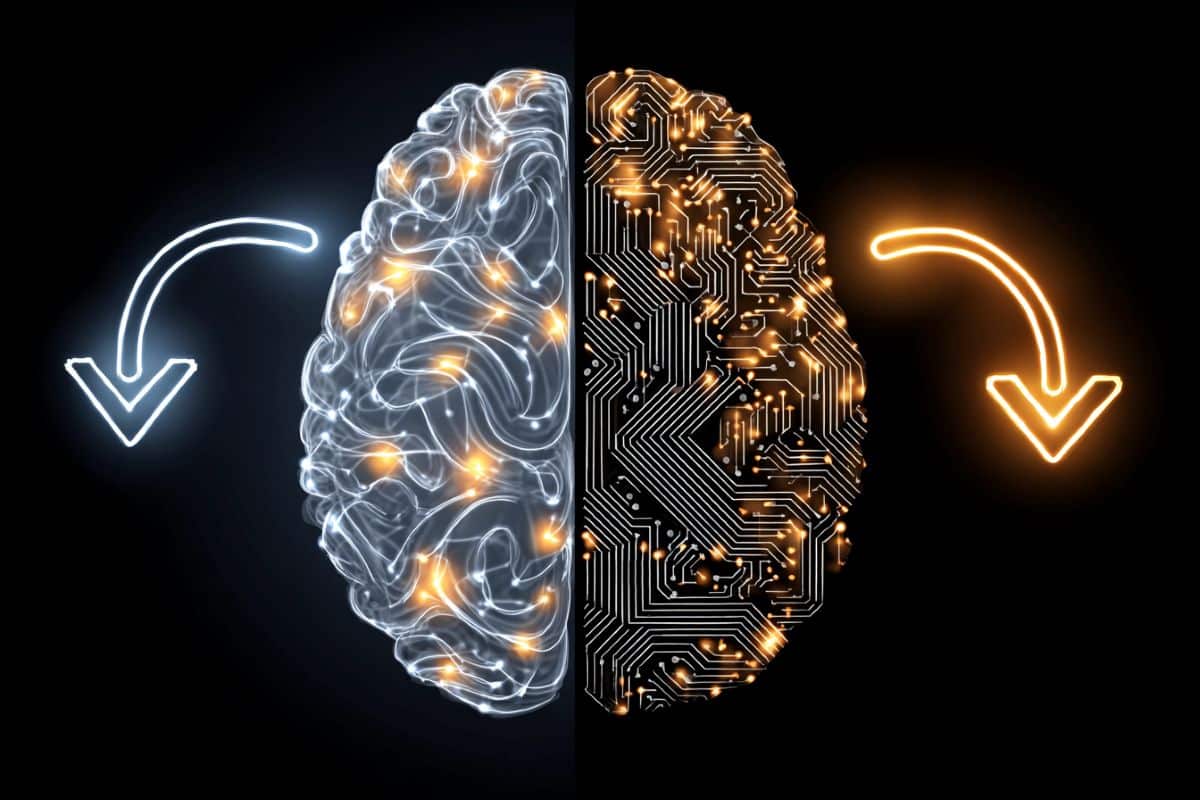
The ChatGPT study is part of a larger revolution in understanding how technology shapes cognition. The convergence of artificial intelligence and neuroscience is redefining our understanding of the brain, unlocking new possibilities in research, diagnosis, and therapy.
Researchers are using advanced neuroimaging while people interact with AI, revealing real-time changes in brain activity. Studies now employ eye-tracking technology to monitor eye movements and pupil dilation, combined with functional near-infrared spectroscopy to collect brain hemodynamic responses during AI use.
These tools are giving us unprecedented visibility into the immediate and long-term effects of AI on human cognition.
Critical Questions and Limitations
It's important to note limitations in current research. The study's small sample size and narrow nature of the essay-writing task are two of the biggest factors limiting the extent to which we can generalize these findings to other contexts and activities.
Moreover, some researchers have challenged the interpretation. The change in neural connectivity may have been the result of participants becoming more familiar with the study task rather than cognitive debt accumulation.
More research is needed, across diverse populations, tasks, and time periods. But the early findings are concerning enough to warrant attention and caution.
A Call for Cognitive Responsibility
We stand at a crossroads. AI tools offer remarkable capabilities that can genuinely enhance human potential—if used wisely. But unconscious, habitual reliance on AI for cognitive tasks threatens to erode the very mental capacities that make us uniquely human.
As researchers warn, "We failed to regulate social media in time. Do we really want to make the same mistake with AI?"
The solution isn't rejecting AI—that's both impractical and unnecessary. It's developing what might be called "cognitive literacy": understanding how AI affects our brains and making conscious choices about when, how, and why we use it.
Some tasks genuinely benefit from AI assistance. Others—particularly those involving learning, creativity, and critical thinking—may be worth protecting as spaces for unaugmented human cognition, at least during foundational skill development.
The Future of Learning in an AI World

Like calculators before them, AI tools can raise the bar for what people can achieve—if they're used the right way. Knowing when, where, and how to use AI is the key to long-term success and skill development.
The most successful individuals in an AI-powered future won't be those who avoid technology or those who outsource everything to it. They'll be those who strategically combine human and artificial intelligence, using each for what it does best while maintaining the cognitive capacities that make them adaptable, creative, and capable of independent thought.
Your brain is remarkably plastic—it adapts to whatever conditions you create. If you consistently rely on AI to do your thinking, your brain will adapt by reducing its cognitive infrastructure. If you maintain regular cognitive challenge while using AI strategically, you can enjoy technology's benefits while preserving your mental capabilities.
Choosing Your Cognitive Future
The question isn't whether AI will change how we learn and think—it already is. The question is whether that change will enhance human potential or diminish it.
The research is clear: thoughtless AI use creates cognitive debt. But thoughtful AI use, properly timed and strategically deployed, can augment human intelligence without replacing it.
We're not passive recipients of technology's effects on our brains. We're active agents who can choose how we engage with AI tools. That choice will shape not just our individual cognitive futures, but the collective intelligence of our species.
The wisdom for this moment is simple but challenging: use AI to extend your capabilities, not replace them. Let technology handle what technology does best, but protect and exercise the irreplaceable human capacities for deep thinking, creative insight, and genuine understanding.
Your brain is listening to every choice you make about when to think and when to let AI think for you. What message are you sending it?
Share

Sara Srifi
Sara is a Software Engineering and Business student with a passion for astronomy, cultural studies, and human-centered storytelling. She explores the quiet intersections between science, identity, and imagination, reflecting on how space, art, and society shape the way we understand ourselves and the world around us. Her writing draws on curiosity and lived experience to bridge disciplines and spark dialogue across cultures.